This folksy fast-food icon had a few skeletons in his closet

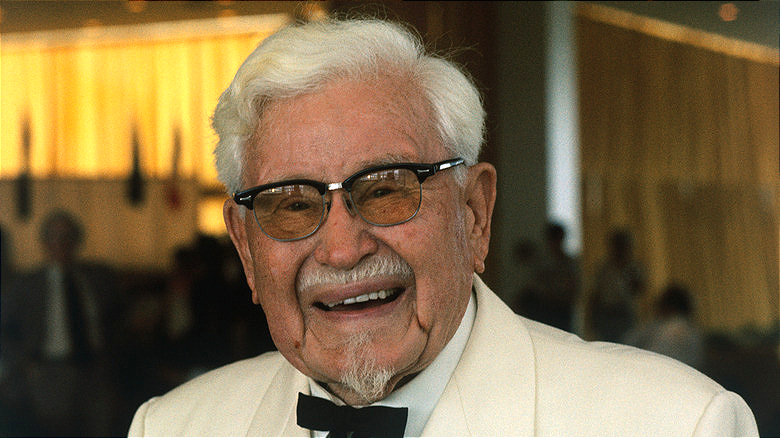
The seventh of May 1931 was a hot, dusty day in Kentucky. Alongside a dirt road, a service station manager named Matt Stewart stood on a ladder painting a cement railroad wall. His application of a fresh coat of paint was gradually obscuring the sign that had been painted there. The car skidded to a stop nearby. But it was not an armed man that emerged — it was three armed men. The driver of the car had been using this particular railroad wall to advertise his service station in town. Stewart leapt from his ladder, firing his pistol wildly as he dove for cover behind the railroad wall. One of the driver’s two companions collapsed to the ground. The driver picked up his comrade’s pistol and returned fire. Amid a hail of bullets from his pair of adversaries, the painter finally shouted, “Don’t shoot, Sanders! You’ve killed me!” The shooter was Harland Sanders, the man who would go on to become the world-famous Colonel Sanders. (via Damn Interesting)
In the middle of a Russian desert is a lighthouse that is miles from any body of water
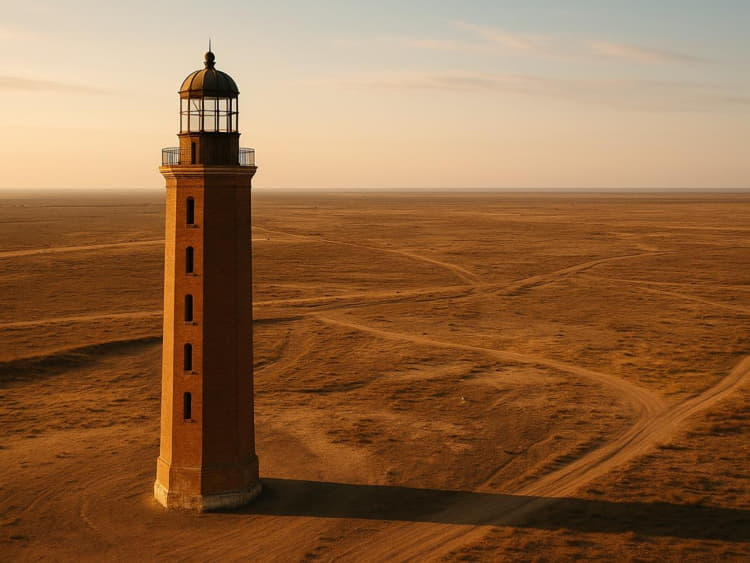
Driving through the steppes of Russia’s Astrakhan region, one of the last things you expect to see is a 20-storey brick lighthouse towering over the arid landscape. It’s the type of structure you normally see near the coastline, but in this case, the nearest coastline is about 30 kilometers (18.6 miles) away. Petrovsky Lighthouse is an architectural anomaly, but one that can easily be explained. In 1741, when Peter the Great of Russia commissioned the lighthouse, the entire area was a part of the Caspian Sea, with islands that housed a port where ships could moor. Originally made out of wood, the lighthouse collapsed during a serious storm and had to be rebuilt. It wasn’t until 1876 that the brick lighthouse was erected. The waters of the Caspian Sea had been receding for a long time, but at the beginning of the last century, the water in the area had become so shallow that the port had to be closed. Petrovsky Lighthouse continued to operate until 1930, by which time the Caspian Sea had receded completely. (via Oddity Central)
Archaeologists say one victim of the Pompeii volcano eruption was probably a doctor

Archaeologists used a combination of advanced CT scans and 3D digital reconstruction to identify one of the Pompeii victims who died in 79 CE during the eruption of Mount Vesuvius as most likely having been a Roman doctor, according to an announcement by the Pompeii Archaeological Park. Mount Vesuvius released thermal energy roughly equivalent to 100,000 times the atomic bombs dropped on Hiroshima and Nagasaki at the end of World War II, spewing molten rock, pumice, and hot ash over the cities of Pompeii and Herculaneum. In the 19th century, an archaeologist named Giuseppe Fiorelli figured out how to make casts of those frozen bodies by pouring liquid plaster into the voids where the soft tissue had been. Some 1,000 bodies have been discovered in the ruins, and 104 plaster casts have been preserved. Restoration efforts on 86 of those casts began about 10 years ago, during which researchers took CT scans and X-rays to determine whether complete skeletons were present. (via Ars Technica)
Hi everyone! Mathew Ingram here. I am able to continue writing this newsletter in part because of your financial help and support, which you can do either through my Patreon or by upgrading your subscription to a monthly contribution. I enjoy gathering all of these links and sharing them with you, but it does take time, and your support makes it possible for me to do that. I also write a weekly newsletter of technology analysis called The Torment Nexus.
In 1997 the NOAA recorded an underwater sound louder than any animal known to man
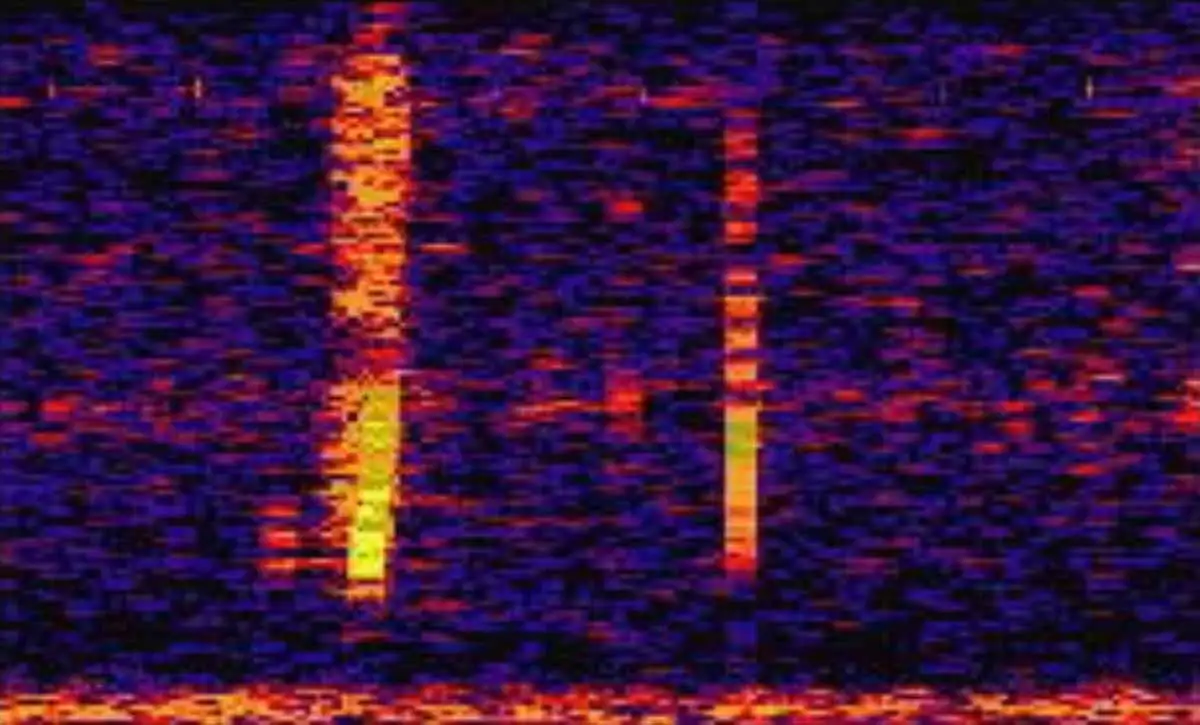
In the summer of 1997, NOAA's underwater microphone network — a Cold War-era array of hydrophones originally built to track Soviet submarines and later repurposed to monitor earthquakes and whale migrations — picked up something strange off the coast of southern Chile. The sound lasted about a minute, rose in frequency as it went, and was loud enough to register on sensors nearly 5,000 kilometers apart. NOAA scientist Christopher Fox noted that the audio profile resembled a living creature, but added that whatever made it would have to be far more powerful than any animal on Earth. The sound — which NOAA nicknamed "the Bloop" — was recorded exactly once and never appeared again. For years, it circulated as one of the ocean's genuinely unsolved mysteries, partly because the location was near the coordinates H.P. Lovecraft had assigned to the sunken city of R'lyeh, home of Cthulhu. (via Boing Boing)
Scientists estimate that Nestlé's marketing of baby formula led to millions of deaths

Reading the history of the last century, one often finds bizarrely nefarious corporations — fruit companies complicit in coups led to events with names like “the banana massacre." Following in this venerable tradition of being comically evil, Nestlé caused millions of infants to die. The best estimate puts the number around 10 million. Nestlé aggressively marketed baby formula to women in poor countries. This has a number of negative effects: for one, formula has to be mixed with water. But in poor countries, water is often unsanitary, causing disease in infants with developing immune systems. Instructions were often printed in languages that mothers couldn’t read. Using contaminated water in formula was associated with a 27% rise in mortality. Nestlé also dressed 5,000 of its sales representatives in nurses' uniforms. (via Bentham's Bulldog)
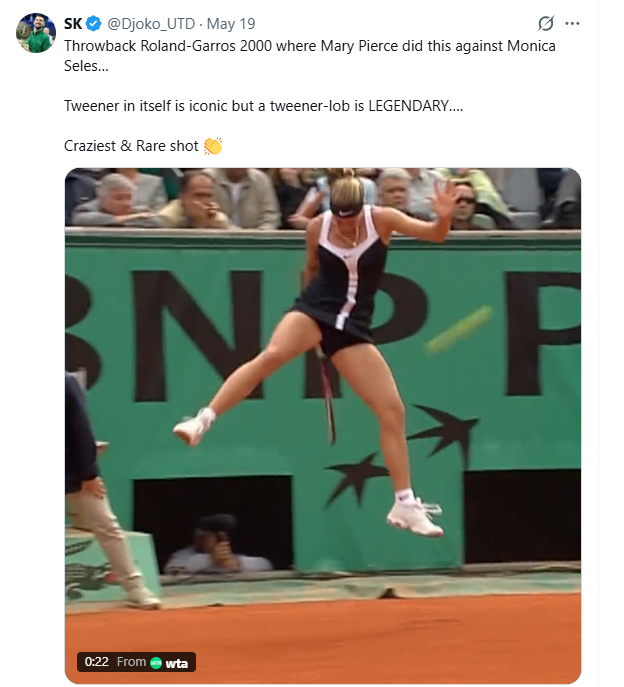
It's over a quarter century old now but this tennis shot is still spectacular
Acknowledgements: I find a lot of these links myself, but I also get some from other places that I rely on as "serendipity engines," such as The Morning News from Rosecrans Baldwin and Andrew Womack, Jodi Ettenberg's Curious About Everything, Dan Lewis's Now I Know, Robert Cottrell and Caroline Crampton's The Browser, Clive Thompson's Linkfest and Why Is This Interesting by Noah Brier and Colin Nagy. If you come across something you think should be included here, feel free to email me at mathew @ mathewingram dot com