A California teen helped run a $250-million crypto scam


Hamza Doost is 6-foot-3, with a chubby, bearded face, black hair, and an ankle monitor. For the past year, the 21-year-old has been confined to his father’s home in Hayward, an East Bay suburb. He’s allowed a computer, but the government tracks every keystroke. Curiously — given the circumstances — he’s allowed one cryptocurrency account. Not long ago, he sat for a photo wearing a cheerful Hawaiian print shirt, surrounded by gleeful friends aboard a luxurious private jet. According to federal prosecutors, Doost was a key figure in a sophisticated crime ring known as “SE Enterprise,” responsible for what was the largest single private theft of cryptocurrency in U.S. history: a $246 million heist pulled off not with guns or elaborate technical exploits but with phone calls and psychological pressure directed at one early bitcoin investor in Washington, D.C., who made the mistake of trusting the group. (via the SF Standard)
Archeologists found the longest runic carving in North America in a small Ontario town
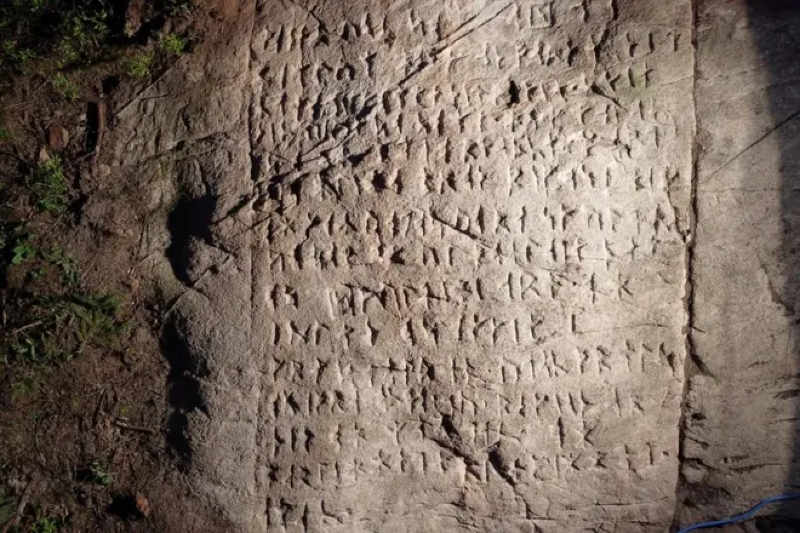
In 2017, a windthrown tree on a property near Wawa, Ontario, uprooted and exposed a section of bedrock. Avelino Pablo Cruz, an agricultural crew supervisor working nearby, took a break and noticed strange markings carved into the newly exposed rock. He reported them to the landowner. It would be years before anyone understood what he had found. The markings turned out to be 255 runic characters arranged in 15 lines — the longest runic inscription yet documented in North America and the only known runic inscription in the world reproducing the Lord’s Prayer. A second panel nearby depicts what appears to be a Scandinavian-style longship carrying 16 figures. The Wawa inscription may sound at first like evidence of a Norse visit to Ontario but it is rather a Modern Swedish version of the Lord’s Prayer, written in futhark characters, a runic script used in northern Europe and Scandinavia. (via Discover)
Scientists turned yeast from a 5,300-year-old mummy's stomach into bread
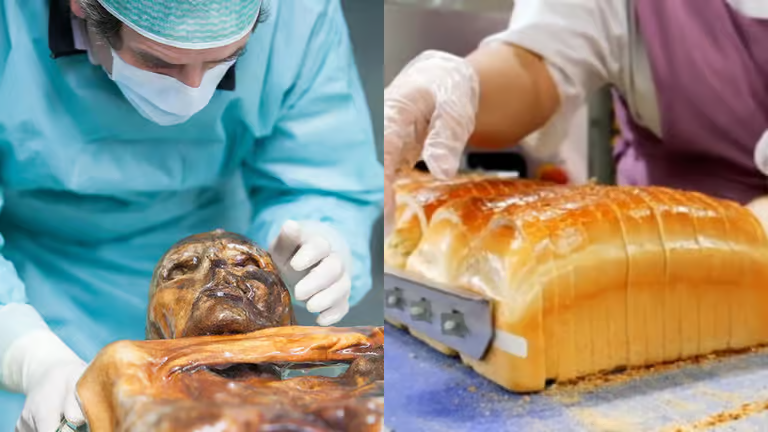
Scientists have used yeast found on a 5,300-year-old mummy to bake sourdough bread, and beer could be next. The yeast was recovered from Ötzi the Iceman, a naturally preserved mummy discovered by hikers in the Ötztal Alps near the Austria-Italy border in 1991. Ötzi has been studied for decades, but new research published in the journal Microbiome found that his remains still contain a mix of ancient gut microbes and cold-loving microorganisms that may remain active under the conditions used to preserve him. Researchers from Eurac Research in Italy cultivated four yeast strains from samples taken from Ötzi’s skin and thawed internal water. Author Mohamed Sarhan said the team then tested whether the yeast could be used for fermentation. (via Dexerto)
Hi everyone! Mathew Ingram here. I am able to continue writing this newsletter in part because of your financial help and support, which you can do either through my Patreon or by upgrading your subscription to a monthly contribution. I enjoy gathering all of these links and sharing them with you, but it does take time, and your support makes it possible for me to do that. I also write a weekly newsletter of technology analysis called The Torment Nexus.
An indigenous explorer may have beaten Lewis and Clark to the Pacific by a century

Several years ago, while homebound for a time, I was researching some mysteries about the Lewis and Clark expedition for a possible book. I wondered why the leaders expected an easy crossing of the Continental Divide at the unmapped headwaters of the Missouri River. A few paragraphs by historian David Lavender suggested the belief might have been influenced by the journey of Moncacht-Apé.This Yazoo tribesman from the Mississippi Valley claimed he crossed the continent around the late 1600s. During the mid-1720s, Moncacht-Apé told his story to French colonist Antoine-Simon Le Page du Pratz, describing eight years of traveling mostly on foot and occasionally in dugout canoes to reach the eastern and western coasts. Along the way, he befriended numerous tribes, learning their languages and the best routes to follow.After Le Page returned to France, he published the account in his 1758 book. (via Outside)
What kind of swear words were common during the Middle Ages? Not the ones you'd think
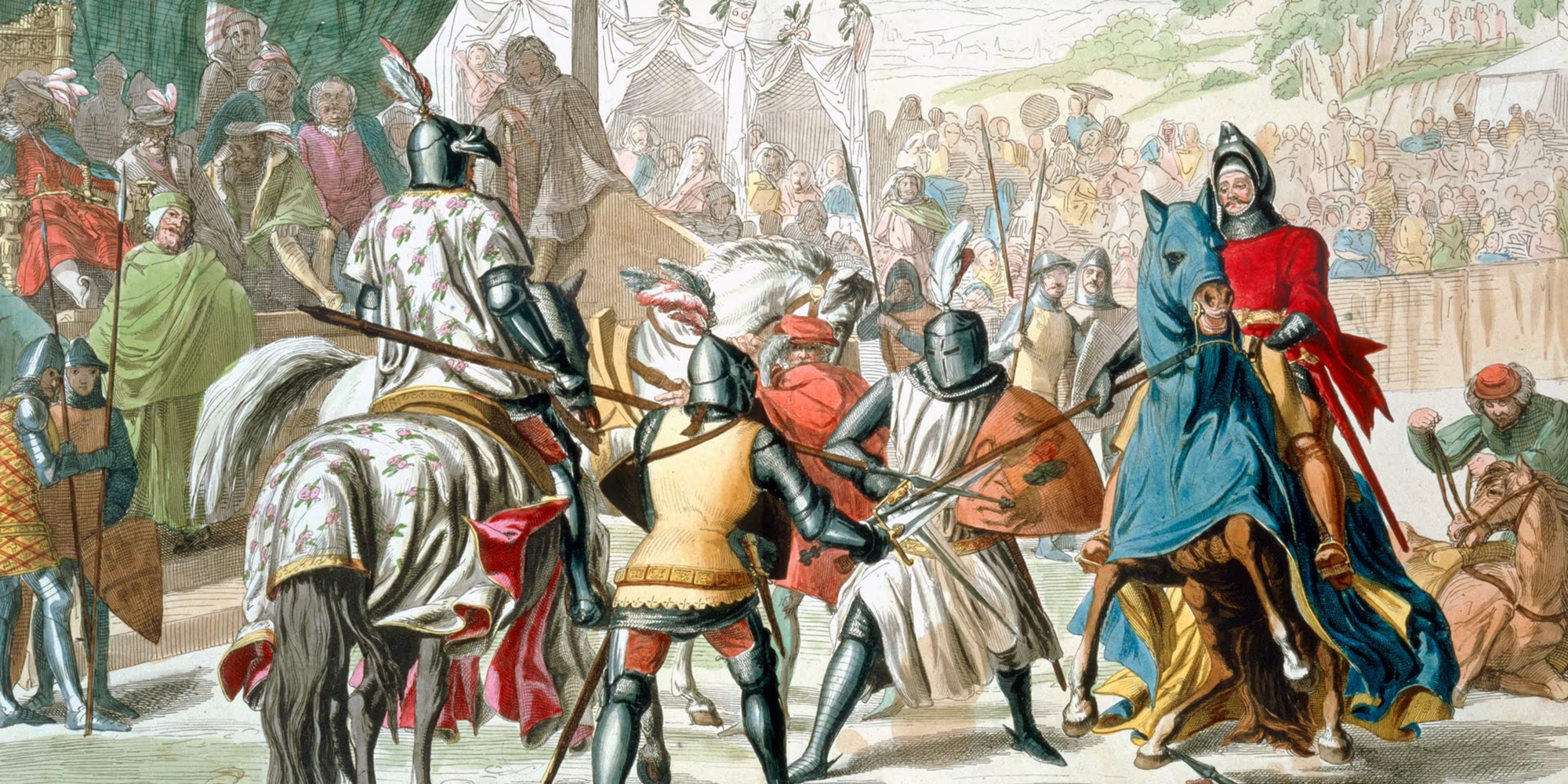
Melissa Mohr, the author of Holy Sh*t: A Brief History of Swearing, explains that people in the Middle Ages did not have much of an issue with describing bodily functions. Going into a city you might find a street called ‘Shitwell Way’ or ‘Pissing Alley’. Open a medieval textbook to teach reading to children and you might find the words arse, shit or fart. Even some names, like Thomas Turd, seem to have been acceptable. The word ‘fuck’ first appears as a name. Records from the year 1310 refer to a man named Roger Fuckebythenavele (although this may have been a nickname or a joke). Before the word fuck existed, "sard" was the word people in medieval England used to describe having sex. Mohr notes that during the Middle Ages, the word "cunt" was typically used to describe a woman’s vagina, even appearing in medical texts. If you were in town looking for a prostitute, you might get directed to Gropecuntelane. (via Medievalists)
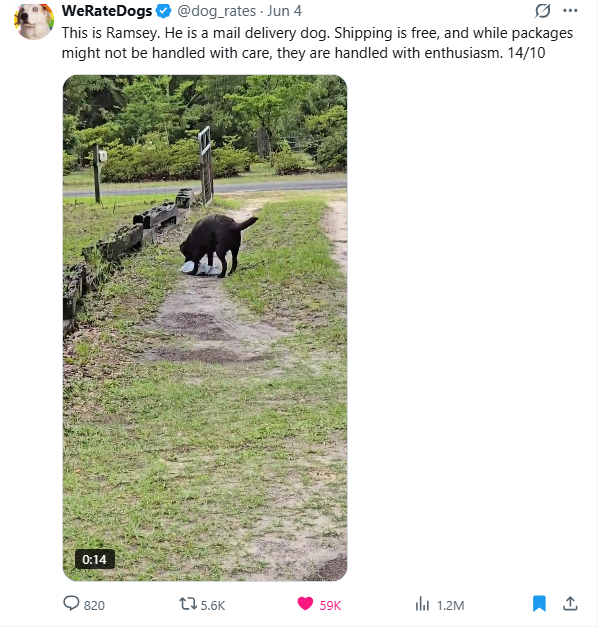
Ramsey the mail delivery dog is not careful but you can't deny the enthusiasm
Acknowledgements: I find a lot of these links myself, but I also get some from other places that I rely on as "serendipity engines," such as The Morning News from Rosecrans Baldwin and Andrew Womack, Jodi Ettenberg's Curious About Everything, Dan Lewis's Now I Know, Robert Cottrell and Caroline Crampton's The Browser, Clive Thompson's Linkfest and Why Is This Interesting by Noah Brier and Colin Nagy. If you come across something you think should be included here, feel free to email me at mathew @ mathewingram dot com