Broke and unemployed man got $1.5 million for a family heirloom


Loren Krytzer walked into the California auction room broke and unemployed. Seventy-seven seconds later, he walked out a millionaire — all thanks to a blanket. His life changed forever when he discovered that a forgotten old family heirloom, a Navajo blanket from the 1800s that had been sitting in his closet for seven years, was actually worth $1.5 million. And just in time, too. He had been scraping by, living in a shack on the edge of California’s Liona Valley, and had lost a leg after a near-fatal car accident. He inherited the blanket initially because no one in his family realized its value, either. When his grandmother died, he had gone to her house to collect the books she had promised him. The last bag in the house held two blankets passed down from his great-grandmother: a softer Hudson’s Bay blanket and the Navajo blanket his grandmother once laid out on the porch when her cat was having kittens. (via CNBC)
The US military has been sending cryptographic keys via the GPS satellite system

The U.S. military has likely been quietly broadcasting codes for its global encryption network using public GPS for nearly 20 years, turning each satellite into a hidden “numbers station,” according to Steven Murdoch, an information security expert, who detailed his findings in a new published article in a security journal. That means every device that uses GPS has been receiving hidden government information for years, and nobody outside the military knew it until now. Murdoch, a professor of security engineering and head of the Information Security Research Group at University College London, presented evidence that a 176-bit GPS sequence labelled “Subframe 4, Page 17” is encrypted material from the Pentagon’s Over-the-Air Distribution (OTAD) network, which delivers cryptographic keys to military personnel. (via 404 Media)
Hundreds of academic papers on cancer made a mistake that makes their results questionable

Hundreds of scientists who study cancer and aging have made an easily avoidable but significant mistake, deploying the wrong antibody to test for a key protein, according to a researcher who exposes errors in the biomedical literature. Instead of antibodies that recognize p16INK4a, a tumor-suppressing protein that may also promote aging, these researchers used antibodies that tag the similarly named protein p16-ARC, which helps shape the cell’s molecular skeleton. The gaffe appears in more than 300 papers, including some published by top journals such as Nature, Nature Medicine, Cancer Cell, eLife, and Science Advances, reports Sholto David, a molecular biologist at the U.K. biotech OXB and a part-time error hunter. David’s latest revelations, posted on 2 June on the blog For Better Science, have sent researchers digging through old lab notebooks and, in at least one case, back to the lab to rerun experiments. (via Science.org)
Hi everyone! Mathew Ingram here. I am able to continue writing this newsletter in part because of your financial help and support, which you can do either through my Patreon or by upgrading your subscription to a monthly contribution. I enjoy gathering all of these links and sharing them with you, but it does take time, and your support makes it possible for me to do that. I also write a weekly newsletter of technology analysis called The Torment Nexus.
This Indonesian volcano has flames that burn a bright blue color
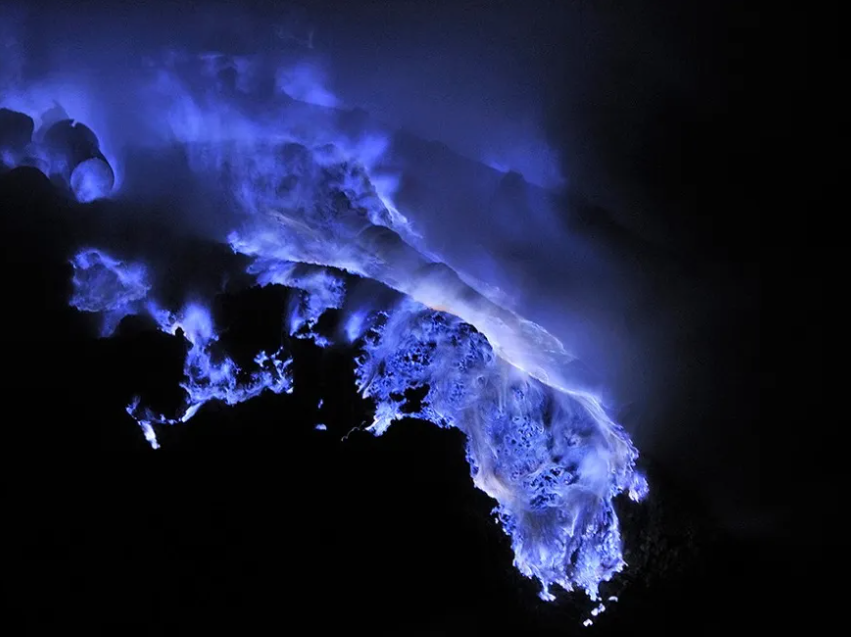
Photos taken by French photographer Olivier Grunewald of Indonesia's Kawah Ijen volcano — snapped during shooting of a new documentary he's releasing with the president of Geneva's Society for Volcanology — showcase the volcano's amazing electric blue glow. The glow isn't the lava itself, but is due to the combustion of sulfuric gases in contact with air at temperatures above 360°C. In other words, the lava isn't colored significantly differently than the lava at other volcanoes, which all differ slightly based on their mineral composition but appear a bright red or orange color in their molten state. But at Kawah Ijen, extremely high quantities of sulfuric gases emerge at high pressures and temperatures (sometimes in excess of 600°C) along with the lava. Exposed to the oxygen, the sulfur burns readily, and its flames are bright blue. (via the Smithsonian)
The ancient Romans collected their urine in pots so it could be used for cleaning their clothes
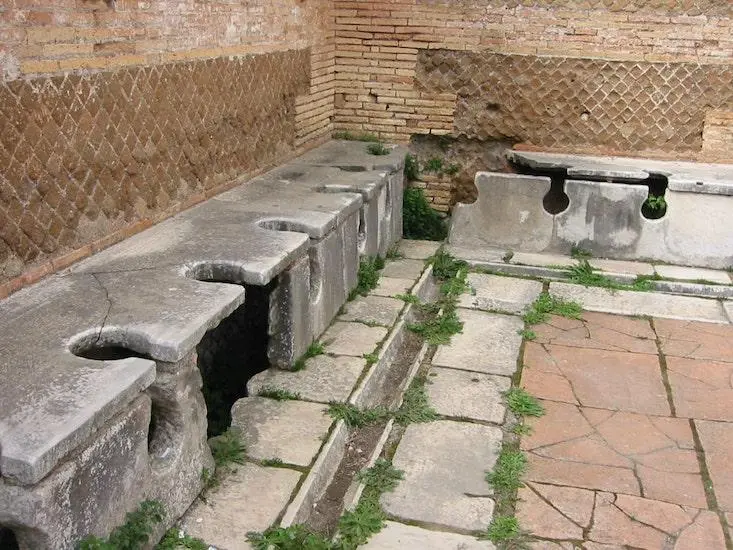
As best we can tell from historic and archaeological data, the ancient Romans peed in small pots in their homes, offices, and shops. When those small pots became full, they dumped them into large jars out in the street. Just like with your regular garbage pickup, a crew came by once a week to collect those hefty pots of pee and bring them to the laundromat. Why? Because the ancient Romans washed all of their togas and tunics in pee. Human urine is full of ammonia and other chemicals that are great natural detergents. If you worked in a Roman laundromat, then your job was to stomp on clothes all day long — barefoot and probably ankle deep in colossal vats of human pee. Frankly, I wonder why we haven’t emulated this aspect of Roman culture in our age of green, eco-friendly, and sustainable businesses. I’m thinking of opening a chain called Urine-Urout All-Natural Laundromat. It’s a sparkling business opportunity! (via Nautilus)
A kind stranger solves the problem after basketball player dislocates his shoulder

Acknowledgements: I find a lot of these links myself, but I also get some from other places that I rely on as "serendipity engines," such as The Morning News from Rosecrans Baldwin and Andrew Womack, Jodi Ettenberg's Curious About Everything, Dan Lewis's Now I Know, Robert Cottrell and Caroline Crampton's The Browser, Clive Thompson's Linkfest and Why Is This Interesting by Noah Brier and Colin Nagy. If you come across something you think should be included here, feel free to email me at mathew @ mathewingram dot com