Having a fever seems to reduce the symptoms of autism


Scientists are catching up to what parents and other caregivers have been reporting for many years: When some people with autism spectrum disorders experience an infection that sparks a fever, their autism-related symptoms seem to improve. With a pair of new grants from The Marcus Foundation, scientists at MIT and Harvard hope to explain how this happens in an effort to eventually develop therapies that mimic the “fever effect” to similarly improve symptoms. “Although it isn’t actually triggered by the fever, per se, the ‘fever effect’ is real, and it provides us with an opportunity to develop therapies to mitigate symptoms of autism spectrum disorders,” says neuroscientist Gloria Choi, associate professor in the MIT Department of Brain and Cognitive Sciences and affiliate of The Picower Institute for Learning and Memory. The Marcus Foundation has been involved in autism work for over 30 years. (via MIT)
Johnny Appleseed was an entrepeneur who owned thousands of acres of land
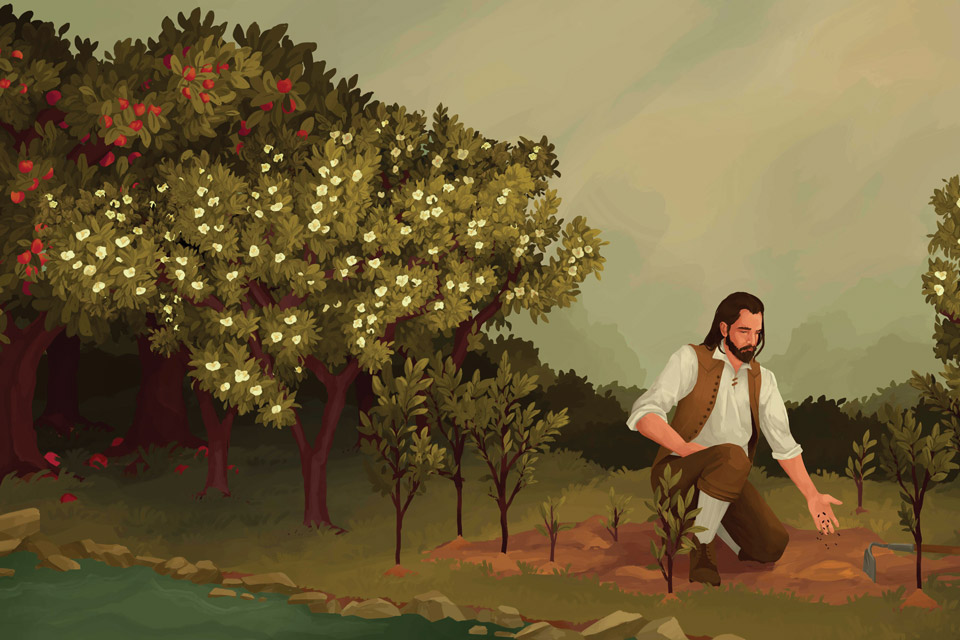
There are some verified facts about John Chapman: he seems to have had no fixed address, wore second-hand clothes and often slept outdoors. However, this nomad only looked like a pauper – in fact, he was a successful entrepreneur. In Ohio, land companies would sometimes grant wilderness tracts to homesteaders on the condition that they sow orchards. Chapman’s business model was to start planting in anticipation of the homesteaders’ arrival. He strategically established nurseries and partnered with local caretakers who would look after the trees, often selling them on Chapman’s behalf long after he had left town. Johnny Appleseed’s apparent poverty was a personal choice: he had 1,200 acres across three states to his name when he died. What’s more, the apples his trees bore were not destined for cobblers and pies but for alcoholic cider and the harder liquor known as applejack, a kind of apple brandy. (via the WSJ)
While leading a militia George Washington wrote down his recipe for beer
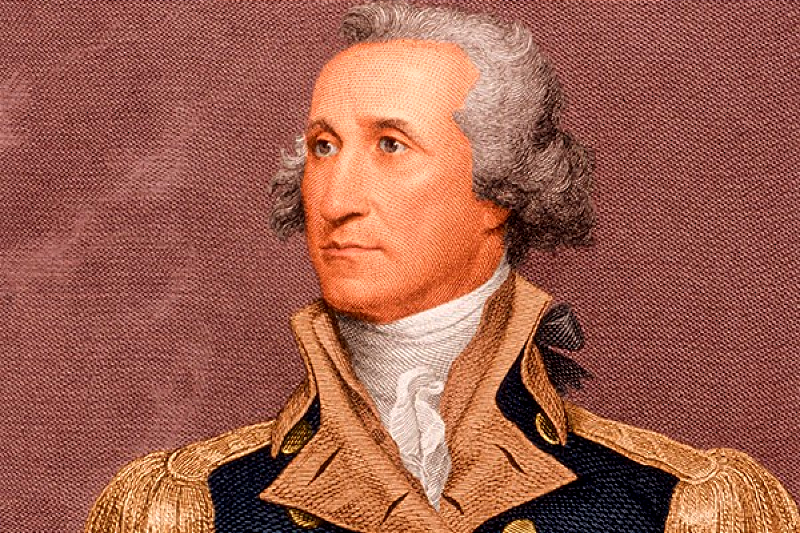
In his 1757 military journal, George Washington kept daily notes on life in the Virginia militia he led during the Seven Years’ War. Some writing — officers’ commissions, orders and the names of horses — was relevant to the battlefield. Other entries, including outlines for letters, were more personal. And then there was a recipe for “small beer.” Washington’s instructions for brewing it were rather simple. Begin by sifting bran hops “to your taste,” boiling them for three hours, then straining 30 gallons into a cooler. Add three gallons of molasses “while the beer is scalding hot,” then let it cool “till it is little more than blood warm” and add a quart of yeast. Cover the mixture with a blanket if the weather is cold, then and bottle it. The journal and recipe are kept in the New York Public Library’s Manuscripts and Archives Division. (via the Smithsonian)
Hi everyone! Mathew Ingram here. I am able to continue writing this newsletter in part because of your financial help and support, which you can do either through my Patreon or by upgrading your subscription to a monthly contribution. I enjoy gathering all of these links and sharing them with you, but it does take time, and your support makes it possible for me to do that. I also write a weekly newsletter of technology analysis called The Torment Nexus.
Archaeologists found canoes in a Wisconsin lake that are older than the pyramids
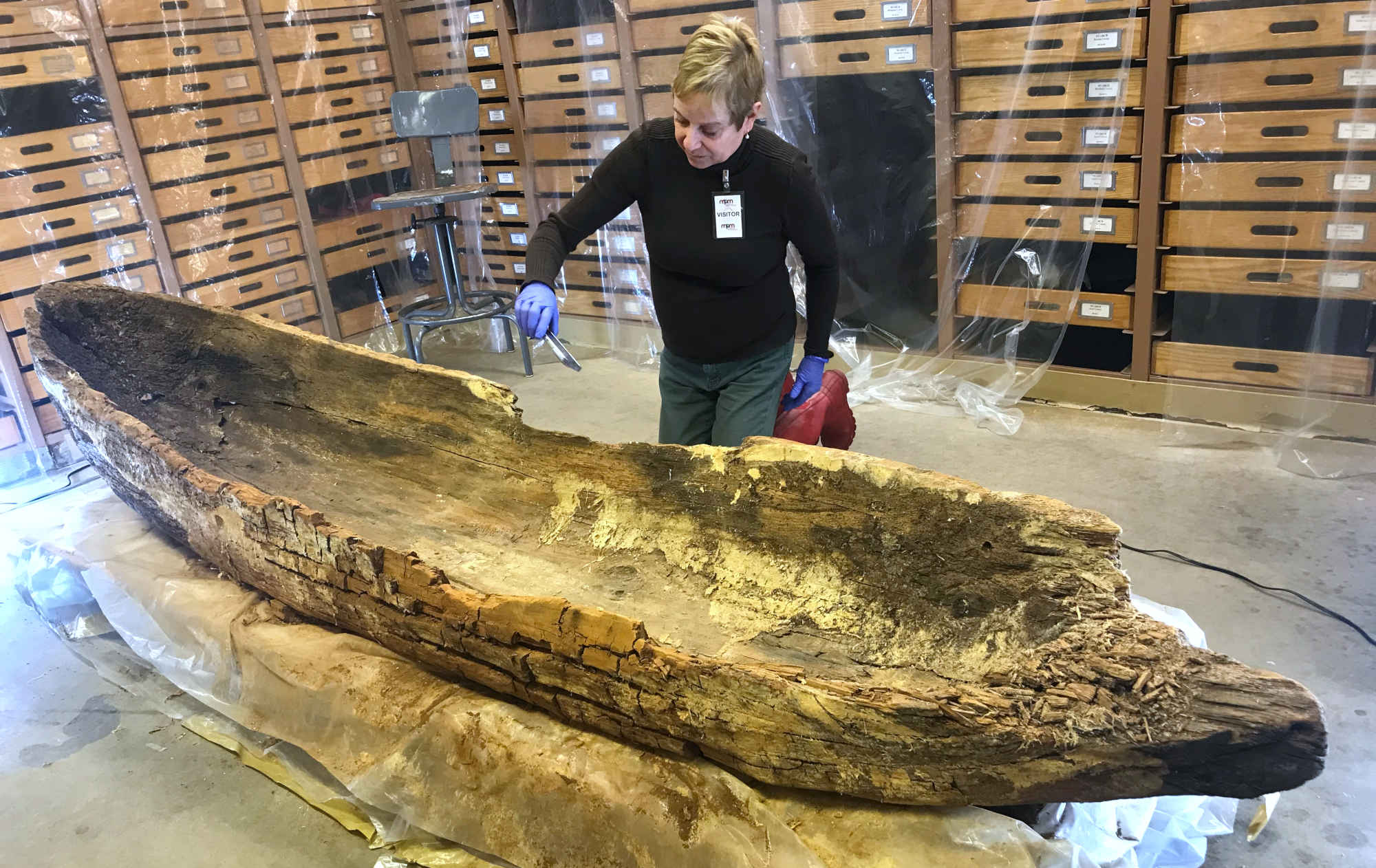
Dr Amy L Rosebrough will never forget where she was when she got the phone call. Thomsen and a fellow diver had been exploring Wisconsin's Lake Mendota. Just as her partner signalled that her air tank levels were low, Thomsen "looked down and discovered she was directly over a sunken dugout canoe", Rosebrough recalled. "We thought it might be 300 years old," said Rosebrough, referring to the vessel. It turned out to be 1,200 years old. They thought this discovery was one of a kind but they were wrong. In 2022 a second canoe pulled from the lake turned out to be 3,000 years old. Since then, 14 more canoes have been unearthed, with the oldest identified as 5,200 years old. This means that more than 4,000 years before the first Europeans sailed ashore and 400 years before the first pyramids were built, Indigenous peoples called this land home (via the BBC)
CIA officer who had $40 million in gold claimed it was part of a top-secret spy mission

The former senior CIA official found with more than $40 million worth of gold bars in his house allegedly created a fake, highly classified intelligence program that he used as a conduit to funnel millions of dollars for his personal use. David J. Rush, who was arrested last month and charged with one count of theft of public money, constructed what is known as a “special access program,” a sort of black box for the most secret intelligence operations, which even intelligence personnel with the highest security clearance cannot access withou authorization. The criminal probe found that Rush initiated two colleagues into the highly secretive sham program, effectively cultivating them as perhaps unwitting accomplices and preventing them from talking to others about it. He persuaded one of them to transfer millions of dollars to the program via a government contract that was also fraudulent. (via the WaPo)
At a festival in the Netherlands visitors got to see the steampunk Steamroadsters

Acknowledgements: I find a lot of these links myself, but I also get some from other places that I rely on as "serendipity engines," such as The Morning News from Rosecrans Baldwin and Andrew Womack, Jodi Ettenberg's Curious About Everything, Dan Lewis's Now I Know, Robert Cottrell and Caroline Crampton's The Browser, Clive Thompson's Linkfest and Why Is This Interesting by Noah Brier and Colin Nagy. If you come across something you think should be included here, feel free to email me at mathew @ mathewingram dot com