They thought she was a vampire so they dug up her casket

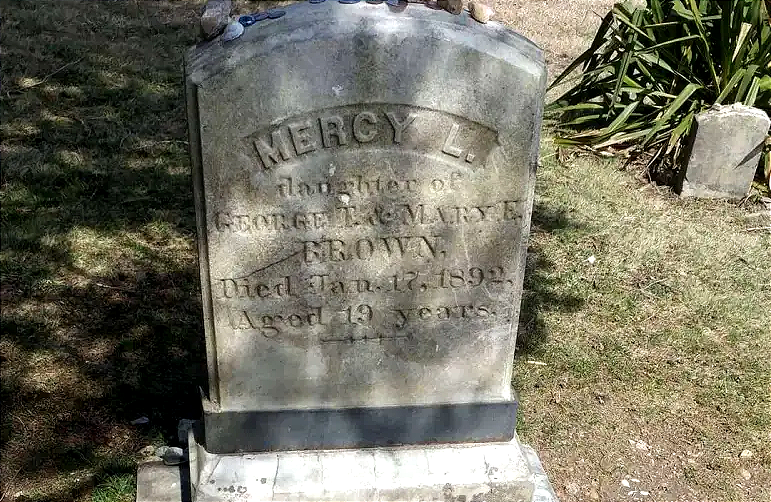
A few miles from where I live is a small graveyard with one tombstone more decorated than the rest. Offerings of trinkets and candles tell a story about a woman mourned by people who never knew her. No story from the life of this young woman, who died of tuberculosis at the age of nineteen, indicated that she would lead a notorious afterlife. Indeed, no story from the life of Mercy Lena Brown has survived at all, though round-ups of weird history or the dark side of Rhode Island sometimes call her “New England’s Last Vampire.” Illness spreading in her family after she died in 1892 gave root to a story that she was feeding off the life-force of her remaining relatives. This story convinced members of her community of Exeter, observed by the medical examiner, to exhume her body and cut out her heart and liver two months after her death. We do not know anything about Mercy as a human being. The only reconstruction of the nineteen years she lived comes from timelines and assumptions. (via Contingent)
Is there really cocaine in the Library of Congress? The answer is yes

The Library of Congress has more than 170 million items, and they’re definitely not all books. And no, I’m not just talking about old-timey letters and other historical documents. There’s also a lot of…stuff. What kind of stuff? A topographical map of the Grand Canyon made of chocolate, for one. The LoC also plays host to Carl Sagan’s old whiteboard, a 160-year-old wedding cake, and at least one packet of cocaine. Contrary to popular belief, the cocaine in question didn’t belong to Sigmund Freud — but it’s still his fault that it’s there. This story starts in the 1880s, when a young Freud was getting super into cocaine. He wasn’t the only one: The medical journal The Lancet basically couldn’t keep up with all the new research being published on cocaine (probably because researchers were also on cocaine). Freud sent a vial to his fiancée and wrote a monograph called “Über Coca” (On Coca, which, again, he very much was) hyping cocaine’s “promise.” Among many potential uses for cocaine, Freud briefly noted that it might make a good local anesthetic. (via Popular Science)
An episode of the TV show Futurama led to a new mathematical proof
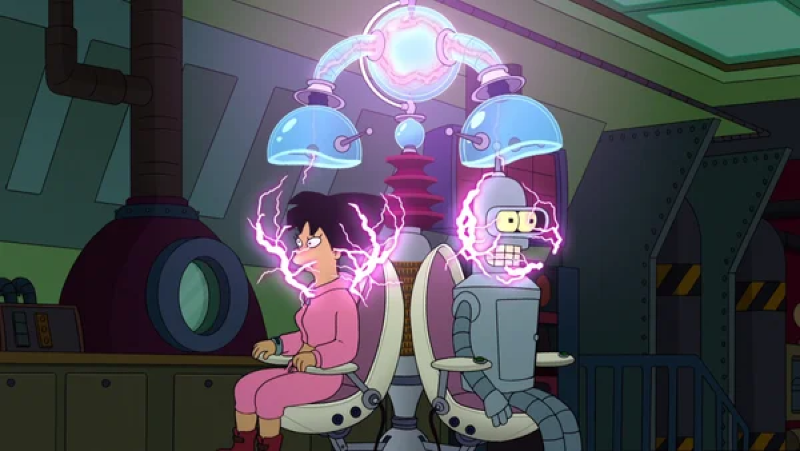
Futurama has taken nerd humor to an extreme. Consider the episode “The Prisoner of Benda.” Its writer, Ken Keeler, had to formulate an original mathematical proof to solve a significant plot problem.The episode’s story begins innocuously. The ingenious Professor Farnsworth invents a machine that can swap the minds of two people. In a bid to be young again, he swaps bodies with the character Amy, who, for her part, is eager to be in a body in which she can eat as much as she wants without having to watch her figure.After the switch is made, the pair realize that the transformation cannot be easily reversed because the device works only once for each pairing of bodies. And so other characters in the series also get involved: in total, they use the machine seven times. The bodies and minds of nine characters are mixed up so wildly that it becomes hard to keep track of who is who at any given time. (via Scientific American)
Hi everyone! Mathew Ingram here. I am able to continue writing this newsletter in part because of your financial help and support, which you can do either through my Patreon or by upgrading your subscription to a monthly contribution. I enjoy gathering all of these links and sharing them with you, but it does take time, and your support makes it possible for me to do that. I also write a weekly newsletter of technology analysis called The Torment Nexus.
Paranoid dictator Enver Hoxha built 750,000 air-raid bunkers that were never used
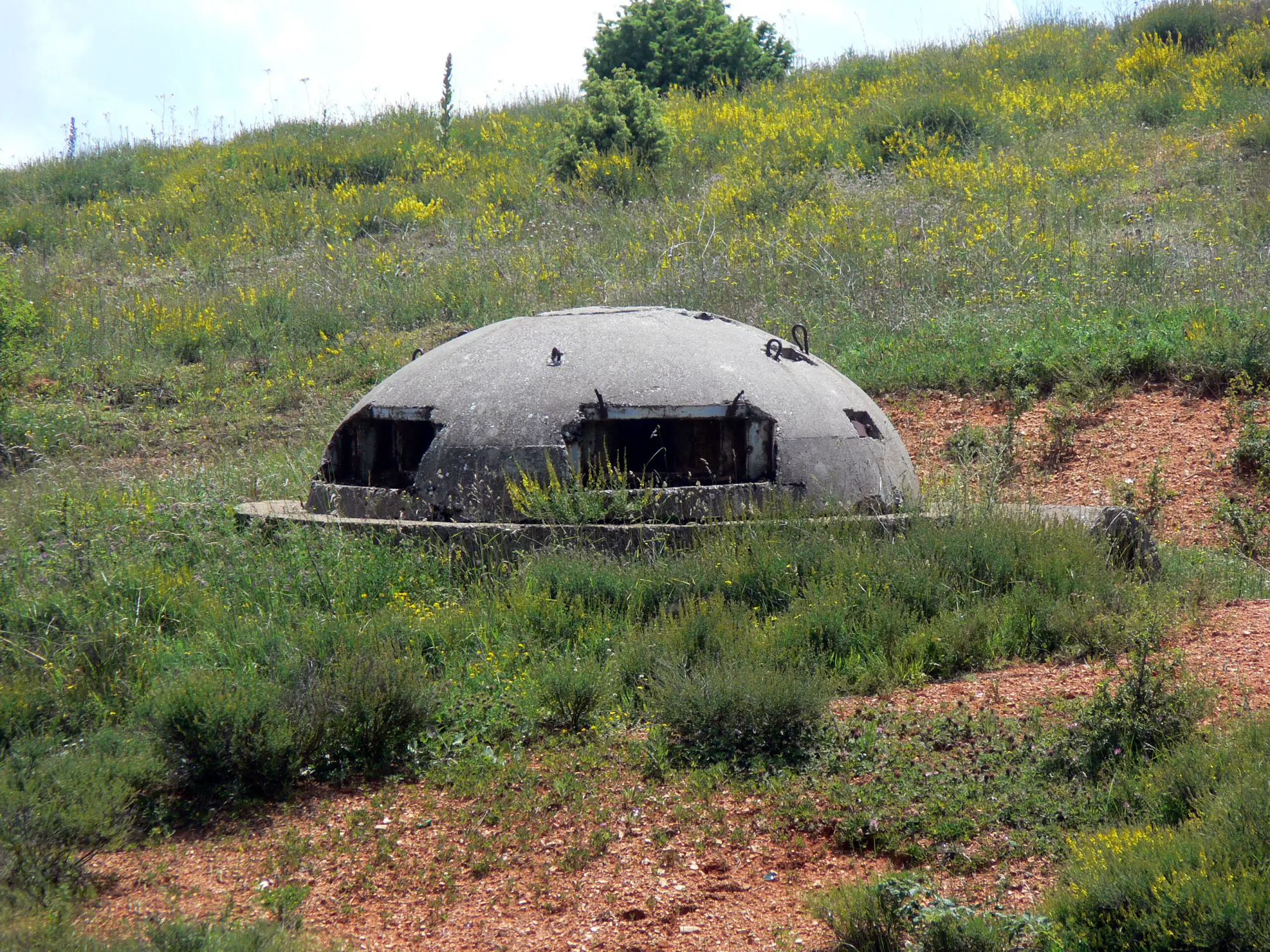
Enver Hoxha, the Stalinist dictator who sealed Albania off from most of the world, was sure enemies could strike at any moment — "like the snake that bites you and injects its poison before you are aware of it." So from the 1960s to the 1980s his government fortified the country with more than 750,000 concrete bunkers, an average of 5.7 for every square kilometer, sprouting from beaches, vineyards, mountain passes, and city streets. Children were trained from age 12 to run to the nearest bunker and repel invaders; the youth movement practiced impaling paratroopers by fixing spikes to treetops. The program cost more than twice as much as France's Maginot Line and swallowed three times the concrete, each bunker running about the price of a two-room apartment while Albania suffered a chronic housing shortage. Between 70 and 100 workers died building them every year. None were used in a war while Hoxha lived, and most now sit derelict, though a few have become cafés, homes, and animal sheds. (via Boing Boing)
Four Colorado farmers faked a drought and stole millions of dollars in crop insurance

Even on freak days when the sky pissed rain, the farms of Patrick Esch and Ed Dean Jagers remained bone-dry. Parched became payday. In one of the most madcap crop insurance scandals on record, Esch and Jagers turned moisture misery into a multi-million-dollar heist. The Colorado cowboys stole $6.5 million worth of raindrops. The farming duo manipulated U.S. weather—literally. They plugged, tipped, covered, and destroyed federal rain gauges in Colorado and Kansas, ensuring NOAA weather stations recorded zero-level rainfall. The result? A windfall in illicit gain. Before landing in USDA crosshairs, via a bizarre narrative more fitting for Jerry Springer, rather than Taylor Sheridan, Esch and Jagers set the fuse on a powder keg of family intrigue, truck-stop hijinks, cash bribes, snitches, whistleblowers, prison escapes, and dead bodies. Welcome to greed borne of water, or lack thereof. (via AgWeb)
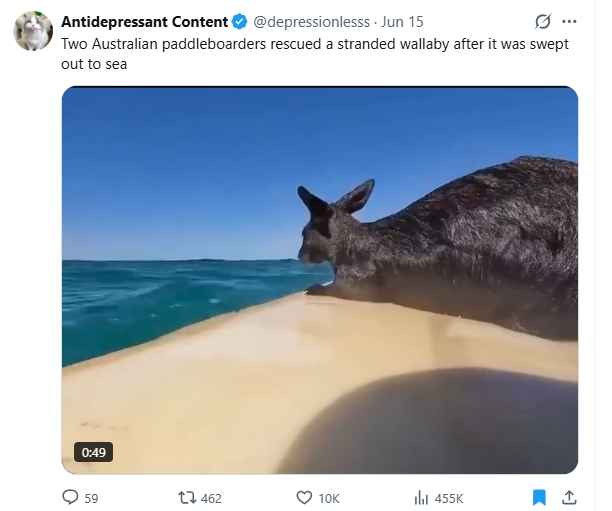
Two Australian paddleboarders rescued a stranded wallaby
Acknowledgements: I find a lot of these links myself, but I also get some from other places that I rely on as "serendipity engines," such as The Morning News from Rosecrans Baldwin and Andrew Womack, Jodi Ettenberg's Curious About Everything, Dan Lewis's Now I Know, Robert Cottrell and Caroline Crampton's The Browser, Clive Thompson's Linkfest and Why Is This Interesting by Noah Brier and Colin Nagy. If you come across something you think should be included here, feel free to email me at mathew @ mathewingram dot com