There's an outpost of the Russian empire in California

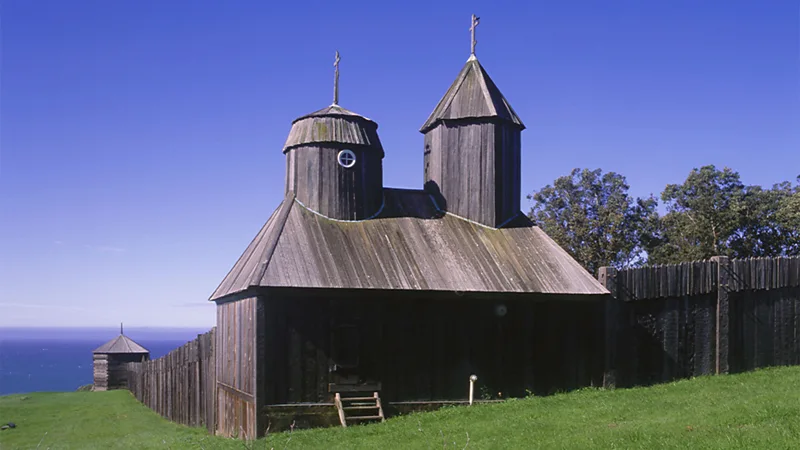
While some Americans may recall that the US's largest state, Alaska, was part of Russia for nearly 70 years, the Russian Empire's only permanent overseas colony, known as Russian America, also extended into California from 1812-1842. In fact, Russians settled in California decades before newly independent Americans did. Innovative and surprisingly cosmopolitan, Fort Ross (short for Rossiya, meaning "Russia") was intended to be a breadbasket for Russia's struggling Alaskan settlements, but it also became the source of hotly debated plans for Russian expansion across North America. As European powers expanded west in the 1500s and 1600s, Russia expanded east. By the 1640s, Russian fur traders and mercenaries had swept their way across Siberia to reach the Pacific coast. In April 1806, with his colony stalked by starvation and his crew decimated by scurvy, Russian-American Company director Nikolai Rezanov steered the prow of his ship, the Juno, into San Francisco Bay. (via the BBC)
Just Room Enough Island is well-named since there is barely enough room for a tiny house
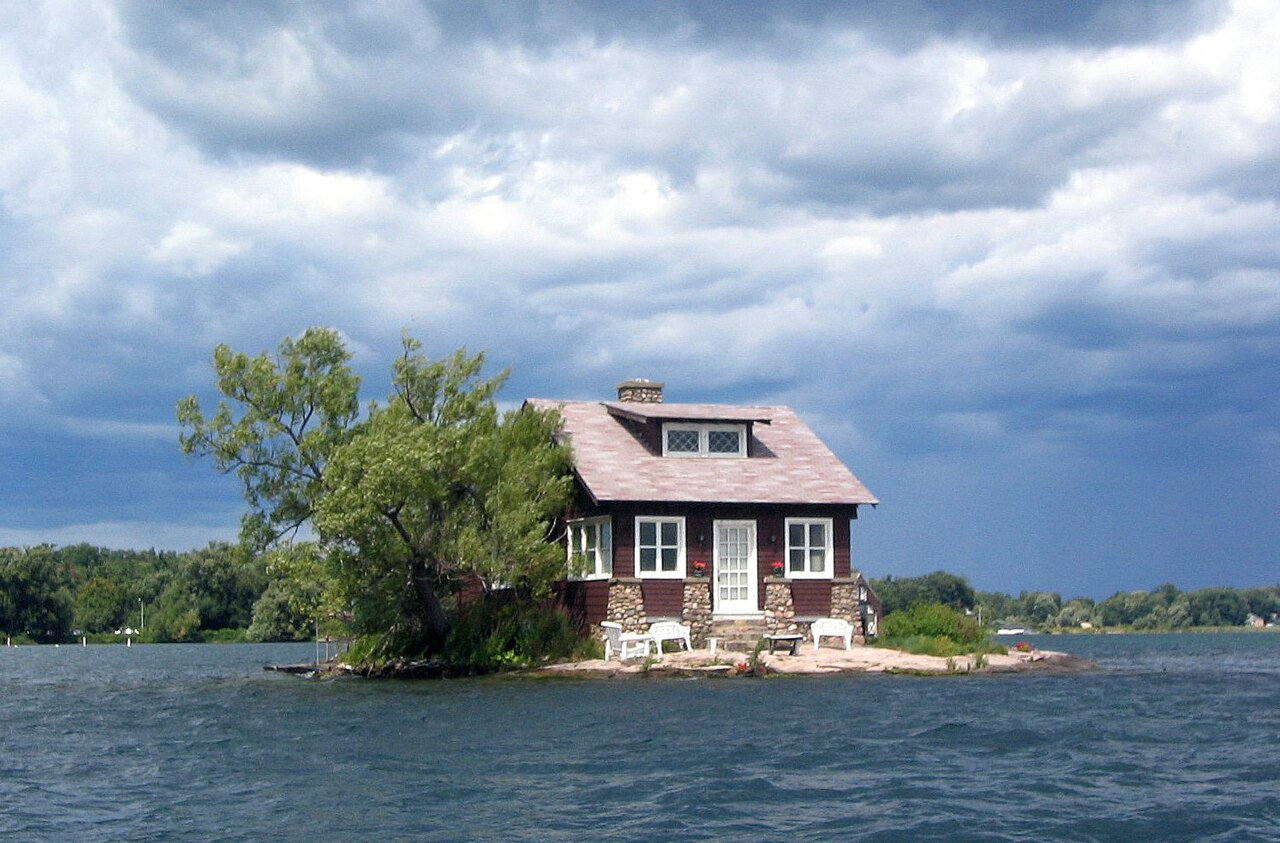
Just Room Enough Island, also known as Just Enough Room Island or Hub Island, is an island located in the Thousand Islands chain, in New York, United States. The island is known for being the smallest inhabited island in the world, which appears to be around 3,300 square feet (310 m2), or about one-thirteenth of an acre. Purchased by the Sizeland family in the 1950s, the island has a house, a tree, shrubs, and a small beach. The island was bought in the 1950s by the Sizeland family, who wanted a holiday getaway and built a house there. Because of the island's small size, in 2010, The Washington Post stated, "One misstep and you're swimming". Bishop Rock was formerly the smallest inhabited island but lost its title in 1992 when the lighthouse became automated and hence had no need for human presence. (On a personal note, I saw some similar tiny islands when I paddled my kayak across the Canada-US border) (via Wikipedia)
In a cemetery in Cape Breton lies the grave of the Giant McAskill who was 7 foot 9 inches tall
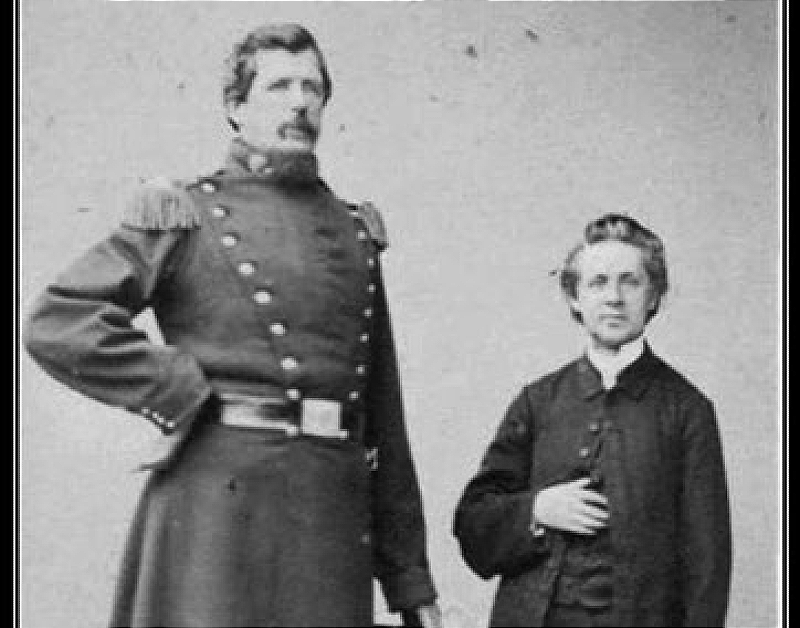
Born in 1825 on the Isle of Berneray in Scotland's Outer Hebrides, MacAskill immigrated to Nova Scotia with his family as a child and eventually settled in the fishing community of Englishtown. Standing an astonishing 7 feet 9 inches (2.36 metres) tall, he was recognized by the 1981 Guinness Book of World Records as the tallest non-pathological giant in recorded history, meaning his extraordinary height was not attributed to a medical condition. MacAskill's remarkable stature attracted the attention of legendary showman P. T. Barnum. MacAskill performed alongside General Tom Thumb, with the pair billed as "The Tallest and the Smallest." During their performances, the diminutive Tom Thumb would reportedly dance on MacAskill's enormous outstretched palm before being slipped into the giant's overcoat pocket. (via Atlas Obscura)
Hi everyone! Mathew Ingram here. I am able to continue writing this newsletter in part because of your financial help and support, which you can do either through my Patreon or by upgrading your subscription to a monthly contribution. I enjoy gathering all of these links and sharing them with you, but it does take time, and your support makes it possible for me to do that. I also write a weekly newsletter of technology analysis called The Torment Nexus.
What does the famous Sator square mean and where did it come from? No one knows
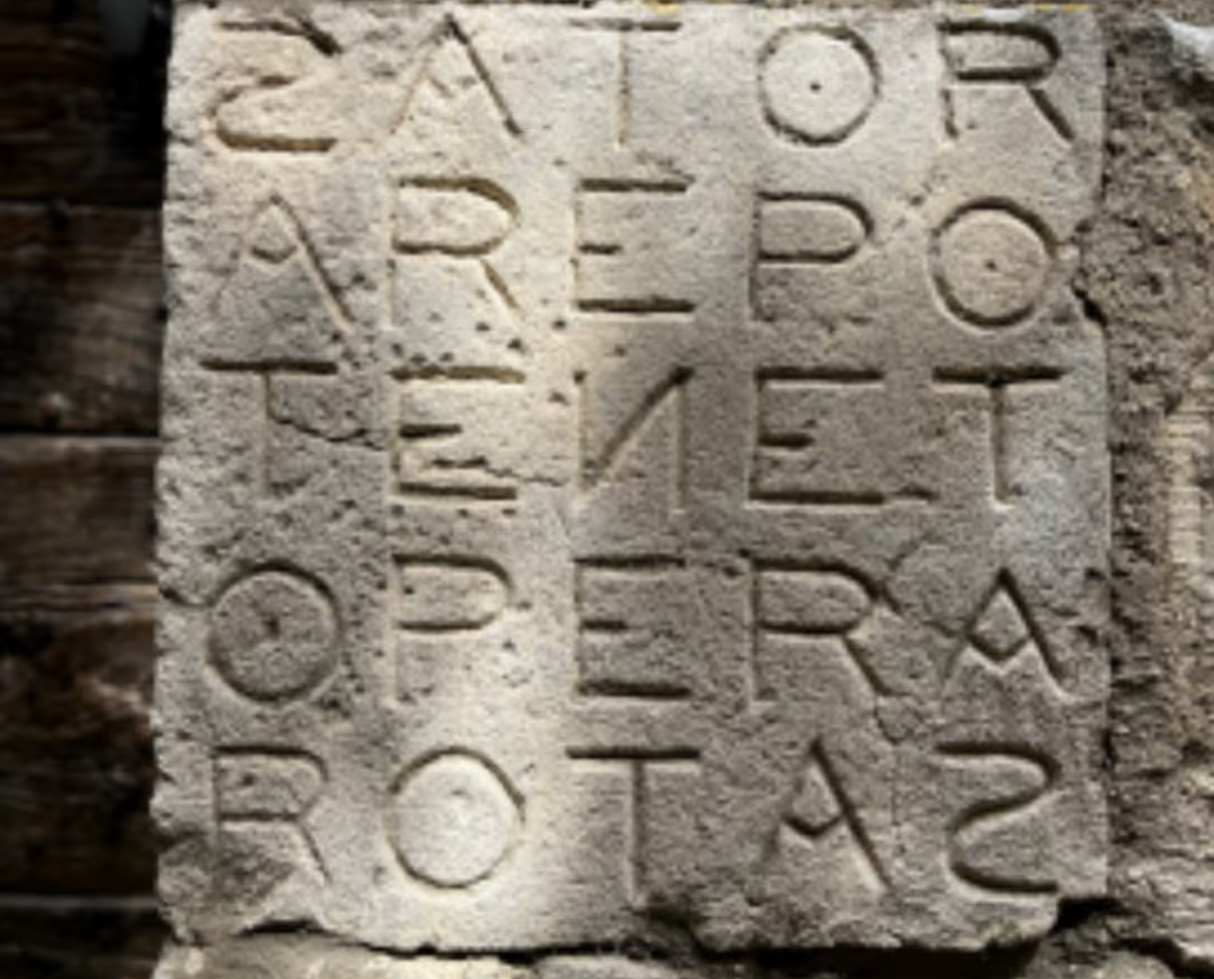
It might be perhaps the world’s oldest word puzzle, were it not for its association with assassinations, conflagrations and rabies. The Sator Square is a Latin, five-line palindrome, it can be read from left or right, upwards or downwards. The earliest ones occur at Roman sites throughout the empire and by the Middle Ages, they had spread across northern Europe and were used as magical symbols to cure, prevent, and sometimes play a role in all sorts of wickedness. The one pictured here is set in the doorway of a medieval house in France, carved to ward off evil spirits. In the 1920s and 30s, two Sator Squares were discovered within the ruins of Pompeii. Sator Squares spread throughout Europe during the Middle Ages and appear in the margins of Christian manuscripts, in important treatises on magic, and in a medical book as a cure for dog-bites. In 16th century Lyon, France, a person was reportedly cured of insanity after eating three crusts of bread with the Sator Square written on them. (via Tetragrammaton)
In the 1800s they had Christmas meat pies with birds and rabbits that weighed over 100 pounds
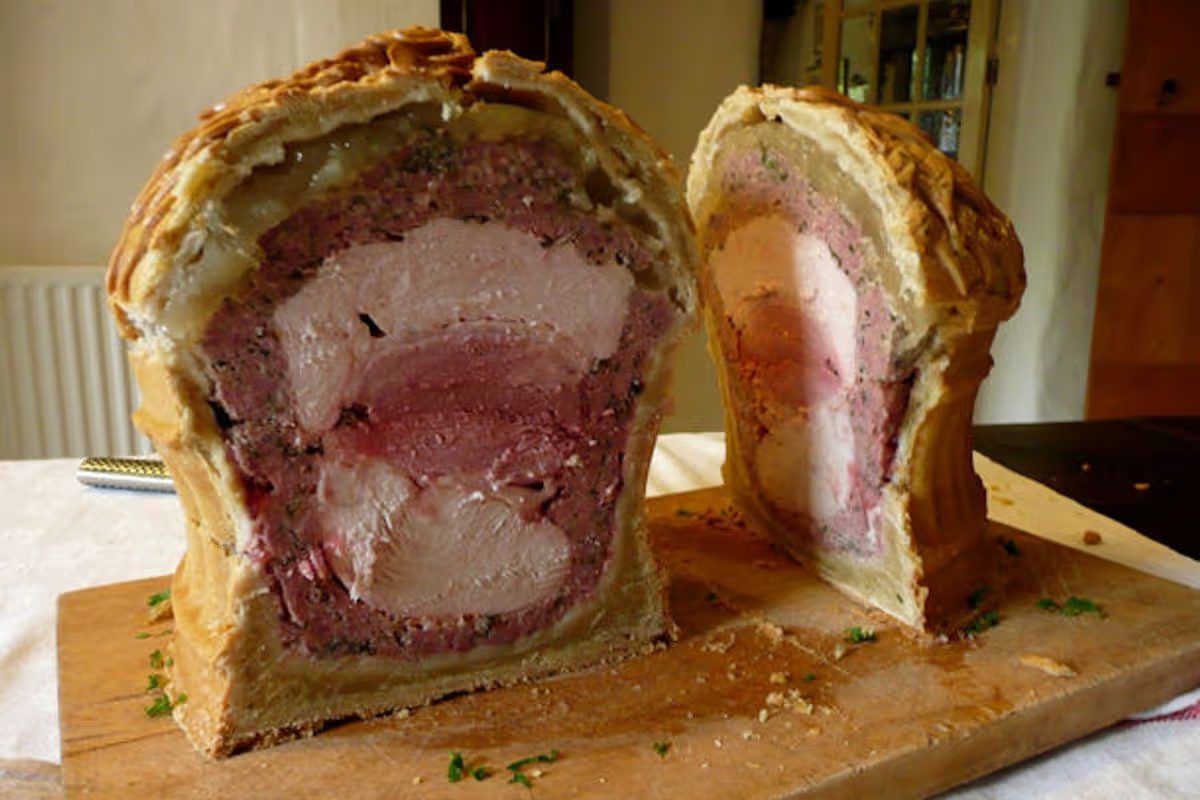
If you look at the end of Hannah’s recipe, she says the pyes were actually meant as Christmas gifts to friends and family living in towns and cities. To get there, they would have to travel by coach, and later train, so you can see why huge amounts pastry were required: protection. These huge pyes took a long time to cook, and the pastry would end up being scorched, but its job was to keep in the meat inside well protected, sterile and appealingly moist. Here’s a description of Earl Grosvenor’s Christmas Pye as reported in the Stamford Mercury on 15 January 1808: At Earl Grosvenor’s second dinner at Chester, as Mayor of that city, on Friday the 1st instant there was a large Christmas pie, which contained three geese, three turkies, seven hares, twelve partridges, a ham, and a leg of veal: the whole, when baked, weighed 154 lbs [70 kg].! This was not an isolated case: Queen Victoria had a Christmas Pye so large, it required four footmen to carry it into the dining room! (via Neil Cooks Grigson)
Bach's Prussian Sonata No. 5 performed on a harpsichord that was popular at the time

Acknowledgements: I find a lot of these links myself, but I also get some from other places that I rely on as "serendipity engines," such as The Morning News from Rosecrans Baldwin and Andrew Womack, Jodi Ettenberg's Curious About Everything, Dan Lewis's Now I Know, Robert Cottrell and Caroline Crampton's The Browser, Clive Thompson's Linkfest and Why Is This Interesting by Noah Brier and Colin Nagy. If you come across something you think should be included here, feel free to email me at mathew @ mathewingram dot com