He turned his theft into a piece of art about taking the money

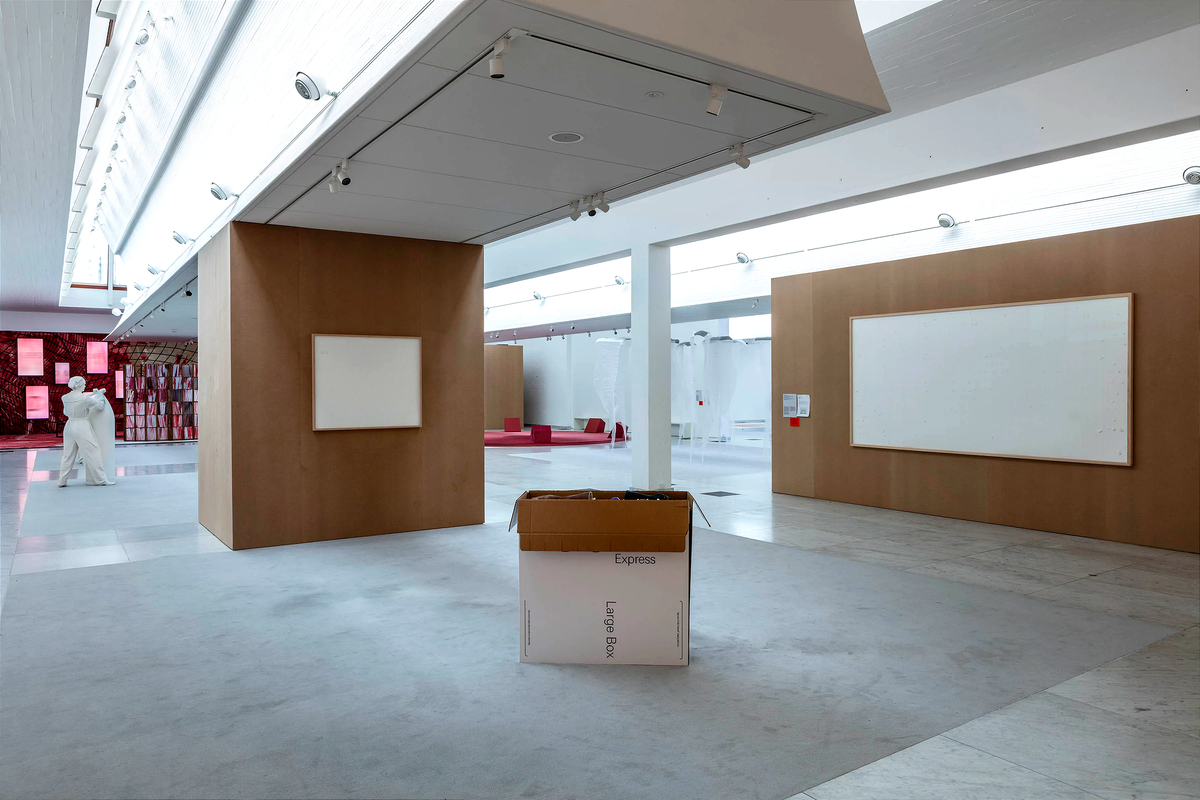
Take the Money and Run is a piece of artwork by Jens Haaning, commissioned by the Kunsten Museum of Modern Art Aalborg in Denmark in 2021. The artwork consists of an empty canvas, intended to act as a commentary on poor work wages. The Kunsten Museum commissioned Haaning to reproduce two of his earlier pieces in which he represented the annual wages of Austrian and Danish workers by framing piles of real kroner and euro bills, offering the artist with 532,549 Danish kroner worth of bills to use for the reproductions; instead, Haaning delivered two blank canvases to the museum. The museum demanded that Haaning return the money that was intended to be incorporated into the artwork, and in turn triggered a response from the artist: "This is only a piece of art if I don't return the money." (via Wikipedia)
The candy corn that you love (and lots of other things) are covered in bug secretions

I regret to inform you that by eating many classic Halloween candies, you are, to some extent, eating bugs. More precisely, you are eating a bug by-product that is in many cases listed on the package as “confectioner’s glaze.” This glaze is used on jelly beans, Milk Duds, Junior Mints, Whoppers, Lemonheads, and Sugar Babies, to name just a few candies. This sounds innocent enough, until you understand that the glaze is shellac — a shiny, moisture-blocking resin that’s the product of lac bugs’ lifelong work. As the female lac bug pierces a tree with her needlelike mouthparts and sucks the sap out, she secretes a goo, also called lac, from a gland on her abdomen to form a cocoon of sorts. Inside her lac coating — which hardens on contact with the air much like, well, a candy shell — she spends her life feeding and laying eggs, safe from predators. If all goes well, she completes her life cycle and dies in her resinous home. (via The Atlantic)
When London's graveyards overflowed they built a railway for the dead

The final journey for London’s dead, circa 1860, was a trip on the London Necropolis Railway. The train would take the corpse and the accompanying mourners out of the city to the sprawling Brookwood Cemetery. The deceased rode first, second, or third class. Brookwood Cemetery was established in 1854 by the London Necropolis and National Mausoleum Company. Founded in response to a crisis of overcrowding in London’s churchyards, it was intended to hold all of London’s dead, for the rest of time — the vast majority of them in unmarked paupers’ graves. At the time, gravediggers forced as many bodies into one grave as they could, sometimes breaking apart the cadavers with pickaxes in order to make them fit. While they were at it, they could make a little extra cash by stripping down the old caskets to resell the handles and nails. Graves were reopened so often that the grass had no time to grow over them. (via JSTOR Daily)
Hi everyone! Mathew Ingram here. I am able to continue writing this newsletter in part because of your financial help and support, which you can do either through my Patreon or by upgrading your subscription to a monthly contribution. I enjoy gathering all of these links and sharing them with you, but it does take time, and your support makes it possible for me to do that. I also write a weekly newsletter of technology analysis called The Torment Nexus.
Criminal forensic evidence like blood-spatter analysis is mostly bullshit
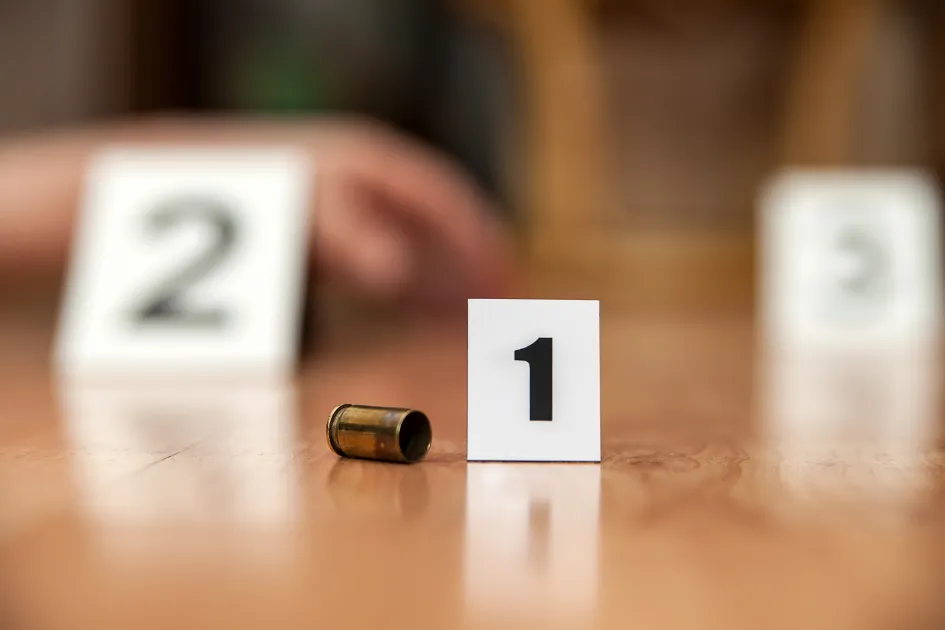
Sara Gordon, a law professor from the University of British Columbia, recently published a trio of deep dives into a few common techniques — which often go unquestioned by judges—and found them quite lacking. Consider blood pattern analysis (BPA) for example. While it has the trappings of a scientific field that draws on physics, mathematics, and fluid dynamics, the genesis of modern blood pattern analysis lies in the experimentation of a Corning Glass Works chemist working in his basement. That doesn’t necessarily mean it’s not a legitimate mode of scientific inquiry, but a comprehensive 2009 report from the National Academy of Sciences found that “the uncertainties associated with bloodstain pattern analysis are enormous.” It also concluded that the opinions of BPA experts—who Gordon notes aren’t subject to any peer or technical review—tend to be “more subjective than scientific.” (via Nautilus)
Rose-colored rock found in the Sahara turns out to be a 4-billion-year old piece of Mars
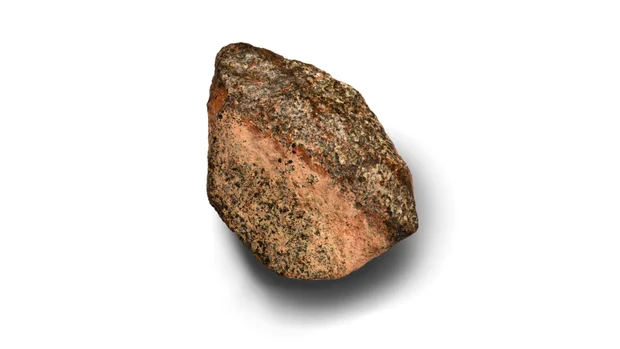
A rose-colored meteorite found in the Sahara Desert in 2022 has been identified as a 4.1-billion-year-old chunk of the Red Planet, a NASA study determined. The nearly two-pound meteorite was found in Mali. It was named Teghaza 001, after the salt plain where it was discovered. Study of the meteorite allowed NASA scientists to determine it was one of roughly 435 from Mars. Meteorites can be verified as having been part of Mars by comparing their chemical and mineral makeup to samples and data collected by NASA's Martian missions. Age-dating of the meteorite led researchers to conclude it was about 4.1 billion years old, making it one of the three most ancient Martian meteorites found on Earth, NASA said. That provides "a rare snapshot" of the planet's crust and formation. One of the paper's reviewers called it a Rosetta Stone for Mars. (via CBS News)
At Montreal's Just For Laughs festival Patrick Stewart talked about the eulogy he wanted
Acknowledgements: I find a lot of these links myself, but I also get some from other places that I rely on as "serendipity engines," such as The Morning News from Rosecrans Baldwin and Andrew Womack, Jodi Ettenberg's Curious About Everything, Dan Lewis's Now I Know, Robert Cottrell and Caroline Crampton's The Browser, Clive Thompson's Linkfest and Why Is This Interesting by Noah Brier and Colin Nagy. If you come across something you think should be included here, feel free to email me at mathew @ mathewingram dot com