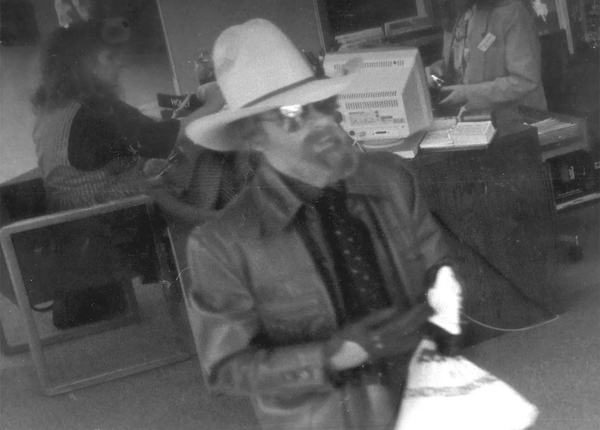
A 97-year-old died at his birthday party dancing to "Stayin' Alive"


A 97-year-old California man pulled off a 'dramatic exit', passing away at his own birthday party just moments after tearing up the dance floor to the Bee Gees' “Stayin' Alive". Los Angeles-based baker Eden Malinoff took to social media to share the remarkable story of Vito, her neighbour, who went out dancing, partying and enjoying after throwing a Halloween-themed 97th birthday bash last week. In the now viral clip, Vito can be seen clapping, dancing and smiling while dressed in a black button-down shirt and dress pants as the popular '70s disco classic played in the background. 24-year-old Malinoff said she baked a red wine chocolate cake for Vito, who was always full of energy and life, despite his advanced age. She said even she could not keep up with him when it came to celebrating life. However, Vito suddenly died at the party, shortly after the guests had sung "Happy birthday" to him. Malinoff said Vito was not intoxicated. (via NDTV)
A Norwegian salmon farm uses 3,500 laser-firing underwater robots to kill sea lice

Submarine AI laser robots have been a surefire success for Norwegian salmon farmers, according to the most recent annual report from the aptly named Stingray Marine Solutions. The Oslo, Norway-based firm now has over 3,500 units deployed around salmon pens along the Norwegian coast, protecting over 112 million fish. Stingray deployments are up by about 1,000 over the last year. This operation has grown to become one of the largest commercial AI deployments in Scandinavia. These high-tech AI-enhanced submarines protect 20-25% of farmed salmon in the country, according to the latest figures. Using this high-tech AI laser solution to ‘optically delouse’ the salmon means fish don’t have to be passed through harsh chemical baths to prevent infestations of these tiny parasitic crustaceans. The result is improved salmon growth and welfare, and consistently cleaner fish exhibit reduced mortality. (via Tom's Hardware)
Earth’s rocks have a missing layer spanning up to a billion years and we finally know where it went

Imagine opening a history book and finding several chapters torn out. This was what geologists looking into the rock records of Earth’s past discovered on several continents in the 1870s. They dubbed it the Great Unconformity. Where layers of rock often stack up in a steady sequence from oldest to youngest, in many places around the world there is a gap of hundreds of millions of years. For 150 years, nobody has known what erased those missing chapters. In new research published today in Nature, we finally provide an explanation: deep processes inside Earth lifted some continents high above the sea, where their surfaces were scoured down by the grinding movement of enormous sheets of ice. Layers of rock often stack up in chronological order, with the oldest at the bottom and the youngest at the top. Yet in some places, such as the Grand Canyon, you can touch rock layers from two different ages, hundreds of millions of years apart. (via The Conversation)
Hi everyone! Mathew Ingram here. I am able to continue writing this newsletter in part because of your financial help and support, which you can do either through my Patreon or by upgrading your subscription to a monthly contribution. I enjoy gathering all of these links and sharing them with you, but it does take time, and your support makes it possible for me to do that. I also write a weekly newsletter of technology analysis called The Torment Nexus.
He was a movie producer but he became famous for winning millions by hacking roulette

Long before he became known as “the man who cracked roulette,” he enjoyed a successful career as a music producer in Spain. He contributed to the popularity of Spanish rock and flamenco, discovering artists and producing albums that became cult classics. At one festival in Buenos Aires, he presented eleven films, all shot within a single year. But the chapter that forever changed his legacy and made him a legend was his adventure in the early 1990s. During these years, he developed a unique method that allowed him and his family to beat roulette across multiple casinos in Europe and beyond. Gonzalo García-Pelayo understood that roulette wheels develop biases. These imperfections, caused by wear and tear or differences in balance, may cause certain numbers to appear slightly more often than others over the long term. Most casinos assume randomness will smooth out such irregularities, but Gonzalo believed that with enough observation and the right analytical tools, patterns could be played. (via Poker Stars)
The handheld multitool seems new but there are versions that go back to the Roman Empire
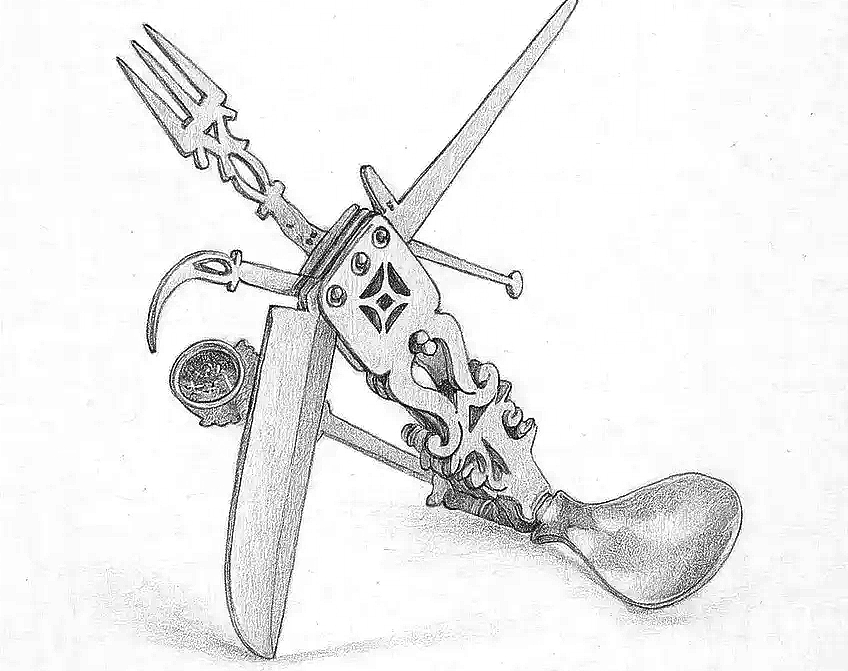
Historically speaking, as functional artifacts, those spikey, hingey, ultra-compact Leatherman “survival tools” are intensely eccentric little machines. But the idea of a multitool is ancient. Aristotle, disciple of Plato, mentions a multi-use “Delphian knife.” In Roman times, sets of domestic tools, for kitchen, bath and boudoir, were gathered together on metal rings. Nobody knows who made the first one. Today, there are four different known models of this ancient, weird device. These four multitools are artifacts from the Roman Empire circa AD 100–200. They are severely anomalous. There’s not a whisper about them in any historical document. Held in the hand, gazed at, it looks weird and it acts weird. Its decor is weird and its engineering is weird. It’s the weirdest multitool in the world. This device is so anachronistic, and so peculiar, that it ranks as a weird sister of the extremely weird “Antikythera Mechanism.” (via Bruce Sterling)
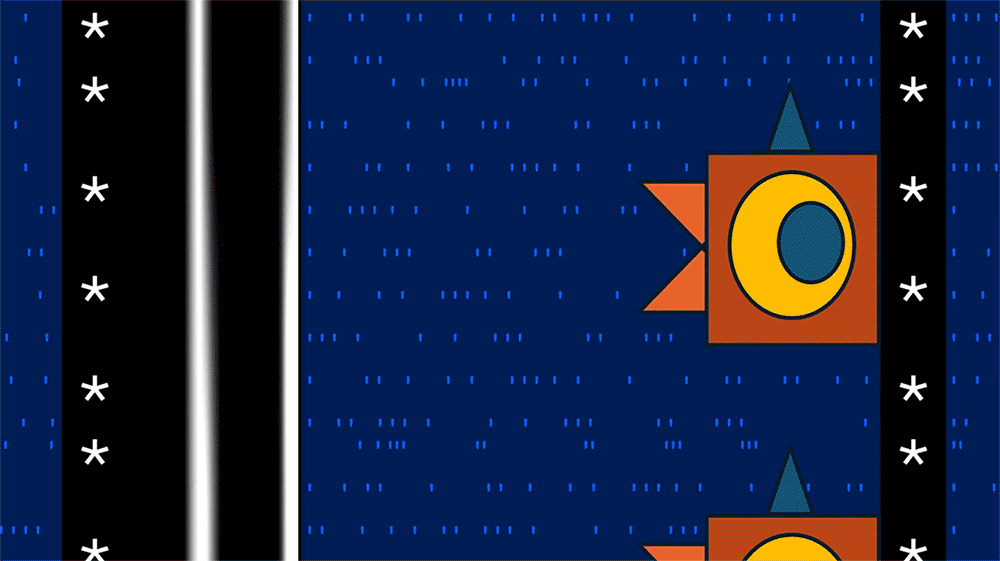
Watch a movie that someone made in Excel
Acknowledgements: I find a lot of these links myself, but I also get some from other places that I rely on as "serendipity engines," such as The Morning News from Rosecrans Baldwin and Andrew Womack, Jodi Ettenberg's Curious About Everything, Dan Lewis's Now I Know, Robert Cottrell and Caroline Crampton's The Browser, Clive Thompson's Linkfest and Why Is This Interesting by Noah Brier and Colin Nagy. If you come across something you think should be included here, feel free to email me at mathew @ mathewingram dot com