He was held hostage for 977 days but he forgave his captors


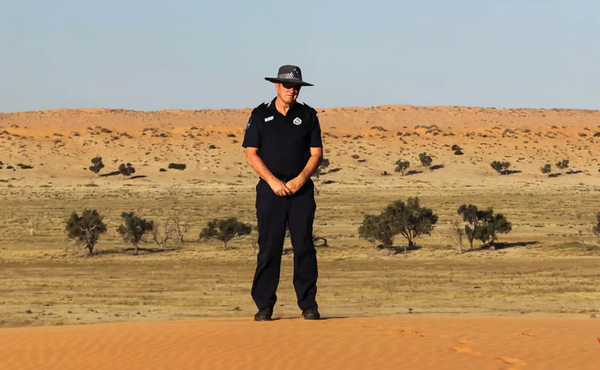
I knew Mohamed Tahlil as a gentle pirate who oversaw a team of guards during the first months of my life as a hostage in 2012. I had travelled to Somalia to report on the outbreak of modern piracy off the coast. On the 10th day, along a dusty road near Galkayo, in the centre of the country, I was kidnapped by pirates. For the next two and a half years, I was a hostage. I spent most of my time on a thin, sweat-soaked foam mattress on the floor of a dusty room. The dim concrete prison houses changed, but the filth and the circumstances didn’t. Sometimes my captors moved me into the Somali savannah – where we camped in the open and slept on the ground – and for a six-month stretch, I was held on a hijacked tuna vessel, where I joined 28 fishers from east Asia who had been captured about three weeks before I was placed on board. During my years in captivity, I was usually kept alone. I was beaten on multiple occasions. I saw a friend of mine being tortured. I was frightened most of the time. (via The Guardian)
History talks of a powerful king who helped conquer England but it was actually a woman
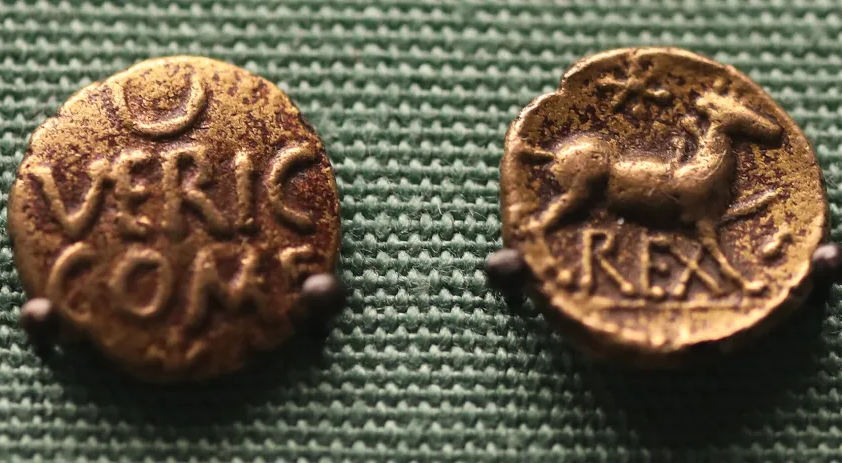
In the early first century, a mighty king ruled the Atrebates tribe located in southern Britain: King Verica, son of Commius. As a client king of the Roman Empire, King Verica had a powerful ally in Emperor Claudius, who, in turn, enjoyed a foothold on the island. So when King Verica was exiled around 40 CE, it offered a pretext for Claudius to invade Britain (according to writings by the Roman historian Cassius Dio), sparking a campaign that would ultimately lead to the Roman conquest of Britain. There’s just one problem with Dio’s story. King Verica wasn’t the son of Commius, she was the daughter of Commius—Verica was a female king. Or at least that’s the case archaeologist Miles Russell of Bournemouth University makes in a newly published book Caratacus: Great King of Britain. “Verica is assumed to have been male because of the patriarchal mindset of 19th century, classical historians,” Russell explained in a statement. “Verica wasn’t only critical to the special relationship between Britain and Rome in the early first century AD but was indisputably female.” (via Nautilus)
One of the few remaining Shakers fell in love with a reporter writing about him and left
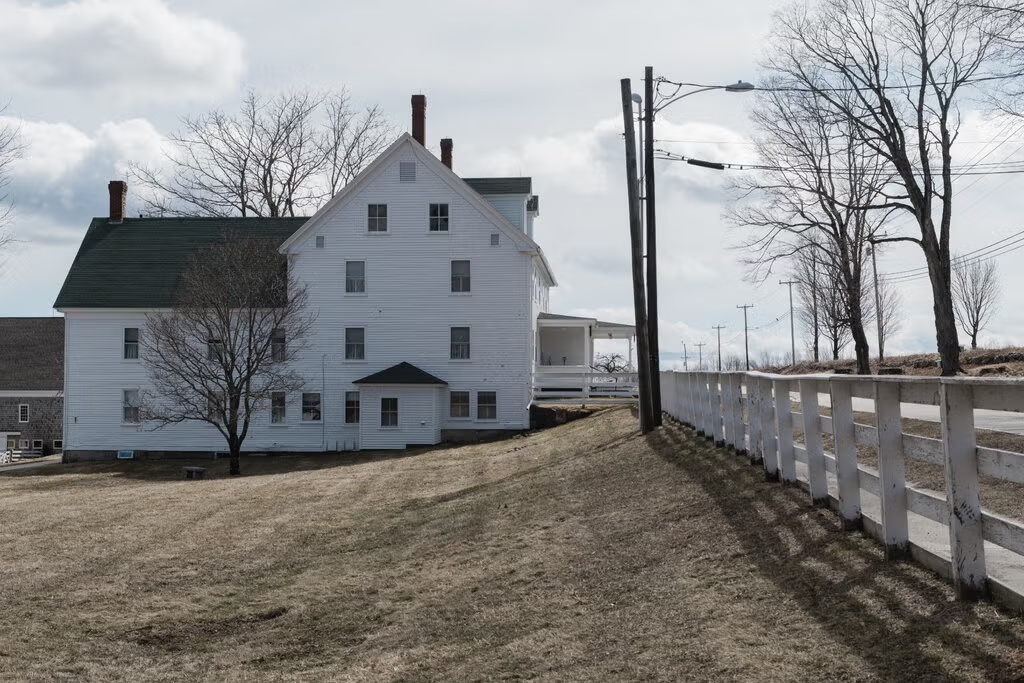
Sister June Carpenter, a gentle librarian and one of three practicing members of the last active Shaker group in America, died on Nov. 3. She was 88. Her death was announced by her community in a social media post that said she had been struggling with health and mobility issues, but did not provide further details. At Sabbathday Lake Shaker Village in New Gloucester, Maine, there are 18 lovely brick and clapboard buildings bounded roadside by a white picket fence, set on a lake and 1,800 acres of farmland, woods and wetlands. But there aren’t legions of Shakers in residence. At this point, there are only two: Brother Arnold Hadd, 70, and Sister April Baxter, who joined last year and is around 60. Most inquiries from the news media are politely declined because of reporters’ tendency to focus on the dwindling population. In one instance, media coverage may have exacerbated the situation. In 2006, after The Boston Globe published a story about the community headlined “The Last Man Standing,” one of its members, Brother Wayne Smith, fell in love with the reporter and left. (via the NYT)
Hi everyone! Mathew Ingram here. I am able to continue writing this newsletter in part because of your financial help and support, which you can do either through my Patreon or by upgrading your subscription to a monthly contribution. I enjoy gathering all of these links and sharing them with you, but it does take time, and your support makes it possible for me to do that. I also write a weekly newsletter of technology analysis called The Torment Nexus.
A French nuclear physicist was convinced he was the rightful heir to the throne of Sark so he invaded
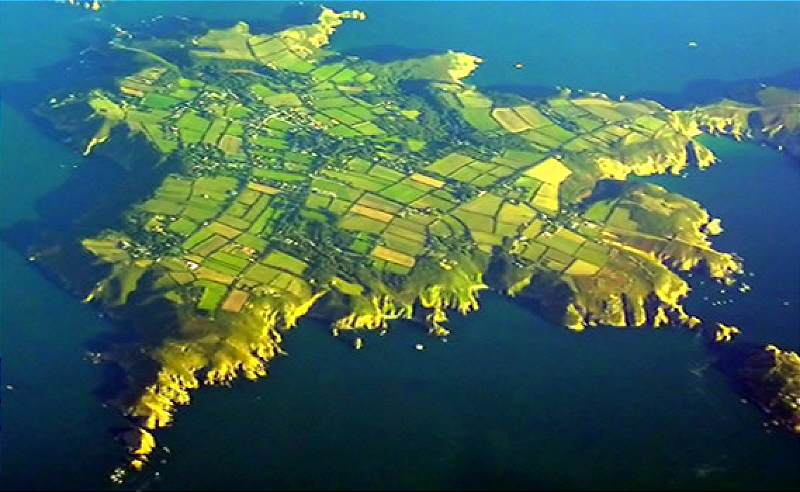
Frenchman Andre Gardes, an unemployed nuclear physicist, having convinced himself that he was the rightful heir and “Seigneur” of Sark, resolved to take action. Accordingly in August 1990 he decided to stage an invasion to forcefully set himself up as the ruler of Sark’s 610 inhabitants. Unable to get anyone to follow him, he concluded that a one man force would suffice anyway – what could possibly go wrong! Being a civilised chap, Gardes duly arrived the night before the invasion and proceeded to post two notices of his impending takeover which was to occur the following day at the stroke of noon. The local volunteer Constable, the only law enforcement on the island, being informed of the invasion thanks to these notices, decided to take the threat seriously. On the morning of the invasion, Constable Perrée began to plan the island’s defense, which was a two stage scheme. The following day Gardes started a solo foot patrol in front of the Seigneurie in full battle-dress with semi-automatic weapon in hand. At this point the full might of Sark’s defences swung smoothly into action. (via Guernsey Donkey)
She spent a night in Transylvania's haunted forest
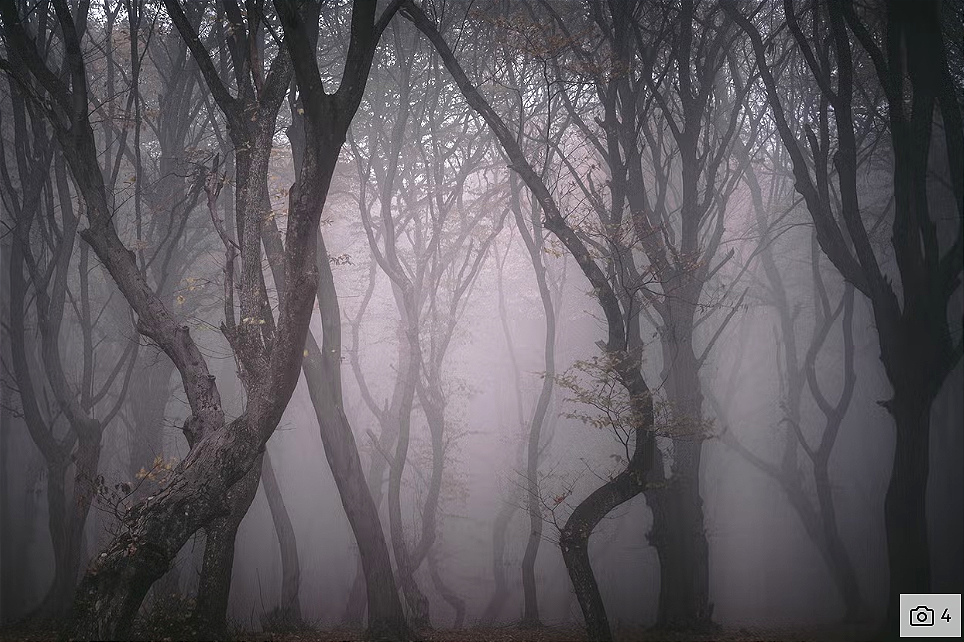
We are in The Clearing. The trees stop in a uniform oval where nothing grows and where, since official records began, nothing has grown. “Once when I came here,” says Alex, our guide, “I found 60 people from Bucharest trying to open a gate into another dimension.” This is Hoia Baciu, just outside Cluj-Napoca, Romania’s second city in the depths of Transylvania. It has been called the creepiest forest in the world. And The Clearing is, allegedly, the creepiest place in the forest. It defies the investigations of soil scientists and attracts Romanian witches, sword-wielding Americans, and people who try to cleanse the forest of evil through the medium of yoga. In the English-speaking world, the words “Transylvania” and “Halloween” conjure up a pre-Twilight Edward Cullen scaling the walls of his castle. But tourists coming to Romania for a Dracula experience are likely to leave disappointed. Romania is resistant to the Dracula legend. (via The Independent)
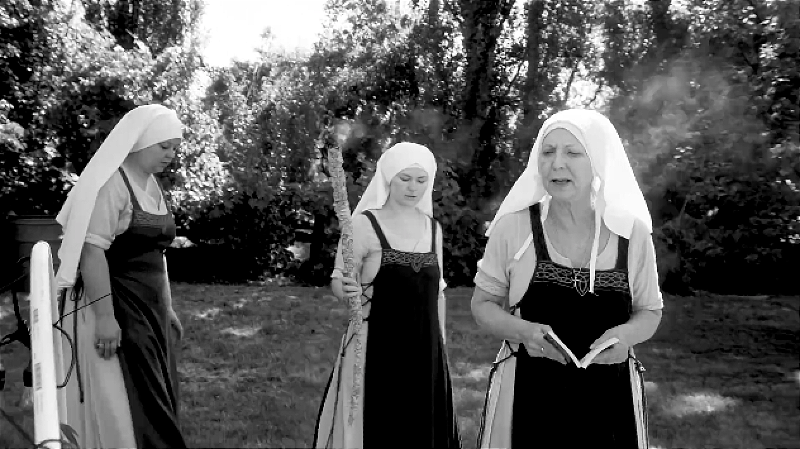
Meet the weed nuns of California's Central Valley
Acknowledgements: I find a lot of these links myself, but I also get some from other places that I rely on as "serendipity engines," such as The Morning News from Rosecrans Baldwin and Andrew Womack, Jodi Ettenberg's Curious About Everything, Dan Lewis's Now I Know, Robert Cottrell and Caroline Crampton's The Browser, Clive Thompson's Linkfest and Why Is This Interesting by Noah Brier and Colin Nagy. If you come across something you think should be included here, feel free to email me at mathew @ mathewingram dot com