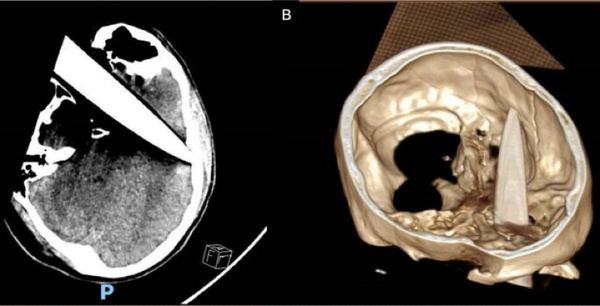
Before writing James and the Giant Peach he was a spy


British author Roald Dahl had enough adventures to last several lifetimes before he found his calling writing children's books. It all started during World War II when Dahl left his oil industry job in Tanzania to enlist in the Royal Air Force in 1939. Despite measuring well over six feet, which made it difficult for him to fit into a cockpit, he became a fighter pilot. But on his first excursion he crashed in the Libyan desert. Suffering from increasingly painful headaches and occasional blackouts linked to his earlier injuries, he was deemed unfit to fly. Dahl could be charming, which won him invitations to dinners and cocktail parties. When Dahl was invited to visit Hyde Park with President Roosevelt and First Lady Eleanor Roosevelt, he took notes. Among his other notable friends and acquaintances were Vice President Henry Wallace and then-Senator Harry Truman. Dahl also had numerous affairs, including with Clare Boothe Luce. (via Biography.com)
The longest surviving Roman inscription is a 2,000-word homage from a man to his wife
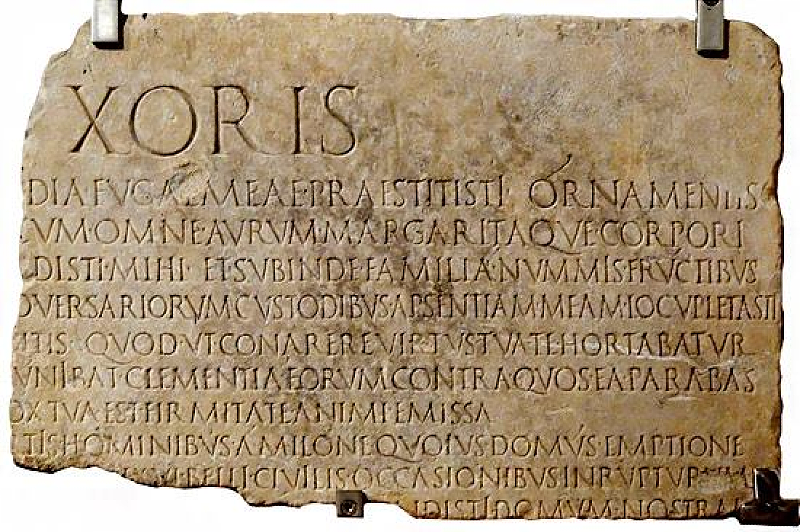
The longest Roman inscription that remains visible is a funerary eulogy (laudatio funebris) that was carved into marble around the late 1st century BCE by an elite Roman husband mourning his wife of 40 years, Originally in two long columns, the first of which is lost, but most of the second survives in four fragments. The speech highlights how the wife displayed courage and loyalty during the Triumviral proscriptions of the late Roman Republic: She avenged the murder of her parents after they were killed in the chaos; she legally defended her family's property and her father's will against coercion; she sent money, jewelry, and provisions to her husband while he was in political exile; she personally interceded with powerful figures like Marcus Lepidus and Caesar Augustus to secure her husband's pardon and safe return, and she defended their home in Rome when a gang attempted to plunder it. (via Oxford Academic)
When they are in danger some snakes turn themselves into a cartwheel and roll away

When danger strikes, you might fight, flee or freeze. But if you were a dwarf reed snake, your first instinct could be to roll.Dwarf reed snakes, tiny snakes native to Southeast Asia, can launch into a series of cartwheel-like movements to spin out of sight when predators approach. A team of scientists first shared their observations of this unusual defense mechanism in 2023, but until recently, it was unclear how the snakes could move that way without veering off their course.Now, a new team of researchers has analyzed the mechanics of the movement, and found that when rolling, the snakes can travel about four times faster than when slithering. To observe the snakes, Dr. Kojima and his team built a racetrack approximately 2.2 meters wide lined with high-speed cameras to capture the cartwheeling from multiple angles. Then, they gently tapped the participating snakes to startle them into rolling away. (via the NYT)
Hi everyone! Mathew Ingram here. I am able to continue writing this newsletter in part because of your financial help and support, which you can do either through my Patreon or by upgrading your subscription to a monthly contribution. I enjoy gathering all of these links and sharing them with you, but it does take time, and your support makes it possible for me to do that. I also write a weekly newsletter of technology analysis called The Torment Nexus.
Stagecoach Mary was a hard-drinking and quick-shooting Black mail carrier in the 1890s
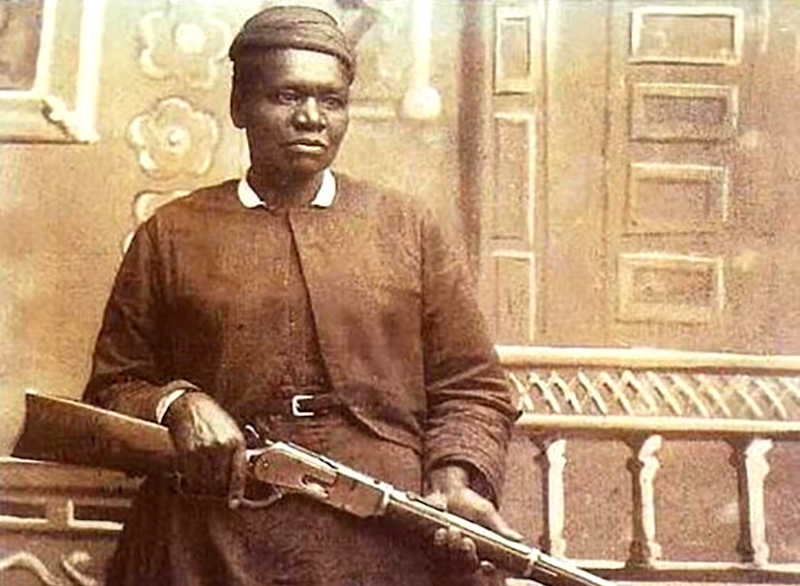
Bandits beware: In 1890s Montana, would-be mail thieves didn’t stand a chance against Stagecoach Mary. The hard-drinking, quick-shooting mail carrier sported two guns, men’s clothing and a bad attitude. As the first African American woman to carry mail, she stood out on the trail—and became a Wild West legend. Rumor had it that she’d fended off an angry pack of wolves with her rifle, had “the temperament of a grizzly bear,” and was not above a gunfight. But how much of Stagecoach Mary’s story is myth? Born Mary Fields in around 1832, Fields was born into slavery, and like many other enslaved people, her exact date of birth is not known. Even the place of her birth is questionable, though historians have pinpointed Hickman County, Tennessee as the most likely location. At the time, enslaved people were treated like pieces of a property; their numbers were recorded in record books, their names were not. (via History.com)
Pringles survive inside the can because the shape of each chip is a hyperbolic paraboloid
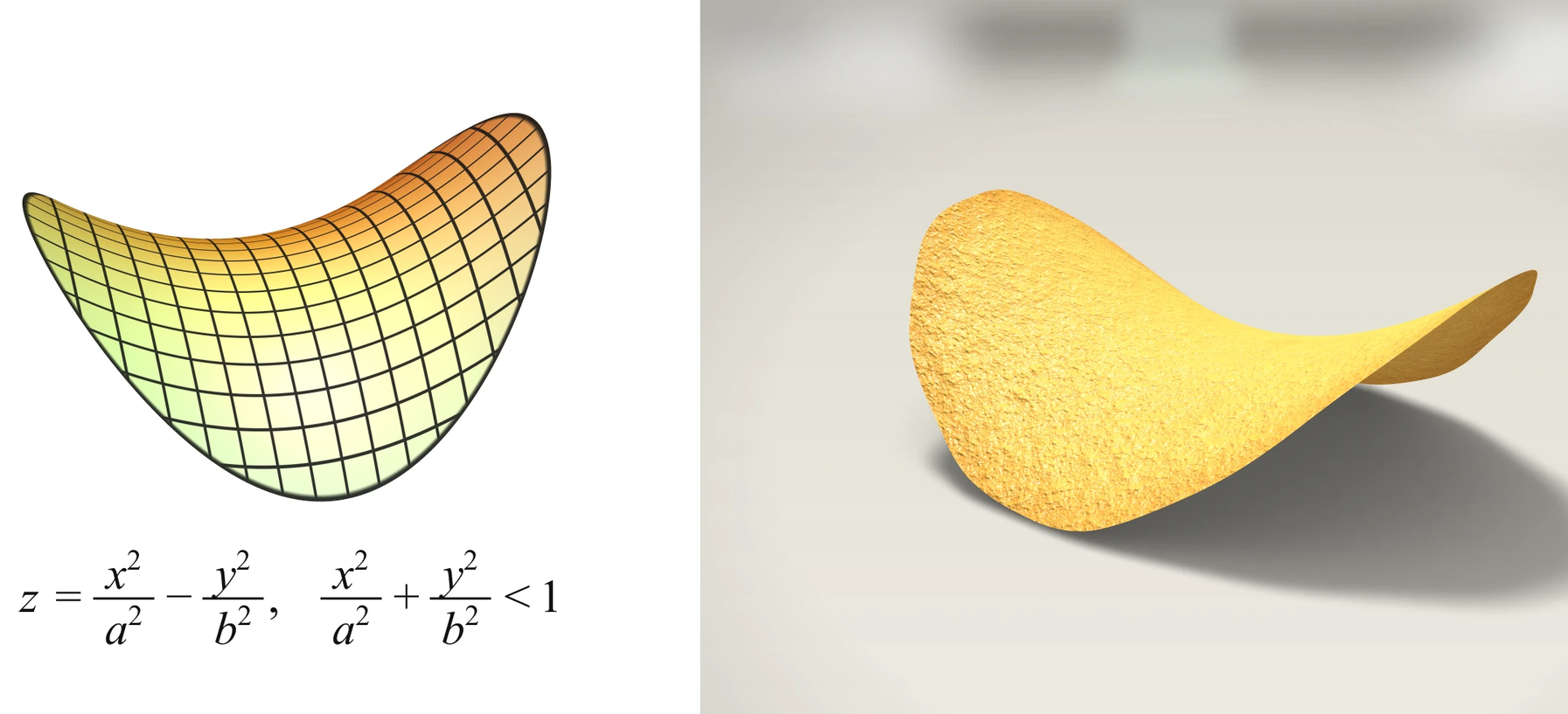
In the 1960s, Procter & Gamble chemist Fredric J. Baur was handed a brief that sounds mundane: make a chip that doesn't arrive broken. Ordinary chips — sliced from whole potatoes, fried, tumbled into bags with a cushion of gas — reached the shelf as a mix of whole chips, halves and crumbs, with plenty of air in between. The trouble is that every sliced chip has its own accidental shape. In a bag, chips touch each other at a handful of points, in random orientations, and every bump in the truck concentrates load on those points. No packing scheme can fix that, because no two chips are alike. Baur's answer was not a tougher chip. It was a chip that is the same every time — pressed from dough into one precise curved shape — so that the chips could be stacked like spoons inside a rigid tube. The shape that makes this work was already well known to architects and mathematicians. It is called a hyperbolic paraboloid. (via Abakcus)
While diving she got a video clip of multiple humpback whales leaping

Acknowledgements: I find a lot of these links myself, but I also get some from other places that I rely on as "serendipity engines," such as The Morning News from Rosecrans Baldwin and Andrew Womack, Jodi Ettenberg's Curious About Everything, Dan Lewis's Now I Know, Robert Cottrell and Caroline Crampton's The Browser, Clive Thompson's Linkfest and Why Is This Interesting by Noah Brier and Colin Nagy. If you come across something you think should be included here, feel free to email me at mathew @ mathewingram dot com