He was the only cop in an area the size of the entire United Kingdom

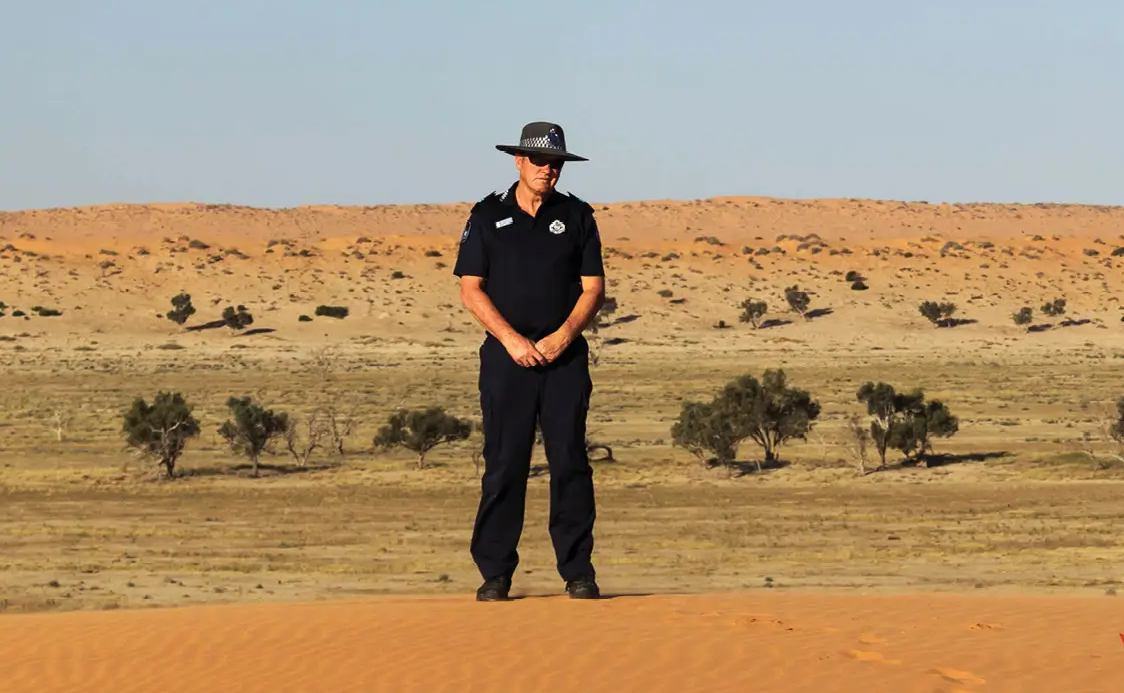
The day before the biggest annual social event on his calendar, Senior Constable and Officer-in-Charge Neale McShane leans against the front desk of the Birdsville Police Station, holding court as a stream of incoming tourists drop by. First, two fresh-faced, off-duty police officers from Emerald, a 16-hour drive northeast, introduce themselves and shake his hand. The Birdsville posting is a one-officer station — a relative rarity in a profession built on partnerships — and McShane has lived at the neighboring house for almost a decade, through dust storms and floods, through joy and tedium, through good health and bad. On Nov. 21, the day of his 60th birthday, his 40-year career will end, per conditions of the Queensland Police Service, which mandate compulsory retirement at this age. He will retire as the longest-serving officer at Australia’s most isolated outpost, having spent 10 years policing a jurisdiction that covers about 93,000 square miles — roughly equivalent to the entirety of the United Kingdom being nuked, then being in charge of a few dozen survivors. (via BuzzFeed News)
The man who runs Google's DeepMind AI designed a popular MS-DOS game when he was 16
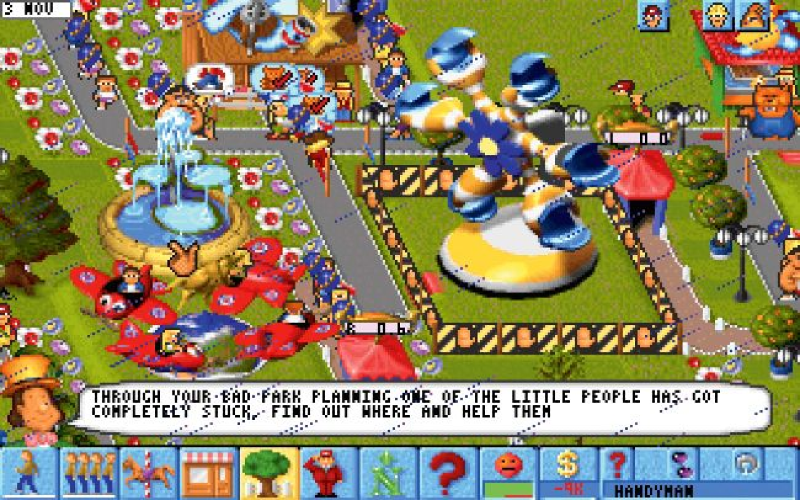
Bullfrog Productions is a beloved name, not only among us retro gaming enthusiasts: it’s a studio whose creativity, novelty and British approach to humour will forever live on aside the very best that gaming has to offer. And what’s interesting is the variety on show: there’s a ‘favourite’ Bullfrog game for everyone, from the RTS of Populous or the dark future of Syndicate to its comedic god games Dungeon Keeper or Theme Hospital. “I was pretty young at the time. I started working at Bullfrog when I was 16, and was immediately working on Theme Park actually,” says Demis Hassabis, the brain behind Theme Park and the simulation that powered it. Considered to be something of a child prodigy, Demis had two main passions: chess and playing and programming videogames. That all began in earnest with Theme Park. “Funnily enough I wasn’t sure I wanted to work on it,” he laughs, “because I was keen to make a game like Syndicate, Populous, Powermonger and the other sort of earlier games." (via PocketMags)
Urchin fisherman survives five-hour swim in Santa Barbara channel after he falls overboard
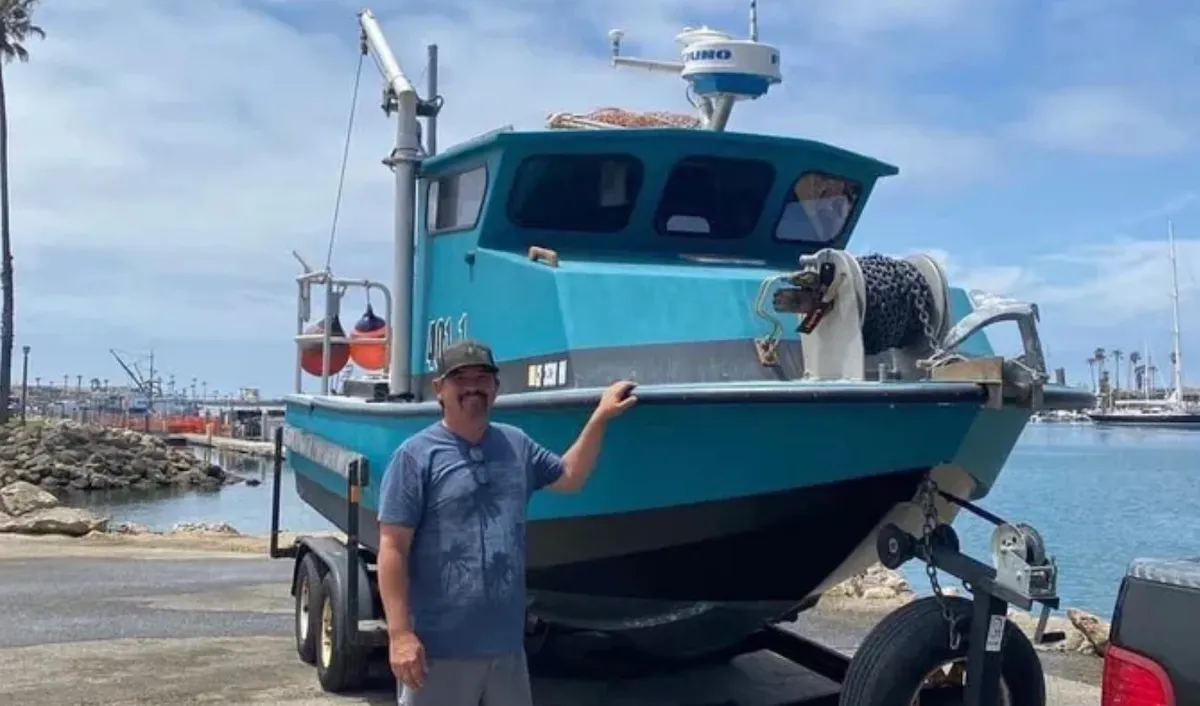
The waters of the Santa Barbara Channel got choppy and sloppy with the winds last week, and when Scott Thompson fell overboard near Santa Cruz Island, he surfaced to see his urchin boat — the Miss Grace — motoring away from him. He’d left it in gear as he’d stepped to the side of the boat for a pee, but the chop against the starboard side made him lose his footing on something slippery. The sun was setting, and his first impulse was to chase after the boat, but the current was against him. Instead, on a moonless night, wearing only a T-shirt and a pair of shorts, Thompson swam for the lights of the nearest platform he could see. He headed for what he thought was Platform Gina, trying to encourage himself and to push away negative thoughts as he kicked and pulled through 57-degree water. “At some point a little seal showed up and started bobbing around checking me out, and I was so happy to see another living creature I just started to talk to it. I even asked him for a lift at one point.” (via The Independent)
Hi everyone! Mathew Ingram here. I am able to continue writing this newsletter in part because of your financial help and support, which you can do either through my Patreon or by upgrading your subscription to a monthly contribution. I enjoy gathering all of these links and sharing them with you, but it does take time, and your support makes it possible for me to do that. I also write a weekly newsletter of technology analysis called The Torment Nexus.
After brain surgery he developed a complication that transposed people's eyes onto his cat
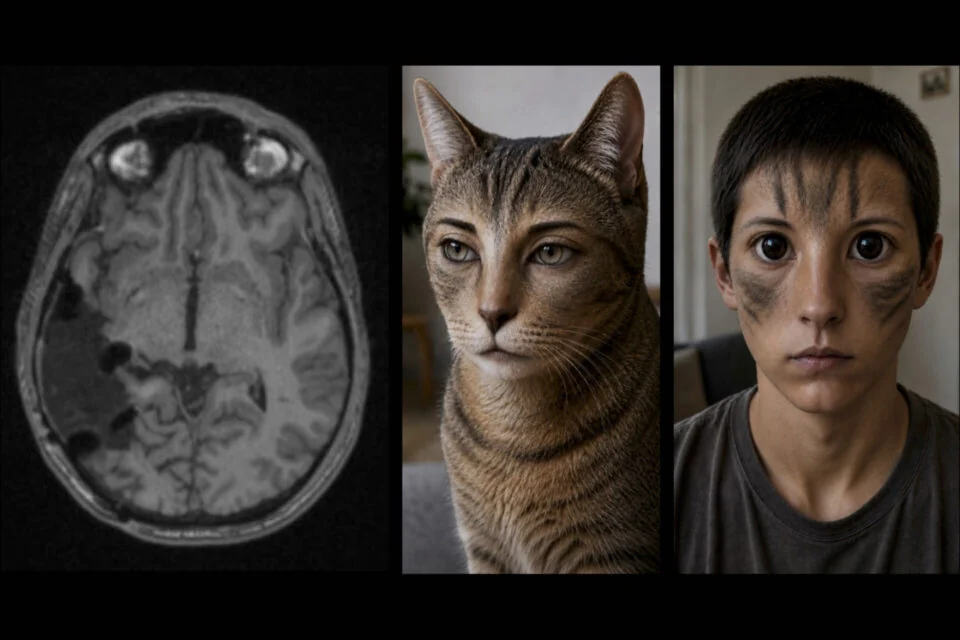
Researchers at Dartmouth College and Brigham and Women’s Hospital have detailed a 28-year-old man with a peculiar condition that causes him to see his cat’s eyes on people and the other way around. The man, identified only as Karl, developed the condition after he underwent brain surgery. Though these sorts of cases are incredibly rare, they illustrate the unique neural circuitry that underlies our facial perception, the researchers said. Prosopometamorphopsia, or PMO for short, is rare in general, with only about 75 cases ever recorded in the medical literature. Duchaine’s team has personally documented about 250 people with PMO who have contacted the lab. But Karl’s version is even stranger than most. Two years ago, Karl needed surgery to treat a case of arteriovenous malformation, an abnormal tangle of veins and arteries that can raise the risk of a brain bleed; the surgery removed part of his right temporal lobe. Karl then developed palinopsia, a symptom that causes an earlier image, object, or light to linger or reappear in a person’s field of vision after it’s no longer there. (via Gizmodo)
This British test pilot flew a record 487 different types of aircraft during his career
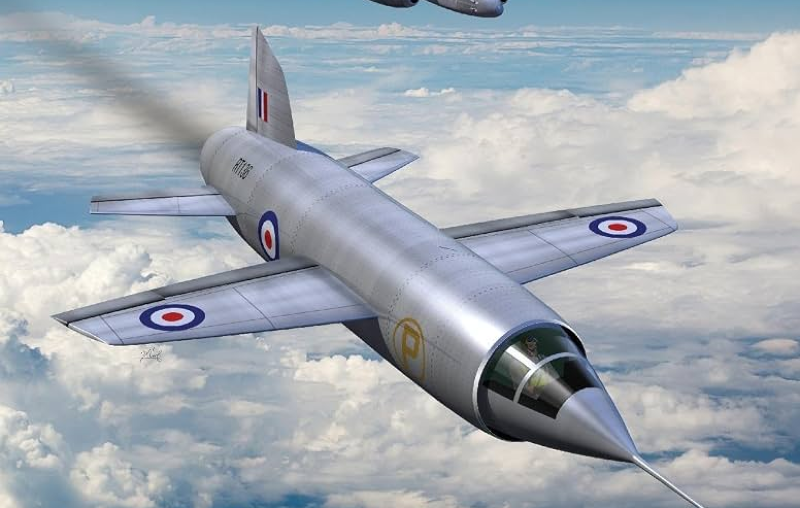
Captain Eric Melrose "Winkle" Brown was a British Royal Navy officer and test pilot who flew 487 types of aircraft, more than anyone else in history. Brown held the world record for the most aircraft carrier deck take-offs and landings performed (2,271 and 2,407 respectively) and achieved several "firsts" in naval aviation, including the first landing on an aircraft carrier of a jet aircraft. Brown flew almost every category of Royal Navy and Royal Air Force aircraft: glider, fighter, bomber, airliner, amphibian, flying boat and helicopter. During the Second World War, he flew many types of captured German, Italian, and Japanese aircraft, including new jet and rocket aircraft. Brown was also selected as the pilot for the Miles M.52 supersonic research aircraft programme, but the government cancelled the project in 1945. In 1944, he was appointed a Member of the Order of the British Empire "for outstanding enterprise and skill in piloting aircraft during hazardous aircraft trials." (via Wikipedia)
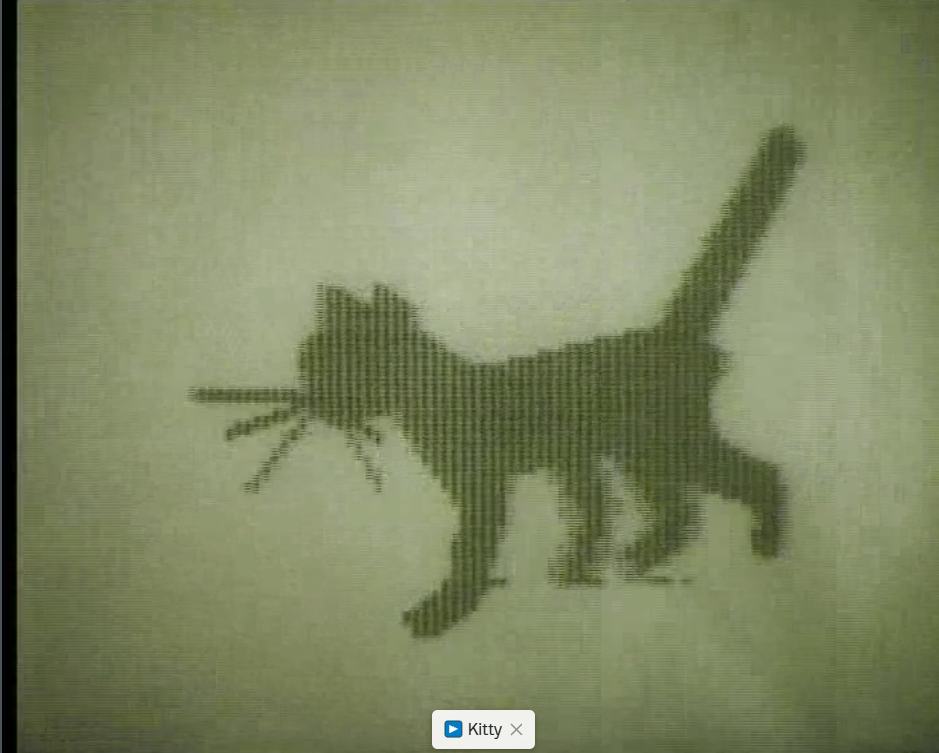
One of the first computer animations was made by a Soviet research lab in 1968
Acknowledgements: I find a lot of these links myself, but I also get some from other places that I rely on as "serendipity engines," such as The Morning News from Rosecrans Baldwin and Andrew Womack, Jodi Ettenberg's Curious About Everything, Dan Lewis's Now I Know, Robert Cottrell and Caroline Crampton's The Browser, Clive Thompson's Linkfest and Why Is This Interesting by Noah Brier and Colin Nagy. If you come across something you think should be included here, feel free to email me at mathew @ mathewingram dot com