He was disembowelled by an angry hippo on his honeymoon


Anna and I got married in Portugal in September last year. We had been together for 13 years. Ten days later, I found myself in a swamp in Botswana with my intestines hanging out of my back. We were on our honeymoon in the Okavango Delta. That evening, we had set off with a group in traditional canoes. We weren’t looking for hippos; the excursion was supposed to be about plants. Before we left, we were warned that a mother hippo with two babies was nearby, so we would stay away from her. I spotted the hippo in the distance and zoomed in to take a photo – she was huge, her open mouth showing big teeth; the calves were behind her. Our canoe had drifted away from the others. Suddenly, I heard a noise behind us – splashing, grunting, growling. The boat started rocking. I turned to my left and saw the same hippo, mouth still open, charging. The look on the guide’s face was one I will never forget: sheer terror. (via The Guardian)
Cornflakes were invented by accident but the Kellogg family disagrees about who was involved
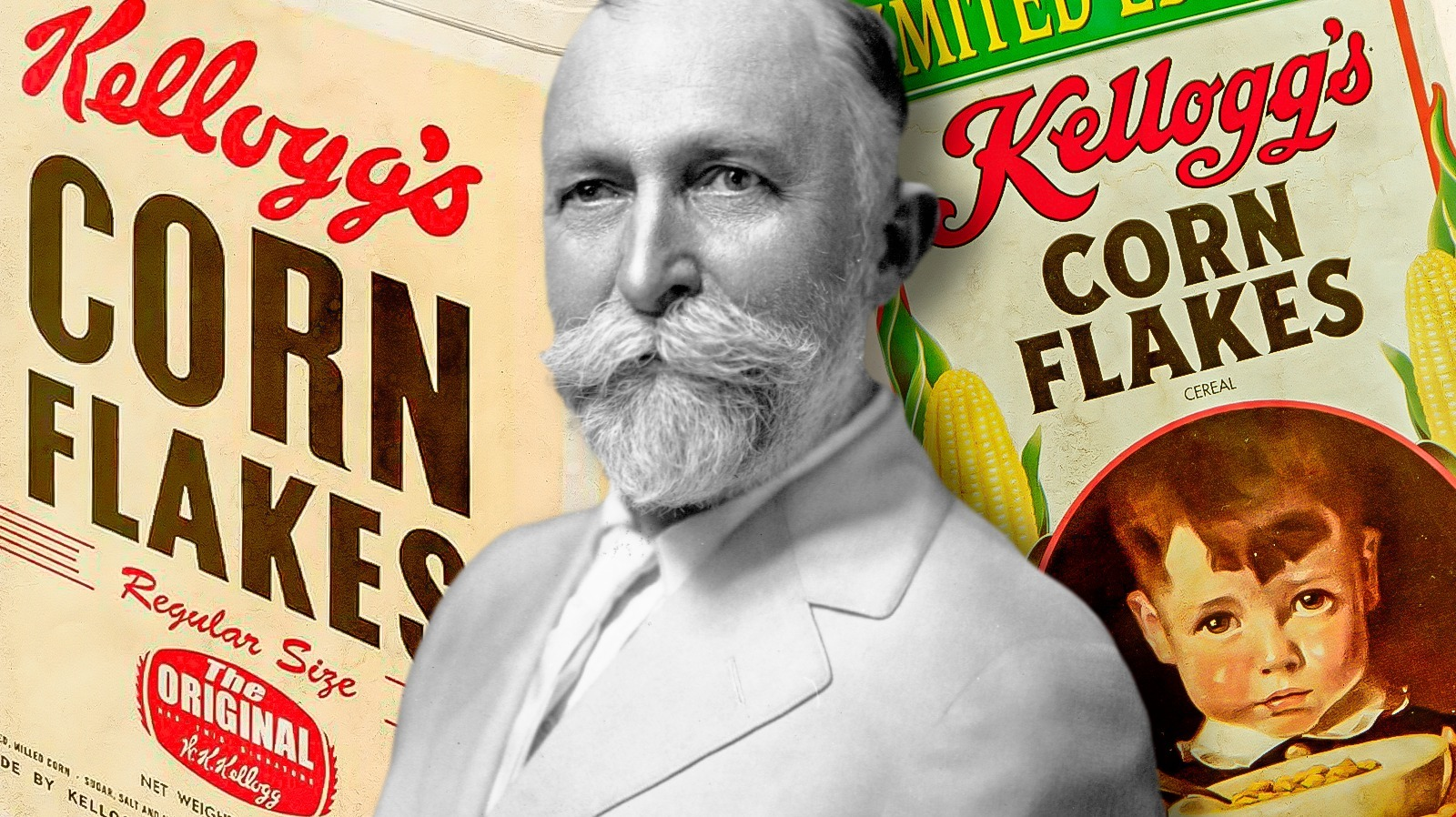
The development of the flaked cereal in 1894 has been variously described by John Kellogg, his wife Ella Eaton Kellogg, his younger brother Will, and other family members. There is considerable disagreement over who was involved in the discovery, and the role that they played. According to some accounts, Ella suggested rolling out the dough into thin sheets, and John developed a set of rollers for the purpose. According to others, John had the idea in a dream, and used equipment in his wife's kitchen to do the rolling. It is generally agreed that upon being called out one night, John Kellogg left a batch of wheat-berry dough behind. Rather than throwing it out the next morning, he sent it through the rollers and was surprised to obtain delicate flakes, which could then be baked. Will Kellogg was tasked with figuring out what had happened and recreating the process reliably. Ella and Will were often at odds, and their versions of the story tend to minimize or deny each other's involvement. (via Wikipedia)
Filmmakers have tracked down the site where the first photograph with people in it was taken
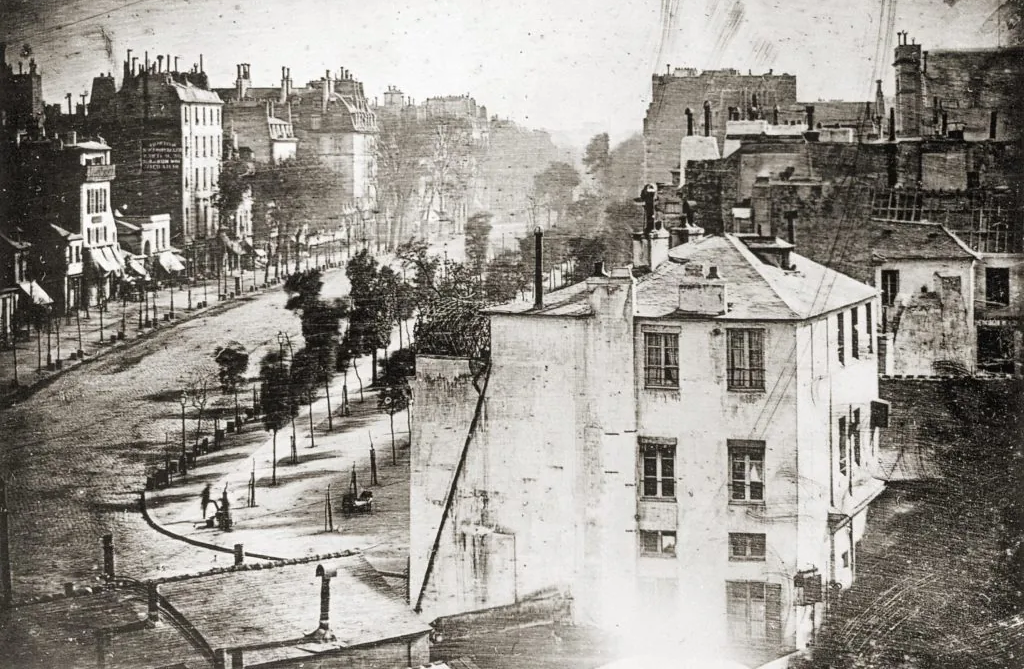
On a spring morning in 1838, Louis Daguerre wanted to test out an invention he’d been tinkering with for the best part of a year. He set up his camera at the window of his upstairs Parisian studio and photographed the view. The image, View of the Boulevard du Temple, was the first to capture human beings: a shoeshine boy and his client, who stand alone at the bend of a tree-lined thoroughfare. The pair were scarcely the only ones out on the boulevard that day. Rather, they were the only people who remained stationary for long enough to be captured by Daguerre’s revolutionary machine, which boasted an exposure time of five to 10 minutes. Daguerre was photographing a site today occupied by Place de la République. Identifying the precise spot has been far from straightforward, and for the past two years, has been the niche obsession of three filmmakers. (via ArtNet)
Mathematician solved a bunch of problems but no one knew because he wrote in an obscure dialect
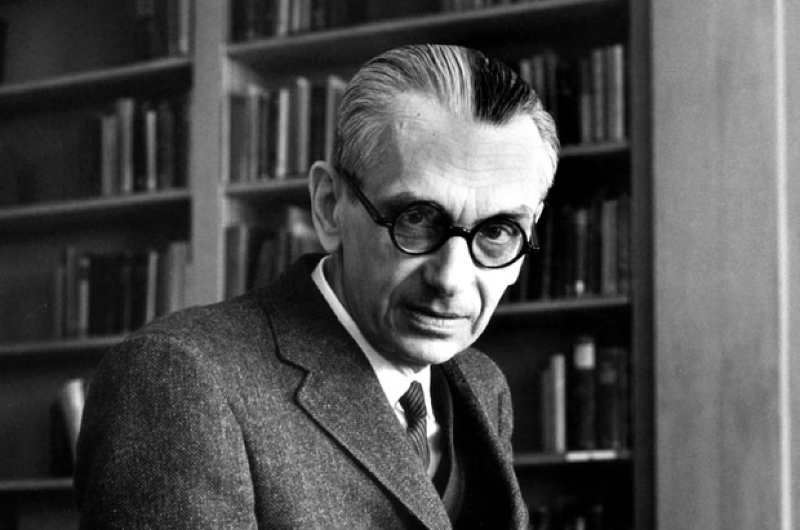
Kurt Gödel was one of the most original thinkers of the 20th century. His two incompleteness theorems, published in 1931, transformed mathematics and paved the way for the digital age. After the 1930s, Gödel published only a few papers. His unpublished work, however, runs to tens of thousands of pages. Since 2017, the Finnish logician Jan von Plato has led a project at Helsinki University to understand the contents of 16 notebooks that Gödel wrote in the early 1940s. This material – the “workbooks” – is 1,009 pages of densely written text about maths and logic. Much of it is written in a German shorthand that was obsolete even when Gödel was using it. Progress in the mathematical understanding of the text was painfully slow until von Plato enlisted the help of AI, which showed that Gödel had proved hundreds of theorems. (via The Guardian)
Peruvian author married his aunt and then his cousin and almost became president of Peru
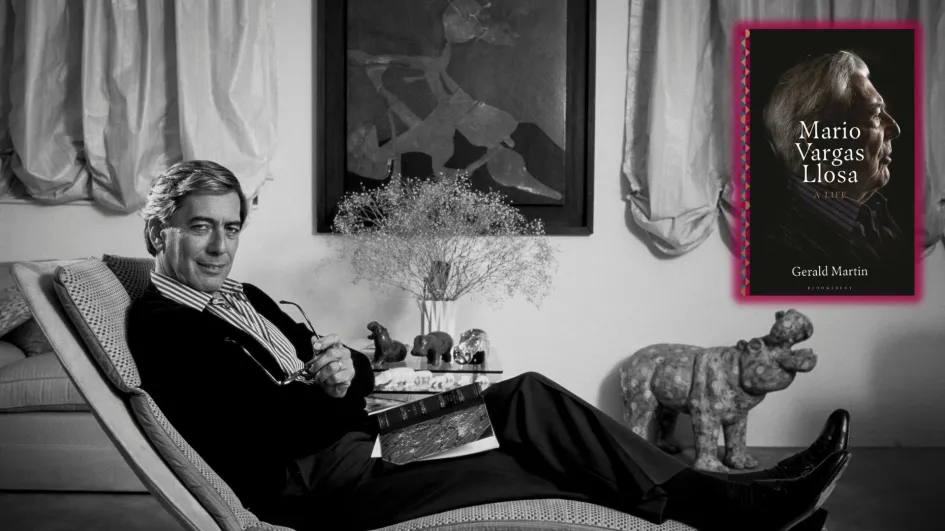
Mario Vargas Llosa: A Life might seem like a bland title, until it dawns on you exactly how much living the man did. He eloped with his aunt at 19, then humiliated her by writing a novel about it translated into more than 30 languages; divorced her for her much younger niece, his first cousin; and, after a scandalous 50-year marriage, walked out one last time for Isabel Preysler, ex-wife of Julio Iglesias, mother of Enrique. Arguably the world’s most famous Peruvian, Vargas Llosa would have been president if not for the dark-horse populist Alberto Fujimori, who handily defeated Vargas Llosa in 1990. At age 74, he won the Nobel Prize in Literature, joining his lifelong frenemy Gabriel García Márquez, whom he famously punched in the face at a film premiere, for reasons that remain unclear. Thus the page count of the new biography clocking in at 812. Gerald Martin, a British critic who also wrote the book on García Márquez, spent 25 years interviewing Vargas Llosa and those who knew him. (via Defector)
She has the world's largest collection of frog-related memorabilia at 13,201
Acknowledgements: I find a lot of these links myself, but I also get some from other places that I rely on as "serendipity engines," such as The Morning News from Rosecrans Baldwin and Andrew Womack, Jodi Ettenberg's Curious About Everything, Dan Lewis's Now I Know, Robert Cottrell and Caroline Crampton's The Browser, Clive Thompson's Linkfest and Why Is This Interesting by Noah Brier and Colin Nagy. If you come across something you think should be included here, feel free to email me at mathew @ mathewingram dot com