How Hemingway's love of boxing changed salad dressing

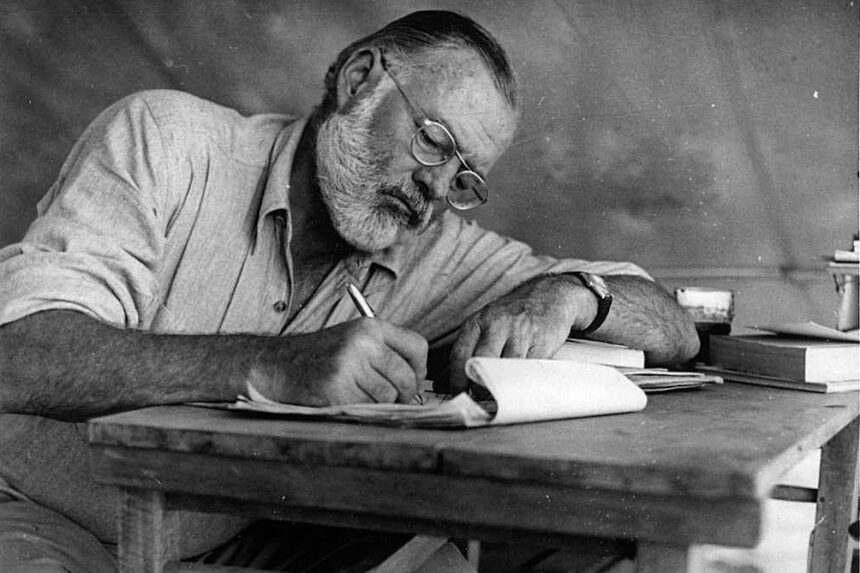
In 1925, Ernest Hemingway published In Our Time, his first collection of short stories, which included his first published boxing story, “The Battler.” On a cool Tuesday evening in October of 1955, three decades after the publication of “The Battler,” an adaptation of Hemingway’s boxing story aired on NBC. Sponsored by Pontiac, Playwrights ’56 was placed in a risky time slot, airing opposite the popular game show The $64,000 Question. In panic mode, producer Fred Coe plucked a relatively unknown actor from the cast. He was young, good-looking, and importantly, already familiar with the script. That unknown’s name was Paul Newman. Ernest Hemingway had not been directly involved in the production of “The Battler.” Instead, his short story was adapted by A. E. Hotchner. Hotchner and Newman bonded during that hectic 1955 production, and they remained good friends throughout their lives. The two each chipped in $20,000 of seed money to found Newman’s Own salad dressing. (via Saturday Evening Post)
Japanese company sells out of robot wolves as record bear attacks drive demand
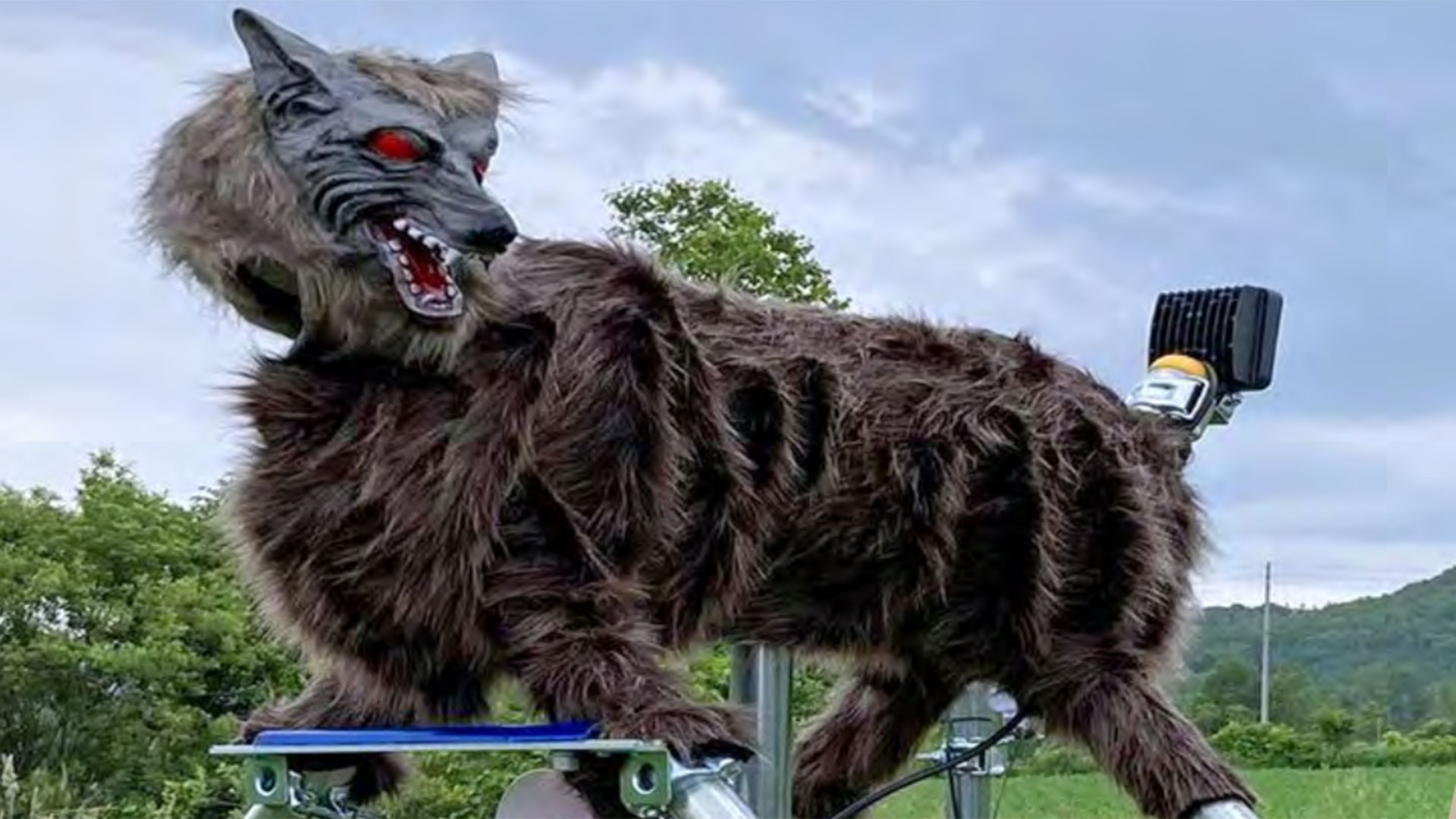
A Japanese manufacturer of animatronic wolves designed to scare off wild animals is being swamped with orders as the East Asian country grapples with rising bear attacks. Ohta Seiki, a company based in Hokkaido, has already received about 50 orders for its "Monster Wolf" device this year, more than the typical volume for an entire year. The surge in demand for the robotic wolf follows a record 13 fatal bear attacks in 2025-2026, more than twice the previous high. There were more than 50,000 bear sightings nationwide in that period, more than double the previous record set two years earlier. The animals were seen entering homes, roaming near schools, and rampaging through stores and hot spring resorts on an almost daily basis. The number of bears captured and culled nearly tripled from a year earlier to 14,601, also an all-time high. In the month of April alone, some northern regions reported nearly four times as many sightings as all of last year as bears emerged from hibernation. (via The Independent)
Scientists say they've found a way to activate a dormant ability to regrow limbs in mammals

For millennia medical thinkers have pondered why certain animals like salamanders are able to regrow entire lost limbs, while mammals like us humans have to make due without any appendages we’ve lost. Now, researchers at the Texas A&M College of Veterinary Medicine and Biomedical Sciences say they may have cracked the code. In a new study they detail a process they say causes bones, joints, and ligaments to regenerate in mammals which otherwise would not be able to regrow tissue. Basically, the researchers used a two-step process that mimics the way regenerative animals such as salamanders regrow lost tissue after amputation. They pull it off via a process known as epimorphic regeneration, in which lost limbs are first covered by a layer of skin cells. Local cells then rearrange themselves into a blastema, a temporary structure that forms the base-layer for the rest of the limb. (via Futurism)
Hi everyone! Mathew Ingram here. I am able to continue writing this newsletter in part because of your financial help and support, which you can do either through my Patreon or by upgrading your subscription to a monthly contribution. I enjoy gathering all of these links and sharing them with you, but it does take time, and your support makes it possible for me to do that. I also write a weekly newsletter of technology analysis called The Torment Nexus.
Did designer Karl Lagerfeld really leave his entire fortune to his cat Choupette?

Karl Lagerfeld, the great German fashion designer, owned apartments in Paris, Rome, and the Côte d’Azur, as well as villas in Biarritz and his native Hamburg; enormous collections of Art Deco furniture, antique jewelry, and couture garments; a personal library of some 300,000 books, by his own estimation; paintings and sculptures by Jeff Koons, Takashi Murakami, and John Baldessari; three Rolls-Royces; and hundreds of pairs of his trademark wraparound sunglasses and fingerless biker gloves. According to his biographer, his annual flower budget appears to have been about 1.5 million euros. Lagerfeld never married or had children, and when he died of cancer, in 2019, the press quickly began to speculate about the immense fortune he’d supposedly left behind, which a number of outlets ballparked at more than $200 million. Speculation also swirled about where these riches would end up. (via The Atlantic)
In the 1800s there were competitions to see who could set type the fastest
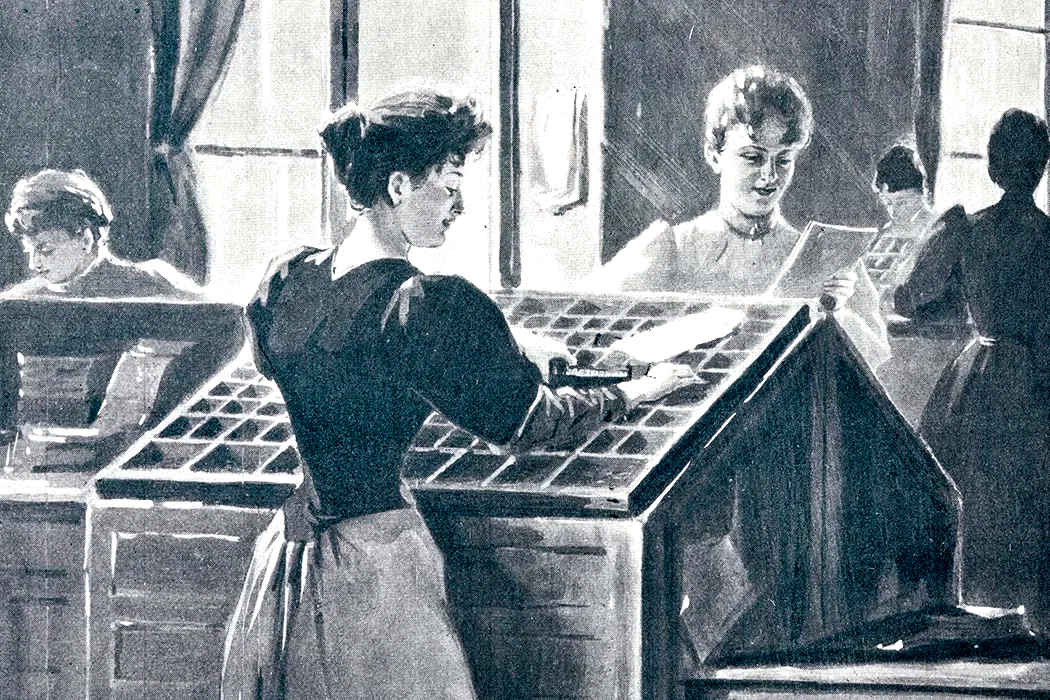
On the afternoon of Saturday, February 19, 1870, a young compositor named George Arensberg astonished the printing world when he achieved a feat few thought possible: setting more than two thousand “ems” of solid minion type in a single hour (about 760 words, or 13 words a minute). As a recent hire at The New York Times, Arensberg soon caught the attention of his colleagues for his remarkable dexterity. That afternoon, a gaggle of fellow compositors from all over town gathered to watch while Times foreman E. A. Donaldson wielded a stopwatch. Working before a standard California job case, Arensberg set his first stick of type in 13 minutes and 55 seconds. When the tallies were counted, he had averaged just under 15 minutes a stick bringing him to 2,064 ems. At the time, a typical compositor was expected to set roughly 700 ems an hour. Breaking the 2,000 mark seemed like a physical impossibility. It was the typesetting equivalent of running a four-minute mile. (via Public Domain Review)
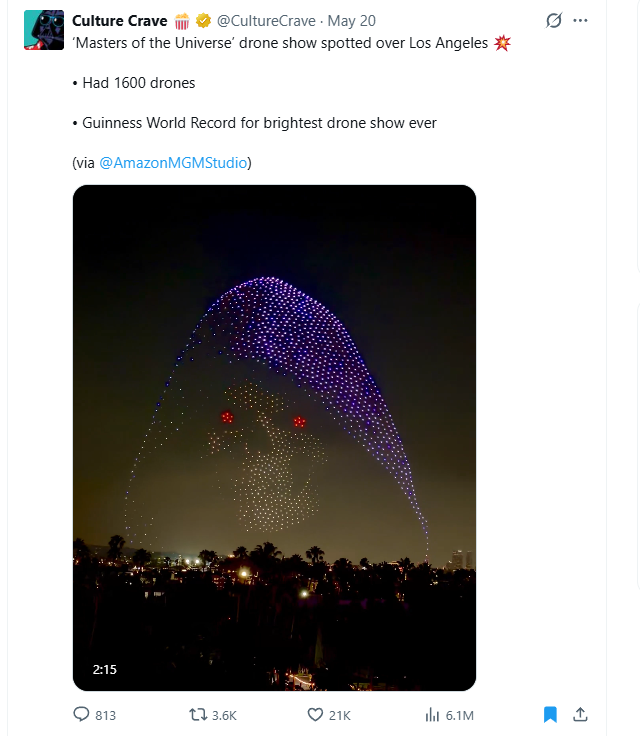
Imagine what this would look like to someone who had never heard of Masters of The Universe
Acknowledgements: I find a lot of these links myself, but I also get some from other places that I rely on as "serendipity engines," such as The Morning News from Rosecrans Baldwin and Andrew Womack, Jodi Ettenberg's Curious About Everything, Dan Lewis's Now I Know, Robert Cottrell and Caroline Crampton's The Browser, Clive Thompson's Linkfest and Why Is This Interesting by Noah Brier and Colin Nagy. If you come across something you think should be included here, feel free to email me at mathew @ mathewingram dot com