The occult history of NASA's Jet Propulsion Laboratory

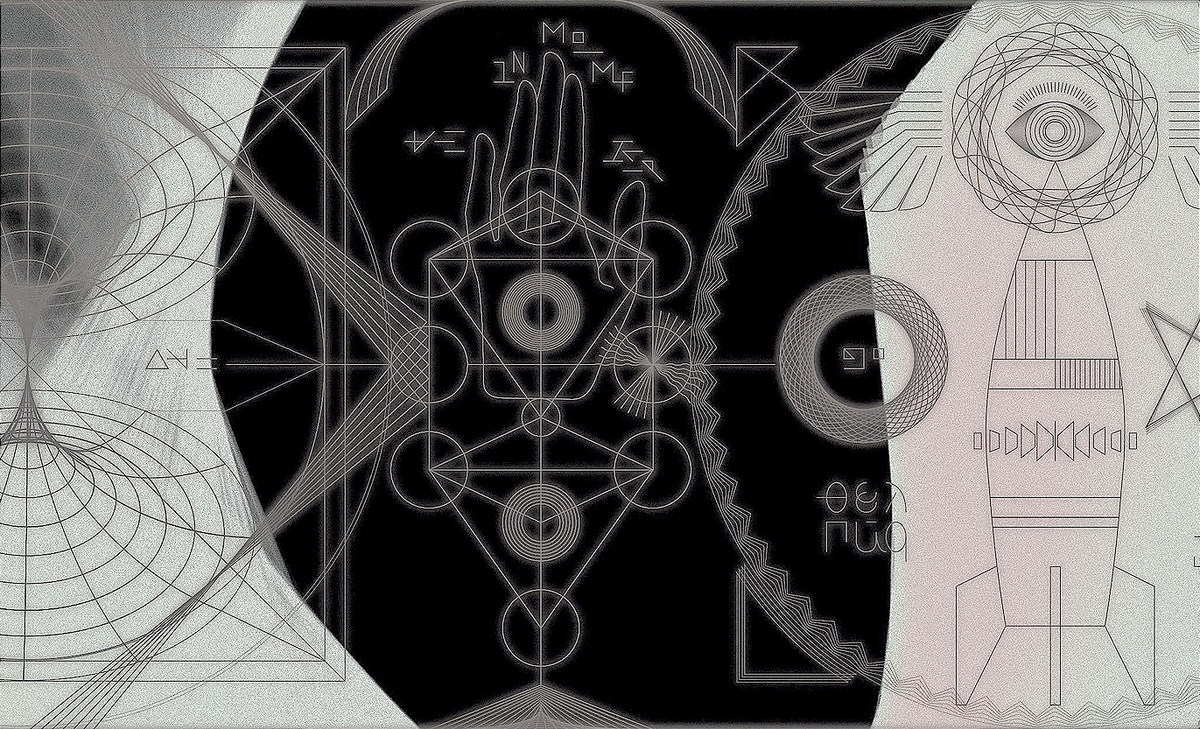
Jack Parsons was one of the most influential figures in the history of the American space program. He also stood accused of espionage, and held a deep fascination with the occult. By 1939, Parsons and his wife Helen Parsons-Smith had fully embraced the teachings of the Ordo Templis Orientis, a central hub for Aleister Crowley’s spiritual and religious philosophy. Crowley taught that a Thelemite’s central ambition was to achieve a higher state of existence by embracing one’s “True Will,” or one’s ultimate purpose beyond selfishness or ego. In pursuit of that goal, many aspects of Parsons’s life blurred the boundaries between science and mysticism. As a Thelemite, he performed ritual magic, including banishing impure elements with pentagrams, invocating the power of the “Holy Guardian Angel,” and offering daily adorations to the sun. (via Supercluster)
These two women are twins but due to a rare event they have different fathers

Lavinia and Michelle know that those of us who haven’t shared a womb with a sibling can be fascinated by twins: their similarities, how they differ, whether there’s any kind of mysterious synergy between them. They aren’t identical twins. They share the same striking eyes, but the lower halves of their faces are different. Their personalities differ, too. But they share many things, including the almost inconceivable circumstances that brought them into the world, and which only came to light four years ago, when they were 45 and both took DNA tests from the genealogy firm Ancestry. Their results of those tests revealed something never before documented in British history. Lavinia and Michelle are twins who grew together in the same womb, were born from the same mother, and delivered within minutes of each other – but have different fathers. (via The Guardian)
He just returned the medieval tiles he stole sixty years ago when he was a young boy
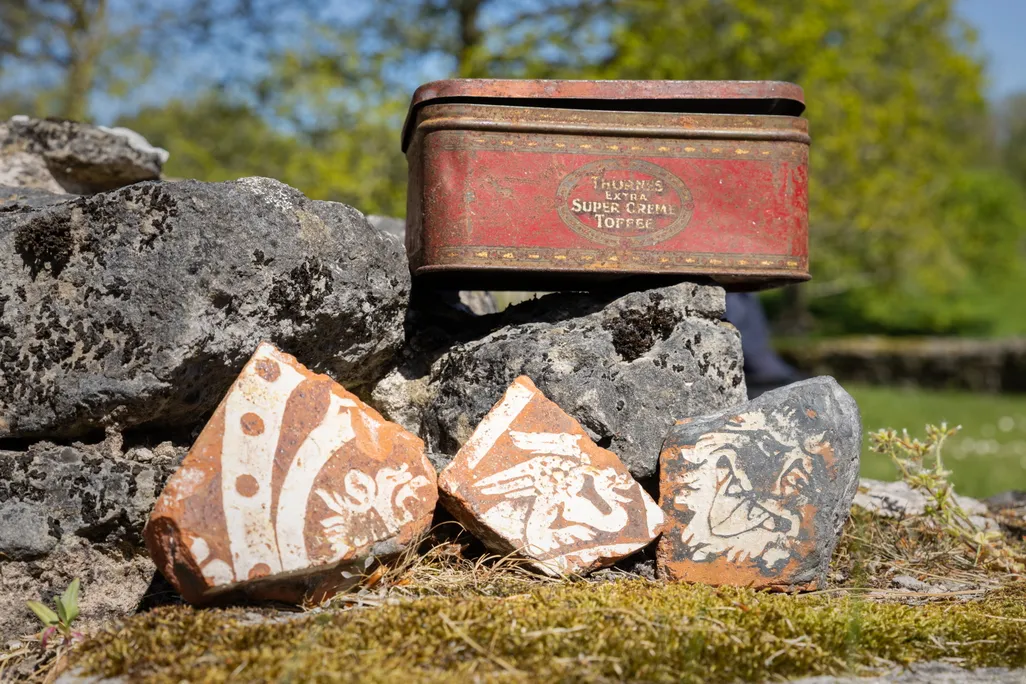
In the 1960s, 9-year-old Simon White visited a medieval English monastery with his family. Encouraged by his father, White pried up some of the historic site’s 700-year-old floor tiles to keep as souvenirs. At home, he stowed them in an old toffee tin for safekeeping. And there the tiles stayed, forgotten, for nearly 60 years. Recently, White — now 68 years old — was sorting through his belongings and he came across the tin. At first, he couldn’t remember where the red clay tile fragments, decorated with a beastly face and a dragon, were from. Fortunately, his mother kept very detailed diaries and he was able to pinpoint a summer day in 1967 when they went to visit Wenlock Priory. Founded more than 1,300 years ago as an Anglo-Saxon monastery, it was one of many historic sites White’s parents took him to over the years. (via The Smithsonian)
Hi everyone! Mathew Ingram here. I am able to continue writing this newsletter in part because of your financial help and support, which you can do either through my Patreon or by upgrading your subscription to a monthly contribution. I enjoy gathering all of these links and sharing them with you, but it does take time, and your support makes it possible for me to do that. I also write a weekly newsletter of technology analysis called The Torment Nexus.
He confessed to the court that he was a werewolf but said he had good intentions

In the year 1692, an 86-year-old man who lived in Latvia stood before a judge and calmly proclaimed that he was a werewolf working for the benefit of the community. The man, known as Thiess of Kaltenbrun, made a series of curious statements during his testimony, describing not only the habits of werewolves but also a vivid account of Hell. Thiess’s confession, preserved in the transcripts of the court proceedings, has long struck researchers as highly unusual. The story of Thiess of Kaltenbrun begins a year earlier, when the judges of Jürgensburg, a town in Swedish Livonia, summoned him as a witness in a case concerning a church robbery. They were aware that local people regarded him as a werewolf who had consorted with the Devil, but at first they showed little interest in such allegations. Thiess himself volunteered the information. He freely admitted that he had once been a werewolf, but had given it up ten years earlier. (via Amusing Planet)
Plants can sense the sound of rain and then seeds start germinating faster

The next time you find yourself lulled by the patter of rain outside your window, think how that same sprinkle might sound if you were a tiny seed. Would you still be similarly soothed? In fact, MIT engineers have found the opposite to be the case: Some seeds may come alive to the sound of rain. In experiments with rice seeds, the team found that the sound of falling droplets effectively shook the seeds out of a dormant state, stimulating them to germinate at a faster rate compared with seeds that were not exposed to the same sound vibrations. The team’s findings are the first direct evidence that plant seeds and seedlings can sense sounds in nature. Their experiments involved rice seeds that they submerged in shallow water, and the researchers suspect that many other similar seed types might also respond to the sound of rain. (via MIT News)
This paper airplane won't crash even if you try to throw it badly
全世界唯一随便乱扔都不会直接坠落的纸飞机✈️你学会了吗🤣 pic.twitter.com/F2uBvOdYE9
— 大明哥₿tc一直涨🚀🇭🇰 (@wymdaming888) April 30, 2026
Acknowledgements: I find a lot of these links myself, but I also get some from other places that I rely on as "serendipity engines," such as The Morning News from Rosecrans Baldwin and Andrew Womack, Jodi Ettenberg's Curious About Everything, Dan Lewis's Now I Know, Robert Cottrell and Caroline Crampton's The Browser, Clive Thompson's Linkfest and Why Is This Interesting by Noah Brier and Colin Nagy. If you come across something you think should be included here, feel free to email me at mathew @ mathewingram dot com