He won the lottery 14 times with math so they changed the rules

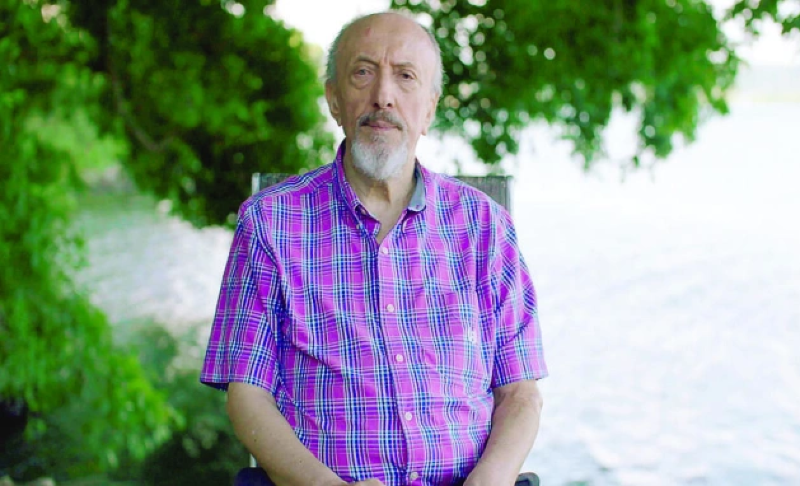
Romanian-born mathematician Stefan Mandel used simple probability and a massive ticket-buying operation to win lottery jackpots 14 times. Born into a poor Jewish family in Romania in 1931, Mandel developed a passion for mathematics at a young age but could not pursue an academic career because of financial hardship. Instead, he worked as an accountant to support his family. His monthly salary of $88 was barely enough to support his family. Mandel said that he needed a way to "get some serious money, quickly." Having spent years studying probability theory and the work of Italian mathematician Leonardo Fibonacci, he began exploring the lottery, convinced mathematics could improve the odds. After years of research, he developed a number-picking algorithm based on a method he called "combinatorial condensation." The strategy relied on a simple principle: identify lotteries where the jackpot exceeded the cost of buying every possible number combination. If enough tickets covering all combinations could be purchased, a profit could be guaranteed. (via VnExpress)
Every spring a team of biologists counts over 50,000 puffins on this remote Welsh island

Skomer Island, located of the coast of Pembrokeshire, is an internationally important seabird island. Every year, The Wildlife Trust of South and West Wales (WTSWW) undertake their annual count to monitor the population of Puffins that return to the island every spring to breed. Puffin counting may sound like an easy job, but with over 50,000, it’s no mean feat. Every spring, the Skomer team set out on a calm, clear evening with binoculars and notepad in hand to count every single Puffin on land, in the sky and at sea. The island is broken up into seven sections, and the team must work against the clock and the elements to make sure they have accounted for every single Puffin. Timing is key – too early in the season and the bulk of birds won’t have returned, too late and they’ll be settled on eggs in their burrows. And there’s method to the Puffin madness – they use the same method today that the wardens have used since the 1980s. This means they can compare over 40 years of Puffin population data. (via Welsh Wildlife)
He had to learn how to walk again after he got a rare virus from a tick but it wasn't Lyme

Martin Novar remembers flashes of his 65th birthday on Nov. 2, 2025. But he doesn’t remember anything else from that month. Memory is a tricky thing for Novar nowadays. When we made plans to meet at his house on Lake Owassa in Frankford Township for this story, he called three hours before the scheduled meeting, wondering where I was and offering directions. It’s not personal. He can’t remember any clients he’s had in the last year either and, after more than 20 years as an attorney, Novar was forced to give up his legal practice. He also doesn’t remember taking a hike with his dog, Raven, in the lush woodlands surrounding his Sussex County home in mid-November. He’d taken dozens of hikes like it before. Novar stayed at his partner Karen Ezra’s apartment in Brooklyn; when they spoke on the phone Thanksgiving morning, Novar was unintelligible. A lumbar puncture, also known as a spinal tap, showed that Novar was suffering from encephalitis, or inflammation in the brain. (via NJ.com)
Hi everyone! Mathew Ingram here. I am able to continue writing this newsletter in part because of your financial help and support, which you can do either through my Patreon or by upgrading your subscription to a monthly contribution. I enjoy gathering all of these links and sharing them with you, but it does take time, and your support makes it possible for me to do that. I also write a weekly newsletter of technology analysis called The Torment Nexus.
In a Bond film where he drove on cobblestones they used Coca-Cola so the car would grip

There are two main vehicular-chase set pieces in No Time to Die. There's an off-road battle set in Scotland's countryside that features lots of SUVs—including Land Rover's new Defender — of which many are launched spectacularly skyward. Then there's a chase through the medieval streets of Matera in southern Italy. The Matera chase involves Jaguar XE sedans and Triumph motorcycles for the bad guys and the old DB5 for Bond. Only, the DB5 in this chase does things no DB5 could actually do. Like powerslides, donuts with Gatling guns poking out of the headlight buckets, and lurid drifts that go on for weeks. Since the replicas weren't built for sale to the public or to be licensed to operate on public roads, they didn't have to meet any government's vehicle regulations. The interior is simply a welded roll cage, a single racing seat, a large wood steering wheel, and some bottom-hinged racing pedals. "We poured Coca-Cola on the ground to get some grip," Higgins explains in his Manx accent. "The Coke seems to work better than anything. It was incredible how well it was working." (via Car and Driver)
The train station in Cambridge got attention from a surprising audience: mathematicians
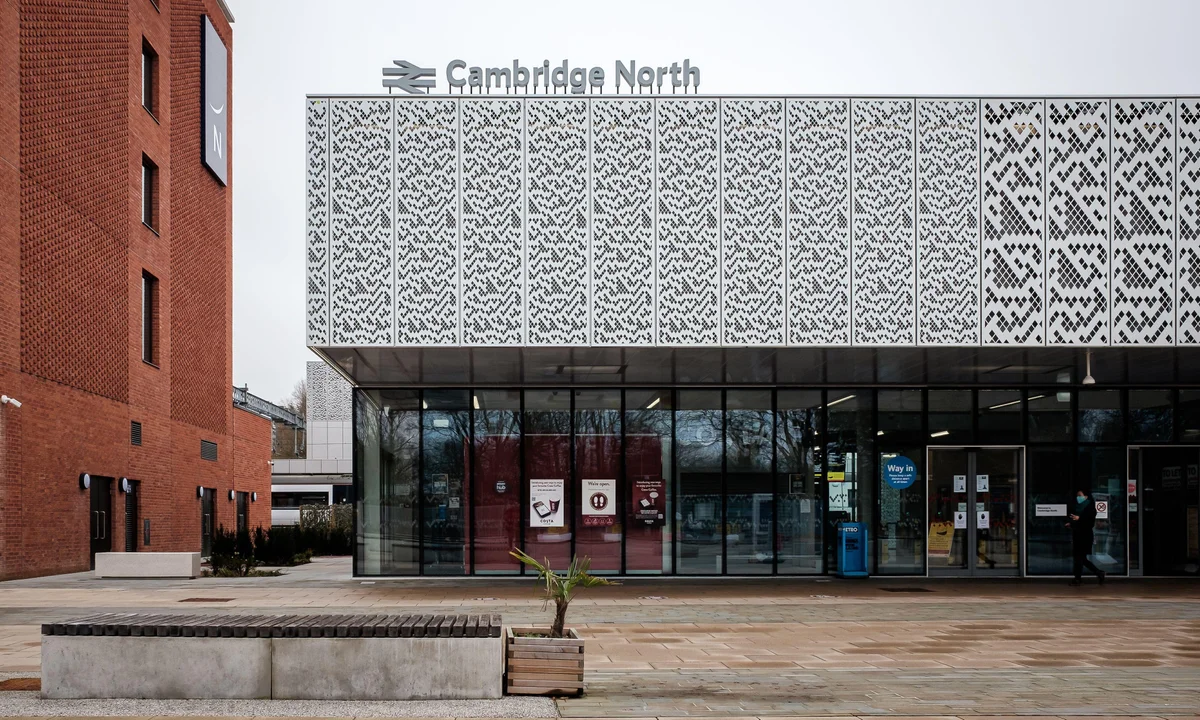
Cambridge North Station is clad in aluminum panels with a geometrical cutout design. The architecture firm, Atkins, originally claimed that the pattern was derived from Cambridge alumnus John Conway’s “Game of Life,” but eagle-eyed mathematicians soon realized that was incorrect. The design is in fact based on a mathematical rule studied by Stephen Wolfram, an Oxford alumnus, much to the dismay of rival university Cambridge. Though the firm’s website still references Conway, a Senior Architectural Designer at Atkins has since confirmed that it was, in fact, Wolfram’s Rule 30 that they used in the design. The mathematical façade transforms the building’s appearance from night to day —for the technically-minded, the pattern shown conforms to Wolfram's rule 135 in the day, while at night the interior lights invert the pattern to rule 30. (via Arch Daily)
Look at this super-cute little blue octopus that was just discovered
Acknowledgements: I find a lot of these links myself, but I also get some from other places that I rely on as "serendipity engines," such as The Morning News from Rosecrans Baldwin and Andrew Womack, Jodi Ettenberg's Curious About Everything, Dan Lewis's Now I Know, Robert Cottrell and Caroline Crampton's The Browser, Clive Thompson's Linkfest and Why Is This Interesting by Noah Brier and Colin Nagy. If you come across something you think should be included here, feel free to email me at mathew @ mathewingram dot com