Why did this trainer at a riding academy shoot a student?


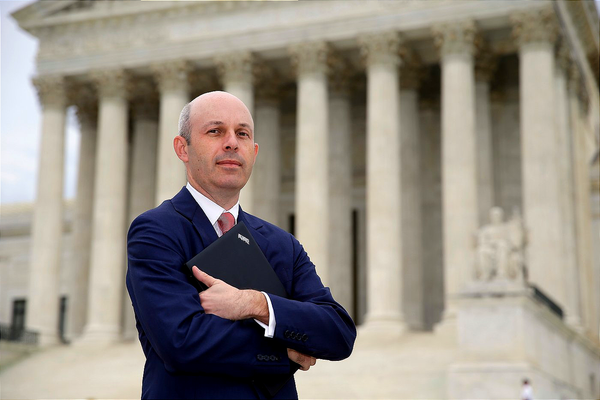
Until 2019, when he attempted to kill one of his students, Michael Barisone was a leading rider and trainer in the horse-handling sport of dressage. Today, he still owns a dressage farm in Loxahatchee, Florida, twenty miles inland from Palm Beach. On five acres, he has a stucco house that’s connected to a barn; white-fenced paddocks shaded by palms; and an outdoor riding ring. Along one end of the ring is a common neighborhood fixture: an eighty-foot-long mirror. Barisone, who’s in his early sixties, with a Will Ferrell chin and a muscular build, can hold a conversation about his own good judgment, and the iniquity of his enemies, while riding a horse and monitoring his own reflection. In Barisone’s Loxahatchee kitchen there is a dark-green safe the size of a vending machine. It used to stand in his office on the New Jersey farm. He has never seriously contested the idea that, on August 7, 2019, he took a handgun from the safe and drove a few hundred yards, to a house on his property where Lauren Kanarek, a thirty-eight-year-old student of his, was boarding with her boyfriend. He shot her twice. (via The New Yorker)
He was cleaning out his garage and found a box marked SECRET in a hidden crawlspace
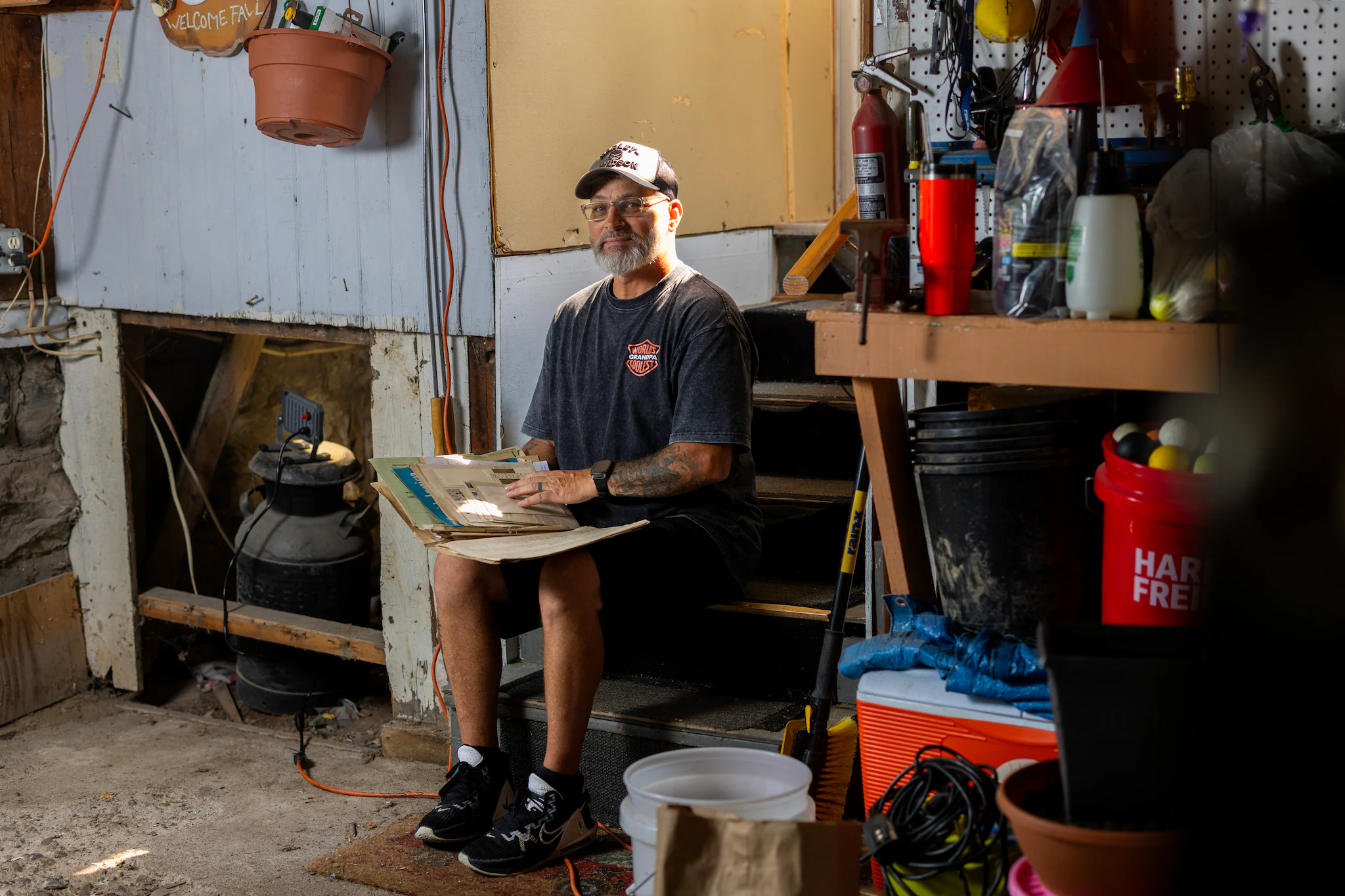
Jason Hurdle was clearing space in his garage for his Halloween decorations when he pulled back an unassuming sheet of plywood from the wall, revealing a crawl space he’d never seen before. Inside was a dusty cardboard box full of weathered files that looked like trash. But as he carried the box out to the flatbed of his truck and reached for a garbage bin, a breeze lifted one of the covers, and a word in red block letters stopped him: “SECRET.” A mechanic for his local school district near Waterloo, New York, Hurdle doesn’t encounter government documents with classified markings. Initially, he wasn’t sure what he was looking at. But as he read the pages, he started to get an idea.The 80-year-old, onionskin pages were mostly handwritten, first-person accounts by American prisoners of war, or POWs, describing their experiences in German captivity during World War II. In July, the National Archives announced the documents had been safely recovered by its Archival Recovery Program. (via the Washington Post)
James Beaton has advanced degrees from Harvard, Yale, Oxford and 10 other universities
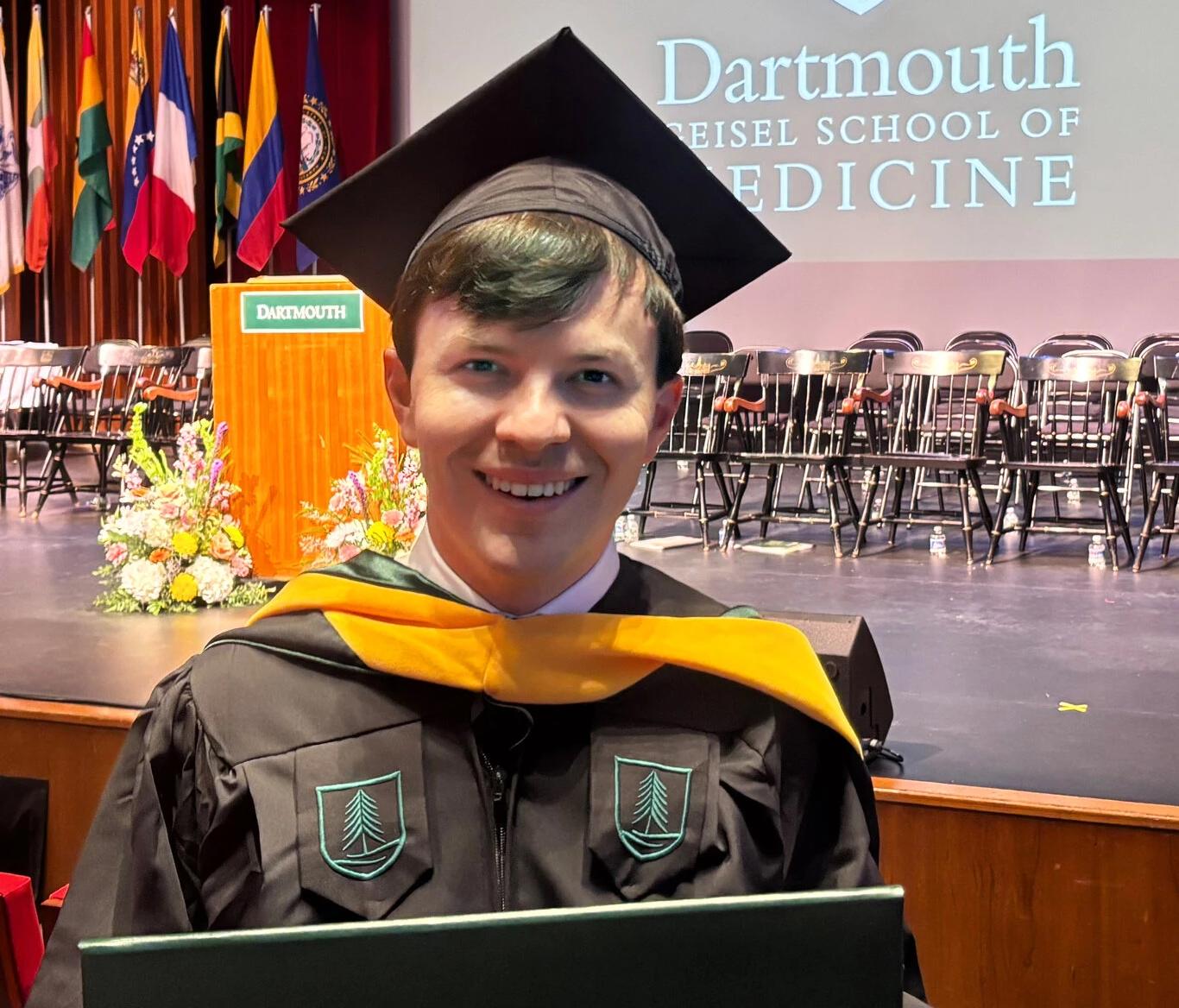
Beaton had graduated magna cum laude from Harvard in 2016, picking up a master’s degree in applied mathematics along the way. He had gone on to collect an M.B.A. from Stanford. Then a law degree from Yale. That was followed by a doctor of philosophy in public policy from Oxford, where he was a Rhodes scholar — all before age 28. Attending classes remotely and in person, he earned additional master’s degrees from the University of Pennsylvania (education entrepreneurship), Stanford (education technology), Princeton (finance), Cornell (health care policy and economics), Dartmouth (implementation science), King’s College London (war studies) and Tsinghua University in Beijing (global affairs). Still, there was more: Beaton was a founder and the chief executive of Crimson Education, a college admissions counseling service that has been valued at more than $600 million. If he continues collecting degrees, he will surpass Benjamin B. Bolger, who has racked up 16 at age 50. (via the New York Times)
Hi everyone! Mathew Ingram here. I am able to continue writing this newsletter in part because of your financial help and support, which you can do either through my Patreon or by upgrading your subscription to a monthly contribution. I enjoy gathering all of these links and sharing them with you, but it does take time, and your support makes it possible for me to do that. I also write a weekly newsletter of technology analysis called The Torment Nexus.
He spent 25 years building a giant castle of rocks by hand in the Colorado wilderness
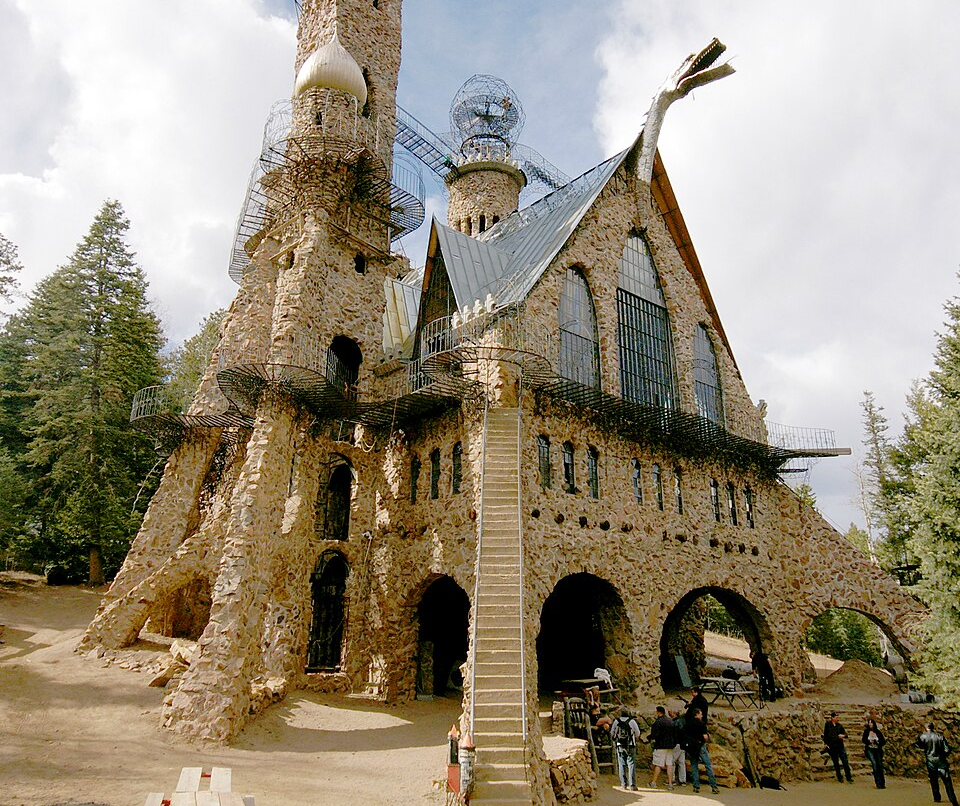
The castle – containing over over 50,000 tons of rock, concrete, lumber, and steel – was built by one man, Jim Bishop, a high school dropout and ornamental ironworker from Colorado. Beginning in 1969, and for roughly the next 25 years, the story of the castle centered on Jim and his crazy one-man construction project. It began when Jim and his father started building a cottage out of rocks for their family in the Colorado mountains. The frontage on Highway 165 drew onlookers who asked, "What's that? A castle?" Jim thrived on the attention. If a castle was what the public wanted, he would give them a castle. The castle's popularity spurred Jim to make his castle as big and elaborate as possible, and to start describing it as America's largest one-man project. He didn't have much money, so the walls were built with rocks that he took for free from nearby road ditches and creek beds. Jim viewed this as a public service. That opinion was not shared by the Bureau of Land Management. (via Roadside America)
The hiccup may be an ancient reflex inherited from ancestors that breathed both air and water

A tadpole hanging in pond water breathes by gulping. Water in through the mouth, out across the gills, and a flap of tissue in the throat snaps shut so the developing lungs stay dry. Take the water away and parts of that sequence look uncannily like something with a different name, one that has been wrecking dinner parties for as long as there have been dinner parties. Mechanically it is quick and graceless. The diaphragm and the muscles between the ribs contract hard and without permission, hauling air in. About 35 milliseconds later the vocal cords slam shut. Airflow stops mid-rush, and the sound is the result. No agreed useful function follows. No gas is exchanged, no blockage shifted, no threat removed. Writing in the journal Gut, gastroenterologists Peter Kahrilas and Guoxiang Shi noted the oddity of something almost every human experiences repeatedly and almost nobody understands. “Archaic motor patterns” is how a 2003 paper in BioEssays described the whole business. (via Science Blog)
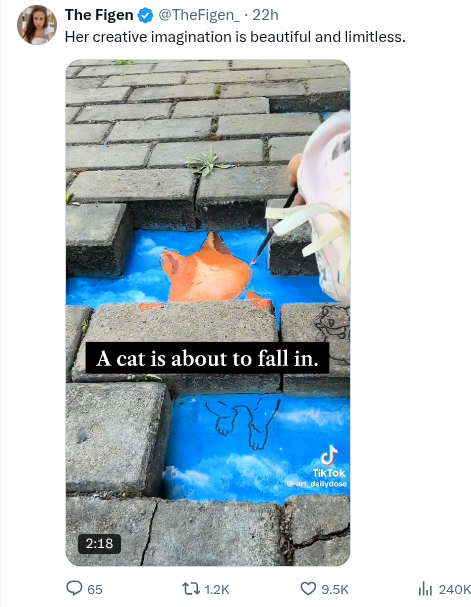
She saw a hole in the sidewalk and decided to do something to make it a little nicer
Acknowledgements: I find a lot of these links myself, but I also get some from other places that I rely on as "serendipity engines," such as The Morning News from Rosecrans Baldwin and Andrew Womack, Jodi Ettenberg's Curious About Everything, Dan Lewis's Now I Know, Robert Cottrell and Caroline Crampton's The Browser, Clive Thompson's Linkfest and Why Is This Interesting by Noah Brier and Colin Nagy. If you come across something you think should be included here, feel free to email me at mathew @ mathewingram dot com