This grammar-school dropout invented microwave popcorn


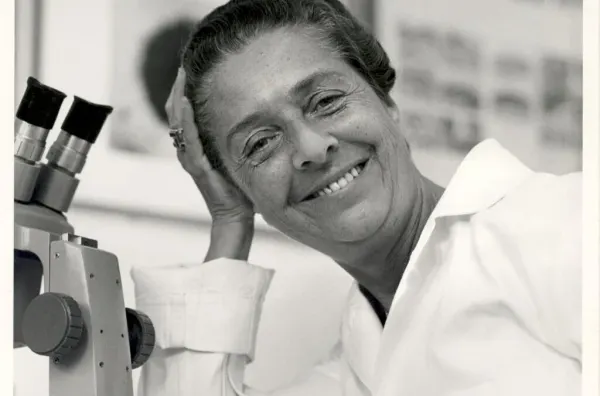
Percy L. Spencer was born on July 9, 1894 in Howland, Maine. He dropped out of grammar school when he was 12 years old to work in a weaving mill and joined the U.S. Navy at 18 as a radio operator. During his shifts he taught himself calculus and physics from textbooks. After World War I, Spencer began working at Raytheon, where he worked on the compact cavity magnetron, a high-powered vacuum tube that generates microwaves. It was used as a radar system in World War II to detect enemy planes and submarines. Spencer developed a system to mass produce the machine, increasing and improving the U.S. military’s technological capabilities. After the war, Spencer was in one of the Raytheon laboratories when he approached a magnetron and noticed that the chocolate bar in his pocket had started to melt. He decided to experiment with un-popped popcorn. He held the bag next to the magnetron and watched as the kernels turned into hardened, miniature white clouds. (via MIT)
This star has exploded more than six times and astrophysicists can't explain why
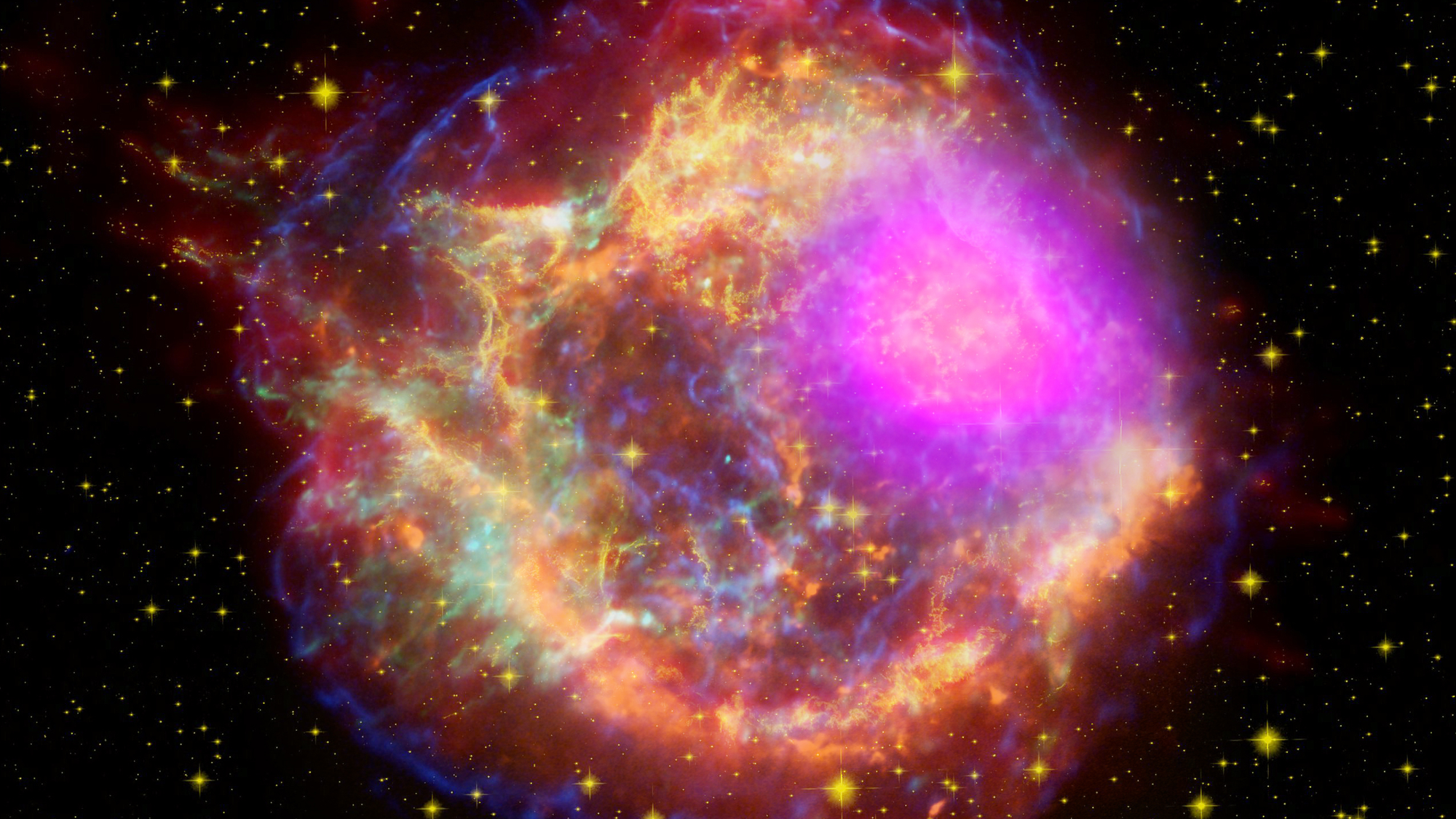
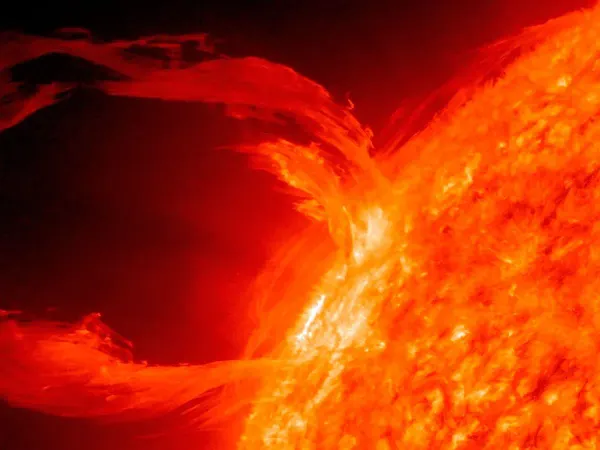
When astronomers first observed iPTF14hls in September 2014, they identified it as a supernova and expected it to dim within 100 days. Instead, it kept erupting. Over approximately 1,000 days, its brightness peaked at least five times, varying by as much as 50 percent. Rather than cooling as expected, it maintained a near-constant temperature of about 5,000 to 6,000 Kelvin. A check of archival photographs found an explosion in the same location in 1954. Since 1954, the star has exploded six times. It is estimated to be at least 50 times more massive than the Sun. The debris expansion rate is slower than any known supernova by a factor of six — as if the star is exploding in slow motion. Proposed hypotheses include antimatter burning in the stellar core, a pulsational pair-instability supernova, and a magnetar with an evolving magnetic field. (via Boing Boing)
How Alberta became one of the few places that rats have not been able to colonize
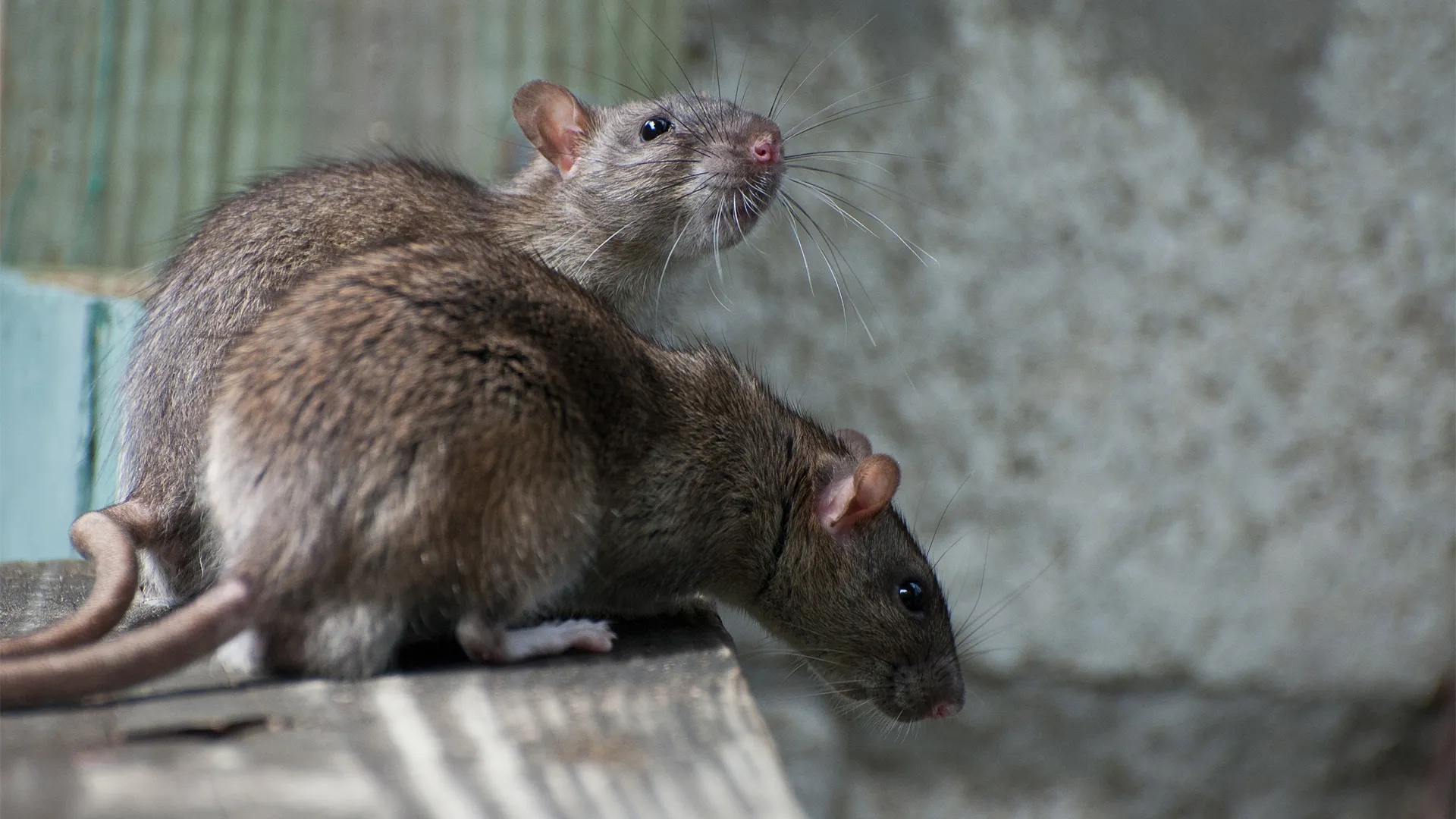
Most of us accept rats as a fact of life. They live in tunnels and sewers, gnaw through walls, contaminate food, and resist nearly every attempt to push them back. But one place stands out: Alberta, a Canadian province, is rat free, and has been for more than seventy years. On a map of global rat distribution, Alberta is a blank spot in an otherwise unbroken sea of rodents. Other places have eliminated rats too: South Georgia and a handful of New Zealand islands have done so to protect endangered birds. But these are tiny, uninhabited landmasses surrounded by ocean, with no permanent human population. Alberta has almost five million people and two cities of over a million each. It shares land borders on all sides with provinces and states that rats colonized in the 1950s, and its farmland and trade links make it an obvious target. Yet it stopped them. After Antarctica, Alberta is the largest rat-free area on Earth. (via Works In Progress)
Hi everyone! Mathew Ingram here. I am able to continue writing this newsletter in part because of your financial help and support, which you can do either through my Patreon or by upgrading your subscription to a monthly contribution. I enjoy gathering all of these links and sharing them with you, but it does take time, and your support makes it possible for me to do that. I also write a weekly newsletter of technology analysis called The Torment Nexus.
Satellite imagery revealed evidence of an ancient lost civilization in the desert
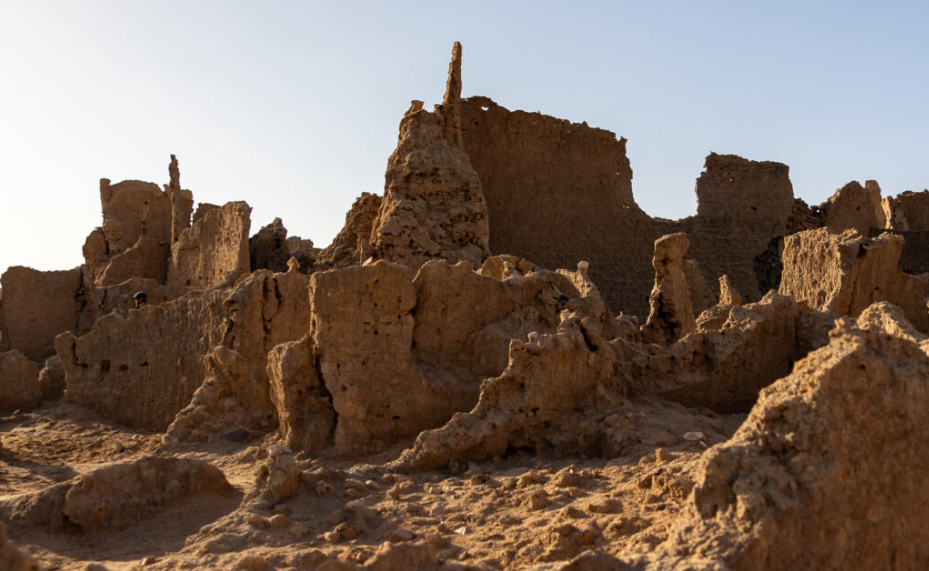
Deep in the Fezzan, in a broad valley called the Wadi al-Ajal lying roughly a thousand kilometres south of Tripoli, that silence holds a secret. Beneath the windblown sand and the rubble of millennia, the walls of a lost civilisation stand waiting: the castles of the Garamantes, a people once dismissed by Rome as barbarians and forgotten entirely by the modern world. For generations, these extraordinary structures were unremarked and unrecorded, hidden in plain sight across one of the most remote and inaccessible deserts on earth. The desert kept its treasures to itself. Then teams of archaeologists armed with satellite imagery looked down from orbit and saw what no one had properly seen before: an entire civilisation gazing back. What the satellites revealed was staggering. More than one hundred fortified farms and villages with castle-like structures, along with several towns, most dating between AD 1 and 500. (via Wild Man Life)
A clinically dead man in Siberia was revived after five hours in sub-zero temperatures
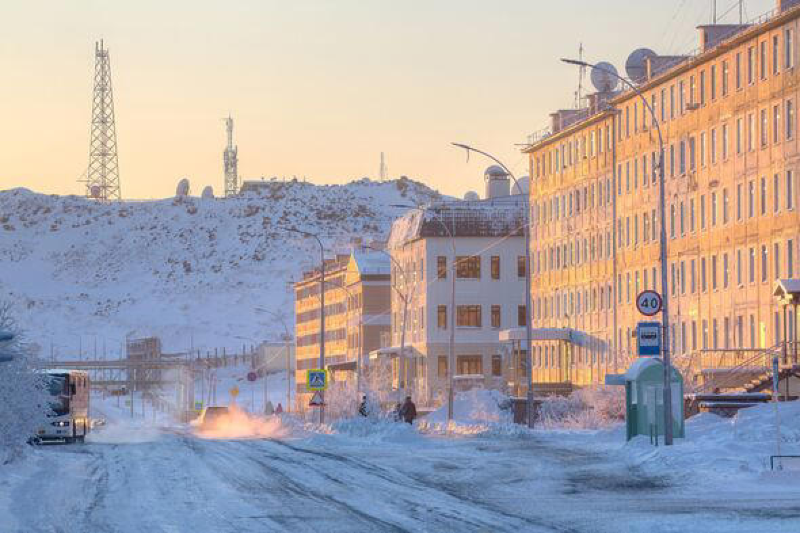
A "clinically dead" man in remote Siberia was brought back to life after spending more than five hours collapsed in sub-zero temperatures. Doctors say the extraordinary case shows how extreme cold can preserve life. The unnamed man, believed to have been intoxicated after a vodka binge, fell asleep on a bench in Mirny, Yakutia - the world's coldest inhabited region - as temperatures plunged to around -20°C. He was later found not breathing by passers-by, who called an ambulance. When medics arrived, they recorded no heartbeat, no blood pressure and a "flatline" on an electrocardiogram - all signs of clinical death. Rather than declaring him dead, doctors at the hospital in Mirny-Russia's diamond capital, launched a complex resuscitation using a specialised rewarming technique developed for Arctic conditions. He was rushed to hospital, where anaesthetist Dr Dmitry Bosikov led a meticulous four-hour process to raise his body temperature from 24°C to 34°C. (via MSN)
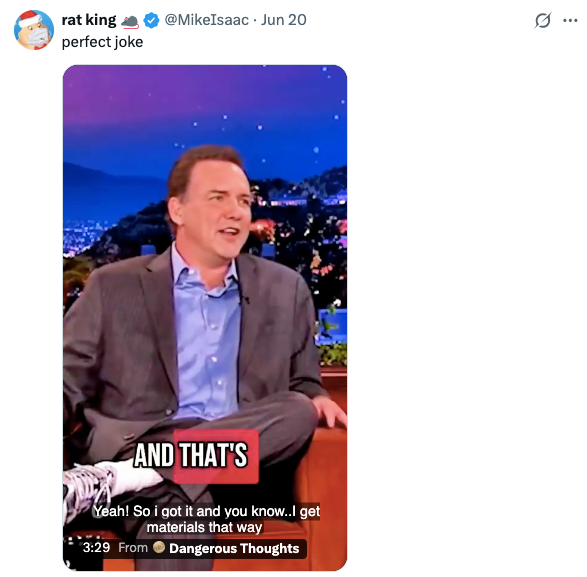
A classic joke from comedian Norm MacDonald
Acknowledgements: I find a lot of these links myself, but I also get some from other places that I rely on as "serendipity engines," such as The Morning News from Rosecrans Baldwin and Andrew Womack, Jodi Ettenberg's Curious About Everything, Dan Lewis's Now I Know, Robert Cottrell and Caroline Crampton's The Browser, Clive Thompson's Linkfest and Why Is This Interesting by Noah Brier and Colin Nagy. If you come across something you think should be included here, feel free to email me at mathew @ mathewingram dot com