A Chinese businessman survived six days in open water

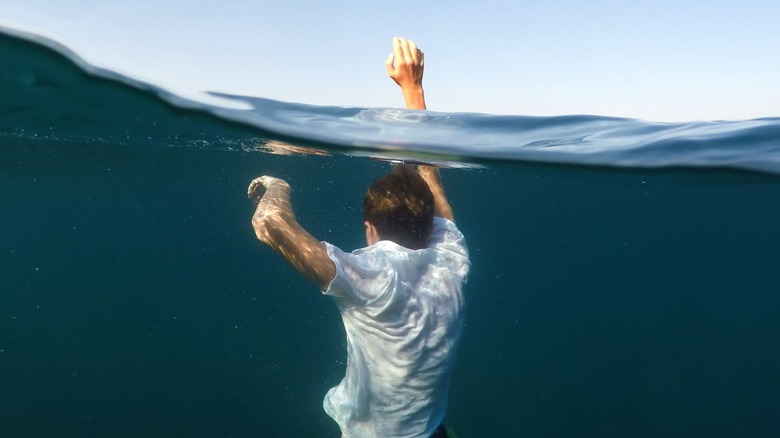
Qin Jianping had only intended to stop off in Haikou, capital of China’s Hainan province, for a few days. He drove to a seaside plaza to take an evening stroll along a seawall. He remembers slipping in the darkness, losing his balance, and suddenly falling over the edge into the sea. After plunging into the deep, dark, icy water, Qin quickly fought his way to the surface. He felt disoriented but could still hear the buskers playing for tourists taking a late-night stroll. In those first few minutes, he was confident someone would soon spot him and call for help. But then the waves began slowly dragging him further from shore. It would be another six days before he reached land again. To survive in open water, the 41-year-old entrepreneur says he clung to buoys, ate raw crabs, and attempted to keep warm using his own urine, all the while enduring an onslaught of jellyfish. On the day he was finally rescued by two fishermen, the Chinese authorities and his family had already begun to believe he was dead. (via Sixth Tone)
How many books is too many to have in your apartment? His landlord said 10,000 is
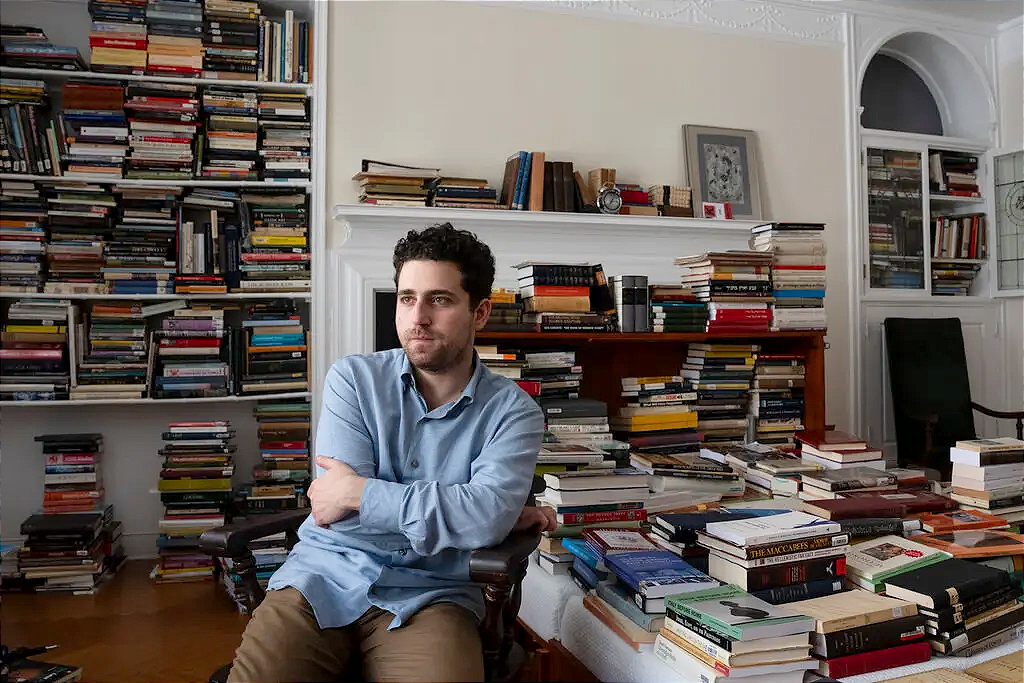
For a young Jewish scholar named Mendel Uminer, books are the wellspring of enlightenment. So when he scored a studio apartment a block away from Central Park on Manhattan’s Upper East Side a year ago, he brought his books with him — all 10,000 of them. What followed, at least for a little while, was a charmed existence in his 600-square-foot temple of knowledge. Towering stacks of Judaica lined the walls, heaps of film criticism and opera history filled the prewar bathroom, piles of plays and poems blocked a window, and Uminer slept on a floor mattress engulfed in dog-eared novels. Waking up around noon, he spent his afternoons on his sunlit chaise, devouring the works of Yiddish writers like Chaim Grade and critics like Edmund Wilson, nourishing his mind while the city churned outside. This past winter, he received a notice from building management. “You are maintaining the Premises in a severely overcluttered condition; permitting the over-accumulation of books in the Premises; creating a fire hazard by over-accumulating combustible books.” (via the NYT)
Inspired by aquatic birds that can dive and swim he invented a flying and swimming robot
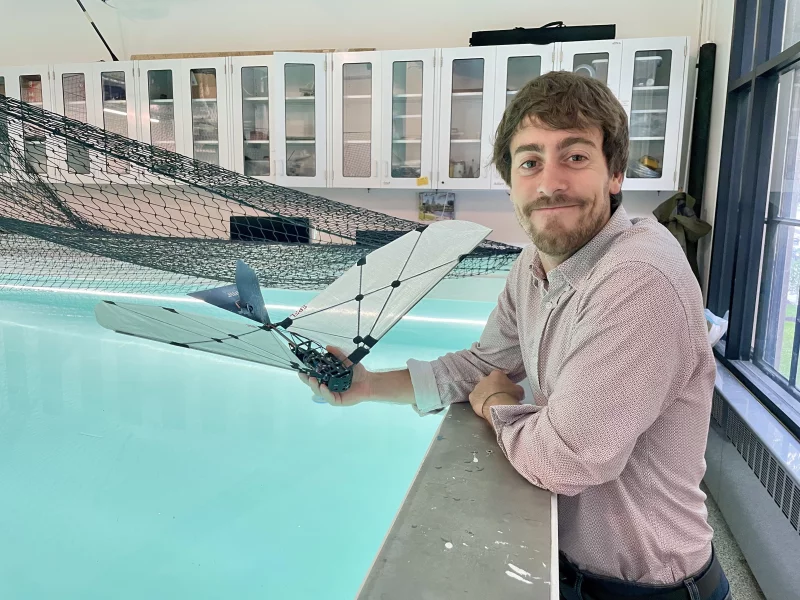
Mechanical engineer Raphael Zufferey's lab at MIT contains a giant tank filled with bright turquoise water, an array of fans that can whip up a powerful wind, and small flying robots perched everywhere you look. It's the robots that are the stars of the show here and they're inspired by diving seabirds like the Atlantic puffin, which uses its wings to both fly and swim. In a paper published Thursday in the journal Science, they describe the engineering of just such an aerial-aquatic robot. It weighs about half a pound and its wingspan measures not quite three feet, tip to tip. It also has many potential applications including observing the coastal ocean and monitoring something like a remote coral reef. The robot could fly to the reef — or something else like a pod of whales or an algal bloom — and then sample the water and collect data. Such bio-inspired robots are fertile ground to learn about both nature and engineering. (via NPR)
Hi everyone! Mathew Ingram here. I am able to continue writing this newsletter in part because of your financial help and support, which you can do either through my Patreon or by upgrading your subscription to a monthly contribution. I enjoy gathering all of these links and sharing them with you, but it does take time, and your support makes it possible for me to do that. I also write a weekly newsletter of technology analysis called The Torment Nexus.
If you go to Indonesia be sure to visit the bizarre Chicken Church
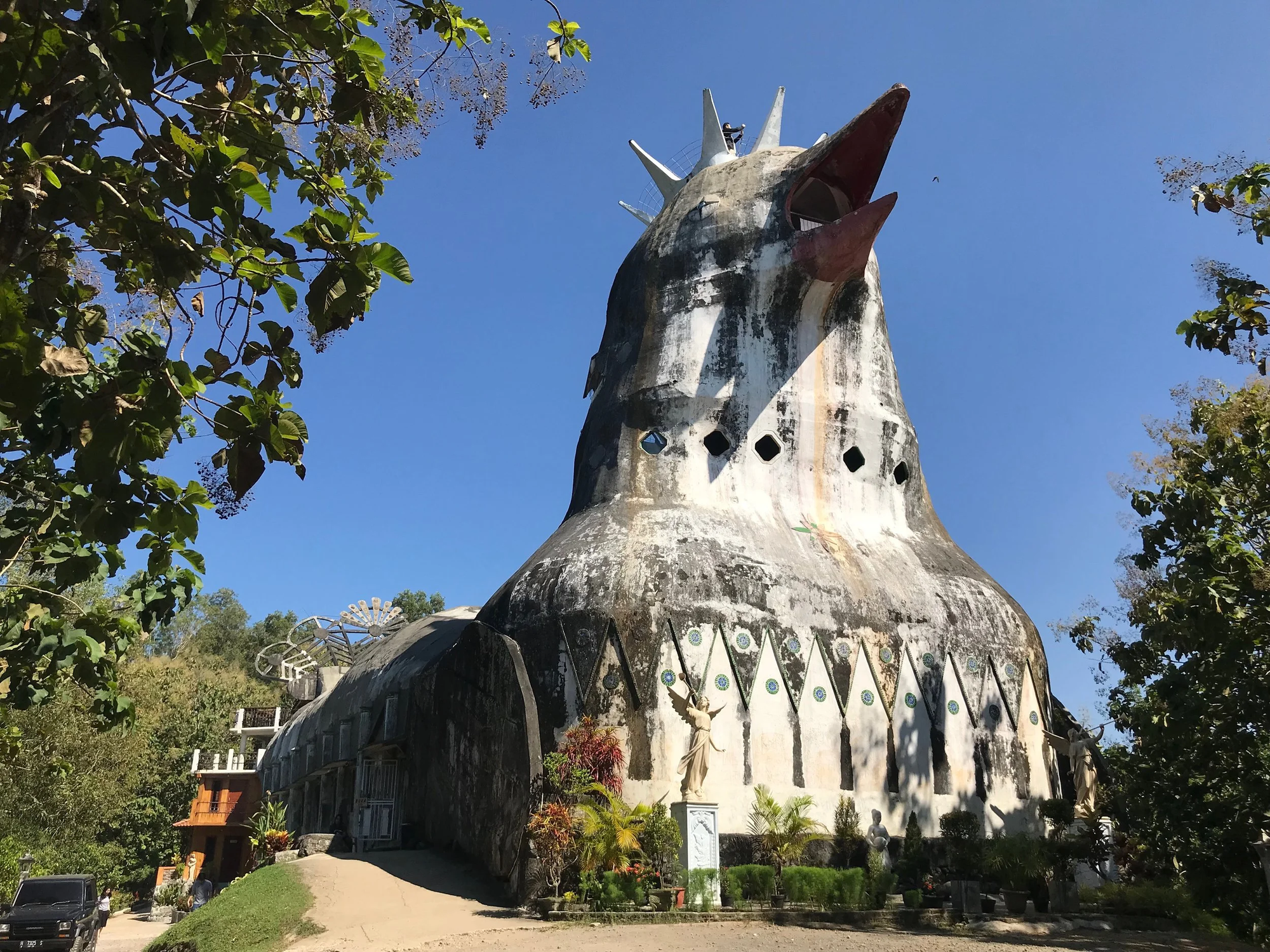
The Lord moves in mysterious ways. And sometimes that means a church that’s built to look like a dove actually comes out looking more like an ignoble chicken. I know the man behind this unusual structure had a different vision in mind, but the end result is really quite comical. The “dove” has liberty spikes atop its head, crosses on its eyes and what appears to be a studded collar, giving it the look of a blotto punk rocker. This unusual structure has taken roost in the middle of the jungle on the island of Java. The cavernous interior is still quite bare-bones, featuring a cluster of seats in rows but no altar or anything else, in fact, that recalls a place of worship. It looks like a depressing concrete community center. The tilework on the floor is the most impressive part. It’s the type of rundown place you’d imagine some doomsday cult taking over. It wasn’t ever fully furnished because its builder ran out of money. It’s rumored to be haunted, home to kuntilanak, vampiric female ghosts from Indonesian folklore. (via NSIA)
Some bees make silk in much the same way spiders do and scientists say we can use it

While the world drowns in plastic, researchers are on the hunt for practical materials that are lightweight, tough, and biodegradable. In recent years, scientists have increasingly turned to the natural world for inspiration – with a whole lot of research focusing on the impressive features of spider silk. But there's another promising alternative hiding in plain sight: bee silk. If you're scratching your head right now, you're not alone. Most people have never heard of bee silk. "Silk production is far more widespread in nature than most people realize," said Oran Wasserman, a molecular biologist who completed his doctorate at Utah State University in Dr. Justin A. Jones' Spider Silk Lab. "Silk has evolved independently many times, with at least 23 separate origins in insects alone," Wasserman explained, including ants, bees, and wasps. Earlier this year, Wasserman and colleagues became the first to create a film of a specific type of bee silk – an important first step in harnessing its power. (via Science Alert)
Here's how to escape a bull if you have the nerve

Acknowledgements: I find a lot of these links myself, but I also get some from other places that I rely on as "serendipity engines," such as The Morning News from Rosecrans Baldwin and Andrew Womack, Jodi Ettenberg's Curious About Everything, Dan Lewis's Now I Know, Robert Cottrell and Caroline Crampton's The Browser, Clive Thompson's Linkfest and Why Is This Interesting by Noah Brier and Colin Nagy. If you come across something you think should be included here, feel free to email me at mathew @ mathewingram dot com