Marmot researchers set up an OnlyFans to get funding

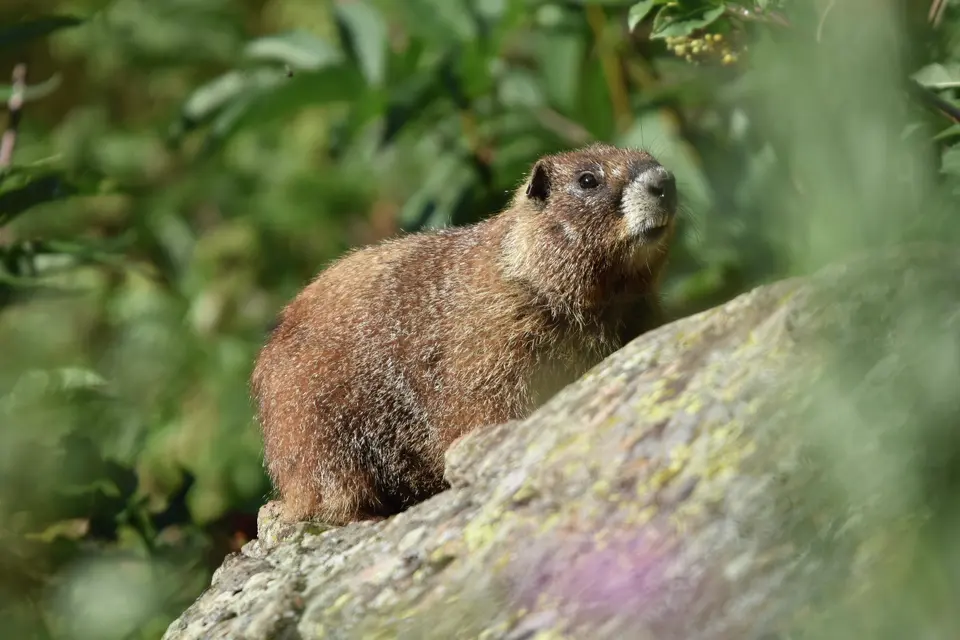
Funding for scientific research in the United States is at a record low after the Trump administration canceled billions of dollars in research grants last year, derailing work focused on diversity, climate change, and other hot-button topics. For Daniel Blumstein, a professor in the Department of Ecology and Evolutionary Biology at the University of California, Los Angeles, those changes reflect a wider priority shift that has caused support for his work to slowly dwindle. For years, Blumstein has overseen one of the longest-running studies of free-living mammals in the world, focused on yellow-bellied marmots in central Colorado. Marmots — soccer ball-sized rodents — are easily tagged and captured, highly social and vocal, and don’t move vast distances, all of which makes them an ideal species to study over time. And since 1962, generations of “Marmoteers” have observed these animals to learn about everything from their social behavior to their communication to how they’ll adapt to climate change. (via SFGate)
Meet the man who has made more than six million edits on Wikipedia
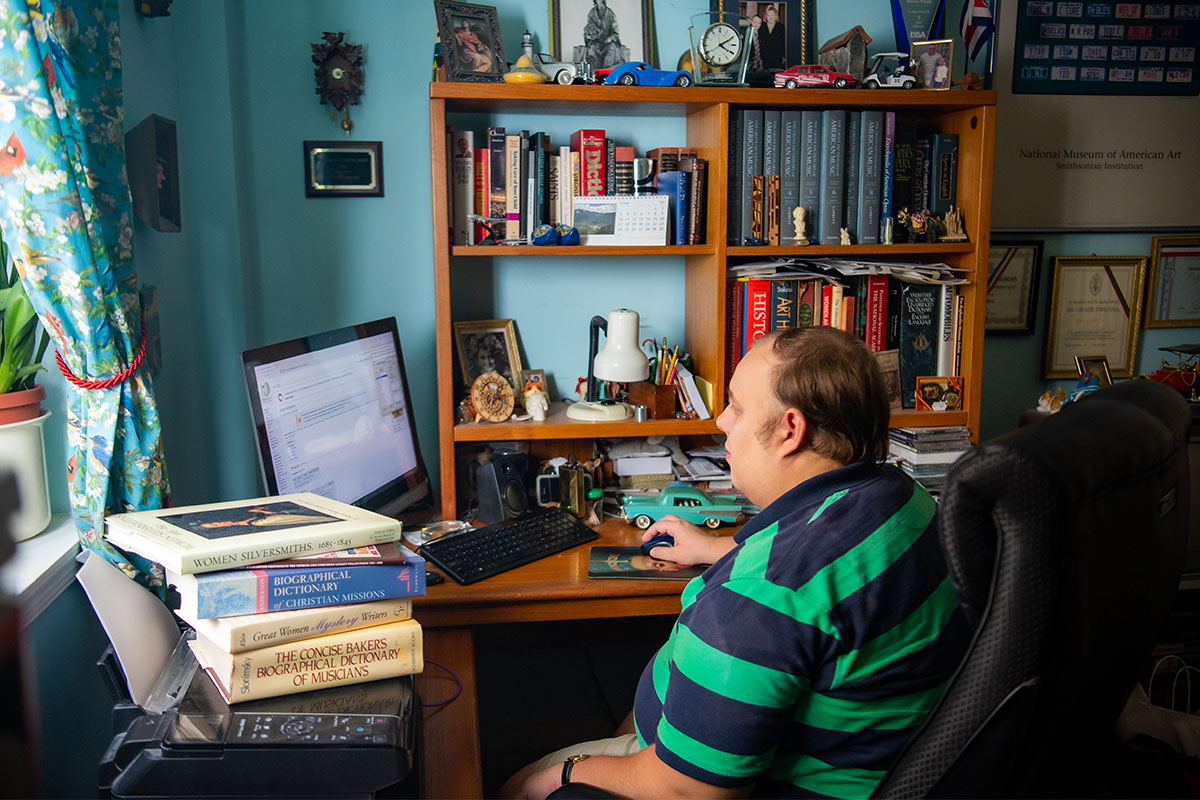
Steven Pruitt spends his evenings identifying errors that most people never notice and making fixes that hardly anyone ever thanks him for. He toils at a desk in Alexandria, Virginia, surrounded by books—the kind of working clutter that suggests a long relationship with paper rather than a fetish for screens. And yet his work is necessarily digital; after dinner, and sometimes late into the night, he uses his desktop computer to correct dates, clean up syntax, standardize categories, and occasionally write entire biographies of people on Wikipedia, the free online encyclopedia. Pruitt is forty-two, and works full time as a records-management contractor for the federal government. After graduating from the College of William & Mary, in 2006, he moved back in with his parents and in recent years, he helped his mother care for his father. Pruitt has made more than six million edits to Wikipedia and created more than thirty thousand articles. He is widely regarded as the most prolific Wikipedian in the world. (via The New Yorker)
Lost shipping containers became an accidental scientific goldmine
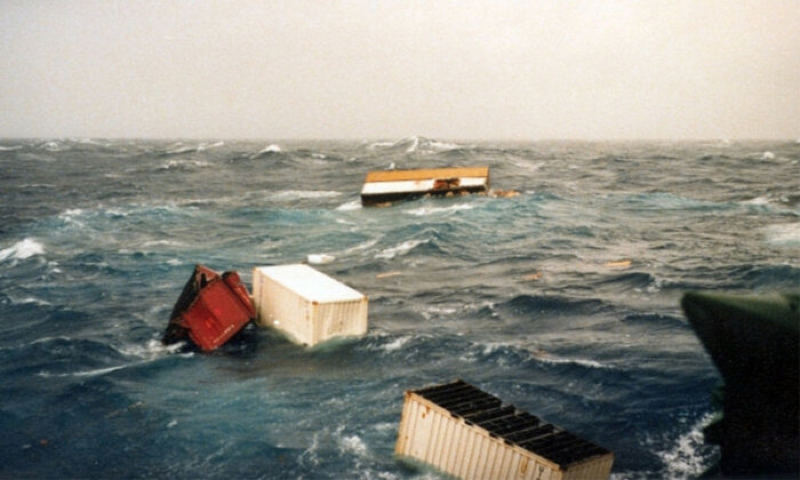
To the casual observer, the look and feel of shipping containers suggests a world of smooth, lossless transportation, almost immaterial in its implementation of a logistical ideal. However, the system is far from lossless. In fact, during storms and shipwrecks, shipping containers regularly go overboard. Nobody knows exactly how many of these vast, 20- or 40-foot-long steel capsules are lost each year, but estimates suggest that of the hundreds of millions in circulation annually, several thousand containers vanish — sometimes forever. And what becomes of the containers that disappear? In May 1990, the Hansa Carrier, a German cargo ship traveling from Korea to the U.S., lost 21 containers in a Pacific storm north of Japan, and four of the containers broke open. The payload, more than 60,000 pairs of Nike sneakers, poured out into the sea. However, for Curtis C. Ebbesmeyer, an oceanographer based in Seattle, the mishap presented a unique research opportunity. (via MIT Press)
Hi everyone! Mathew Ingram here. I am able to continue writing this newsletter in part because of your financial help and support, which you can do either through my Patreon or by upgrading your subscription to a monthly contribution. I enjoy gathering all of these links and sharing them with you, but it does take time, and your support makes it possible for me to do that. I also write a weekly newsletter of technology analysis called The Torment Nexus.
Radiation fruit: How 1950s ‘gamma gardens’ created today’s grapefruit
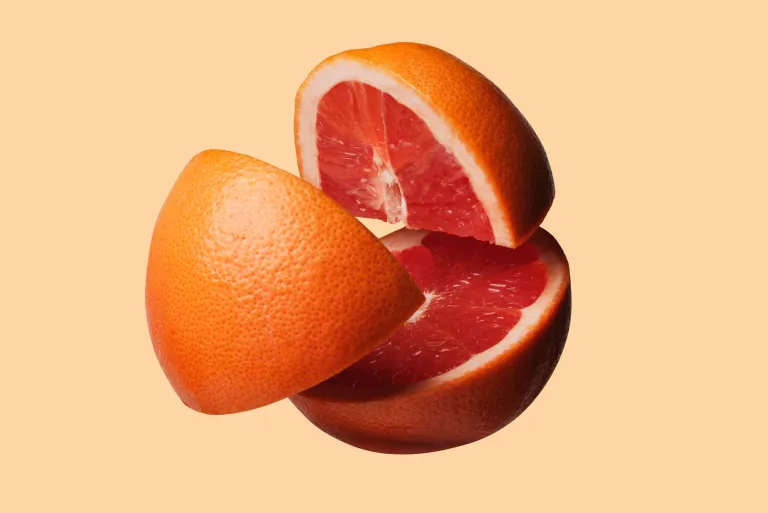
The ruby-red grapefruit is a staple of grocery stores’ produce section. Its rosy-colored flesh is sweeter and more mellow than that of a yellow grapefruit, and has become a familiar favorite across the United States. The grapefruit, so named because it grows in clusters vaguely reminiscent of grapes on a vine, is actually an accidental hybrid. The first grapefruit seedling, a cross between a Jamaican sweet orange and an Indonesian pomelo, sprouted on the island of Barbados in the 18th century. George Washington tasted grapefruit during a visit to Barbados between 1750 and 1751, and noted the experience in his journal. The first pink grapefruit, a chance mutation among the otherwise pale-yellow-fleshed fruits, was discovered in 1906. Finding the color appealing, growers propagated more of them. This pink grapefruit, though, was not quite the same as the varieties available in grocery stores today. For ruby-red and other trademarked grapefruit varieties, we can thank radioactivity. (via Popular Science)
A near-death experience led to the discovery of an ancient sea dragon
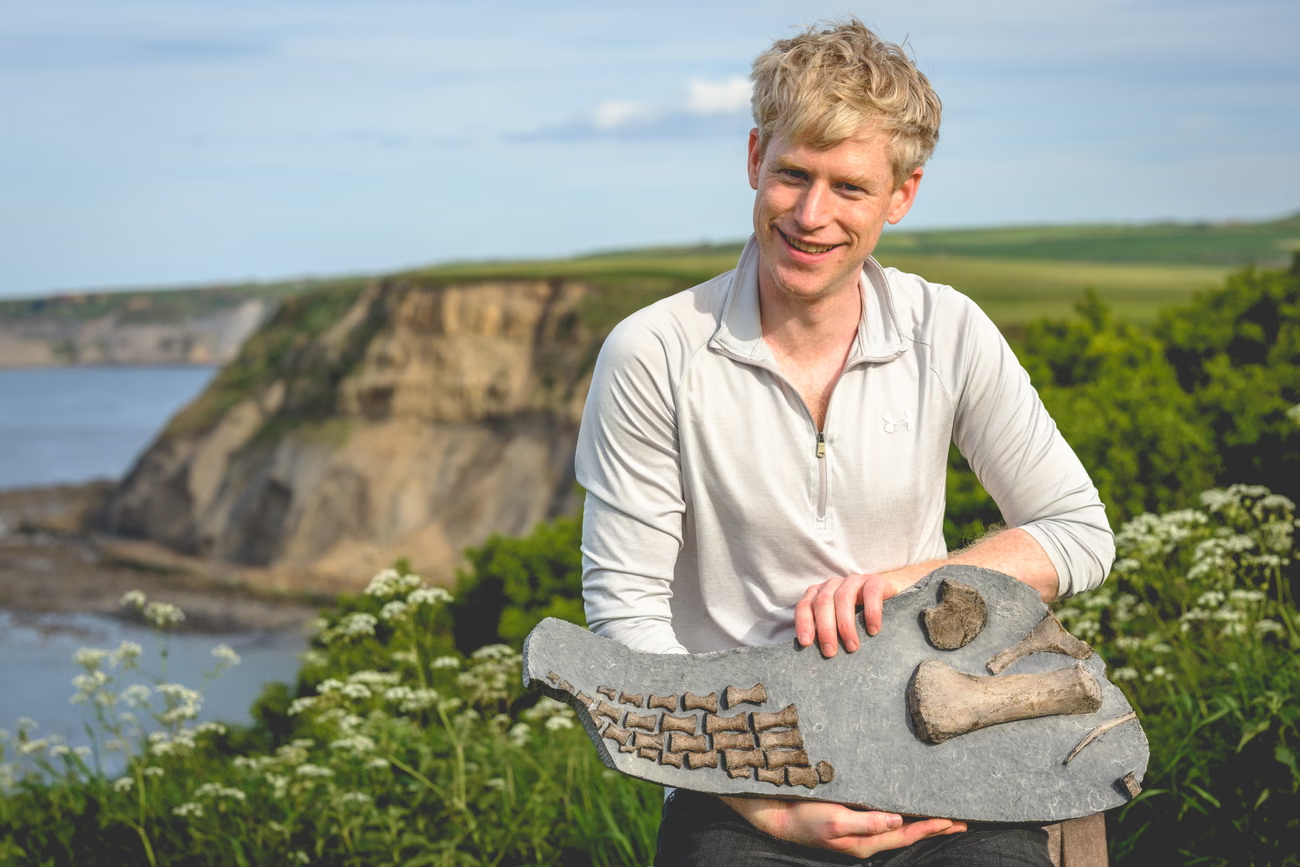
When Matthew Myerscough walks along a beach, he cannot help hunting for fossils. It was on Lavernock beach near Penarth, south Wales, that he recently stumbled across the fossilised bone of an early type of plesiosaur, a marine reptile that roamed the oceans while dinosaurs stalked the land during the early Jurassic period. Encased in hard limestone bedrock, the 201m-year-old jaw – with its unusual spoon-shaped end – once belonged to “a sea dragon” known as a rhomaleosaur, and was the first of its kind found in Wales. For Myerscough, however, fossil hunting is not just about finding fossils. It is tied to his recovery from a terrifying near-death experience. In February 2014, he was hiking up Yr Wyddfa in north Wales when he was thrown off a cliff during an avalanche. He was discovered unconscious, barely breathing, 20 minutes later, buried beneath more than a metre of snow. It took him only a few days to recover physically after he was rescued from the mountain. But he found his thoughts returning repeatedly to the accident, the near-misses, the what-ifs. (via The Guardian)
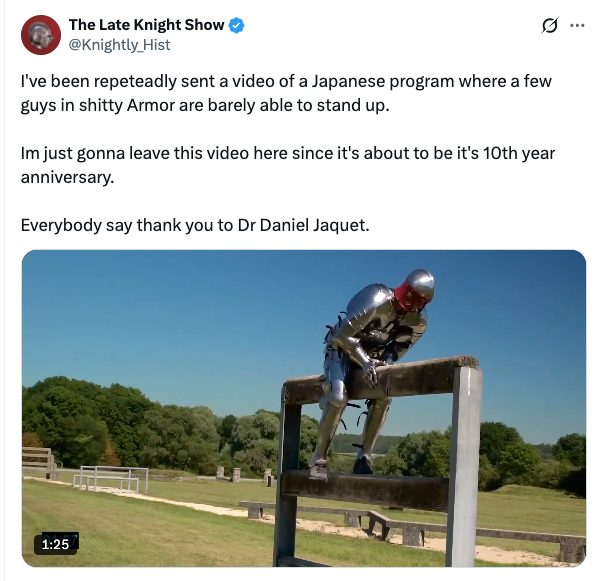
It's a myth that armor was so heavy that knights had problems moving
Acknowledgements: I find a lot of these links myself, but I also get some from other places that I rely on as "serendipity engines," such as The Morning News from Rosecrans Baldwin and Andrew Womack, Jodi Ettenberg's Curious About Everything, Dan Lewis's Now I Know, Robert Cottrell and Caroline Crampton's The Browser, Clive Thompson's Linkfest and Why Is This Interesting by Noah Brier and Colin Nagy. If you come across something you think should be included here, feel free to email me at mathew @ mathewingram dot com