Inside the secret plan to move the famous Bayeux tapestry

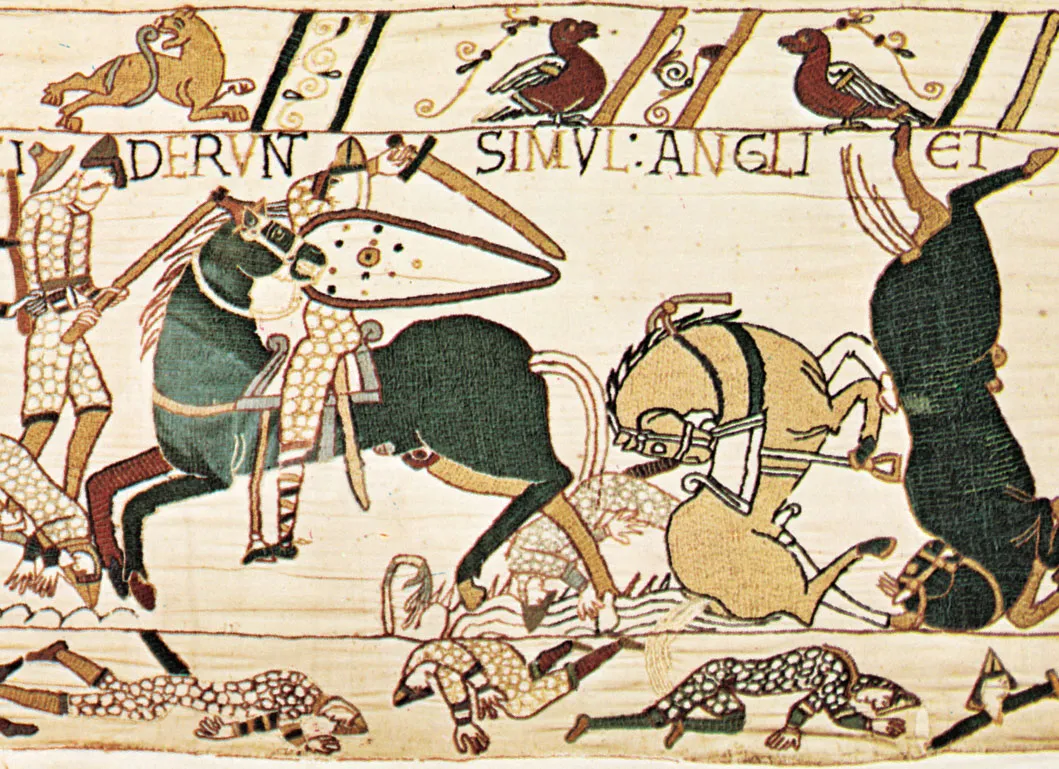
A convoy of police cars, lights flashing, tail the large yellow truck up to the back gates of London’s British Museum. It’s just before 3 a.m. on July 10, a date that has been kept under wraps for months. After the truck pulls into the museum’s loading bay, four men open its back doors to reveal a cage-like rectangular crate. Inside it is another crate, inside that crate is a metal shell, and inside that shell, folded back and forth on itself 28 times, is a precious and fragile artifact, nearly a thousand years old.The journey this truck has made over the previous 10 hours, by road and rail from northern France, was undertaken in great secrecy, due to the importance and value of the cargo within (reported to be insured for over a billion dollars). The Bayeux Tapestry is perhaps the most celebrated artwork to have survived from the Middle Ages. It is remarkable purely as an object: a narrative piece some 225 feet long. (via National Geographic)
She went from cleaning a space toilet to planning a Mars exploration mission
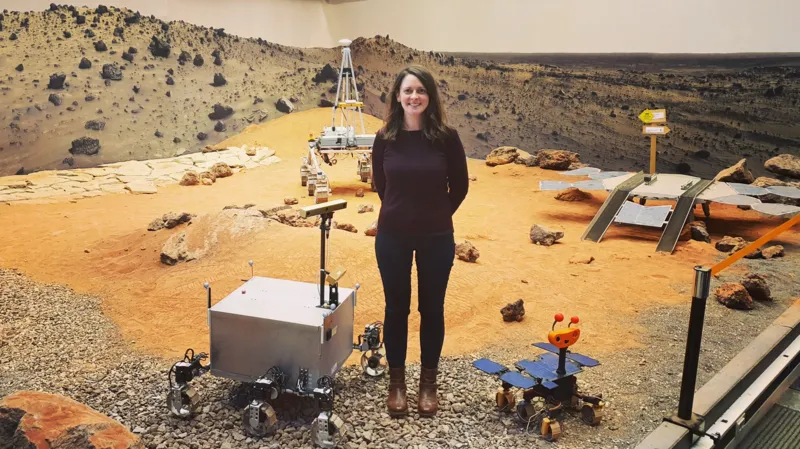
Cleaning a space toilet while on work experience was Claire Parfitt's first introduction to a career away from Earth's orbit. But she never imagined her time at the National Space Centre in Leicester, when she was 14, would one day see her lead a team exploring future Mars missions. Parfitt, originally from Nottingham, now works for the European Space Agency's European Space Research and Technology Centre in the Netherlands. The 42-year-old joined the space industry after securing a physics degree and a PhD in spacecraft power systems engineering. She has since worked on missions such as the ExoMars Rosalind Franklin rover, which will explore the surface of Mars. She has also worked on the SMILE mission - officially known as the Solar wind, Magnetospheric, Ionic Link Explorer mission - which uses four science instruments to study how Earth responds to the solar wind from the Sun. (via the BBC)
After 1,700 years in one place why did the Polynesians suddenly sail east?

The same question drives both the plot of Moana and decades of archaeological research: why, after centuries of relative stability, did Polynesian voyagers suddenly begin settling islands thousands of kilometres away across the Pacific? New climate evidence may help us understand why they embarked on these voyages. The backdrop to Moana is the mystery of the “long pause”. This was a period when Polynesian ancestors sailed east into the Pacific as far as the island archipelagos of Samoa and Tonga, arriving around 3,000 years ago. They brought with them distinct pottery styles and an island-based culture. Yet, for the next 1,700 years, there was little voyaging. Archaeological evidence suggests that populations in Tonga and Samoa grew and developed their own distinct post-Lapita culture. Then, between 900 and 1100 AD, ancestral Polynesians suddenly undertook a massive phase of eastward migration. (via The Conversation)
Hi everyone! Mathew Ingram here. I am able to continue writing this newsletter in part because of your financial help and support, which you can do either through my Patreon or by upgrading your subscription to a monthly contribution. I enjoy gathering all of these links and sharing them with you, but it does take time, and your support makes it possible for me to do that. I also write a weekly newsletter of technology analysis called The Torment Nexus.
This Pasadena bank robber had one identifying trait: he was in a wheelchair

A man in a wheelchair handed a teller a note claiming he had a gun, took a few thousand dollars from a South Lake Avenue bank Friday afternoon and got away. Authorities have not yet found him. The robbery happened about 2:47 p.m. at a First Citizens Bank branch in the 90 block of South Lake Avenue, Pasadena police Lt. Anthony Russo said. The man passed the teller a note saying he was there to rob the bank and had a gun, and kept one hand in his pocket, Russo said. No weapon was seen. The teller handed over U.S. currency in mixed denominations — a few thousand dollars, by Russo’s estimate, though the exact amount has not been released. The man was last seen heading south on Lake Avenue. Arriving officers canvassed the area but did not find him. Russo described the suspect as a Black man between 30 and 40 years old, wearing a black windbreaker and dark pants. (via Pasadena Now)
127 years ago a coffin fell from the sky and scientists have figured out part of the puzzle
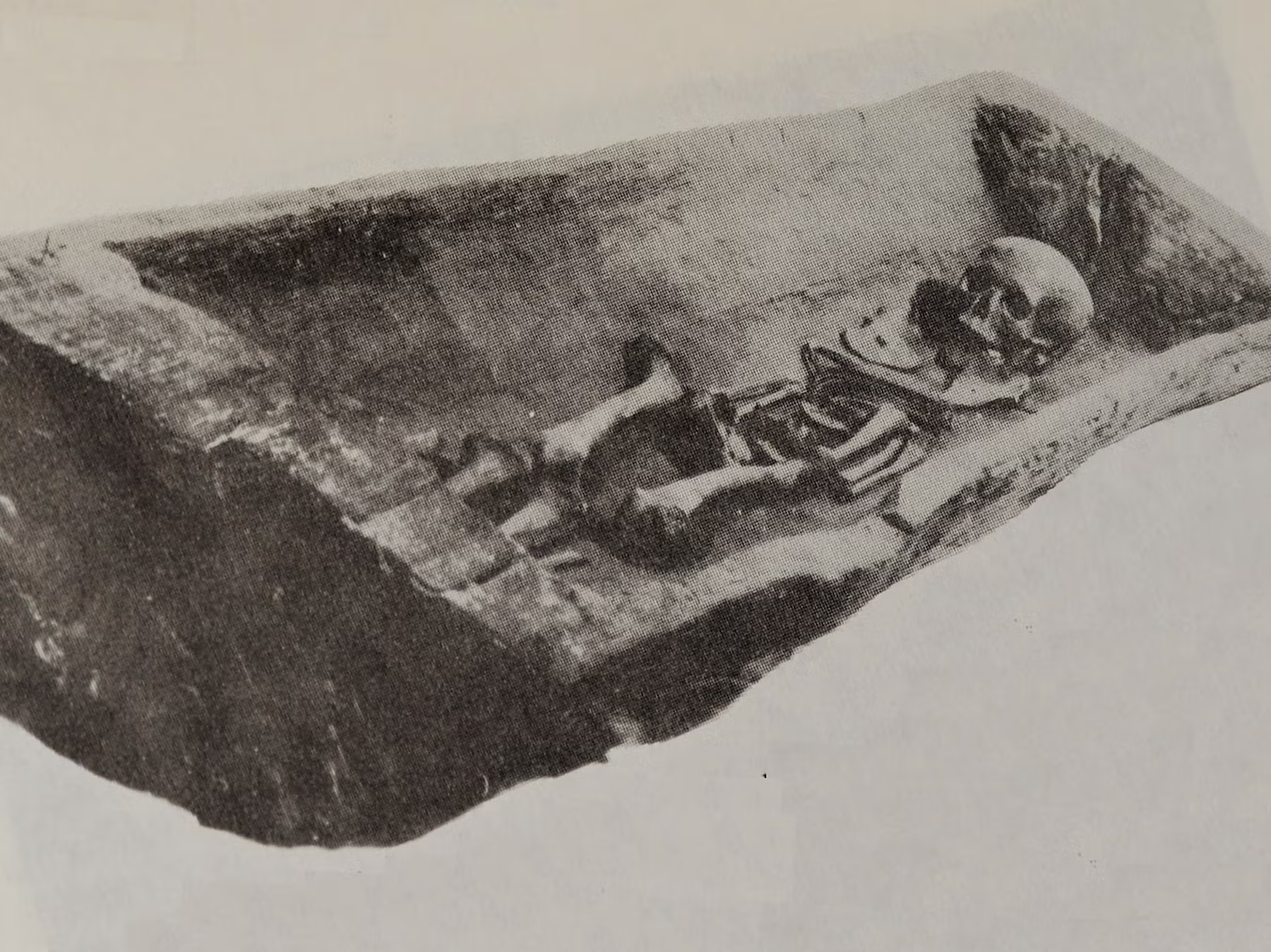
Archaeological finds aren’t always unearthed from the ground or recovered from caves and catacombs. Sometimes, they basically fall from the sky. When a coffin crashed down from a cliff near the Baltic Sea in Poland in 1899, it was (unsurprisingly) the last thing anyone expected. Made from the hollowed trunk of an oak tree and exceptionally preserved, it protected the bones of a young woman from the ancient Wielbark culture. She was buried with a bronze fibula, a necklace of glass and amber beads, a brooch, and bronze bar bracelets; was laying on a cowhide; and had a wooden stool at her feet. Even more recent investigations found that, though the burial appeared to be purposely set apart from other graves, it was unlikely the deceased was a princess or aristocrat — her burial was too similar to others from the Roman Iron Age. (via Popular Mechanics)
What it's like to make friends with an octopus

Acknowledgements: I find a lot of these links myself, but I also get some from other places that I rely on as "serendipity engines," such as The Morning News from Rosecrans Baldwin and Andrew Womack, Jodi Ettenberg's Curious About Everything, Dan Lewis's Now I Know, Robert Cottrell and Caroline Crampton's The Browser, Clive Thompson's Linkfest and Why Is This Interesting by Noah Brier and Colin Nagy. If you come across something you think should be included here, feel free to email me at mathew @ mathewingram dot com