The sizes of UK shoes are based on the length of a barleycorn

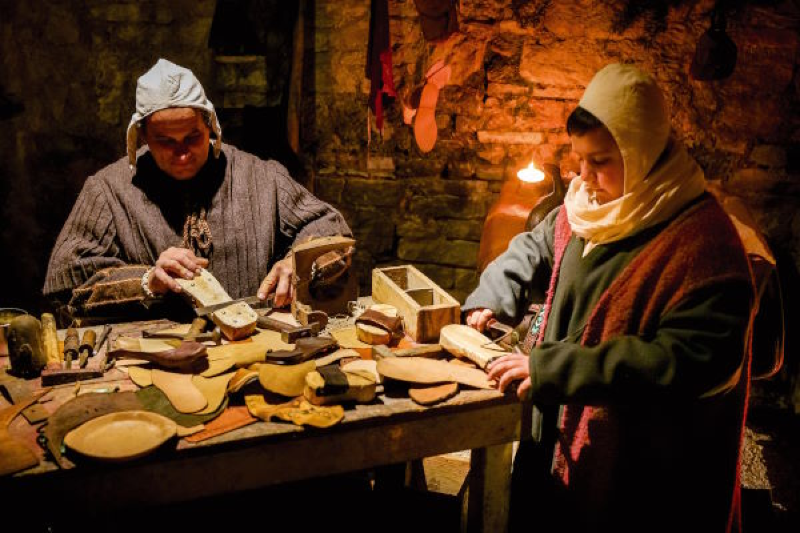
Most forms of measurement from times past – even some in common use today – are based on some part of the human body or some action a person may take. For example, the ‘inch’ was originally the width of the middle of the thumb across the knuckle. The ‘foot’ was just that – the length of an adult male foot, the ‘span’ was the full stretch of the hand from the tip of the little finger to the thumb (about nine inches) and the ‘yard’ was the length of the outstretched arm, from shoulder to fingertips, or on occasion, nose to fingertips. In England, the humble barleycorn – literally, the kernel from the seed of the barley plant – was chosen to be the basis of a new measuring system. According to The Composition of Yards and Perches, a mediaeval statute which is said to date to somewhere between 1266 and 1303, ‘three grains of barley dry and round do make an inch, 12 inches make one foot, three feet make one yard, five yards and a half make a perch, and 40 perches in length and four in breadth make an acre’. (via Satra.com)
A billionaire who invested in Apple in 1980 just bought Ferrari's first EV for $40 million

He has owned Apple since its IPO, and now he owns a Ferrari shaped by the same design mind that helped define the company’s most recognizable products. That makes Herbert A. Wertheim’s $40 million purchase of the Ferrari Luce more compelling than a simple tale of a billionaire spending lavishly on a new car. Wertheim bought Apple shares at the company’s 1980 IPO and continued building his position when the stock traded at around $10 during the 1990s. By 2019, his 1.25 million Apple shares were worth about $195 million. Now 87, the optometrist, inventor, and veteran investor has acquired the first production Ferrari Luce, whose design was developed in collaboration with LoveFrom, the creative collective founded by former Apple design chief Jony Ive and Marc Newson. The car, designated Chassis 0, crossed the block at RM Sotheby’s Monterey auction for an astonishing $40 million. (via Luxury Launches)
He was the shortest batter to ever hit in the major leagues at 3 foot seven inches tall

Bill Veeck had a track record for designing some of the most elaborate marketing promotions during his four stints as a Major League Baseball owner, including an exploding scoreboard in 1960. But his most outlandish publicity stunt was sending 3ft 7in inch pinch-hitter Eddie Gaedel to the plate at a game 75 years ago Wednesday. Sporting uniform number 1/8, Gaedel was greeted with a standing ovation at Sportsman’s Park in St Louis as he came to bat in the second game of a doubleheader on 19 August 1951 for the St Louis Browns. A famous Associated Press photo shows Detroit Tigers catcher Bob Swift sitting on his knees with a ball in his glove, towering over Gaedel and his tiny strike zone. Not surprisingly, he walked on four pitches, and was immediately taken out and replaced by a pinch-runner. Many baseball traditionalists clutched their pearls about the stunt – more about undermining the seriousness of the national pastime, than out of any concern about exploitation. (via The Guardian)
Hi everyone! Mathew Ingram here. I am able to continue writing this newsletter in part because of your financial help and support, which you can do either through my Patreon or by upgrading your subscription to a monthly contribution. I enjoy gathering all of these links and sharing them with you, but it does take time, and your support makes it possible for me to do that. I also write a weekly newsletter of technology analysis called The Torment Nexus.
Lines of giant stones in France appear to be the oldest megalithic structures found to date
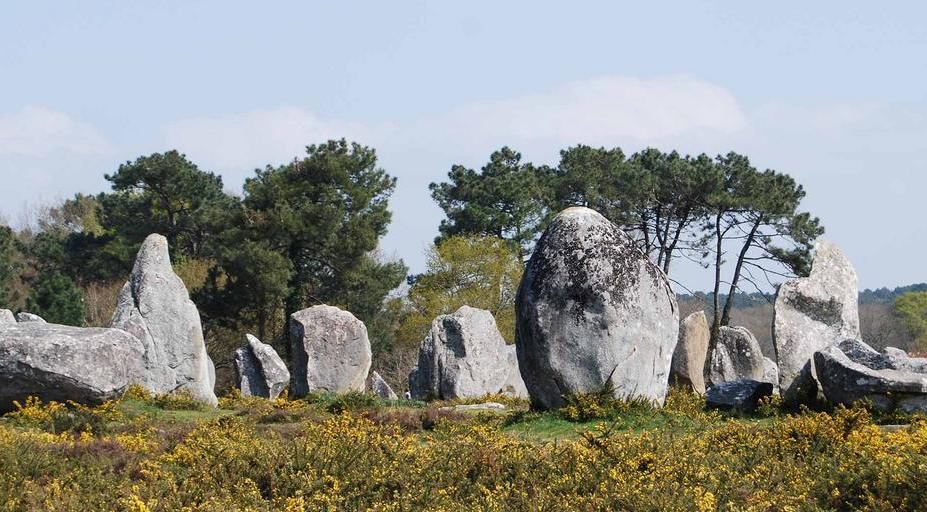
The enigmatic stone alignments in the Carnac region of Brittany, France, are among the most famous megalithic monuments in Europe – alongside Stonehenge, Menga, and the megalithic temples of Malta. For the first time, it has now been possible to date parts of these alignments with a higher precision and gain new insights into their function. This breakthrough results from a French–Swedish collaboration within the framework of the ERC-funded research project NEOSEA, led by the University of Gothenburg. “The alignments in the Carnac region now appear to be among the earliest megalithic monuments in Europe, with this section constructed between 4600 and 4300 cal BC,” says archaeologist Bettina Schulz Paulsson. More than 3,000 standing stones stretch over 10 km in the region, from Carnac/La Trinité-sur-Mer to Erdeven, forming a unique concentration of megalithic alignments. (via University of Gothenberg)
Foxes have apparently been stealing shoes from campsites in Saskatchewan

A sneaky duo has been having some fun at a Saskatchewan campground, much to the chagrin of visitors. A Facebook post by the Christopher Lake and Emma Lake Community page says a pair of foxes has been stealing shoes at the Christopher Lake campground. The foxes don’t appear to discriminate. From shoes and sandals to slippers and flip-flops, the foxes are taking them all. Commenters on the Facebook post say they’ve had everything from Crocs to Air Force Ones taken by the thieves. A ‘Fox Shoe Bin’ has been created, with recovered shoes in a lost-and-found for those with missing footwear. Campers who find missing shoes around the campground are asked to put them in the bin. (via CTV News)
Every now and then a pogo stick master appears

Acknowledgements: I find a lot of these links myself, but I also get some from other places that I rely on as "serendipity engines," such as The Morning News from Rosecrans Baldwin and Andrew Womack, Jodi Ettenberg's Curious About Everything, Dan Lewis's Now I Know, Robert Cottrell and Caroline Crampton's The Browser, Clive Thompson's Linkfest and Why Is This Interesting by Noah Brier and Colin Nagy. If you come across something you think should be included here, feel free to email me at mathew @ mathewingram dot com