The man who blew up a nuclear plant and then disappeared


At 21, Rodney Wilkinson was the best fencer in South Africa: national champion in foil and sabre, second in epee. He had toured Europe and Argentina. He had not stood on the Olympic podium, because South Africa was banned. The apartheid state had taken that from him, along with everything else it took from everyone. Eleven years after the incident, the same man was working as a contract engineer at the Koeberg nuclear power station, 19 miles north of Cape Town. He was furious with the regime that had conscripted him, sent him to fight a war in Angola he didn’t believe in, and made his country a pariah. In an act of folly or courage, in December 1982 he walked four bombs into South Africa’s only nuclear power station, weeks before it was due to come online. On 17 December, he pulled the pins, made it out of the control room, had a farewell drink with his colleagues, and then disappeared. (via The Guardian)
He accidentally discovered that his wife was a world-class Tetris player
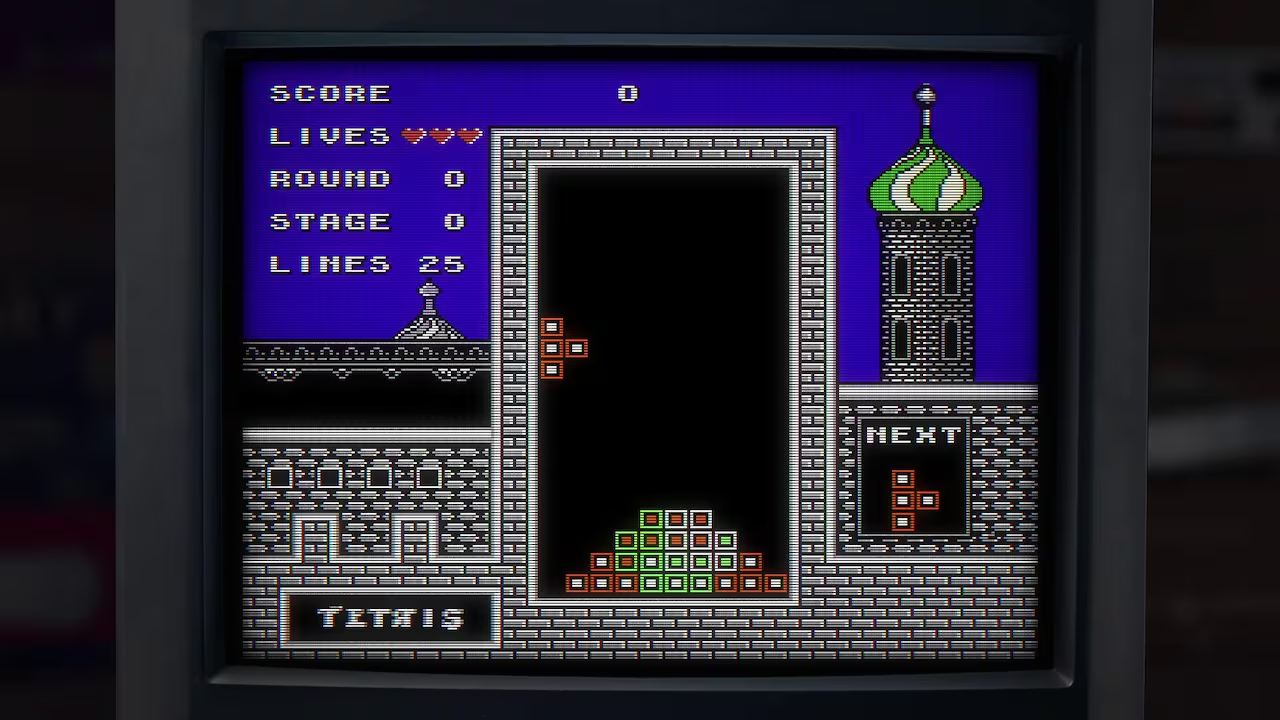
I contacted Kelly Flewin, a 29-year-old gas station attendant in Winnipeg, Manitoba, and the senior referee at twingalaxies.com, who told me that any record in one of the more popular classic games would always set the classic gaming world on fire. "It's funny," I told him. "We have an old Nintendo Game Boy floating around the house, and my wife will sometimes dig it out to play on airplanes and long car rides. She's weirdly good at it. She can get 500 or 600 lines, no problem." After I hung up the phone, I went to the bedroom and woke my wife, Lori. "Honey," I said. "You're not going to believe this, but I just got off the phone with a guy who's in charge of video game world records, and he said the world record for Game Boy Tetris is 327 lines, and he wants us to go to New Hampshire this spring so you can try to break the world record live in front of the judges at the world's largest classic video game tournament. (via Boston.com)
A legal battle lasted for 25 years over a two-second sample of a song

In 1977, the German band Kraftwerk released the album Trans Europa Express, which contained the track Metall auf Metal. Twenty years later, producer Moses Pelham used a two-second loop from that song in a track entitled Nur Mir by artist Sabrina Setlur. Two years later, in 1999, members of Kraftwerk filed a copyright infringement lawsuit against Pelham in the Hamburg Regional Court. It was the first salvo in what would become one of the longest-running copyright infringement cases in history. However, a recent decision by the European Court of Justice may have finally brought an end to the case. After more than 25 years of legal wrangling, the court ruled in favor of Pelham, finding that his use of the loop was protected under European copyright law. It’s a case that is older than this site and many of the people who read it. (via Plagiarism Today)
Hi everyone! Mathew Ingram here. I am able to continue writing this newsletter in part because of your financial help and support, which you can do either through my Patreon or by upgrading your subscription to a monthly contribution. I enjoy gathering all of these links and sharing them with you, but it does take time, and your support makes it possible for me to do that. I also write a weekly newsletter of technology analysis called The Torment Nexus.
Why is there an American penny on Mars?
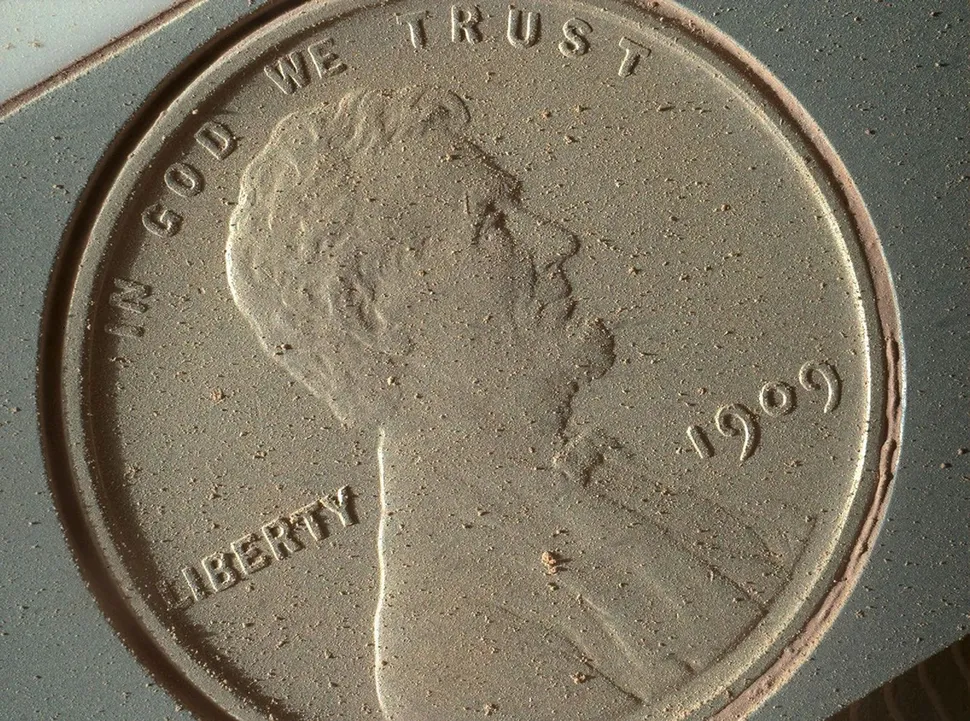
Can you imagine picking up a lucky penny on Mars? One rover already has. In this snapshot from the Red Planet, Martian dust covers a penny that has traveled farther than any human (so far). NASA's Curiosity Rover captured a surprisingly Earthly image on the surface of Mars. With its Mars Hand Lens Imager, the rover snapped a close-up image of a penny. This image was captured on Oct. 2, 2013 on the 411th sol, or Mars day, of the Curiosity rover's mission on the planet. On the penny's surface, reddish Martian dust has collected over the 14 months that the mission had already been on Mars by that point. It's neat to see a penny on another planet. It's a (now endangered) relic from our own world minted over 100 years ago, in 1909. But this penny serves a surprisingly important purpose: scale. In photographs, it can sometimes be difficult to tell how big or small something is without an object of known size in frame for scale. (via Space.com)
He invented the saxophone and dozens of other instruments and went bankrupt three times
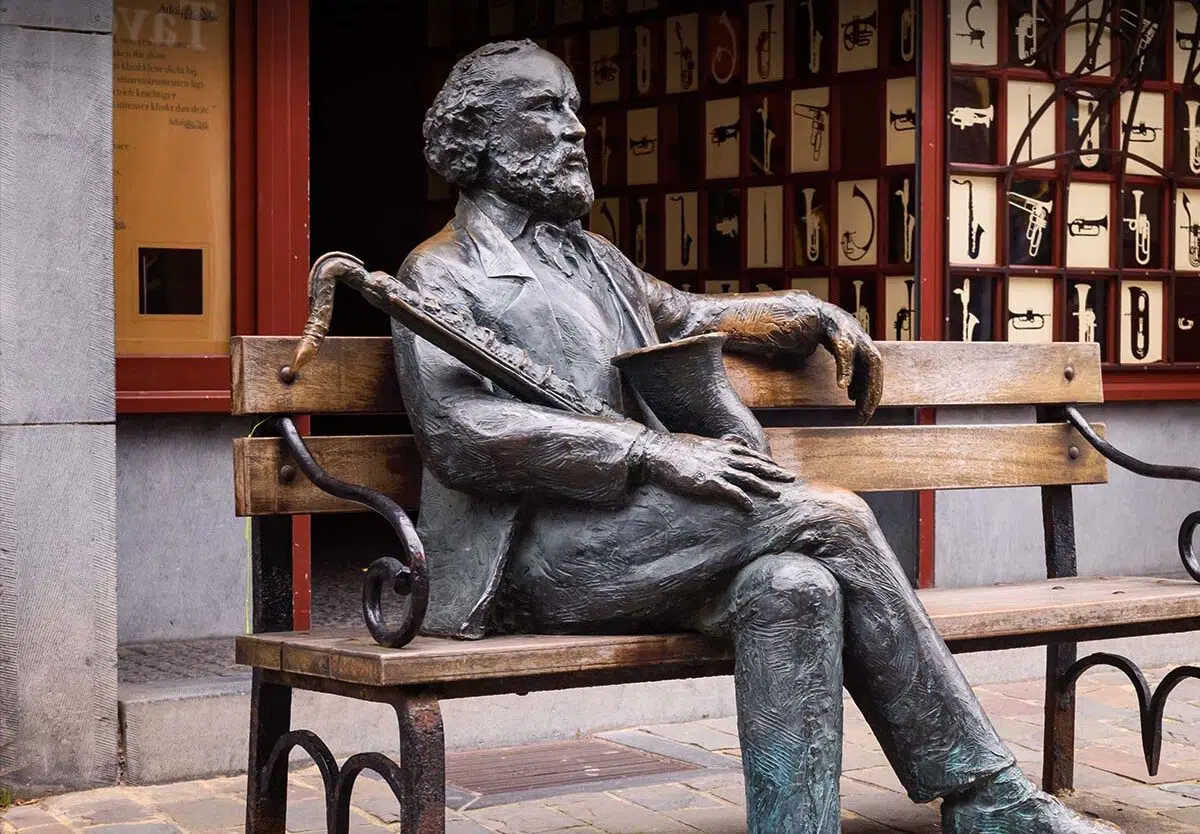
After leaving the Royal Conservatory of Brussels, Adolphe Sax began to experiment with new instrument designs, while his parents continued their business of making conventional instruments. Sax's first important invention was an improvement in bass clarinet design, which he patented at the age of 24. He relocated permanently to Paris in 1842 and began working on a new set of valved bugles. Hector Berlioz was so enamoured of these that he arranged in February 1844 for one of his pieces to be played entirely on saxhorns. Sax made two more inventions, though neither was ever actually built: First, he designed the "Saxotonnerre", a massive, locomotive-powered organ which was supposed to be so loud as to be heard across all of Paris at once. The second was the "Saxocannon", a giant cannon whose half-ton round shots would be powerful enough to completely destroy an "average-sized city." (via Wikipedia)
He came to her concert to apologize for putting gum in her hair in 2nd grade

Acknowledgements: I find a lot of these links myself, but I also get some from other places that I rely on as "serendipity engines," such as The Morning News from Rosecrans Baldwin and Andrew Womack, Jodi Ettenberg's Curious About Everything, Dan Lewis's Now I Know, Robert Cottrell and Caroline Crampton's The Browser, Clive Thompson's Linkfest and Why Is This Interesting by Noah Brier and Colin Nagy. If you come across something you think should be included here, feel free to email me at mathew @ mathewingram dot com