Russian hitman busted because he used Google Translate


When Denis Alimov passed through the arrivals hall of El Dorado International Airport in Bogotá on the morning of February 24, 2026, he had the outward appearance of a middle-aged Russian tourist escaping Moscow's harsh winter: a salt-and-pepper goatee, a light travel bag, a connecting flight from Istanbul, and a reservation at a Cartagena beach resort. Within minutes, Colombian migration officers had him in handcuffs. The Interpol Red Notice — activated as he flew in at the request of federal prosecutors in the Southern District of New York — had been waiting at the gate. Alimov stood accused of orchestrating the attempted assassination of two prominent Chechen dissidents based in Europe, having offered a bounty of $1.5 million on each of their heads — payable whether the target arrived in Russia dead or merely, in the deadpan vocabulary of Russian intelligence, “legally deported.” The FBI had been tracking Alimov for over a year — in part, by reading the Google Translate-assisted exchanges between him and one of his would-be foreign assassins. (via The Insider)
Police responded to reports of gunfire and found the shooter was a dog

Police responding to reports of a shotgun blast at a convenience store sounds like the opening of countless American crime movies, but when cops in Nebraska responded to a recent such call they found an unusual culprit: a dog. Local TV station KNOP News 2 reported that police in the town of Scottsbluff were called out to a local store recently after reports of a blast involving a shotgun. Upon arrival they found a truck with blast damage in one of its doors and a woman who had been struck in the arm by a pellet from a shotgun. However, investigation showed a canine cause behind the shooting when it was revealed the blast happened as the vehicle had pulled up to the store as a dog had been moving from one side of its back seat to another. Somehow, the dog had triggered the shotgun – which had a live round chambered – to fire, damaging the vehicle and striking a female passerby. (via The Guardian)
The text in every printed version of this author's book is slightly different from the others
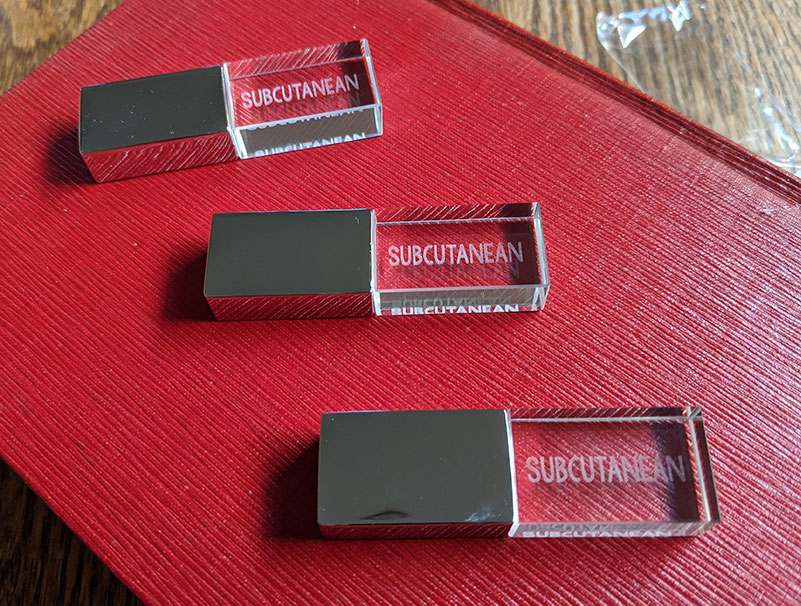
Subcutanean, my novel that changes each time it’s printed, works like this: there’s a master text with the whole story, occasionally splitting into alternate versions and variants at the level of words, sentences, or even whole scenes. Each time the book is “rendered” for a new reader, a single option from each set of variants is randomly chosen, resulting in one particular version of the story. I wrote earlier about the aesthetics of why you’d do this, but the how is interesting too. I call this kind of writing “quantum authoring,” because the author must hold all the possible versions in their head at once and keep each one interesting and consistent. Unfortunately, this kind of writing is often intertwined with programming or other mentally exhausting tasks, like operating a complex tool or remembering a finicky syntax. For this project, I wanted to write in a format that was as lightweight and unobtrusive as possible. (via Aaron Reed)
Hi everyone! Mathew Ingram here. I am able to continue writing this newsletter in part because of your financial help and support, which you can do either through my Patreon or by upgrading your subscription to a monthly contribution. I enjoy gathering all of these links and sharing them with you, but it does take time, and your support makes it possible for me to do that. I also write a weekly newsletter of technology analysis called The Torment Nexus.
Archaeologists have found an Atlantis-like underwater city in Kazakhstan

Beneath the shallow edge of Lake Issyk-Kul in Kyrgyzstan, archaeologists have identified the remains of a lost medieval city. Their latest underwater survey revealed a Muslim cemetery, public buildings, and streets now hidden under just a few yards of water. The team believes a powerful earthquake in the early 1400s pushed this settlement under the lake, freezing a moment in its history. Lake Issyk Kul already ranks among the world’s deepest mountain lakes, but this discovery hints at how much of its past still lies underwater. In fall 2025, an international team surveyed four zones along the northwestern shore, working in water only 3 to 13 feet deep. Divers mapped walls, collapsed buildings, and wooden beams while underwater drones filmed every stone for later analysis on shore. The work was led by Maxim Menshikov, an underwater archaeologist at the Institute of Archaeology of the Russian Academy of Sciences. (via Earth.com)
Hackers are turning disposable vapes into musical synthesizers
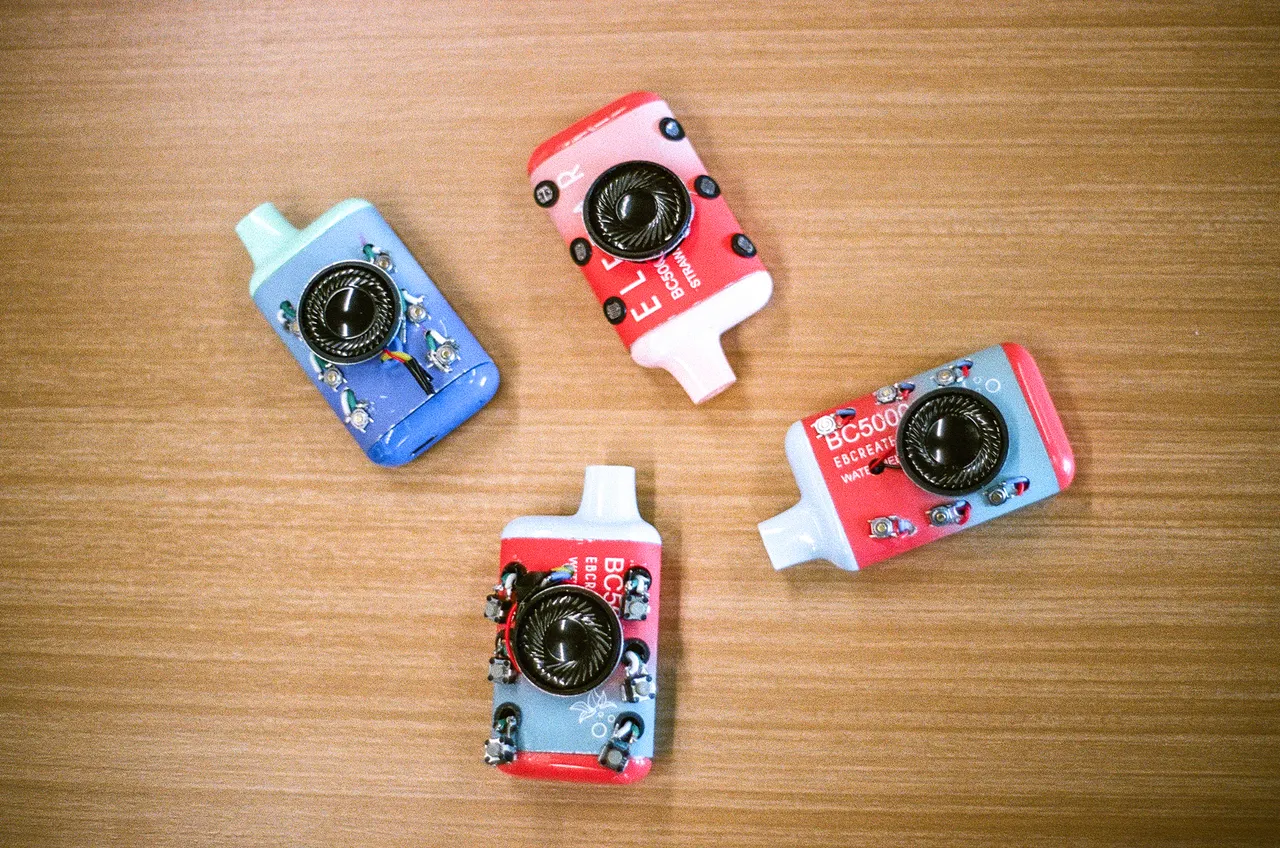
Vapes are bad for your body and definitely bad for the planet; the world’s landfills are stuffed with disposable vape cartridges. But now there’s a way to give all that e-waste a more pleasant tune. The Vape Synth is a project created by a group of makers in New York City who break apart spent Elf Bar nicotine vaporizers and hack them into digital musical instruments. The resulting device still looks like a vape cartridge, but with a small speaker nestled amid an array of lights and buttons. To play it, you put your mouth on it and draw your breath inward, like you would on a vape. Think of it like a digital ocarina. The Vape Synth repurposes the vaporizer's existing low-pressure sensor. By sucking wind through the sensor—maybe it's a reverse digital ocarina—you trigger an oscillator circuit and generate an audio signal. Pressing the buttons triggers different tones. The noises that come out are, frankly, screechy and chaotic. (via Wired)
She got death threats in Iran for posting women getting haircuts so this is what she did

Acknowledgements: I find a lot of these links myself, but I also get some from other places that I rely on as "serendipity engines," such as The Morning News from Rosecrans Baldwin and Andrew Womack, Jodi Ettenberg's Curious About Everything, Dan Lewis's Now I Know, Robert Cottrell and Caroline Crampton's The Browser, Clive Thompson's Linkfest and Why Is This Interesting by Noah Brier and Colin Nagy. If you come across something you think should be included here, feel free to email me at mathew @ mathewingram dot com