The rise and fall of the world's only female yakuza gangster


In almost 40 years, Mako Nishimura never lost a fight. She told me this as if it were as obvious as night following day. Nishimura is 5ft-nothing and slight of build. She is also probably the only woman ever to have been a full-fledged yakuza, a member of Japan’s feared and rule-bound criminal underworld. She must have defeated many male gangsters. How, I asked her, did she do it? “First the legs,” she said, hands clasped, maintaining the calm demeanour of a village priest. Nishimura’s relaxed attitude to violence is what first caught the attention of yakuza members in 1986, when she was a 19-year-old runaway and former juvenile-prison inmate living in Gifu, a city near Nagoya. She was getting more deeply involved in serious crime, too, running sex workers and extorting local businesses, as well as selling – and taking – large quantities of methamphetamines. Yakuza life nonetheless appealed. It offered respect, protection and, above all, the opportunity to make big money. (via The Guardian)
This is what happened when a software engineer decided to randomize his entire life

Max Hawkins had started to feel trapped by his optimized life. Every weekday, he woke up at exactly 7 a.m. and grabbed a single-origin pour-over. He got on his bike and rode 15 minutes and 37 seconds along the best possible route to Google, where he was a software engineer. He spent eight hours working, then met friends for a beer at a craft brewery or a hang in Mission Dolores Park. But despite his great job and charmed life, something felt off.One afternoon at work, while reading an academic paper, he located the source of his ennui. The study, which tracked the movements of 100,000 anonymized mobile-phone users over six months, had found that human mobility is surprisingly predictable: Our days default to simple, repeatable patterns. The engineer part of Max’s brain thought the research was pretty cool, but he also found it unsettling. “There was something very programmed about the way I was living,” he told me. If his movements were that predictable, where did that leave his free will? (via The Atlantic)
A Swiss invention called Mikiphone was the 1920's version of the iPod or the Walkman
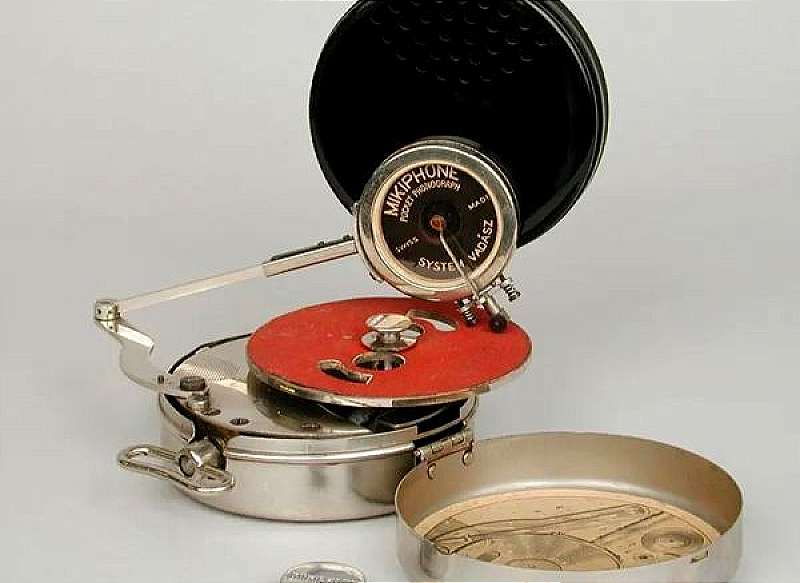
This invention manufactured in Switzerland in 1924 was one of the first means of providing portable music. It's powered by a hand-cranked spring turned a few dozen times. The invention of siblings Miklós and Étienne Vadász, the world’s first pocket record player caused a stir when it was introduced a century ago, nabbing first prize at an international music exhibition and finding favor with modernist architect Le Corbusier, who hailed it for embodying the “essence of the esprit nouveau.” Unlike more recent portable audio innovations, some assembly was required. A period advertisement extols the Mikiphone’s portability but fails to mention that in order to enjoy it, you’d also have to schlep along a fair amount of 78 RPM records. Maison Paillard produced approximately 180,000 of these hand-cranked wonders over the course of three years. (via Open Culture)
Hi everyone! Mathew Ingram here. I am able to continue writing this newsletter in part because of your financial help and support, which you can do either through my Patreon or by upgrading your subscription to a monthly contribution. I enjoy gathering all of these links and sharing them with you, but it does take time, and your support makes it possible for me to do that. I also write a weekly newsletter of technology analysis called The Torment Nexus.
Historians say a painting of Anne Boleyn was done to dispel rumors that she was a witch
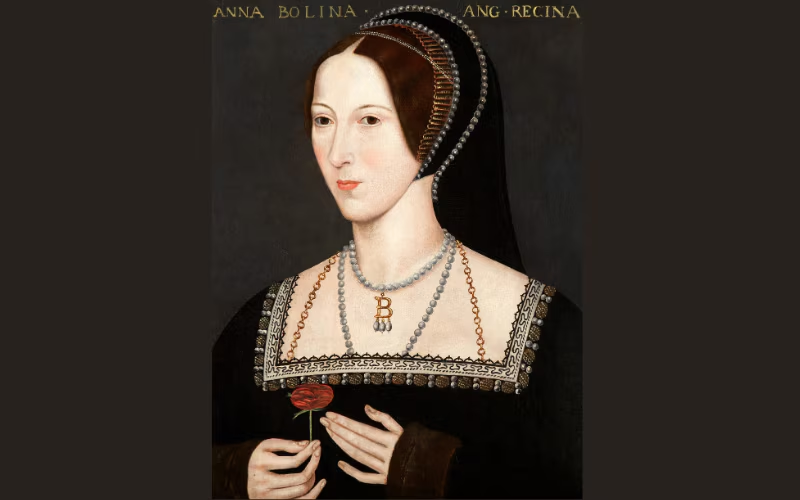
Anne Boleyn’s “Rose” portrait is one of history’s most iconic faces, with her French hood, her dark eyes and a red rose in her right hand. Scientific analysis of the painting at Hever Castle, her childhood home in Kent, has uncovered evidence that an Elizabethan artist sought to create a “visual rebuttal” to claims that Henry VIII’s ill-fated wife was a witch with a sixth finger on her right hand. Helene Harrison suggested that Anne’s hands were prominently displayed in the portrait to counter claims by Nicholas Sanders, a 16th-century writer and activist, who campaigned for the restoration of Roman Catholicism in England. He sought to undermine Elizabeth I’s legitimacy, writing that Anne had “on her right hand six fingers”. On being told of the new evidence, Harrison said it was amazing to find that the analysis supported her theory. Kate McCaffrey, an assistant curator at Hever, said: “It’s really thrilling. This is very strong evidence of a visual rebuttal of a very specific myth of witchcraft and six fingers. (via TYWKIWDBI)
The word torpedo came from the name of a fish and it originally meant lethargic or stunned
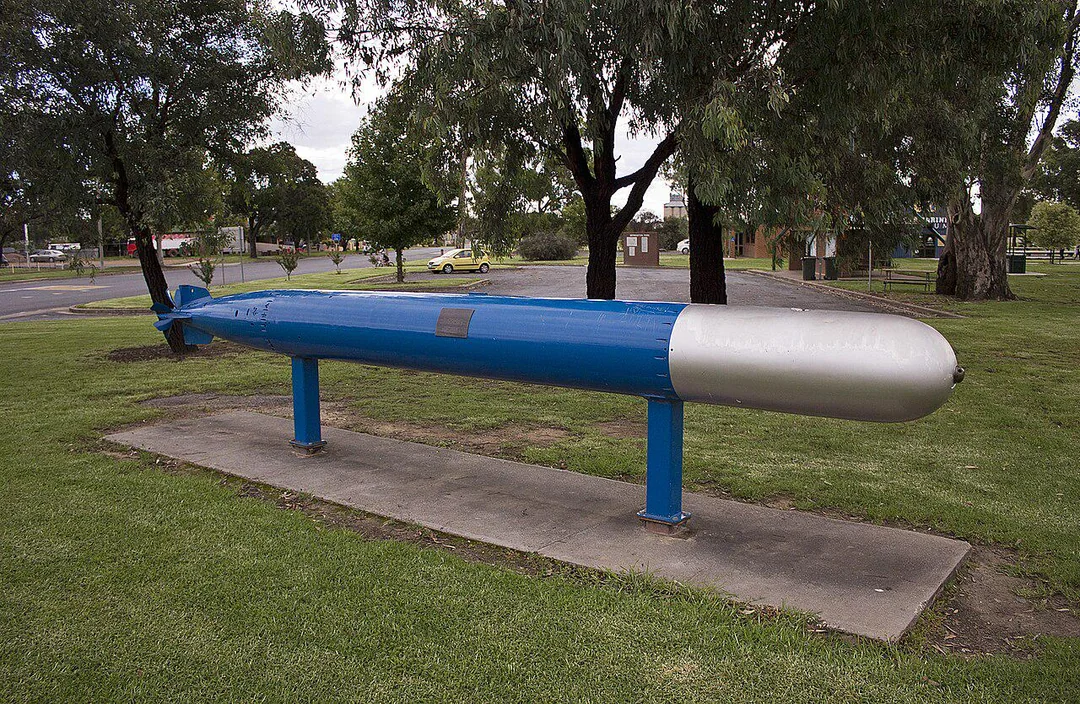
The word torpedo was first used as a name for electric rays, which in turn comes from the Latin word torpēdō meaning "lethargy" or "sluggishness." In naval usage, the American inventor David Bushnell was reported to have first used the term as the name of a submarine of his own design, the American Turtle or Torpedo. This usage likely inspired Robert Fulton's use of the term to describe his stationary mines, and later Robert Whitehead's naming of the first self-propelled torpedo. The sense of "explosive device used to blow up enemy ships" is attested by 1776 in reference to a floating mine; the self-propelled version is from c. 1900. Torpedo-boat is by 1810: a small, swift boat from which a torpedo is operated. Torpedo tube, from which it is launched, is by 1893. An expert in their use was a torpedineer (1881). (via Wikipedia)
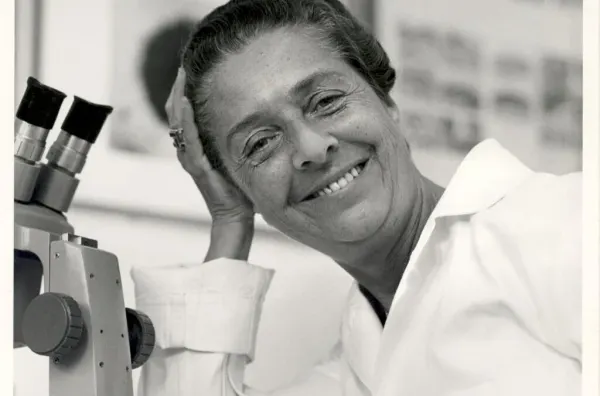
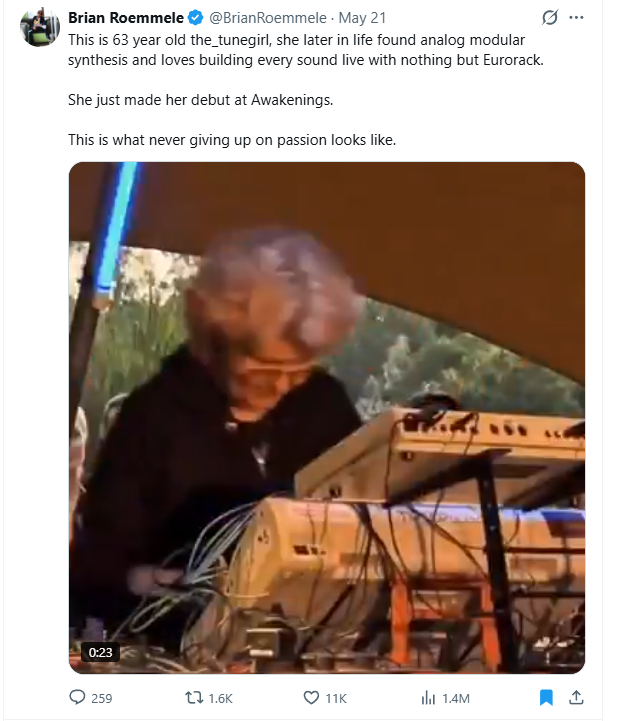
She's a 63-year-old DJ who makes dance music with analog synthesizers
Acknowledgements: I find a lot of these links myself, but I also get some from other places that I rely on as "serendipity engines," such as The Morning News from Rosecrans Baldwin and Andrew Womack, Jodi Ettenberg's Curious About Everything, Dan Lewis's Now I Know, Robert Cottrell and Caroline Crampton's The Browser, Clive Thompson's Linkfest and Why Is This Interesting by Noah Brier and Colin Nagy. If you come across something you think should be included here, feel free to email me at mathew @ mathewingram dot com