The heat wave that got the US to legalize wearing shorts


Before the summer of 1936, people were used to dressing in a lot of layers. And while the materials in summer were lighter, they were still hot. That arrangement was tolerated most summers. Temperatures would climb, and everyone would grimace and bear it, sweating underneath coats and petticoats, vests and corsets, hats and gloves. But the summer of 1936 was too much. It was a summer when people perished because of their choice of clothing. In Yonkers, on June 21, two reporters from the New York Daily News — hoping to test the city's anti-shorts law — were arrested for wearing shorts. They were given the choice to leave the city or put on more appropriate clothing. They refused and were eventually brought forth before city judge Charles W. Boote. The judge was probably sweating underneath his robe when he made his decision on July 10, when the high was 102. Boote was sympathetic to the journalists, fining them $10 (adjusted for inflation about $240) but suspending the fines. (via National Geographic)
How a homeless woman became friends with Renee Zellweger and Zach Galifianakis
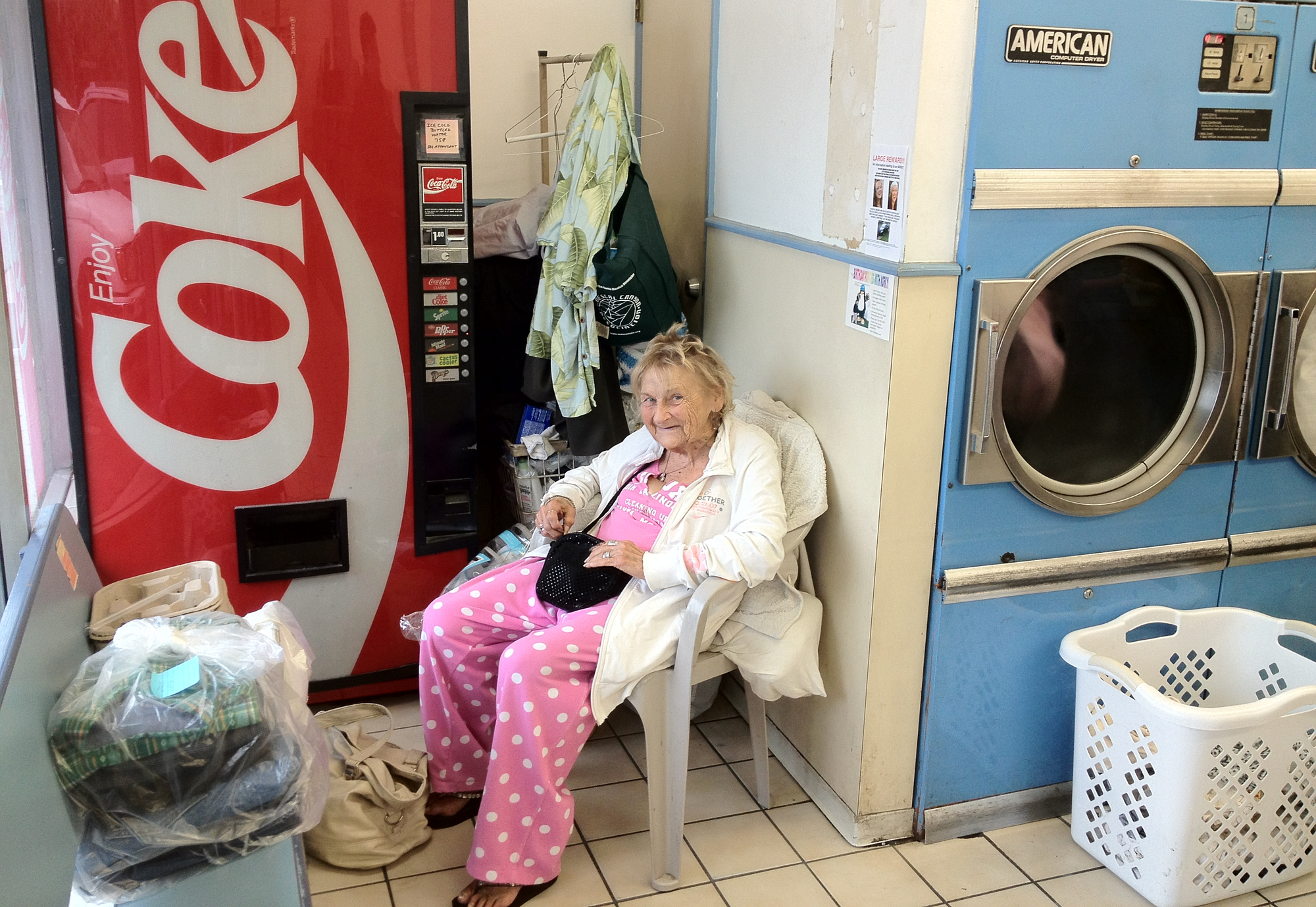
The last 25 years of Marie "Mimi" Haist's life sounds almost too unbelievable to be true: Divorced, jobless, and without a home, she sought shelter in a laundromat for nearly 20 years in an upscale Santa Monica neighborhood. She slept between the first row of washers and dryers and earned money by helping fellow customers wash their clothes. It wasn't much, but enough to at least buy a little something to eat. Then—because life is odd, random, and totally unexpected—Mimi met a couple of movie stars who ended up becoming her friends. In the late '90s, Zach Galifianakis was still years away from superstardom when he met Mimi at the laundromat. "I taught him how to wash his clothes," remembers Mimi. "I later met Renée [Zellweger] through Zach." Although Mimi didn't know who Zach was at the time, things were a bit different when she was introduced to Zellweger. "Of course, I recognized her right away from the movies!" (via Glamour)
Maybe we could learn something from the way the Amish handle technology

I first began studying the Amish in 2012 as a doctoral researcher of media studies at Indiana University, located within a few hours of settlements in Elkhart, LaGrange, and Daviess counties. Going into the project, I knew what most everyone else did: that the Amish prized simple living, communal values, and religious discipline, while resisting certain technologies such as cars, TV, and electricity. In the end, I came to realize that the Amish are, in fact, technology-agnostic. They do not care much about what a new technology is or how it works; they care about what its adoption would mean for the surrounding community. In Joe’s settlement, the black-box phone was developed in response to a very specific social problem: Roughly 100 crews left the settlement daily for their construction jobs and needed a way to communicate while away from home. At the same time, several ministers believed that private text messages could facilitate extramarital relationships and smartphones tempted users to access unfiltered, immoral content such as pornography.(via MIT Press)
Hi everyone! Mathew Ingram here. I am able to continue writing this newsletter in part because of your financial help and support, which you can do either through my Patreon or by upgrading your subscription to a monthly contribution. I enjoy gathering all of these links and sharing them with you, but it does take time, and your support makes it possible for me to do that. I also write a weekly newsletter of technology analysis called The Torment Nexus.
Radiation detectors rely on steel harvested from ships that sank before 1945

The Trinity test took place in New Mexico on 16 July 1945. Hundreds of above-ground nuclear tests followed around the world, particularly during the 1950s and early 1960s. Their fallout distributed artificial radionuclides through the atmosphere and across the surface of the planet. Steel made before that period could not have incorporated fission or activation products from weapons fallout during its original manufacture. That made older material attractive for laboratories trying to push their background count as low as possible. A Pacific Northwest National Laboratory account of low-background steel explains that several US Department of Energy facilities built counting-room shields from pre-World War II metal. These rooms were used for measurements in which a very small amount of radioactive material inside a person had to be distinguished from radiation arriving from everywhere else. (via Space Daily)
Research shows how avocado plants reverse sexes throughout the day
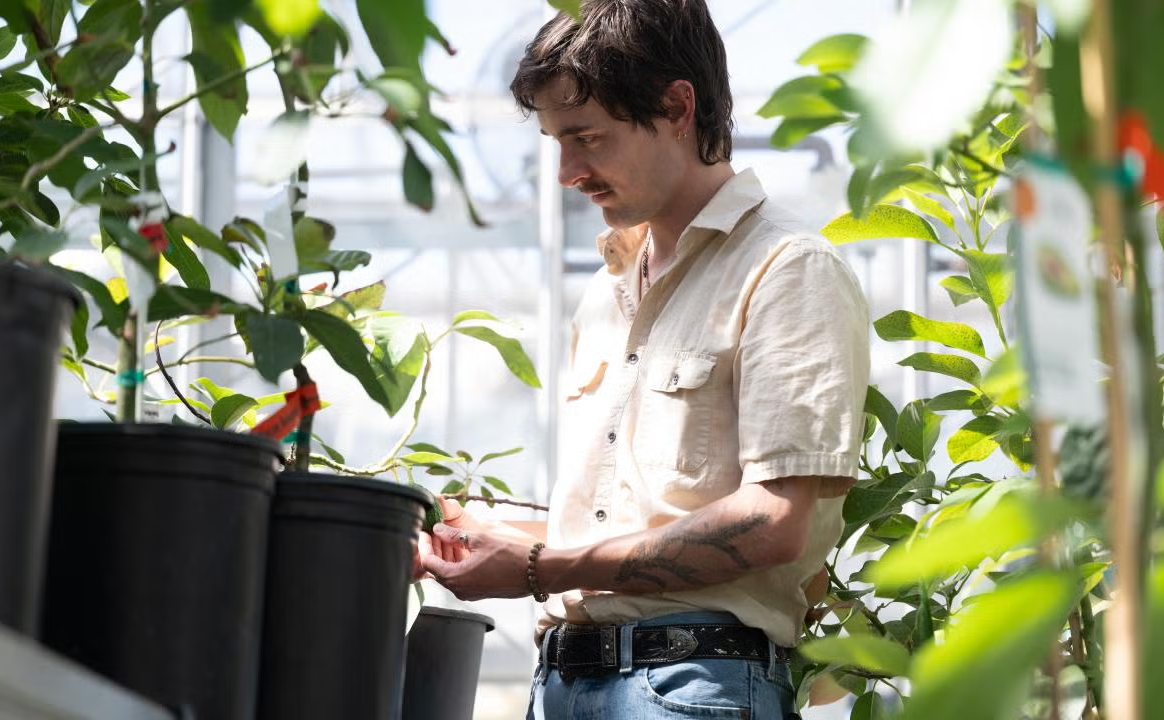
To avoid self-pollination, avocado trees alternate between opening male and female flowers at different times of day. Some avocados are female in the morning and male in the afternoon, while others are on the opposite schedule. How avocados do this has been unclear. In a new study, a team led by researchers from the University of California, Davis, revealed that this rhythm is dictated by variation in a single gene that evolved about 42 million years ago. Published in Proceedings of the National Academy of Sciences, this finding could help avocado breeders and researchers quickly sort seedlings to maximize yield and develop new varieties. All avocado trees are hermaphrodites, but at any given time their flowers function either as male by releasing pollen, or as female by receiving pollen. Approximately half of all avocado trees (“A-type” plants) open female flowers in the morning and male flowers in the afternoon, whereas the other half (“B-type” plants) follow the opposite pattern. This partitioning minimizes the risk of self-pollination, which can result in inbreeding. (via UC Davis)
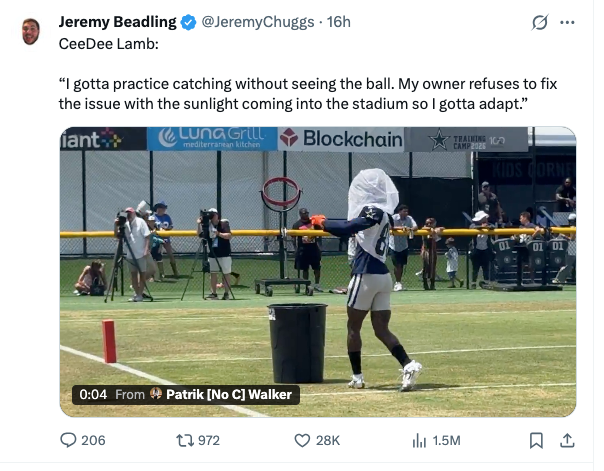
Why football player CeeDee Lamb practices with a plastic bag over his head
Acknowledgements: I find a lot of these links myself, but I also get some from other places that I rely on as "serendipity engines," such as The Morning News from Rosecrans Baldwin and Andrew Womack, Jodi Ettenberg's Curious About Everything, Dan Lewis's Now I Know, Robert Cottrell and Caroline Crampton's The Browser, Clive Thompson's Linkfest and Why Is This Interesting by Noah Brier and Colin Nagy. If you come across something you think should be included here, feel free to email me at mathew @ mathewingram dot com