The bizarre bomb plot that blew up a Lake Tahoe casino


“I don’t think it belongs here.” Such was the assessment of Bob Vinson, the graveyard shift supervisor at Harvey’s Wagon Wheel Casino in Lake Tahoe, Nevada. The “here” Vinson referred to was a nook just outside the telephone equipment room in the employees-only portion of the second floor of the hotel. The “it” was a curious piece of equipment of unknown origin loitering conspicuously in the cramped side room. It was a metallic gray box about the size of a desk, with a smaller box attached on top near the rear right corner. The front face of the smaller box was an incomprehensible control panel occupied by 28 metal toggle switches in five neat rows, each labeled with a numbered sticker. All of these switches were situated in the down position except for #23, which was toggled up—an oddly ominous asymmetry. Whoever had left the machine had taken the time to place each corner on blocks of wood, and these blocks pressed deep dimples into the red-orange carpet, suggesting that the equipment had significant mass. In spite of its resemblance to some kind of manufactured electromechanical office machine, it had no power cord, and no obvious power switch, just the 28 enigmatic toggles. (via Damn Interesting)
An Icelandic TV station aired an episode of the Teletubbies but with audio from The Sopranos
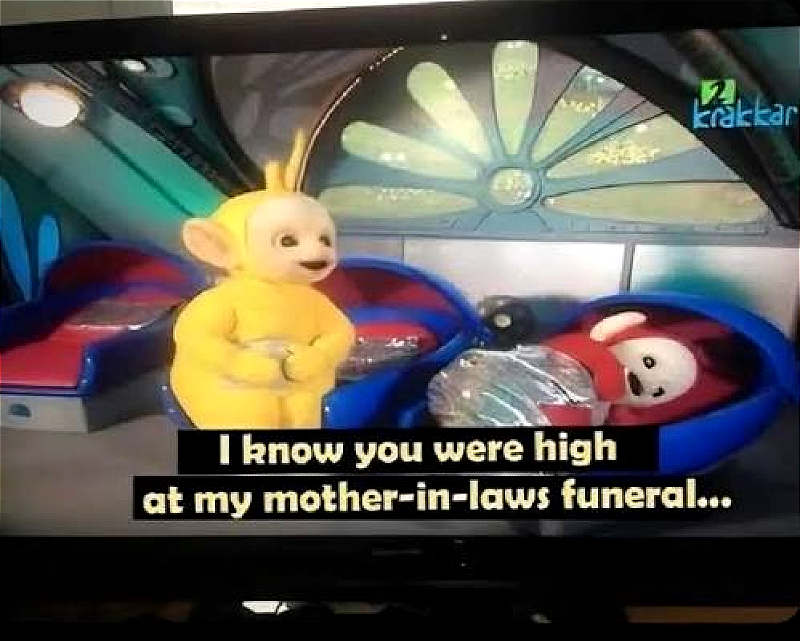
In 2012, Icelandic television viewers were in for a major surprise when a showing of Teletubbies featured an NSFW subtitle-dubbing from HBO’s The Sopranos. Eh-Oh! The shows couldn’t be more opposite. For one, Teletubbies is geared towards children; therefore, Laa-Laa, Po, Dipsy, and Tinky-Winky speak in a language only toddlers could understand. The Sopranos, on the other hand, is a crime drama following members of the mob in New Jersey, often featuring language of a different sort. While it was definitely a major error on the station’s part, funnily enough, the stark contrast really works? The dubbing over the Teletubbies episode was from Season 4, Episode 10 of The Sopranos, “The Strong Silent Type”. Unlike the Teletubbies fighting over the last slice of Tubby Toast, the family is holding an intervention for Christopher. They’ve become increasingly fed up with his drug use. Adriana brings up the fact that he recently killed their dog, Cosette, by sitting on it while he was high. (via Vice)
Feuding Korean clans have agreed to end a 400-year war over burial plots

After nearly 400 years, a few killings and scorned pleas from a king, two powerful clans have settled one of the longest-standing feuds in Korean history, over ancestral burial grounds.The clash between the Yoon family and the Shim family started in 1614 when the two began burying their ancestors in large burial mounds next to each other, with both claiming rights to the land. It will finally be sorted out in March 2008 under a settlement deal reached a few days ago. The Yoon family will give about 8,300 square meters (89,340 sq ft) of land to the Shim family, which will use it as a new burial ground for 19 of its ancient clan members. The settlement deal from the two sides, who increased their power in ancient times by having their daughters marry into the royal family, was aided by a married couple made up of a member of the Shim clan and a member of the Yoon clan, the local daily Hankyoreh reported. Ancestor worship has played a significant role in Korean culture for centuries and families search for sites harmonious with nature in the belief it will lead to benefits for their family for generations. (via Reuters)
Hi everyone! Mathew Ingram here. I am able to continue writing this newsletter in part because of your financial help and support, which you can do either through my Patreon or by upgrading your subscription to a monthly contribution. I enjoy gathering all of these links and sharing them with you, but it does take time, and your support makes it possible for me to do that. I also write a weekly newsletter of technology analysis called The Torment Nexus.
Chinese doctors claim they can reverse Alzheimer's symptoms with one simple surgery

The video opens with a man in his 80s slumped in a hospital bed, his face hollow as he scrunches his eyes. A jump cut advances the scene three days: the man is alert now, words gathering as he identifies his son. Six months later, he is pictured sitting upright, engaged in conversation. His gaze is animated. At eight months, the man walks briskly down a hospital corridor. The footage records the recovery of a man who, in September 2020, became the first person in the world to undergo a surgery known as deep cervical lymphatic-venous anastomosis. The procedure involves connecting tiny lymphatic vessels in the neck — part of the drainage system that carries waste away from the brain — to nearby veins, creating a route that, in theory, allows fluid and waste proteins to flow more easily into the bloodstream. At the time, it drew little notice. But that changed the following year, when Wei Chen, a microsurgeon at the Cleveland Clinic in Ohio, began showing the footage at surgical meetings around the world. (via Nature)
A Volvo engineer invented the seatbelt and the company gave the rights way for free
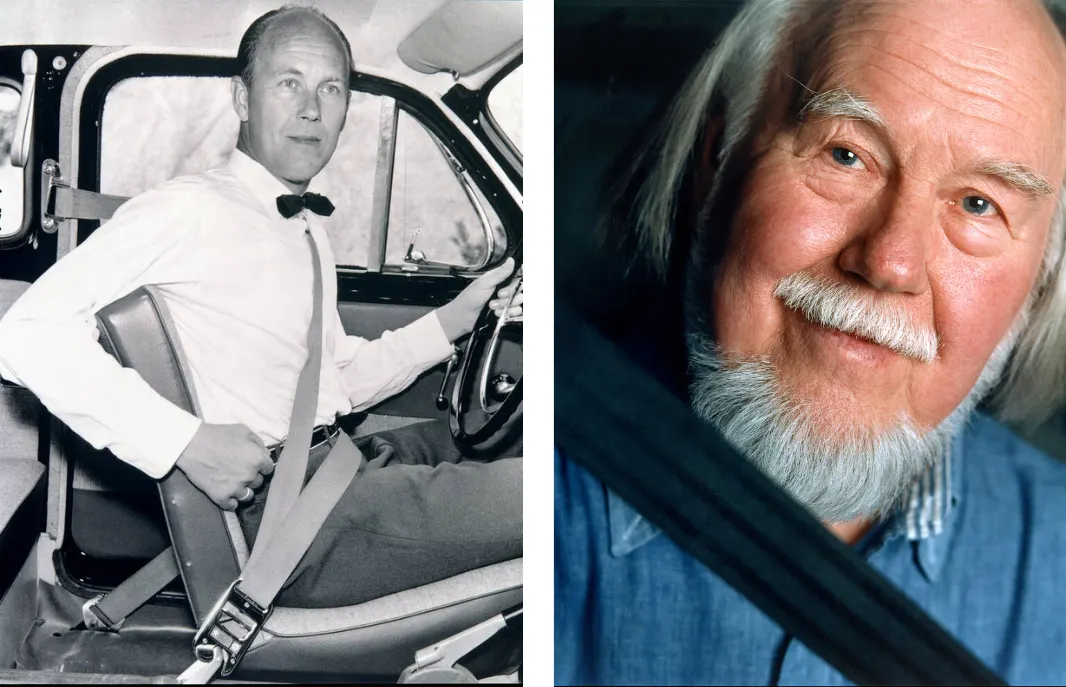
In 1959, Volvo engineer Nils Bohlin developed the modern three-point belt, and on August 13 of that year, the company sold the first car fitted with one, a PV 544, to a customer in Sweden. The invention is credited with saving more than one million lives, and Volvo later opened the patent to every competitor, rather than charging for it. Patents normally protect an invention: we made this, so you get to pay us. Volvo, with a particular Swedish sense of civic good, saw the bigger picture. Its value got bigger and bigger as it spread, and every competitor that adopted the design made the invention more successful (and the automotive world much safer). Bohlin had previously worked on ejector seats as part of Saab’s aviation division. His job was to get a body out of a speeding plane as fast as possible. When he arrived at Volvo in 1958 as the company’s first dedicated safety engineer, that job inverted: keep the body in the car at all costs. (via Why Is This Interesting)
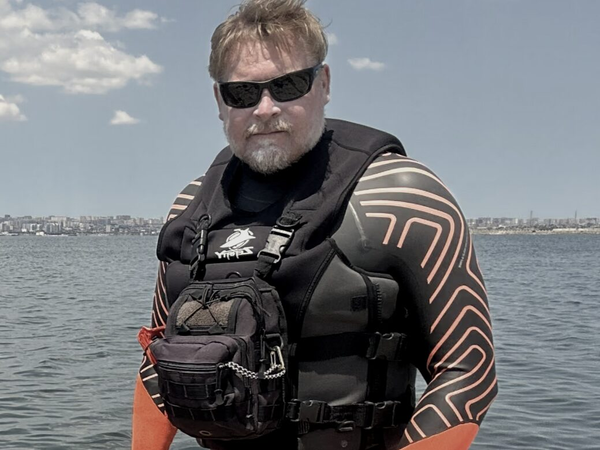
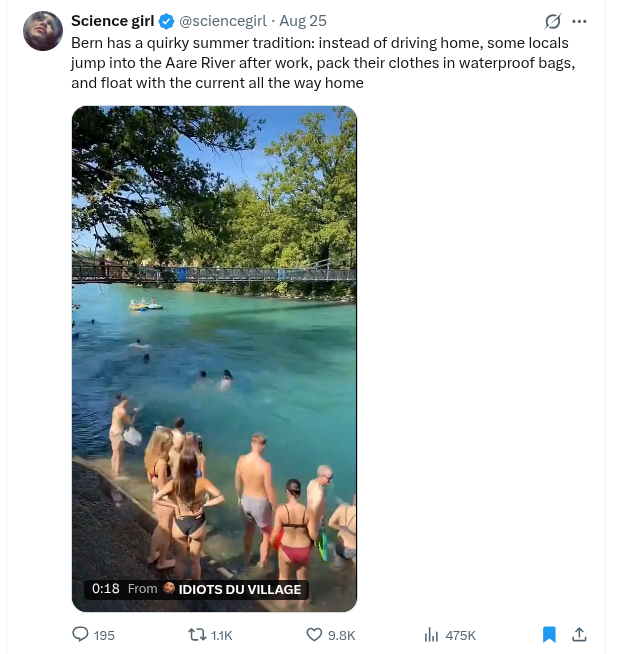
After work in Bern some locals choose to float all the way home
Acknowledgements: I find a lot of these links myself, but I also get some from other places that I rely on as "serendipity engines," such as The Morning News from Rosecrans Baldwin and Andrew Womack, Jodi Ettenberg's Curious About Everything, Dan Lewis's Now I Know, Robert Cottrell and Caroline Crampton's The Browser, Clive Thompson's Linkfest and Why Is This Interesting by Noah Brier and Colin Nagy. If you come across something you think should be included here, feel free to email me at mathew @ mathewingram dot com