The architect her co-op used turned out to be a serial killer

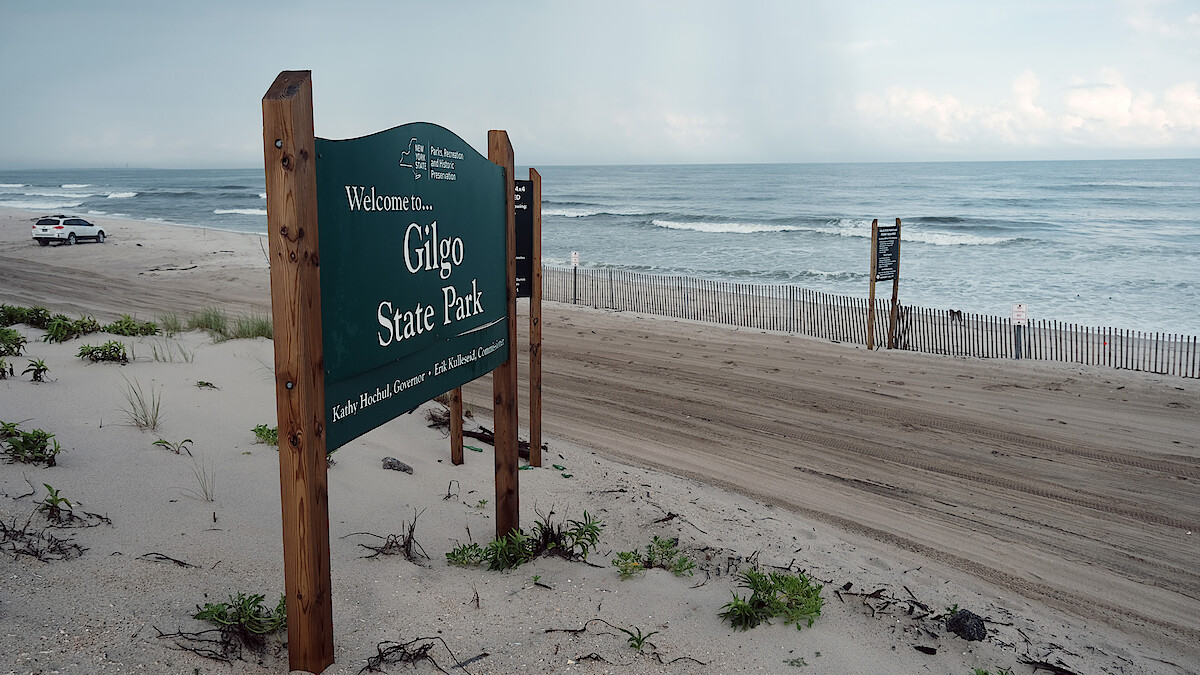
One July morning in 2023, I was driving my son to an art class when my friend Amy Ryan called. The Gilgo Beach serial killer had just been identified and taken into custody.“You will not believe who it is,” she reported: “It’s Rex Heuermann.” However unlikely it was that the two of us — lifelong New Yorkers in middle age, one a journalist, the other, an Oscar- and Tony-nominated actress — would know a serial killer merely by way of our domestic routines, it is in fact where we had landed. Heuermann was a consulting architect who worked with the stewards of several well-kept prewar apartment buildings in Brooklyn. I dealt with him briefly over the reconstruction of a courtyard garden when I served on my co-op board in Brooklyn Heights. I sat in occasional basement meetings with him talking about, as I vaguely recall, things like drainage efficiency. But Heuermann had been in Amy's apartment, arguing with her architect. (via the NYT)
This 400-year-old Lithuanian oak was just named the European Tree of the Year
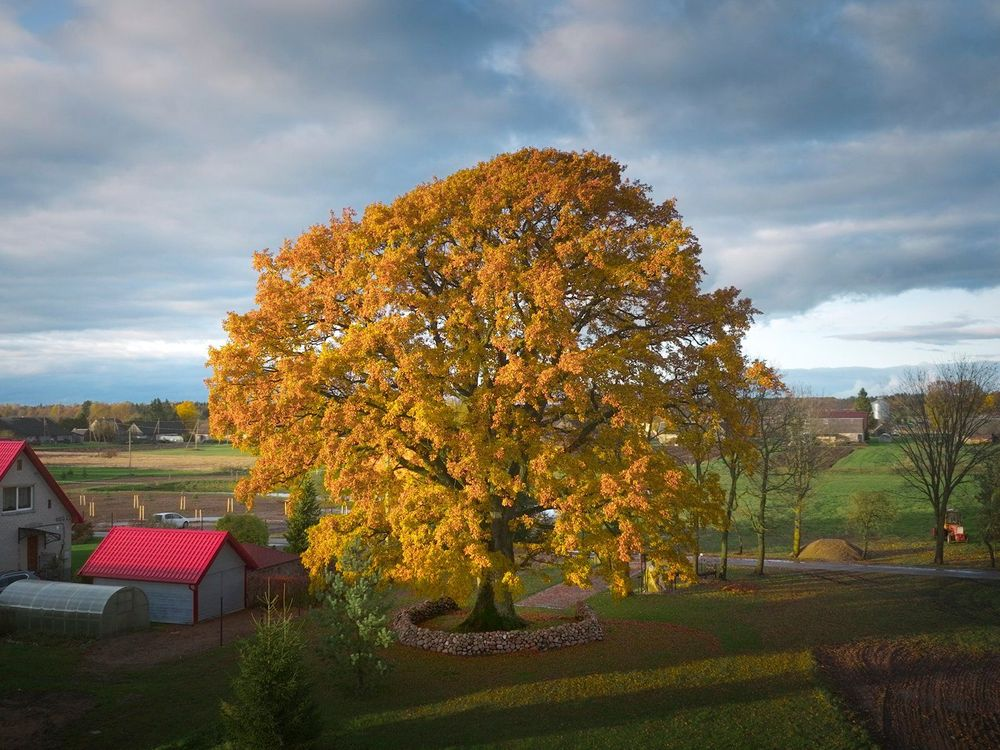
The 400 year old Oak of Laukiai once stood almost forgotten, known only to the people of the small Rukai village. A year ago, however, the local community restored the area around the tree and organised a celebration in its honour, bringing people together and reminding them of its quiet strength. Today, the sixth generation of the Laukiai people is growing up alongside this oak. The Old Wild Apple Tree, which placed second, has withstood wind, rain, snowstorms, and heat waves for more than 150 years, growing in harsh conditions at an altitude of 860 meters. From a place called Diel, it quietly watches over the village below – a silent observer of its joys, troubles, and changes. The third placed Crooked Elm of Szyslowiec rises above the moat on an island near the former castle of the Szydłowiecki and Radziwiłł families. Its unusual shape comes from its location, forcing it to lean toward the water. This year, for the first time, the trees competed for Tree points instead of votes. (via Tree of The Year)
A medical doctor won the equivalent of $8 million by figuring out how to beat roulette
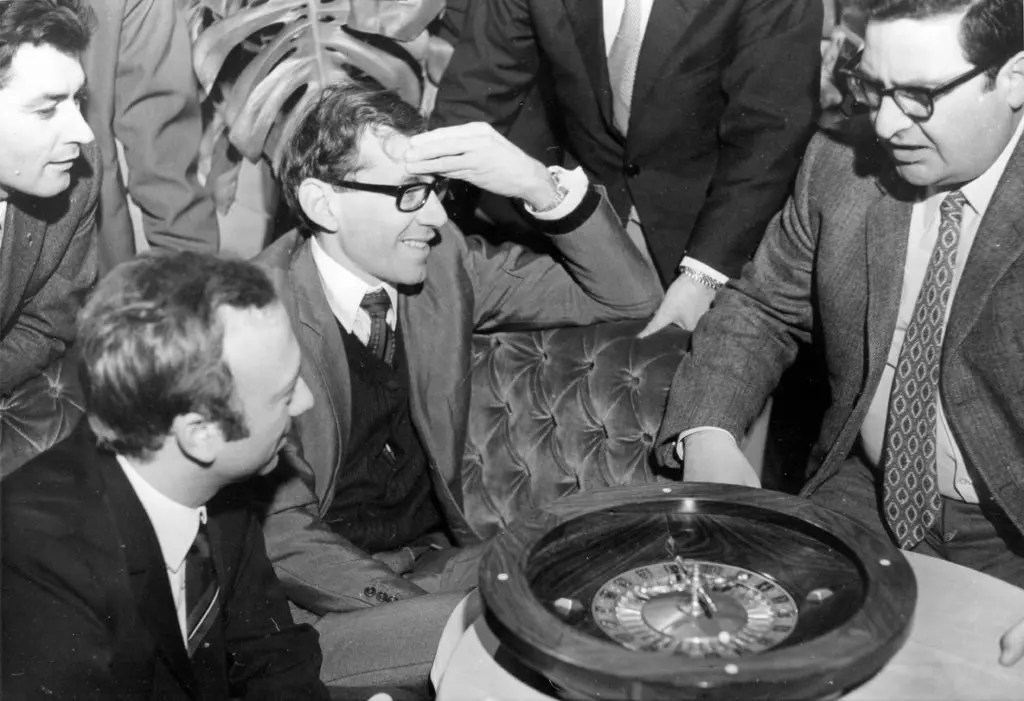
Many gamblers see roulette as a game of pure chance — a wheel is spun, a ball is released and winners and losers are determined by luck. Richard Jarecki refused to believe it was that simple. Jarecki was not the sort of rakish bon vivant that might come to mind as the epitome of a successful gambler. He was a married medical doctor and researcher at Heidelberg University in Germany. The Sydney Morning Herald described him in 1969 as “rather tall and slim and reedy — looking just like a professor should, complete with a rumpled suit and a bewildered look.” That look concealed a keen eye for detail and a sharp mathematical mind, which Dr. Jarecki first turned to the problem of roulette in Germany in the early 1960s. He became the scourge of European casinos in the 1960s and early ′70s by developing a system to win at roulette. And win he did, by many accounts accumulating more than $1.2 million, or more than $8 million in today’s money. (via the NYT)
Hi everyone! Mathew Ingram here. I am able to continue writing this newsletter in part because of your financial help and support, which you can do either through my Patreon or by upgrading your subscription to a monthly contribution. I enjoy gathering all of these links and sharing them with you, but it does take time, and your support makes it possible for me to do that. I also write a weekly newsletter of technology analysis called The Torment Nexus.
Travellers remember the legendary Boston-to-New York "Fung Wah" bus line

When Ayo Edebiri shouted out the Fung Wah bus on the Today show, the mention brought back memories for anyone who once took the cheap, chaotic ride between Boston and New York. The Boston-born star of The Bear recalled taking the low-cost bus with her mother from Boston to New York, where they would try to rush Broadway shows. debiri described it as a $10 or $15 ride from Boston’s Chinatown to New York that could get passengers there in “under four hours — sometimes three.” But, as Edebiri put it, the cheap fare came with a certain amount of uncertainty. The bus might catch fire. It might break down in Connecticut. It might leave passengers to “figure it out” at an IHOP somewhere between Boston and New York. We asked readers to share their memories of the Fung Wah, and the responses were just as chaotic. They remembered cheap fares, fast rides, breakdowns, missed pickups, highway scares, and fires. (via Boston.com)
How to build an inexpensive hydrophone for listening to whale songs
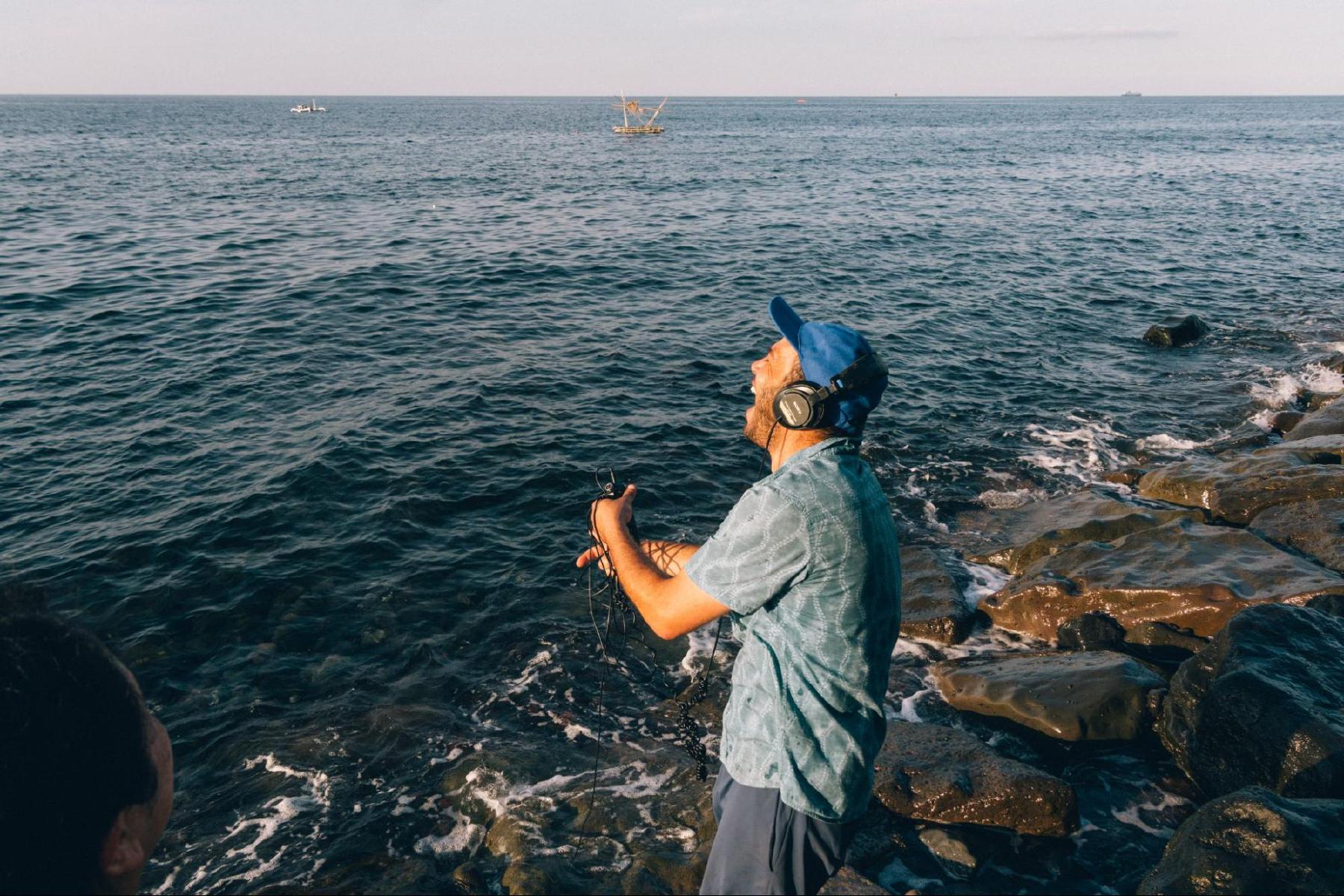
Whale songs were first noticed by accident, when analysts tracking Russian submarines at the height of the cold war heard cetacean interference instead. An engineer sent some recordings to Roger Payne, a biologist friend of his, who did something that proved pivotal: he played the hours-long recordings on his hi-fi at home, while he went about his day. By listening for hours at a time, Payne noticed that these vocalizations weren’t simple chirps, but complex structured social patterns — songs, even. A trendy topic in biology now is “passive acoustic monitoring,” the science of understanding ecosystems through their soundscapes. While participating in Dinacon 2025 in Les, Bali, I investigated different techniques for collecting and listening to bioacoustic field recordings. First, running a workshop to make inexpensive and radically accessible hydrophones that work as simply as a computer microphone. Secondly, expanding the hydrophone to stereo. By using multiple hydrophones at different depths, a stereo field can be constructed. (via Exclaves)
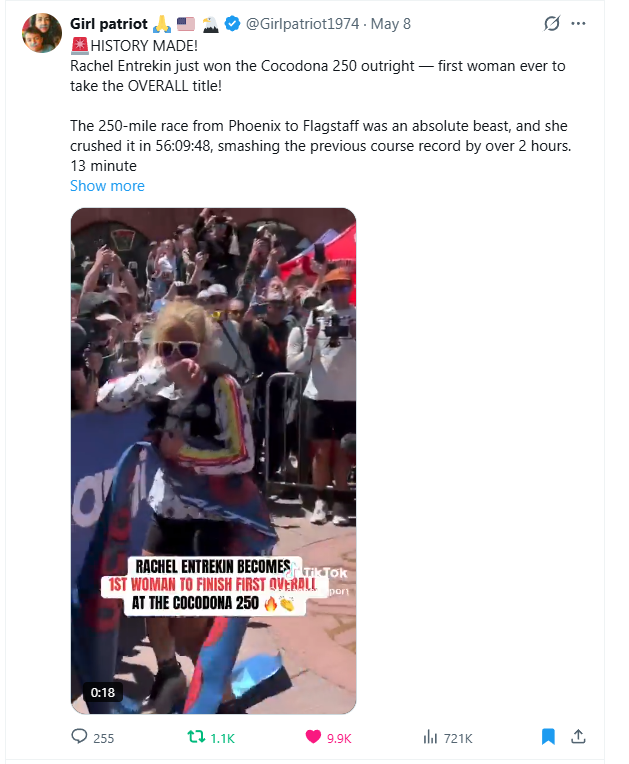
Ultramarathon legend Rachel Entrekin becomes the first woman to win the Cocodona 250
Acknowledgements: I find a lot of these links myself, but I also get some from other places that I rely on as "serendipity engines," such as The Morning News from Rosecrans Baldwin and Andrew Womack, Jodi Ettenberg's Curious About Everything, Dan Lewis's Now I Know, Robert Cottrell and Caroline Crampton's The Browser, Clive Thompson's Linkfest and Why Is This Interesting by Noah Brier and Colin Nagy. If you come across something you think should be included here, feel free to email me at mathew @ mathewingram dot com