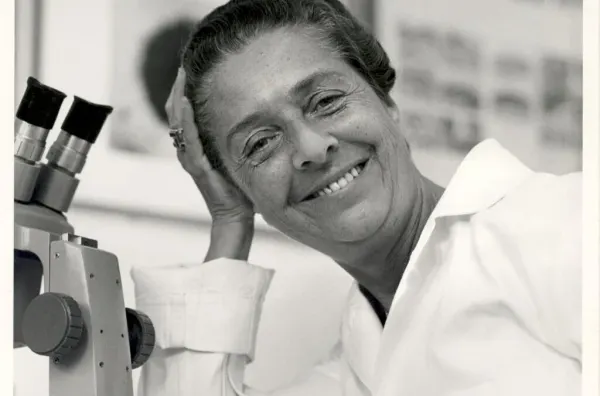
She's 17 years old and her brain won't let her forget anything


Known as the human calendar to her friends but nicknamed AJ in later research reports, the woman was looking for help. “I want to know why I remember everything,” she said. AJ told the scientists that she couldn’t turn her memory off, even when she was engaged in other activities that demanded her attention, like talking to a friend. The scientists reported on AJ’s condition, and coined the term “hyperthymesia” to describe it. Almost uniformly, those who have the condition find the memories—which tend to be carefully indexed by date—intrusive, uncontrollable, and distressing. Which is why the recently published case study of a 17-year-old girl dubbed TL is commanding attention. Like others with hyperthymesia, TL has an exceptionally intense and vivid memory for the events that have occurred over her short life. She can provide an especially rich amount of perceptual, spatial, and temporal information, and even recall events from multiple points of view. But unlike the others, she is able to organize these memories into a kind of “memory palace,” and can access them whenever she likes. (via Nautilus)
They rented jet-skis for an hour and wound up fighting for their lives in the open ocean

They had become, in an instant, two indiscernible specks stranded in a dark and boundless sea. The jet skis that had carried them past the breakwater had been swept away. The shore of Long Beach, Calif. — where their evening jaunt had begun — was no longer in sight. Now the longtime friends clung to life jackets while choking on fierce waves, their bodies dangling in the Pacific Ocean. It was Aug. 16, and the last rays of sun had faded. It was not clear if help was on the way. Mr. Carbullido was dazed. He had been thrown from his jet ski and landed on his back, the wind knocked out of him. He appeared unable to comprehend the urgency of the situation. At 47, Ms. Dubray was a strong swimmer; it was not unusual for her to go into the ocean every day of the week, even to take her kayak out at night. But as she left Mr. Carbullido and set off for the glimmer in the distance, the water churned with an unfamiliar terror. Every few strokes, she shouted her friend’s name so he could hear her voice. She heard no response. (via the NYT)
They studied the dietary benefits of cockroach milk and the aerodynamics of nose blowing
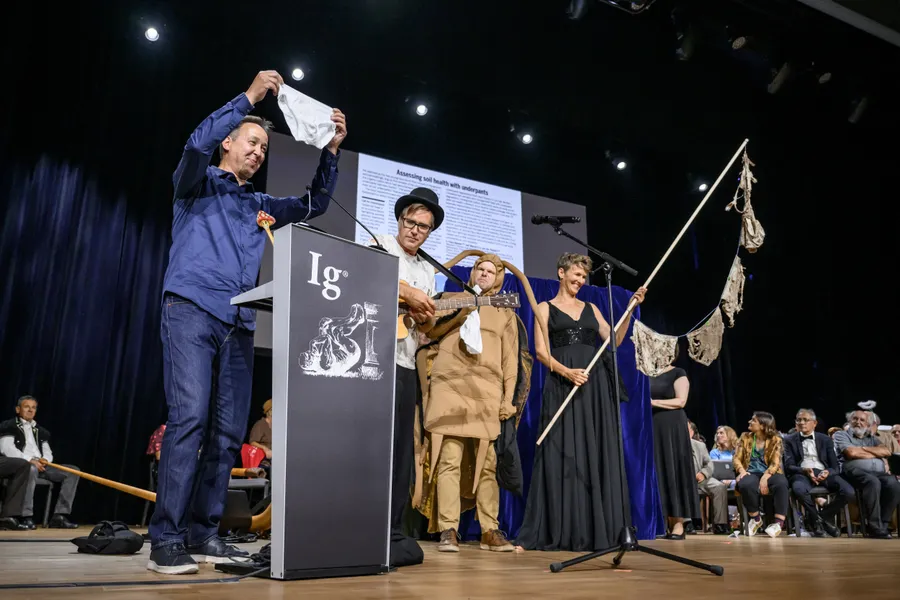
How nutritious is cockroach milk? At last, this burning question is getting the recognition it so sorely deserves: the team answering it has received one of the 2026 Ig Nobel Prizes. The annual awards, which recognize the most absurd research science can offer, were handed out at a ceremony in Zurich. And yes, the winners in chemistry really did calorie count the milk proteins cockroaches make to nourish their young. (Their results, based on advanced x-ray crystallography, indicate cockroach milk is more than three times as energy-dense as ordinary dairy.) The insect enthusiasts were in good company: other winners included University of Oxford scientists who devised a proper definition of “kissing” in order to argue that human ancestors smooched Neanderthals, a team that taunted venomous snakes to study why they bite and researchers who confirmed what we all know: people who drive expensive cars tend to be jerks. (via Scientific American)
Hi everyone! Mathew Ingram here. I am able to continue writing this newsletter in part because of your financial help and support, which you can do either through my Patreon or by upgrading your subscription to a monthly contribution. I enjoy gathering all of these links and sharing them with you, but it does take time, and your support makes it possible for me to do that. I also write a weekly newsletter of technology analysis called The Torment Nexus.
A psychologist found that too much meditation can actually trigger mental illness

In 2004, Willoughby Britton, then a doctoral candidate in clinical psychology at the University of Arizona, began recruiting participants for a study that, she felt sure, would show meditation improves sleep.Britton, a meditation teacher, was so devoted to the practice that she saw herself as a “double agent,” someone who uses science to promote meditation. Although she had grown up in a nonpracticing Episcopalian home, she’d become deeply invested in Buddhist teachings. She read meditation books in her spare time and at one point considered becoming a Buddhist nun. When she reviewed the results, she was dismayed to find they were the opposite of what she had predicted. The participants in the meditation group slept more fitfully than those who didn’t meditate. Over time, she would find that meditation, promoted as a treatment for anxiety, addiction and other ailments, can sometimes cause severe and lasting side effects: depression, anxiety, even acute psychosis. (via The Atlantic)
Mark Twain wrote a story in 1898 that describes something like the internet
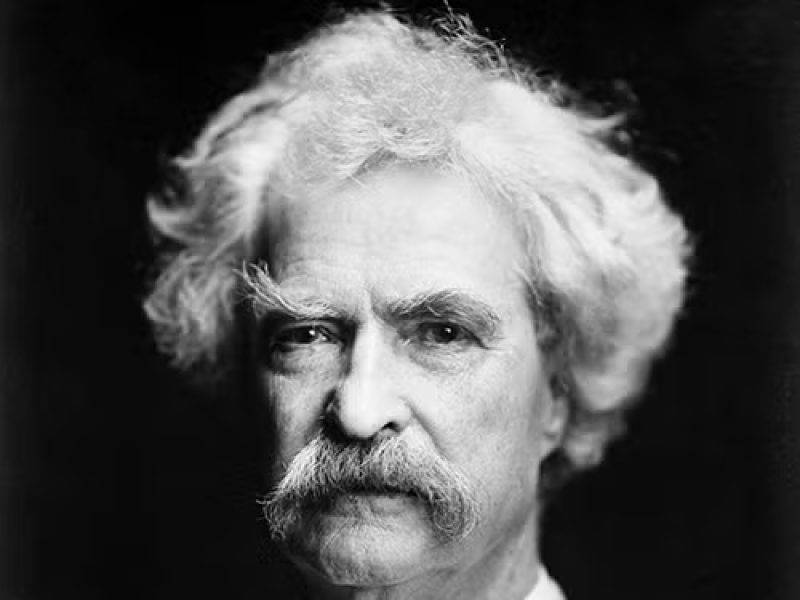
"From The 'London Times' in 1904" is an 1898 Mark Twain short story set six years in the future, and it describes something very close to the internet. It opens as a murder mystery. Clayton, a hot-tempered army officer, is accused of killing Szczepanik, the inventor of a machine called the telelectroscope. In the story the device gets wired into the telephone systems of the whole world, and after that, Twain writes, the daily doings of the globe are "made visible to everybody, and audibly discussable too, by witnesses separated by any number of leagues." Clayton, sentenced to hang, asks for a telelectroscope in his cell and gets one. He spends his nights calling up one city after another. "Give me Yedo," he says, then "Give me Hong-Kong," then "Give me Melbourne," and he watches people going about their work in the parts of the world where the sun is up. As Clayton is being marched to the gallows, the narrator spots the murder victim alive on the telelectroscope screen, standing in a crowd at a coronation in China. (via Boing Boing)
How to tell the difference between different types of coffee

Acknowledgements: I find a lot of these links myself, but I also get some from other places that I rely on as "serendipity engines," such as The Morning News from Rosecrans Baldwin and Andrew Womack, Jodi Ettenberg's Curious About Everything, Dan Lewis's Now I Know, Robert Cottrell and Caroline Crampton's The Browser, Clive Thompson's Linkfest and Why Is This Interesting by Noah Brier and Colin Nagy. If you come across something you think should be included here, feel free to email me at mathew @ mathewingram dot com