She saved the NASA moon mission multiple times


It’s July 20, 1969. Neil Armstrong and Buzz Aldrin are about to land on the moon. They will be the first humans to set foot on Earth’s only natural satellite. Suddenly, the onboard computer flashes: “Alarm 1202.” Over the next 278 seconds, four more alarms trigger: “Alarm 1202,” “Alarm 1201,” “Alarm 1202,” “Alarm 1202.”The system is overloaded. Aldrin and Armstrong are instructed by the NASA crew on the ground to proceed with the landing. But the NASA team members know that their colleagues have done a good job and programmed in a safety net. And thanks to the error messages, they know how to address the problem. Computer scientist Margaret Hamilton was one of the people responsible for the features that ultimately made the moon landing possible. And her then four-year-old daughter may have helped spur her thoughts. (via Scientific American)
He wanted to break a slacklining record. The only problem was that if he failed, he'd die

Spencer Seabrooke takes a deep breath. He’s up high—290 meters, or about level with a 70-story skyscraper. If he dropped a rock, it would take eight seconds before he’d hear it land. Before him is a slackline stretched between a gaping gully. He steps on the line and falls almost immediately. He catches himself, hands and ankles clasped around the line, and swings back up to sitting, then standing. His harness is not secured to the line. If he loses his footing and doesn’t catch, he’d fall all the way down. He lets out a roar. He starts walking, a tiny figure silhouetted against the distant mountains, arms swimming for balance, grunting as he takes step after step toward the other side. It’s August 2, 2015, and Seabrooke is on the north gully of the Stawamus Chief, a granite dome in Squamish, BC. He’s here to break a world record by walking 64 meters across a highline: a loosely tensioned, one-inch-wide piece of polyester webbing, and he’s doing it untethered, without the protection of a safety leash. (via Victory Journal)
A creature called the leaf sheep uses photosynthesis to generate energy like a plant
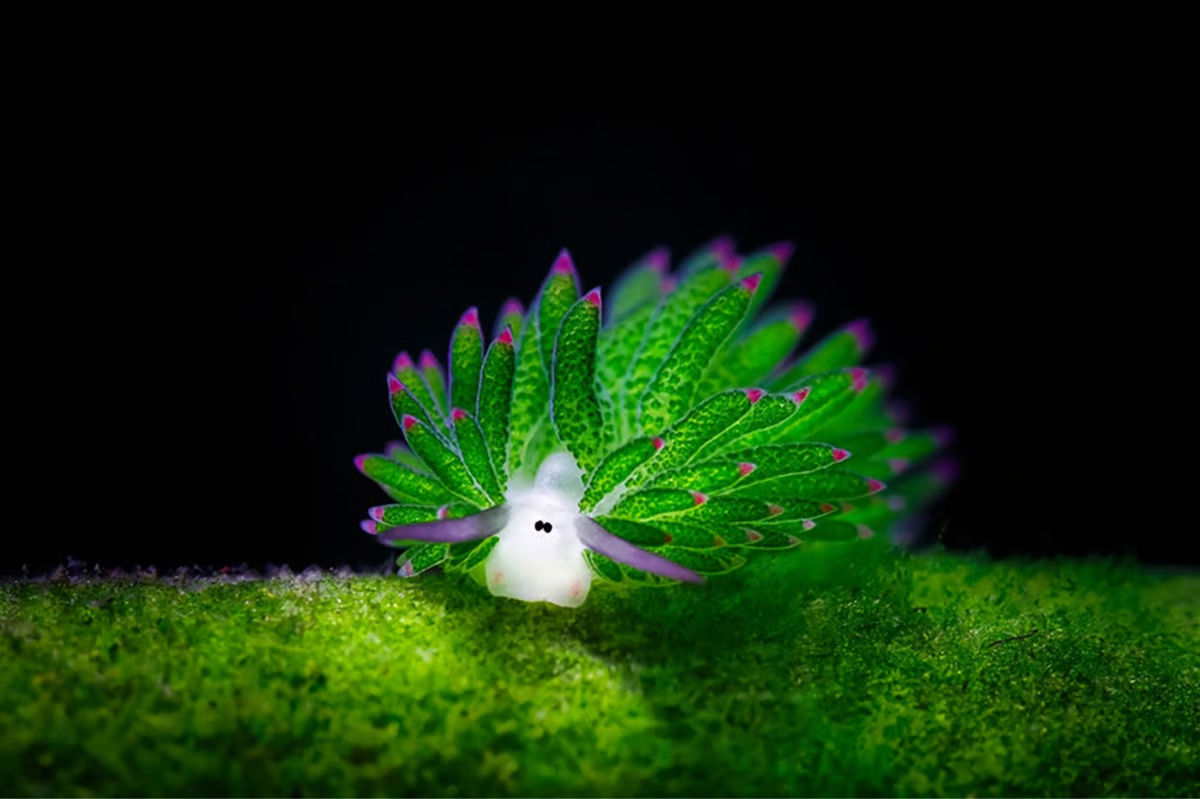
It’s a species of slug that is partially solar-powered, like a plant. Leaf sheep are kleptoplastic organisms that steal chloroplasts from algae, store them in their bodies, and then can rely on photosynthesis for their energy needs: The Costasiella sea slug not only looks like a succulent—it acts like one, too. One of the few animals able to photosynthesize, this tiny invertebrate (also known as the leaf slug or leaf sheep) acquires chloroplasts by munching on Avrainvillea, a paddle-shaped seaweed with a velvety texture. It then stores those chloroplasts in its own body, which enables the slug to soak up sunlight and transform it into energy—a process that also gives the mollusk its green color. The chloroplasts are stored in the horn-shaped structures called cerata located on the slugs’ backs. Cerata evolved to increase the surface area of these animals for use in respiration and surface area is very helpful if you run on solar panels. (via Kottke)
Hi everyone! Mathew Ingram here. I am able to continue writing this newsletter in part because of your financial help and support, which you can do either through my Patreon or by upgrading your subscription to a monthly contribution. I enjoy gathering all of these links and sharing them with you, but it does take time, and your support makes it possible for me to do that. I also write a weekly newsletter of technology analysis called The Torment Nexus.
Using chemistry, archival records and AI, scientists are reviving the smells of history

We often learn about the past visually — through oil paintings and sepia photographs, books and buildings, artifacts displayed behind glass. And sometimes we get to touch historical objects or listen to recordings. But rarely do we use our sense of smell — our oldest, most primal way of learning about the environment — to experience the distant past. Without access to odor, “you lose that intimacy that smell brings to the interaction between us and objects,” says analytical chemist Matija Strlič. As lead scientist of the Heritage Science Laboratory at the University of Ljubljana in Slovenia and previously deputy director of the Institute for Sustainable Heritage at University College London, Strlič has devoted his career to interdisciplinary research in the field of heritage science. Much of his work focused on the preservation and reconstruction of culturally significant scents. (via Knowable)
Instead of barking this unique breed of African dog makes a sound more like a yodel
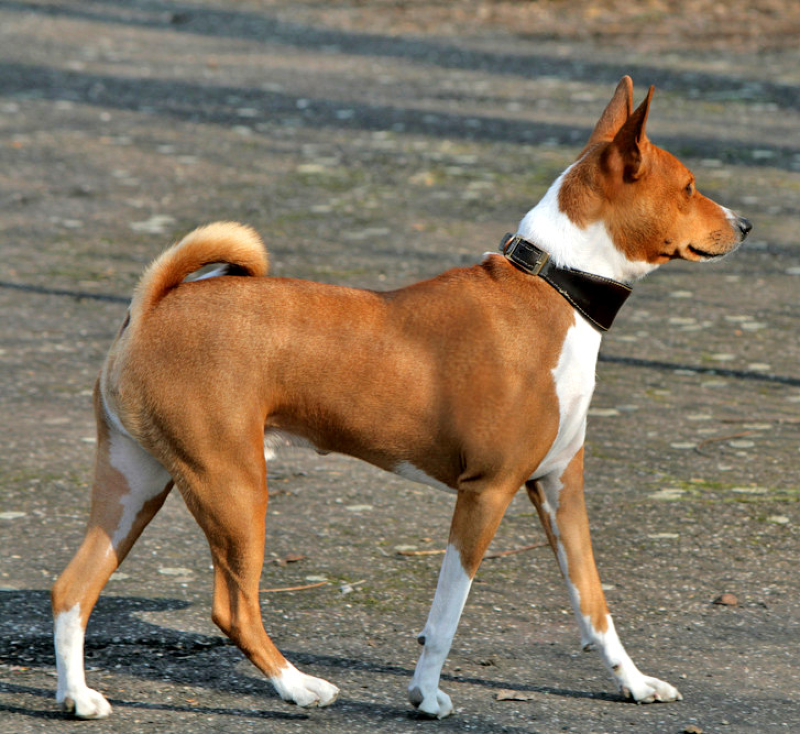
The Basenji is a breed of hunting dog created from stock that originated in Central Africa, including in the Republic of the Congo and other adjacent tropical African countries. The breed does not bark in the traditional manner of most dogs, rather vocalising in an unusual, yodel-like "talking" sound, due to its unusually-shaped larynx. This trait earns the Basenji its nickname of "barkless" dog, a similar feature seen and heard in the New Guinea singing dog. Basenjis are athletic small dogs that can run up to 30 to 35 miles per hour (48 to 56 km/h), and share many distinctive traits with the pye or pariah dog types of the Indian subcontinent. In addition to their uniquely similar vocalisations, the Basenji only come into estrus once per year, as does the Tibetan Mastiff. The Basenji breed also lacks a distinctive odor, or so-called "dog smell". (via Wikipedia)
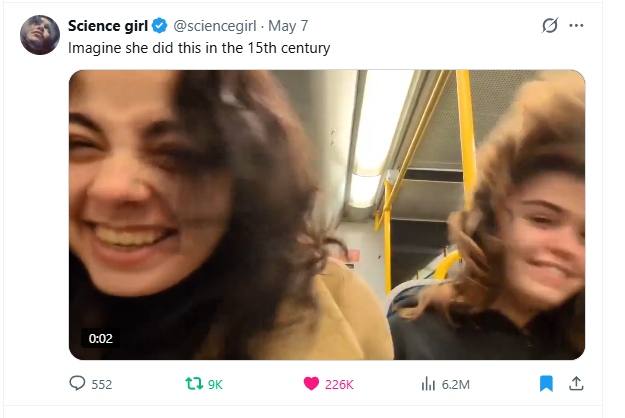
Imagine what would have happened if she did this in the 15th century
Acknowledgements: I find a lot of these links myself, but I also get some from other places that I rely on as "serendipity engines," such as The Morning News from Rosecrans Baldwin and Andrew Womack, Jodi Ettenberg's Curious About Everything, Dan Lewis's Now I Know, Robert Cottrell and Caroline Crampton's The Browser, Clive Thompson's Linkfest and Why Is This Interesting by Noah Brier and Colin Nagy. If you come across something you think should be included here, feel free to email me at mathew @ mathewingram dot com