Scientists say crows pass their grudges down to their offspring

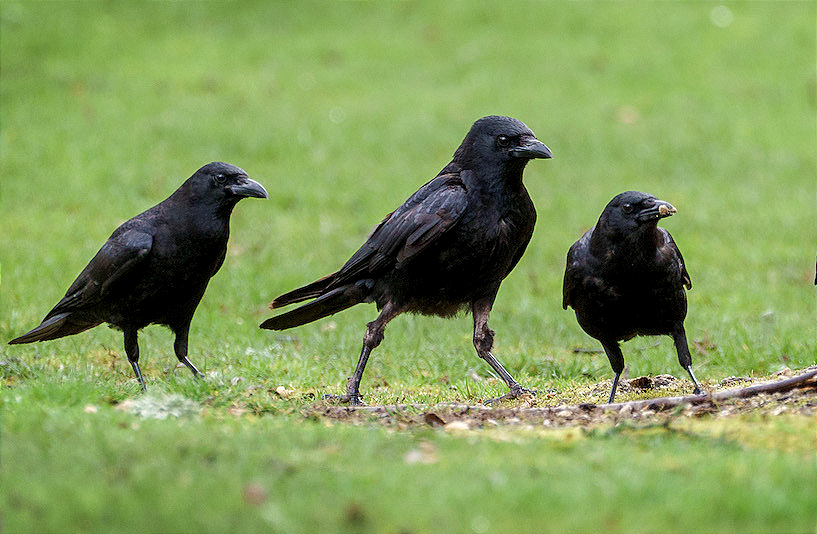
CrowTrax, a website started eight years ago by Jim O’Leary, a Vancouver resident, has received more than 8,000 reports of crow attacks in the leafy city, where crows are relatively abundant. And such encounters stretch well beyond the Pacific Northwest. A Los Angeles resident described crows attacking his house, slamming their beaks against his glass door to the point where he was afraid it would shatter. An artist in Brunswick, Maine said crows destroyed the wiper blades of dozens of cars in the parking lot of his senior living apartment complex. Crows can mimic human speech, use tools and gather for what seem to be funeral rites when a member of their group dies or is killed. They can identify and remember faces, even among large crowds. When a murder of crows singles out a person as dangerous, its wrath can be passed along beyond an individual crow’s life span of up to a dozen years, creating multigenerational grudges.(via the NYT)
In 1828 serial killers sold the bodies of their victims to medical schools
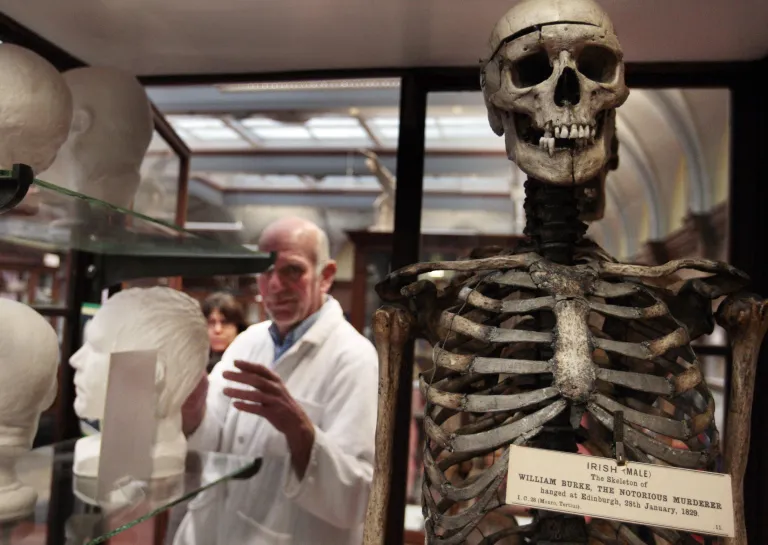
In the early 1800s, surgery was booming. Scottish surgeon John Hunter had helped bring a scientific view to Western medicine. One of the leading lights in this burgeoning field was Hunter’s compatriot Robert Knox, who ran an anatomy school in Edinburgh. But by 1827, Knox had hit a roadblock. A change to regulations meant that dissection had become an important part of the medical curriculum. Knox’s school would require more than 400 bodies the following year. Citizens had no legal way to donate their bodies to medical science. But where there’s a demand, supply will follow. Across the city, two other men also had a problem. William Hare owned a lodging house with his wife near Edinburgh’s Grassmarket and made friends with William Burke. One day in early 1828, Hare discovered one of his tenants had died overnight. Even worse, the dead man still owed him rent. They carried the corpse to Knox’s door. There, he paid them £7 and 10 shillings; more than a month’s wages. (via Popular Science)
An Italian farmer found a bag of seeds in his attic and rediscovered an ancient strain of wheat
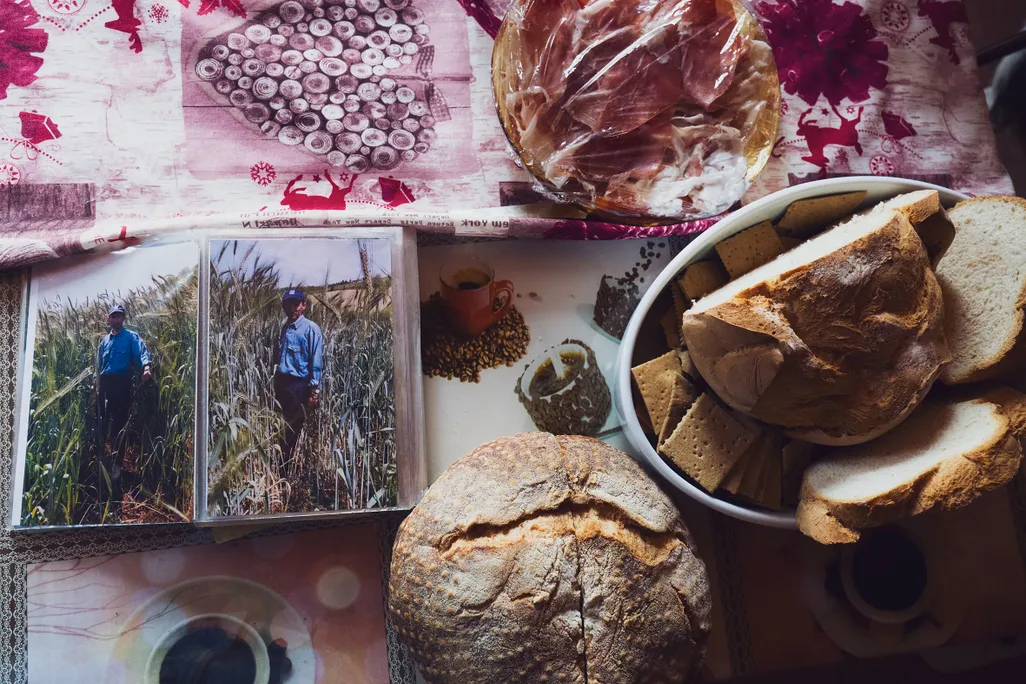
In the early 1990s, Claudio Grossi, a 40-year-old farmer in northern Italy, was cleaning his attic when he turned up an old sack full of seeds that he couldn’t identify. The bag, he was sure, had been left by his late great-grandfather, who’d started the farmstead around 1915. Grossi had no idea how long the seeds had been sitting there, deprived of water, soil and sun. Dry and cracked, the kernels looked so old in the palm of his hand that he doubted anything would ever sprout from them. He carried the bag down the stairs, shook the seeds out into a pile of manure and then forgot about them. To his surprise, the seeds soon sprouted a few different types of wheat. One was particularly striking: the tall wheat grew a full seven ears, always in the same pattern: a long one with six shorties bunched up around it like little fingers. Leafing through a Bible at church one Sunday, he found a passage in the Book of Genesis describing a stalk with seven ears, in a dream that Joseph interprets for the Pharaoh. (via The Smithsonian)
Hi everyone! Mathew Ingram here. I am able to continue writing this newsletter in part because of your financial help and support, which you can do either through my Patreon or by upgrading your subscription to a monthly contribution. I enjoy gathering all of these links and sharing them with you, but it does take time, and your support makes it possible for me to do that. I also write a weekly newsletter of technology analysis called The Torment Nexus.
At this golf course you can tee off in Canada and your ball will land an hour later in North Dakota

At the Gateway City Golf club, at the 9th hole, you tee off in Canada aiming for the America flag in the cup, across First Ave. Walk across the international frontier at the 49th Parallel into the USA to make the putt. Then there is the time machine. Since Saskatchewan doesn’t observe daylight saving time but North Dakota does, it means the ball lands in a different country an hour later. The course is located in both Portal, ND, and North Portal, Canada. Its clubhouse and the first tee box are in the U.S., and the ninth green is also on American soil. When I visited there were no armed soldiers, customs interrogations, Black Hawk helicopters, razor wire, fences, South American drug lords or desperate illegal migrants looking for a safe place in the world to live. The four men I joined were three Canadians and their American friend. They work for the sister towns or the railway companies that transit between the two countries. (via Canadian Journalist)
This town has only one resident: A 93-year-old woman who is mayor, librarian and bartender
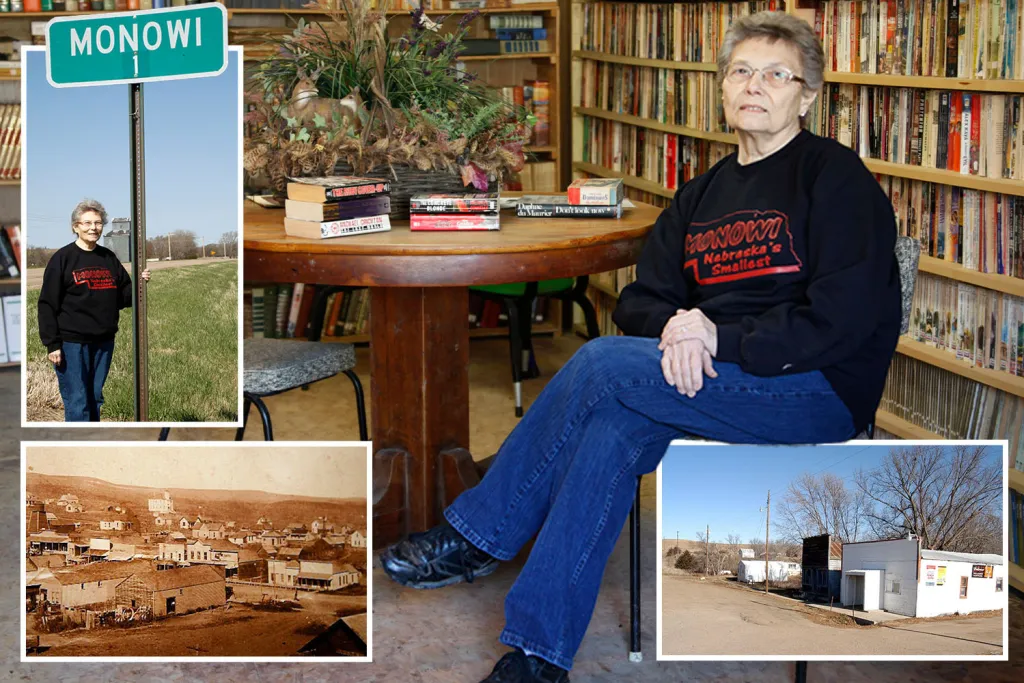
Once a thriving community where generations of families built their lives, the forgotten settlement of Monowi has been slowly erased from the map of rural America, leaving behind one solitary woman who refuses to leave. At 93, Elsie Eiler is the sole inhabitant of the Nebraska village. She told the BBC: “I’m happy here. I grew up here, I’m used to this and I know what I want. It’s just hard to change after so many years.” Elsie is the mayor of a town with nobody left to govern, the only voter in elections she cannot lose and the owner of its last surviving business – a roadside tavern. For more than 20 years, Elsie has been the only custodian of a town that once counted more than a hundred residents. Nestled among the sprawling farmland of Nebraska’s Great Plains, Monowi is the only incorporated municipality in the United States widely recognised as having a population of one. Its peculiar distinction has turned Elsie into an unlikely international celebrity, attracting travellers from across the world to a place that might otherwise have faded into complete obscurity. (via The Sun Ireland)
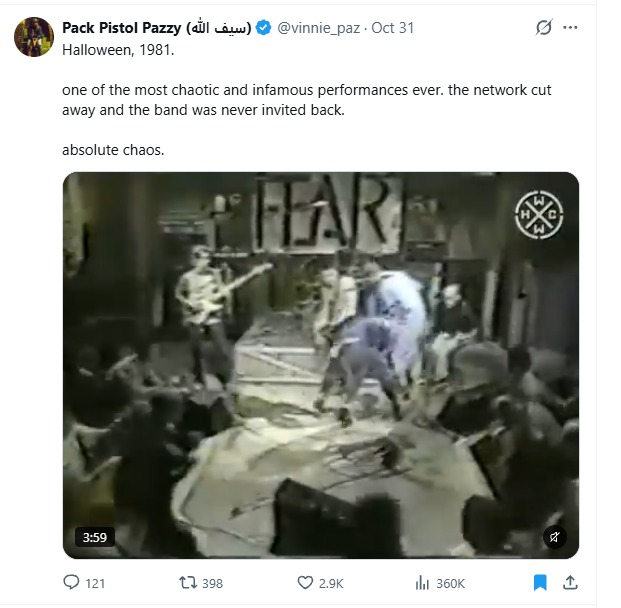
When the punk band Fear appeared on NBC in 1981 the studio was almost destroyed
Acknowledgements: I find a lot of these links myself, but I also get some from other places that I rely on as "serendipity engines," such as The Morning News from Rosecrans Baldwin and Andrew Womack, Jodi Ettenberg's Curious About Everything, Dan Lewis's Now I Know, Robert Cottrell and Caroline Crampton's The Browser, Clive Thompson's Linkfest and Why Is This Interesting by Noah Brier and Colin Nagy. If you come across something you think should be included here, feel free to email me at mathew @ mathewingram dot com