King Tut was buried with 140 pairs of immense underwear

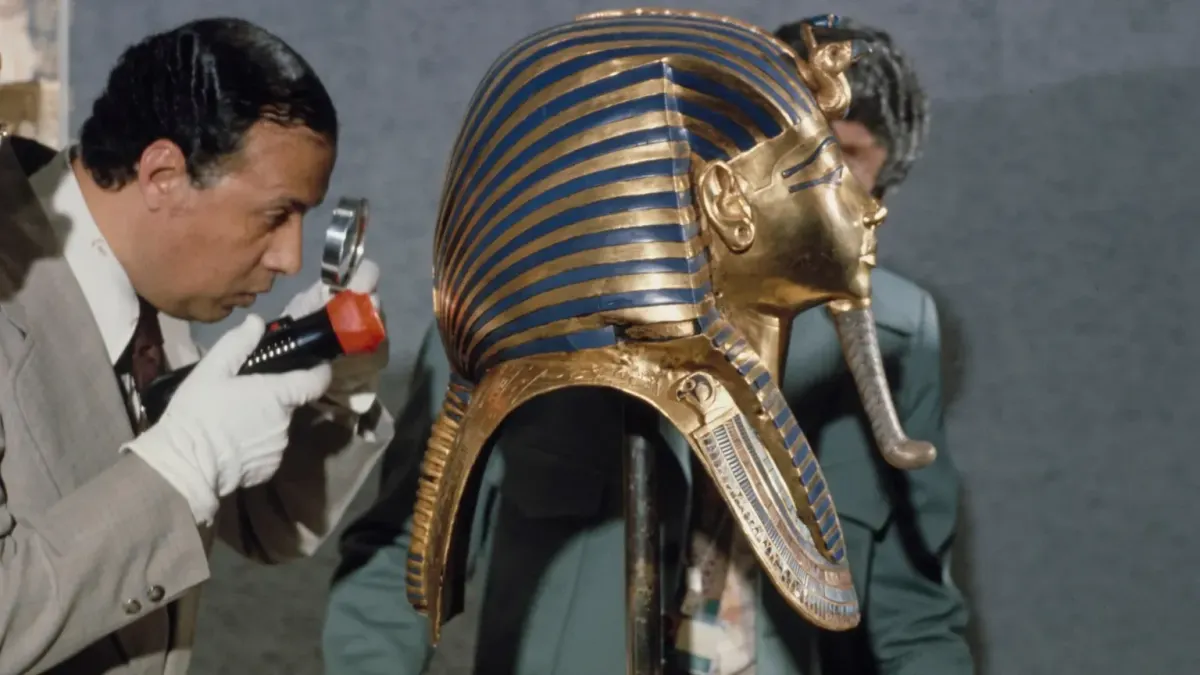
When excavators explored (and emptied) King Tuntankhamun’s tomb in the 1920s, they found a lot of magnificent artifacts. The 5,398 officially noted burial objects included ceremonial figurines, chariots, pieces of jewelry and artwork, and even piles of food. Excavators also found King Tut’s underwear — more than 140 pairs of it. No one knows why King Tut was sent off to the afterlife with so many loincloths, let alone why he packed precisely this many for his journey. A closer look at Tut’s garments suggested his measurements were 31”, 29”, 43”—rather hippy for a young man. Indeed, a “virtual autopsy” scan of King Tut done some years ago suggested he had a slim torso and fatty deposits around his hips. For a time, there was speculation that King Tut may have inherited a congenital disorder that impacted his body shape. Akhenaten, who may have been the boy-king’s father, was depicted in artwork as having wide hips and a protruding belly, which stood out from portraits of other Egyptian royalty. But genetic research has shown it’s unlikely the family had congenitally big butts; it’s more likely that Akhenaten had unusual taste in art. (via Popular Science)
A double-amputee Army veteran has climbed the highest peak on seven continents
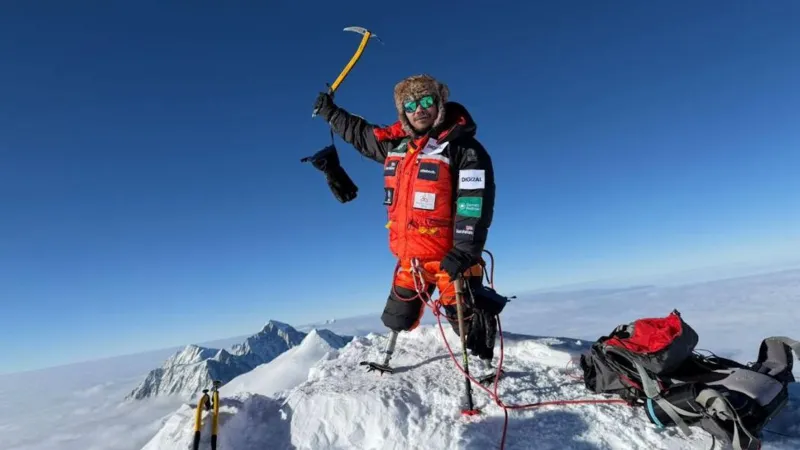
A former Gurkha has become the first double above-the-knee amputee to climb the highest peak on each of the seven continents. Hari Budha Magar, from Canterbury in Kent, completed his long-running challenge with a gruelling three-day ascent of Antarctica's 16,059ft (4,892m) Mount Vinson, the summit of which he reached on Tuesday. The veteran, who lost both legs in 2010 while serving with the British Army in Afghanistan, had spent years training in order to prepare for the record-breaking attempt. Following the loss of his legs to an Improvised Explosive Device (IED), Magar said he struggled to recover, both mental and physically, describing "dark" times and "a loss of self-worth". However, he eventually discovered a new purpose, sparked by his boyhood dream of becoming a mountaineer. His seven peaks challenge began with the 15,780 ft ascent of Mount Blanc in the Alps in August 2019, followed by Kilimanjaro in Tanzania in 2020 and Everest in the Himalayas in May 2023. (via the BBC)
Soviet scientists drilled the deepest hole ever drilled into the Earth – but why?
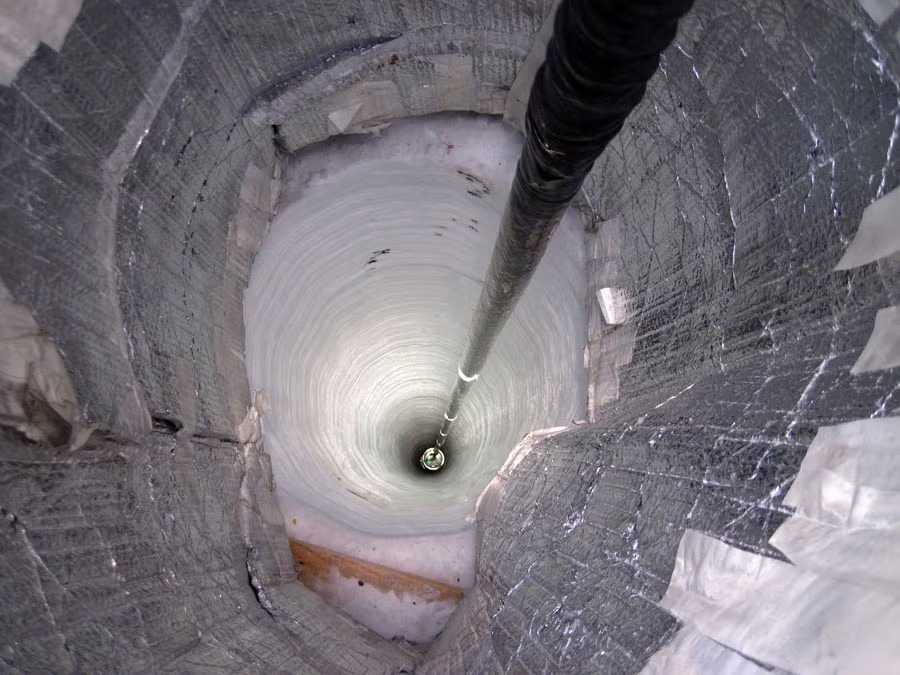
In the late 1980s, from certain corners of cable TV, you could learn that the Soviet Union had dug straight to Hell. The story ran on a program called Praise the Lord, the long-running worship and current events program aired by the evangelical Trinity Broadcasting Network, which reached around 5 million daily viewers. Over several episodes, the program explored how a Soviet deep drilling project had accidentally tunneled into Satan’s underworld. When the Soviets lowered a remarkably heat-resistant microphone into an underground cavern discovered by their dig, so the story went, the Russians—to their horror and surprise—recorded the wailing of damned souls as they languished in temperatures exceeding 1,800 degrees Fahrenheit. Their lamentations were played on the air for a stunned audience. In later developments, the network reported that a winged, bat-like figure had been seen rising from the hole and blazing a trail across the Siberian sky. This was all the proof they needed to assert that, out there somewhere in the Siberian tundra laid the “Well to Hell.” (via Nautilus)
Hi everyone! Mathew Ingram here. I am able to continue writing this newsletter in part because of your financial help and support, which you can do either through my Patreon or by upgrading your subscription to a monthly contribution. I enjoy gathering all of these links and sharing them with you, but it does take time, and your support makes it possible for me to do that. I also write a weekly newsletter of technology analysis called The Torment Nexus.
The Great Antonio was a legendary Montreal strongman who pulled buses with his hair
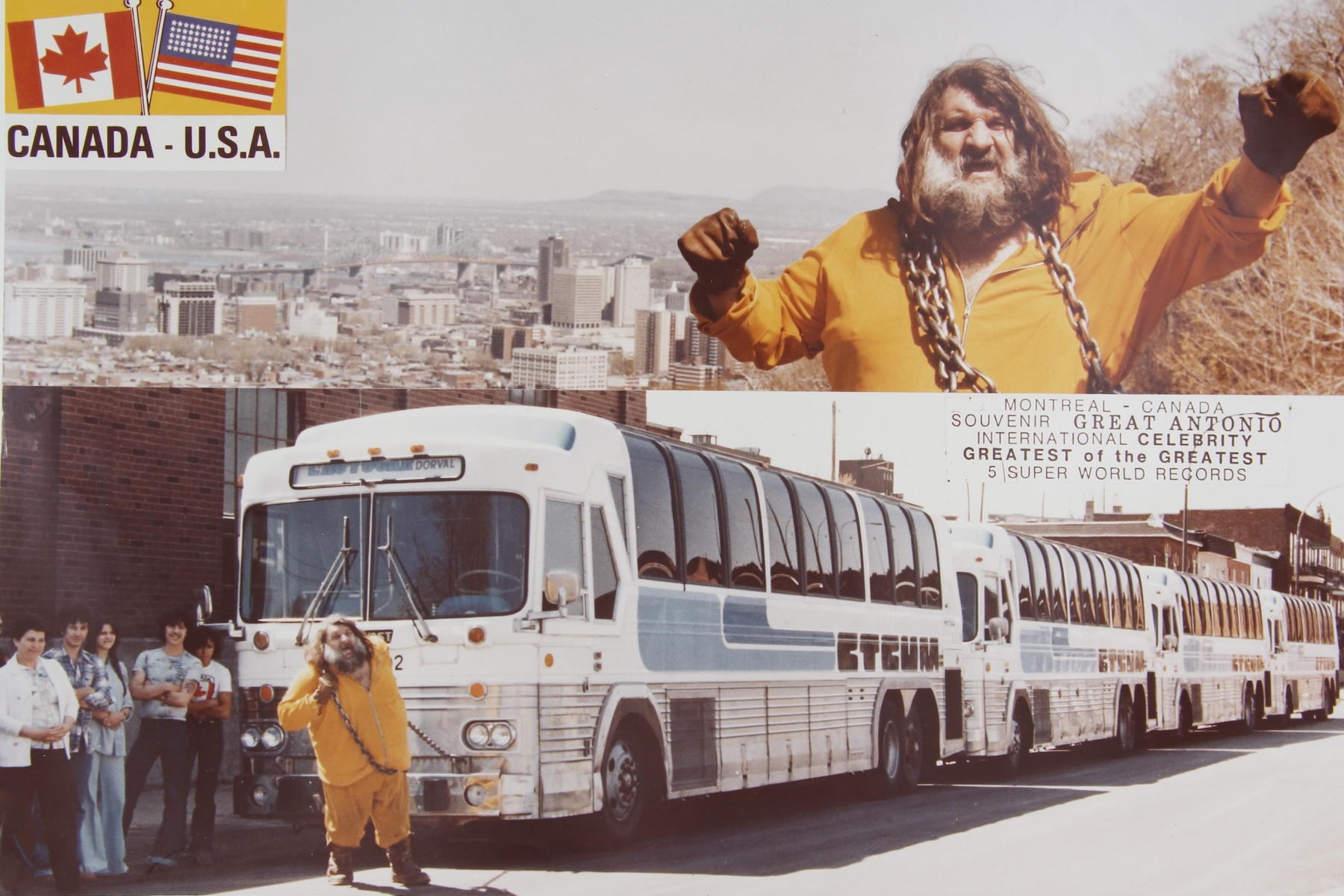
There’s a story my mother has told so often it’s burned into my brain and has become a family legend. In 1980, when I was four, I was walking with her on avenue Papineau in Montreal, eating ice cream. A shadow fell over us: a mammoth of a man with an iron towing chain around his neck, his long, matted dreads interwoven with rope and capped with electrical tape. My mother was afraid and yanked me back but wasn’t quick enough to stop his giant hand from alighting on my head—with a softness that rivalled hers. He turned left on rue Beaubien and found his true target: a bus full of passengers stopped at a red light. Seeing noses pressed to the glass and onlookers starting to gather, he attached his chain to the bumper, barked at the driver to put the gear into neutral, and started to pull. The light turned green, but traffic didn’t dare move. At first, the wheels didn’t turn, but he kept rocking. The bus finally gave, first a few inches and then a few feet. The giant opened his mouth to the sky and let out a victory shout. Meet Antonio Barichievich, a.k.a. the Great Antonio. The strongest man in the world. (via The Walrus)
How a botanist's study of breadfruit changed our understanding of Polynesian migration
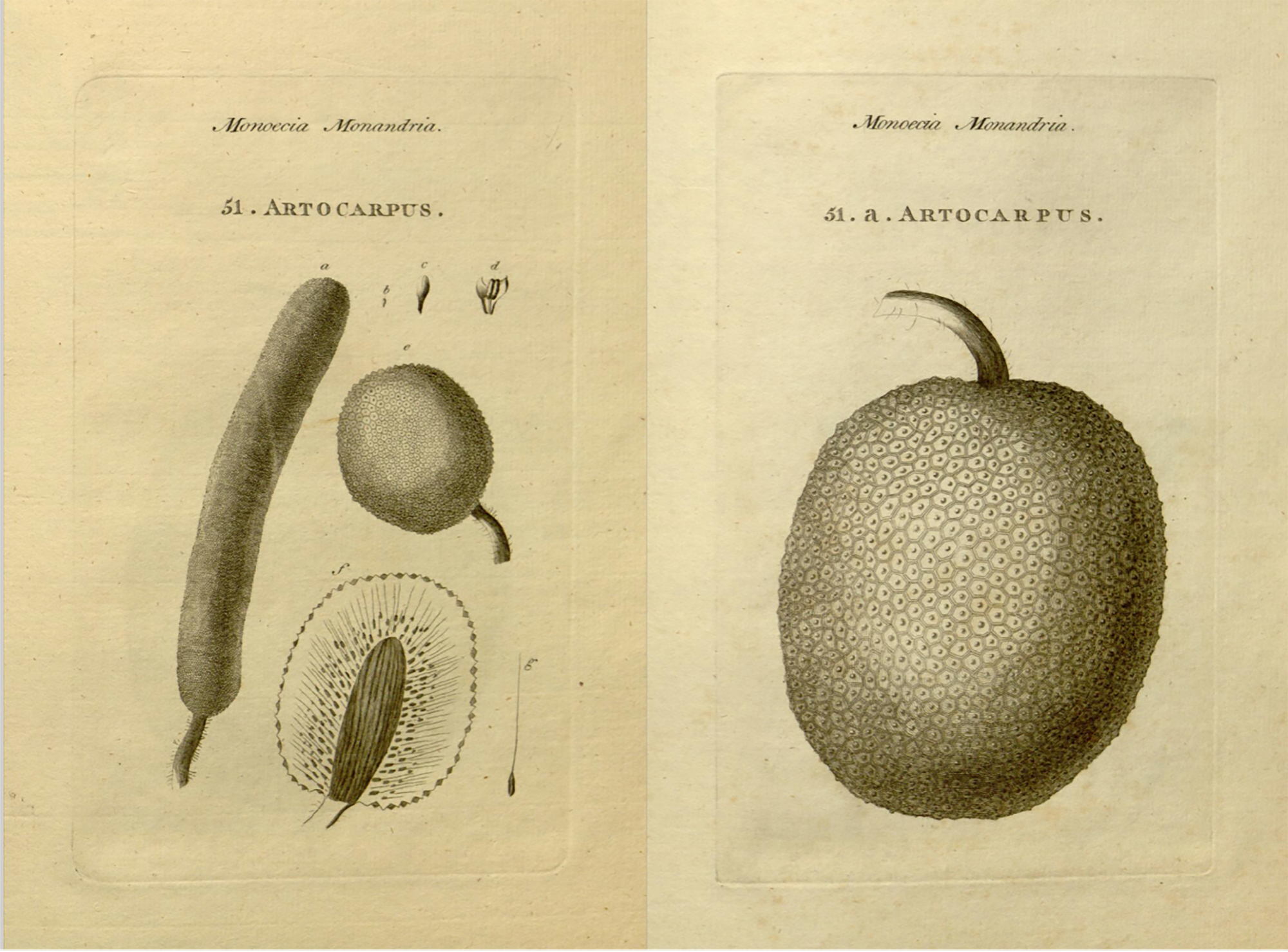
Forster had first encountered the breadfruit a decade before, while traveling as an assistant to his father, the naturalist Johann Reinhold Forster, aboard the HMS Resolution, during Cook’s second voyage. It was a tropical fruit that grew on large trees on many of the South Pacific islands they had visited. He had enjoyed the dishes made with the abundant breadfruit — roasted on hot stones or fermented into a dough that was baked like bread — but he had also noticed that they had been seedless. With no seeds, the breadfruit trees on Tahiti, Tonga, Tanna, and Malakula (as he explained in his essay), could only be propagated by cuttings from suckers that grow off the tree’s roots. During the many months they had spent in the region, Forster had not seen a single wild breadfruit tree — all of them had been planted by humans. That made him wonder where breadfruit trees originated and how they had arrived on the islands. The history and movement of the breadfruit enabled Forster to develop a surprising understanding of Polynesian migration. The breadfruit’s journey was proof that the Polynesians had migrated east from Southeast Asia across the Pacific — a theory confirmed more than 200 years later by DNA and archaeological studies. (via Lapham's Quarterly)
A world record for a mile run while pushing a baby in a stroller

Acknowledgements: I find a lot of these links myself, but I also get some from other places that I rely on as "serendipity engines," such as The Morning News from Rosecrans Baldwin and Andrew Womack, Jodi Ettenberg's Curious About Everything, Dan Lewis's Now I Know, Robert Cottrell and Caroline Crampton's The Browser, Clive Thompson's Linkfest and Why Is This Interesting by Noah Brier and Colin Nagy. If you come across something you think should be included here, feel free to email me at mathew @ mathewingram dot com