He was a star NFL agent and then came the crossbow murder


He drove his red Mercedes along Pershing Avenue with the top down, his wavy brown hair just long enough to flap in the wind. With his monogrammed shirts and pleated pants, Michael Blatt exuded a specific 1980s California cool rooted in the certainty that, no matter what, he would never, ever lose. An Army brat, Blatt said he moved 18 times before coming to the University of the Pacific to play soccer in the mid-1960s. His ambition took root. By 21, he wanted to make a million dollars. By 24, he wanted $10 million.After graduating from UOP in 1968, he worked in finance, but Blatt would never settle for managing other people’s money. One day, legend goes, he walked into a bank and asked for a million-dollar loan. The chairman, wearing a cowboy shirt and an oversized belt buckle, said, “You’re either crazy, full of bullsh—, or you gotta be right.”Blatt got the loan. Within six years, he had built 4,000 apartment units. Within a decade, his company tallied $120 million worth of construction. Later, he built a subdivision he called Blatt Estates with streets named after his children. (via The Athletic)
During World War I the White House called a herd of sheep into service to mow the lawn
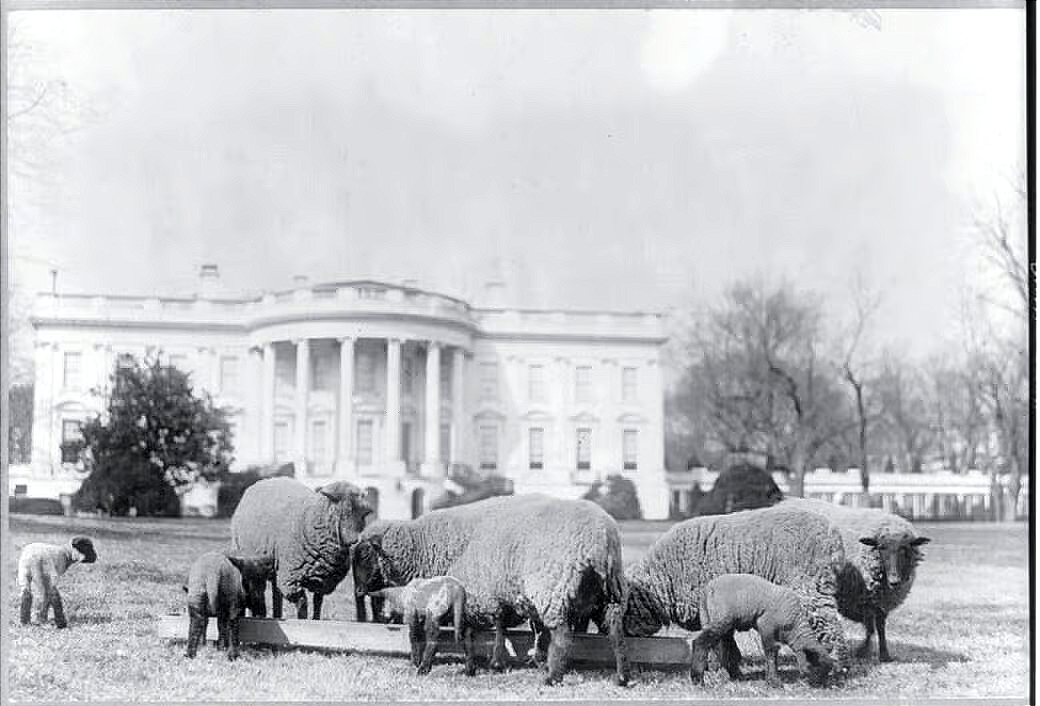
In the spring of 1918, the United States was a year into World War I, and any man holding a job that could be done by someone — or something — else was a man who could be sent to France instead. That posed a problem for President Woodrow Wilson: the White House needed its grass cut and its groundskeepers freed up, and those two needs were pulling in opposite directions. The idea came from Dr. Cary T. Grayson, Wilson’s personal physician, who happened to have useful friends in horse racing. Grayson contacted his horse racing acquaintance William Woodward, who owned Belair Farm. Woodward sent along a small flock, 18 sheep in all, by wagon to the nation’s capital. The idea was simple: the sheep needed to eat anyway, and grazing on the lawn of the President’s house would mean the grass would always be well tended to. The idea worked at first, and had a nice side benefit. Sheep grow wool, and wool grown on the President’s lawn was kind of cool. But there were problems with the sheep-as-mowers scheme. (via Now I Know)
Why did a thriving civilization in Malta collapse and disappear 4,000 years ago?

The Temple Culture of the Maltese archipelago in the Mediterranean began nearly 6,000 years ago and at its height probably numbered several thousand people—far denser than the people of mainland Europe could manage at the time. The island people constructed elaborate sacred sites, such as the famous Ġgantija temple complex, and their buildings are among the earliest free-standing buildings known. But, after 1,500 years, they were gone. Caroline Malone, prehistory specialist at Queen’s University Belfast, Northern Ireland, wanted to understand how the fragile island ecology sustained the people for so long despite drought, violent storms, and soil erosion—and why it ultimately failed. She ran an ambitious project, Fragsus, which drew on multiple tools to find some answers. Scientists drilled earth cores ranging from eight to 30 meters deep, dating the sediment using carbon dating to understand which time period it referred to. They counted the pollen at two-centimeter intervals and analyzed individual pollen grains using chemical signatures imprinted by the surrounding environment to understand what nutrients the parent plants were absorbing from the ground. (via Nautilus)
Hi everyone! Mathew Ingram here. I am able to continue writing this newsletter in part because of your financial help and support, which you can do either through my Patreon or by upgrading your subscription to a monthly contribution. I enjoy gathering all of these links and sharing them with you, but it does take time, and your support makes it possible for me to do that. I also write a weekly newsletter of technology analysis called The Torment Nexus.
Brooklyn's smallest and strangest museum is hiding right in plain sight
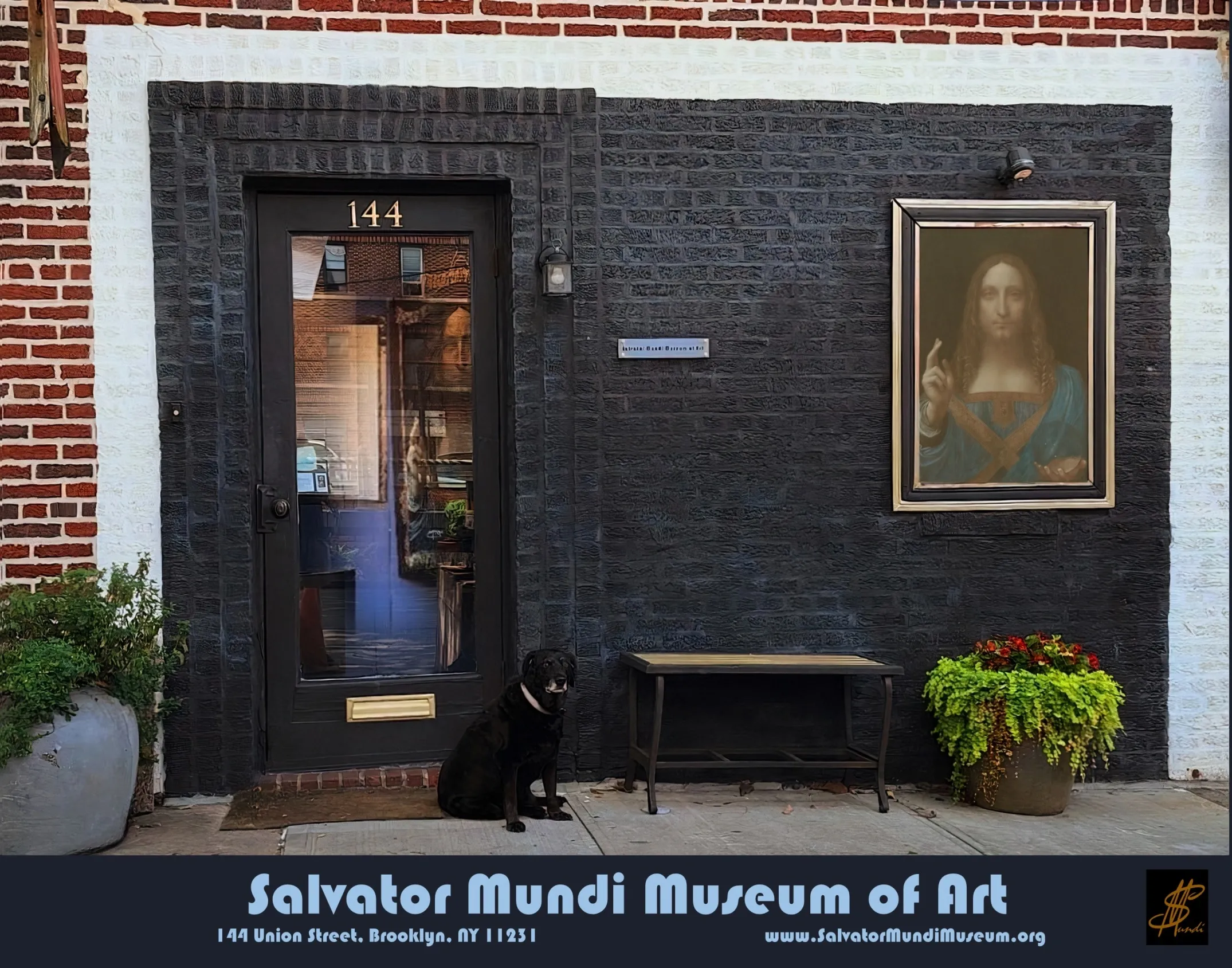
Look closely next time you find yourself in Carroll Gardens: Tucked into the residential streetscape, just past the BQE on Union Street, is a minuscule exhibition visible entirely from the street through a panel on one local artist’s front door. This is the Salvator Mundi Museum of Art, sculptor Elliott Arkin’s homage to the strange story of Leonardo da Vinci painting The Salvator Mundi. Long believed to be lost, the badly damaged 16th-century work resurfaced at a New Orleans estate sale in 2005 and became the most expensive painting ever sold at public auction. Arkin decided to trademark “Salvator Mundi,” which is Latin for "Savior of the World" and refers to a specific depiction of Christ in which his right hand is raised and he holds an orb in his left. In 2018, to promote his new brand, Arkin opened a tiny exhibition space dedicated to the painting in the 45-square-foot lobby of his home. Where once there were coats, umbrellas, and his daughter’s bicycle, there is now the Salvator Mundi Museum of Art, currently featuring an exhibition on orbs, inspired by the crystal sphere in the painting. It’s the second show of the year, and Arkin has lost track of how many shows there’ve been in total. (via Gothamist)
Gangs of well-dressed thugs were a menace that terrorized Paris at the turn of the century
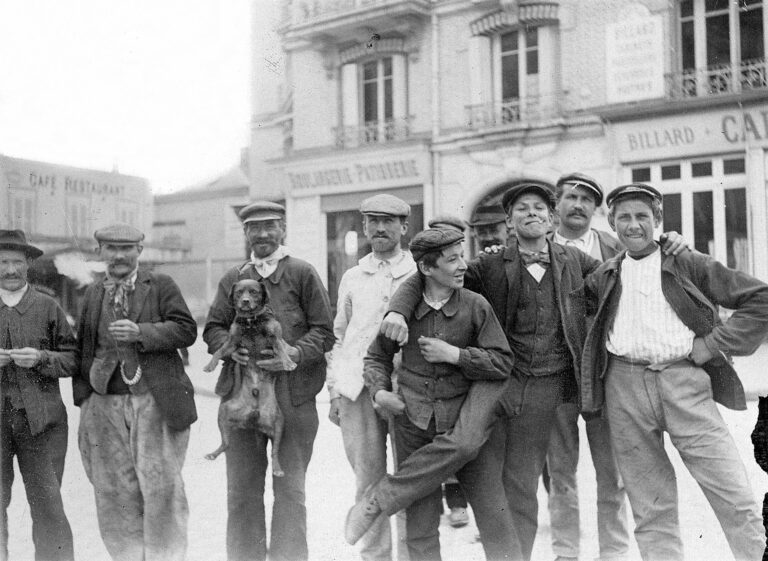
The Paris of the Belle Époque saw the emergence of a certain type of street outcasts; a subculture that combined killer style with the criminal underworld. They were known as, les Apaches. They lived in secret dens in the city outskirts, shunned the idea of honest labor and took their name from the allegedly savage native American tribes of Apaches. They targeted the bourgeois middle-class, hunting and stalking their victims before mugging them of their valuables using the special Apaches revolver as a weapon if needed. Abiding by their own code of honor, they woke up late, spoke the obscure slang Jare and most of all, paid very close attention to their style – particularly their footwear. It was their unlikely physical appearance that imposed both respect and fear from the Parisians and their police. An apache might have been holding you at gun point, but you perhaps would not have been able to resist admiring his shoes, or his dandy layering. Apache could steal, cheat, or kill if necessary to get hold of a pair of shoes that would enhance his image in the eyes of his gang or his lovers. The littlest scratch and the shoes were thrown to the poor. The height of Apache vanity was a pair of freshly polished pointed yellow boots with golden buttons. (via Messy Nessy Chic)
Sometimes geometry can be a little like magic

Acknowledgements: I find a lot of these links myself, but I also get some from other places that I rely on as "serendipity engines," such as The Morning News from Rosecrans Baldwin and Andrew Womack, Jodi Ettenberg's Curious About Everything, Dan Lewis's Now I Know, Robert Cottrell and Caroline Crampton's The Browser, Clive Thompson's Linkfest and Why Is This Interesting by Noah Brier and Colin Nagy. If you come across something you think should be included here, feel free to email me at mathew @ mathewingram dot com