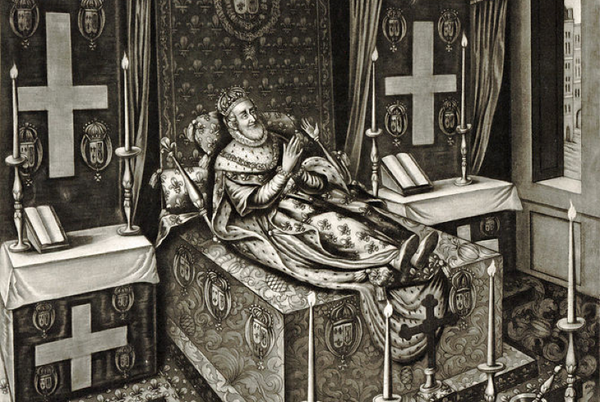
He lives like a monk but he dines like a king


A couple of months ago, a man arrived for his 50th dinner at Nisei, the one-Michelin-starred Japanese fine-dining restaurant in Russian Hill. As he sauntered up Polk Street in his signature white tennis shoes, jeans, blazer, and backpack, the entire Nisei staff was waiting outside to greet him with a round of applause. It was as if royalty had arrived. Except by all accounts, it was just a guy named Michael Grepo. Grepo, 67, is a single, former federal employee who, for the past 38 years, has been living in a rent-controlled in-law apartment in Miraloma Park. It’s the same neighborhood where he grew up in a Filipino family. He pays $1,000 a month, utilities included. He doesn’t own a car. He takes Muni to dinner. When he’s not eating out, he makes himself monastic bowls of tofu and steamed kale. But since his retirement in 2018, he has become a regular at the kind of restaurants that don’t normally have regulars. (via the SF Standard)
The European witch trials were a result of competition between Catholics and Protestants
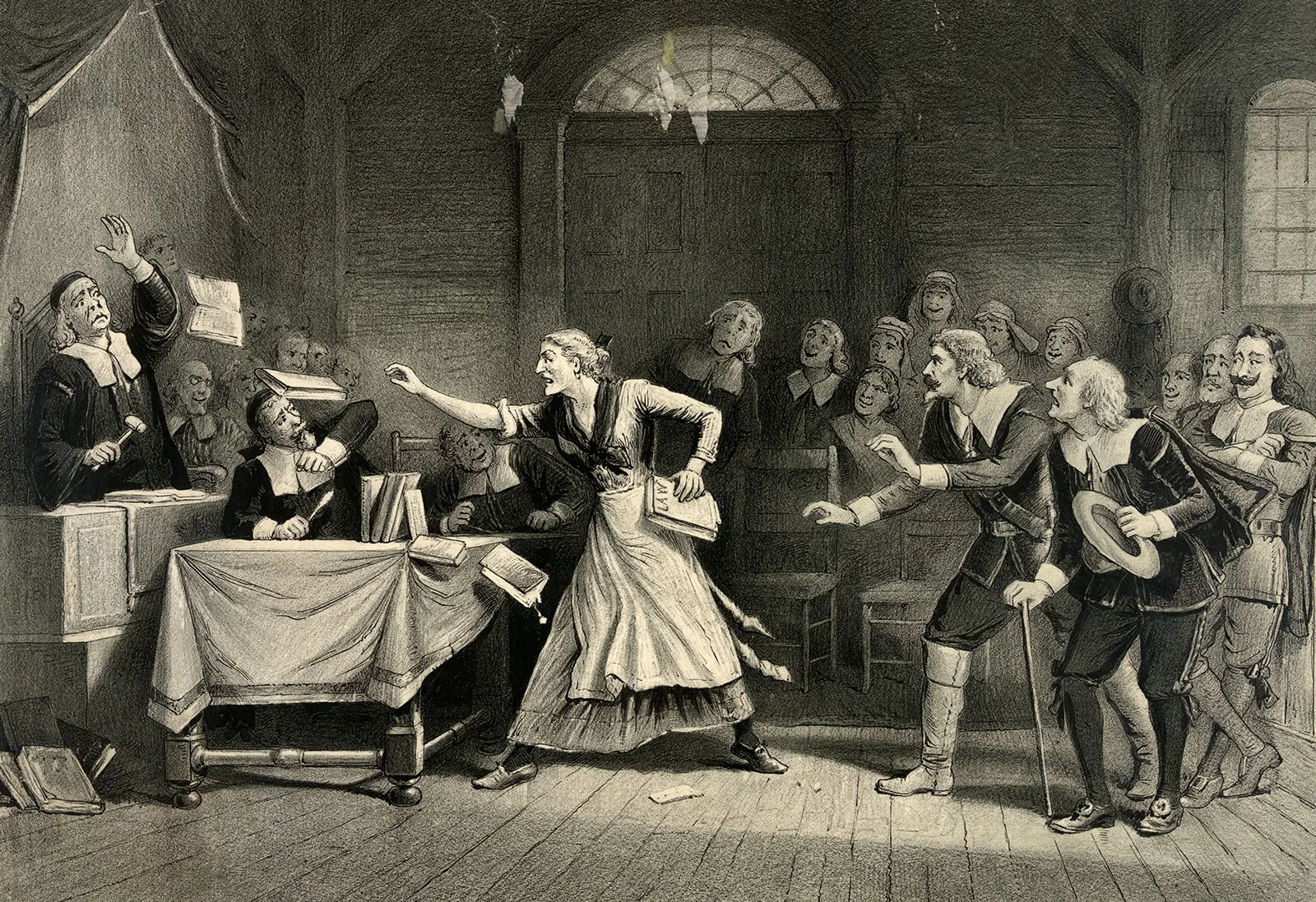
Between 900 and 1400, Christian authorities were unwilling to so much as admit that witches existed, let alone try someone for the crime of being one. This was not for lack of demand. Belief in witches was common in medieval Europe and in 1258 Pope Alexander IV had to issue a canon to prevent prosecutions for witchcraft. By 1550, Christian authorities had reversed their position entirely. Witches now existed in droves and, to protect citizens against the perilous threat witchcraft posed to their safety and well-being, had to be prosecuted and punished wherever they were found. In the wake of this reversal, a literal witch-hunt ensued across Christendom. The great age of European witch trials would not end for another 150 years. By the time it did, no fewer than 80,000 people had been tried for witchcraft, half of them executed. We argue that this reflected non-price competition between Catholic and Protestant churches for religious market share in confessionally contested parts of Christendom. (via Peter Leeson)
He thought they were homework but they were famous unsolved problems
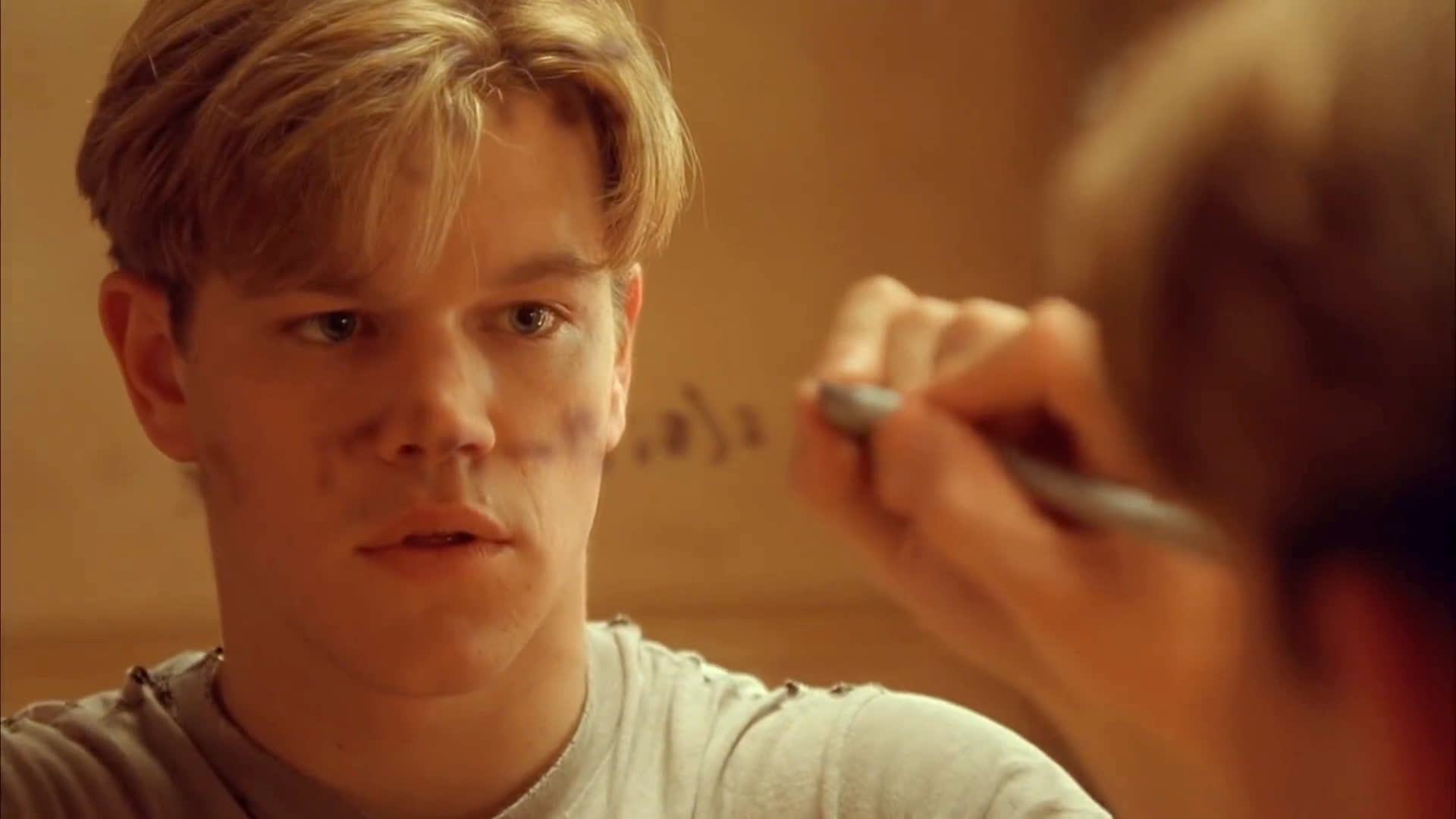
In 1939, George Dantzig rushed off to his graduate statistics class at UC Berkeley. As he sat down among the other graduate students in class, his eye was caught by a set of math problems written up on the blackboard. Assuming them to be the day’s assigned homework, he copied them down and turned them in to his professor, and apologized for taking so long to do the homework. Early Sunday morning about six weeks later, Dantzig and his wife were awakened by someone banging on their front door. They were surprised to find an out-of-breath Neyman with an excited look on his face, clutching a couple of rumpled papers. He had just written an introduction to one of the papers and wanted to send it out for publication. As it turned out, the problems Dantzig had mistaken for homework were really two famous unsolved statistics problems that were now, at the suggestion of Neyman, taken up as his doctoral dissertation. (From UMD)
Hi everyone! Mathew Ingram here. I am able to continue writing this newsletter in part because of your financial help and support, which you can do either through my Patreon or by upgrading your subscription to a monthly contribution. I enjoy gathering all of these links and sharing them with you, but it does take time, and your support makes it possible for me to do that. I also write a weekly newsletter of technology analysis called The Torment Nexus.
The Tully Monster was an ancient marine animal whose fossils have only been found in Illinois
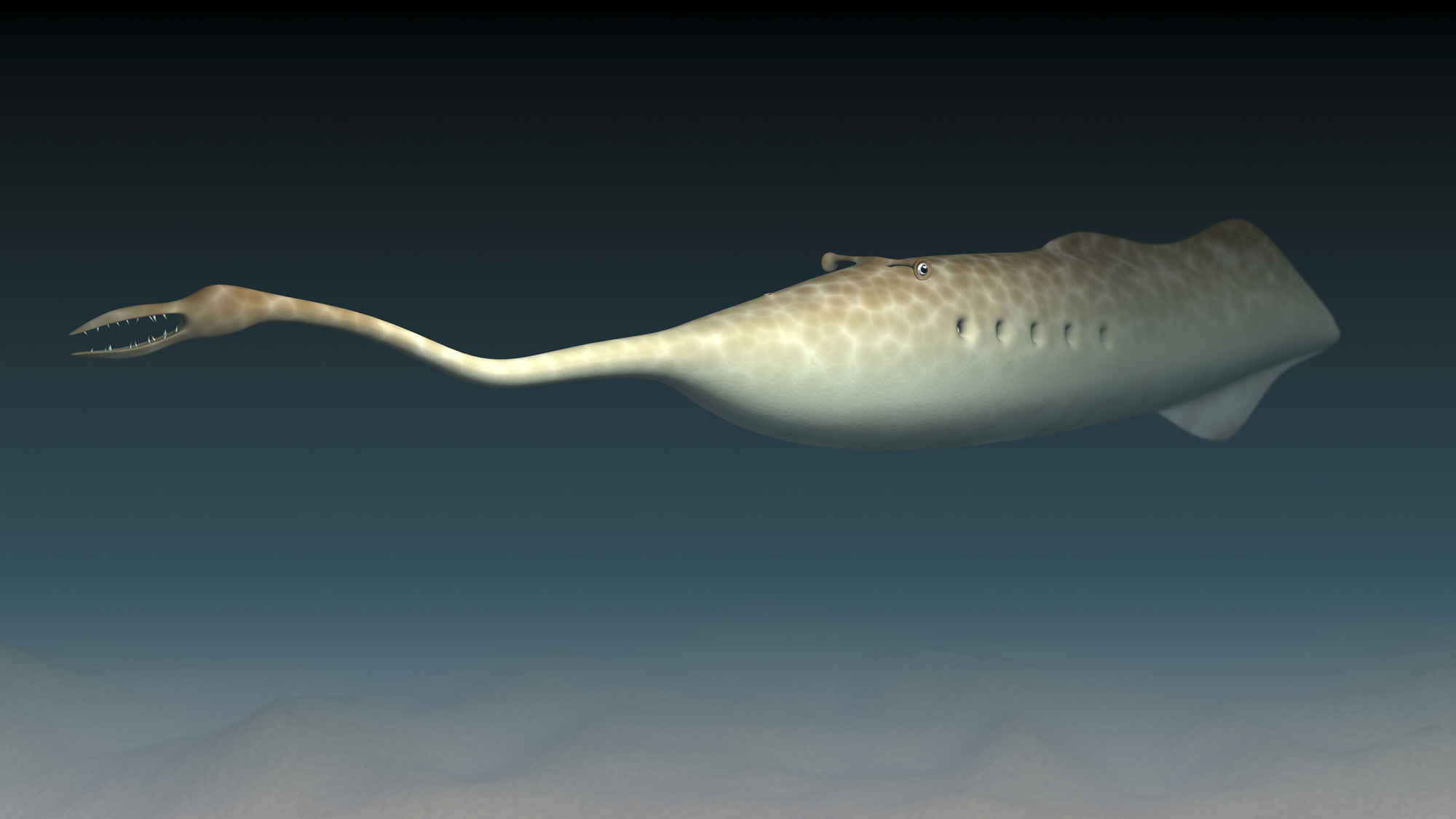
Tullimonstrum, colloquially known as the Tully monster or sometimes Tully's monster, is an extinct genus of soft-bodied bilaterian marine animal that lived in shallow tropical coastal waters of muddy estuaries during the Pennsylvanian, about 310 million years ago. Examples of Tullimonstrum have been found only in sediments deposited far from the palaeocoast (formally termed the Essex biota), in the Mazon Creek fossil beds of Illinois. This creature had a mostly cigar-shaped body, with a triangular tail fin, two long stalked eyes, and a proboscis tipped with a mouth-like appendage. Amateur collector Francis Tully found the first of these fossils in 1955 in a fossil bed known as the Mazon Creek formation. He took the strange creature to the Field Museum of Natural History, but paleontologists were stumped as to which phylum Tullimonstrum belonged to. (via Wikipedia)
Scientists say that the giraffe's long neck evolved for sexual combat

If you’re a fan of Rudyard Kipling’s Just So Stories, you’ll recall “How The Elephant Got His Trunk,” “How The Leopard Got His Spots,” and the like. You probably also remember from basic biology the regnant evolutionary account of “How The Giraffe Got His Long Neck.” It lent itself to contrasting Lamarckian selection — in which early giraffes stretched their necks to reach higher leaves, thereby bequeathing their long neckedness to subsequent generations — with Darwinian natural selection, in which evolution favored those individual giraffes whose genetic background endowed them with longer necks, thus selecting for this trait. Although Lamarck remains in disfavor, research recently published in the journal Science strongly suggests that a different and far sexier variant of natural selection — appropriately termed sexual selection — has been operating. Time to revise the textbooks. But not completely. (via Nautilus)
He built a chessboard with a taser built in that shocks you if you make the wrong move
Acknowledgements: I find a lot of these links myself, but I also get some from other places that I rely on as "serendipity engines," such as The Morning News from Rosecrans Baldwin and Andrew Womack, Jodi Ettenberg's Curious About Everything, Dan Lewis's Now I Know, Robert Cottrell and Caroline Crampton's The Browser, Clive Thompson's Linkfest and Why Is This Interesting by Noah Brier and Colin Nagy. If you come across something you think should be included here, feel free to email me at mathew @ mathewingram dot com