He got home from his around-the-world trip 28 years later


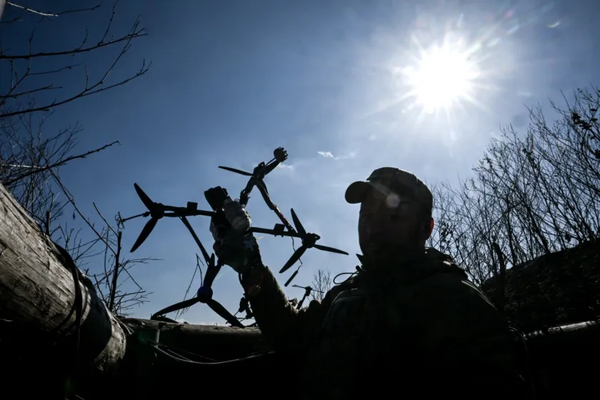
Adventurer Karl Bushby completed a multi-day swim of the English Channel, stepping foot on UK soil after a 28-year journey. Bushby, 57, left Chile, South America, on 1 November 1998, following two self-imposed rules – not to use transport to advance and not to return home until the journey is complete. On Tuesday, he announced that he had swum from France to the UK – the final, major hurdle of his journey back to his childhood home in Hull. Bushby said he swam for 20 hours over three days, making landfall at Shakespeare beach, just south of Dover, at 15:30 BST on Monday. To date, Bushby has covered more than 30,000 miles (48,000km), including 29 countries. He walked the length of South America, crossed the treacherous Darien Gap and continued north to Alaska. From there he crossed the Bering Strait on foot, swimming where necessary. Bushby then traversed Siberia and the rest of Asia before swimming across the Caspian Sea, which took 31 days to complete. (via the BBC)
Researchers built a model of a fruit fly's nervous system and it can parallel park a car
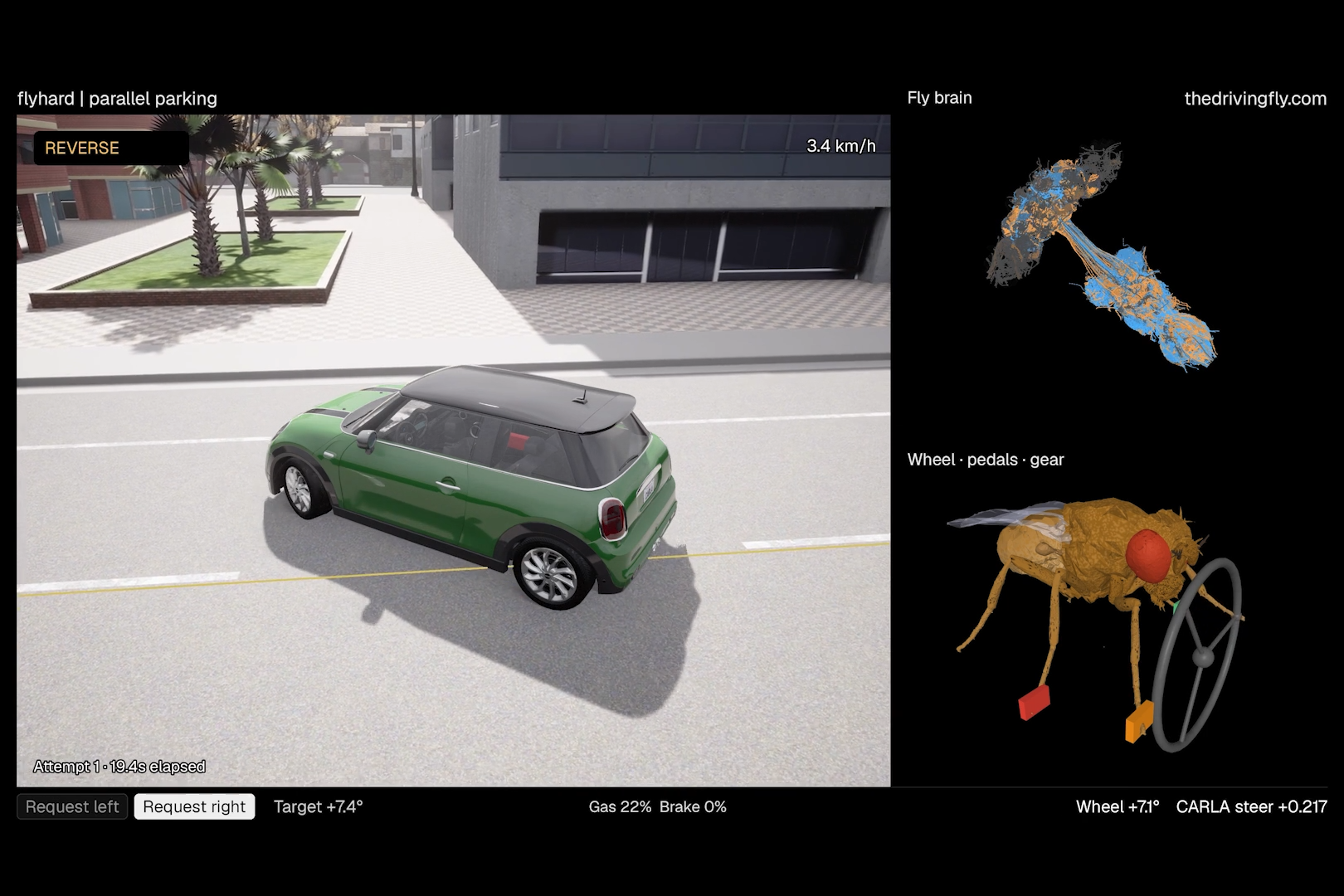
What can a fruit fly do? Buzz around ripe bananas, sure. But maybe, a whole lot more. Like parallel park. Or play Minecraft. Creative internet users have in recent days taken a complete map of a fruit fly’s 166,000 neurons, published by Google, and made simulated flies do some things that are pretty impressive, given that these insects have a brain the size of a poppy seed. One has been trained to solve a Rubik’s Cube. Another dances to the Village People’s “Y.M.C.A.” in response to four tones. Others have envisioned fruit flies playing poker and blackjack and slicing a doner kebab. Mr. Unthank, who lives in Italy, also programmed a fly to use a car’s blinkers when turning because he was frustrated that so few human drivers seem to use them. Researchers at the Howard Hughes Medical Institute in Virginia completed the new map of the adult male fruit fly’s brain in partnership with Google. In 2024, a consortium led by researchers at Princeton published a map of an adult female fruit fly brain. (via the NYT)
At the Olympics in 1908 one of the sports was competitive pistol duelling
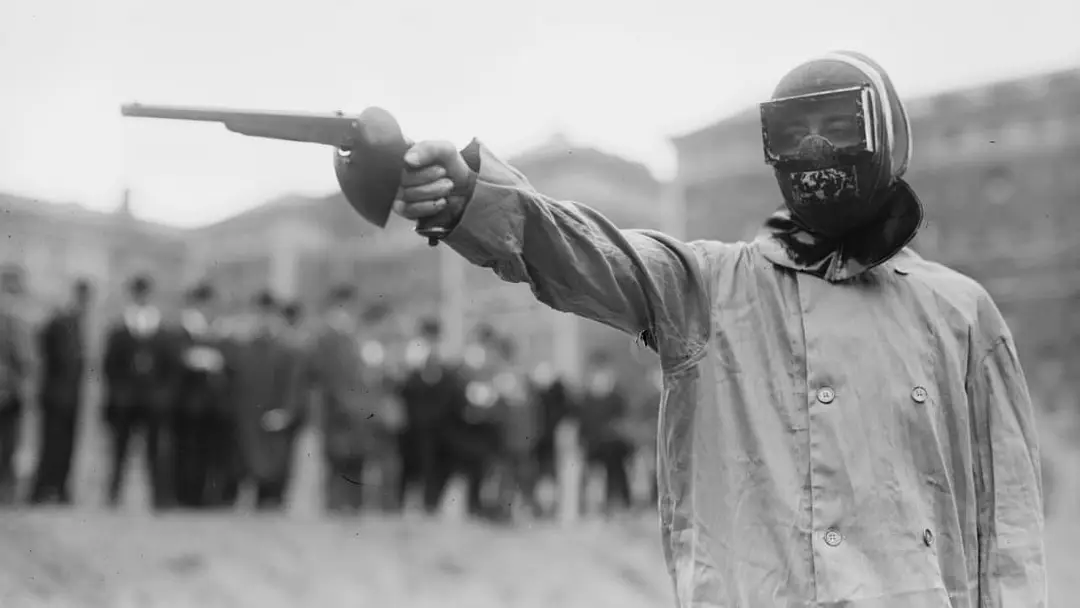
At the 1908 Summer Olympic Games in London, it was possible for losing participants to be pronounced dead—theoretically, anyway. For a fleeting period of time in the early 20th century, a form of pistol dueling grew in popularity by promising all the excitement of a fatal rivalry with none of the actual bloodshed. Duelists, armed with specially-made pistols and painful (but not deadly) wax bullets, faced off against one another in a mannered test of sidearm skill that encompassed not one but two Olympic Games. In 1901, a doctor and dueling aficionado named Paul Devillers developed an intriguing way to practice one’s dueling skills without committing homicide. He crafted a bullet made from tallow and baryta sulfate and then convinced pistol-making firm Piot-LePage to manufacture a gun that could fire the wax projectile. With a reduced charge without gunpowder and a special steel adapter in the chamber, the bullet could speed through the air and strike an opponent, who would typically be outfitted in a fencing-style chest protector and mesh mask. (via Mental Floss)
Hi everyone! Mathew Ingram here. I am able to continue writing this newsletter in part because of your financial help and support, which you can do either through my Patreon or by upgrading your subscription to a monthly contribution. I enjoy gathering all of these links and sharing them with you, but it does take time, and your support makes it possible for me to do that. I also write a weekly newsletter of technology analysis called The Torment Nexus.
He was an evangelical preacher at 4 years old but went on to expose the con

By the time he was 4, Marjoe Gortner was an ordained minister, coached by his parents into a tiny simulacrum of a Pentecostal preacher, belting out hellfire and brimstone. He was born into the business, the fourth generation of a family of ministering men. But it was his mother, Margaret, known as Sister Marge, who taught him the trade, writing the scripts for his sermons and drilling him in daylong sessions. He rarely stumbled. When he did, Marge’s teaching method involved pressing a pillow over his face or holding his head under a running faucet. He was a hit on the evangelical circuit. Clad in a little white suit and cowboy boots, his hair a nimbus of blond curls that his mother had bleached and permed, he gestured and lunged, delivering his lines in a piping voice from a pint-size pulpit. Mr. Gortner, who exposed the flimflammery of his former profession in the 1972 Oscar-winning documentary “Marjoe” and went on to become a hard-working mid-list actor, died on Oct. 2 in Santa Fe, N.M. He was 82. (via the NYT)
To some he was just a monk who liked to garden but he discovered how genes work
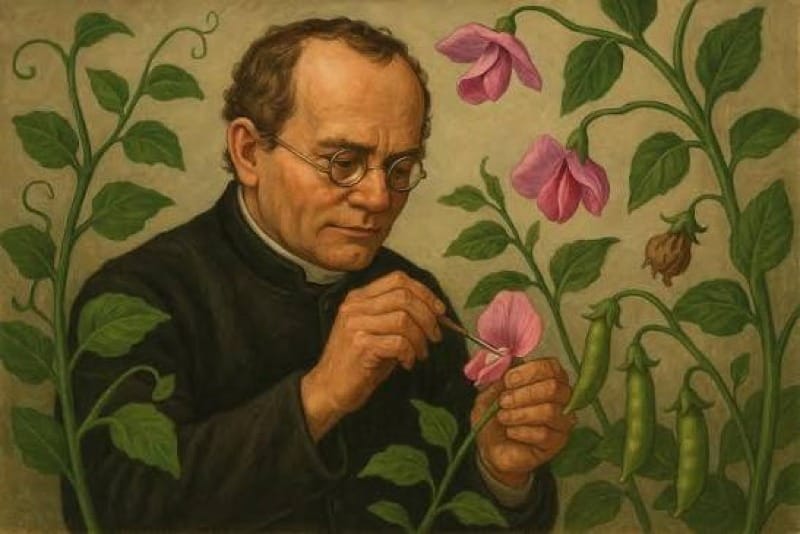
Gregor Mendel was born in 1822 in a remote village in Moravia. As a young adult he began his studies at a small village convent long before the advent of public education in rural areas. His parents were meager farmers and they did not have any previous education to help Mendel. To be accepted into an elite academic institution without credentials or finances, Mendel had to begin his studies as a monk and eventually become a member of the Augustine Order. By entering the strict religious sect, he managed to cover the substantial expenses of his advanced studies. Mendel stopped his education all together several times due to depression and personal crises. Despite these trials and tribulations, he began lecturing in Brno at the age of 31. It was here that he undertook a series of experiments involving sweet peas that changed the scientific world forever. But Mendel’s findings did not receive much attention during his lifetime and his contemporaries did not recognize his genius. (via NRGene)
At this aquarium the otters help clean up their toys and get paid in ice cubes

Acknowledgements: I find a lot of these links myself, but I also get some from other places that I rely on as "serendipity engines," such as The Morning News from Rosecrans Baldwin and Andrew Womack, Jodi Ettenberg's Curious About Everything, Dan Lewis's Now I Know, Robert Cottrell and Caroline Crampton's The Browser, Clive Thompson's Linkfest and Why Is This Interesting by Noah Brier and Colin Nagy. If you come across something you think should be included here, feel free to email me at mathew @ mathewingram dot com