He escaped from a memory unit by listening to the keypad tones


At the Elmcroft of Lebanon, Tennessee, the staff of the memory-care unit knew the code to the keypad that controlled the exit door. Residents weren’t supposed to be able to leave unattended. That’s how the system worked: the keypad stood between those in the facility’s care and the risks outside of it. But on March 2, 2020, the system broke down—because one resident realized the keypad was giving the code away. That afternoon, a husband and wife living in the memory-care unit left the facility. While the man and woman were gone about 30 minutes before a stranger picked them up two blocks away and returned them to the facility, uninjured, the real question came afterward: how did they manage to get through the locked exit in the first place? Local reporters say the man told staff that he had previously worked with Morse code in the military and learned the door’s numeric exit code by listening as staff punched it on the keypad. From those sounds, he figured out the code well enough to use it himself. (via Popular Mechanics)
How orchids helped inspire the evolutionary theories of Charles Darwin
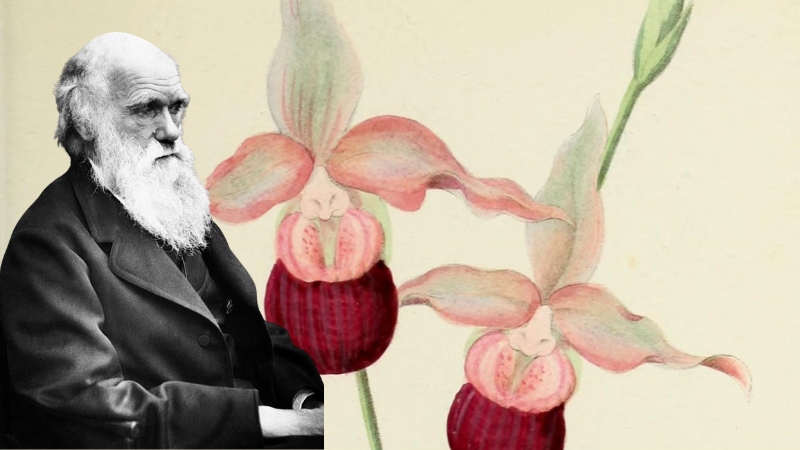
In Darwin’s woods I was moved that I was feeling pleasure from something he initiated but never got to see. And in his woods are some plants he would be fascinated by. Here and there in the deep shade under the beeches is a species of orchid called violet helleborine. The orchids time their flowering for when fruits have fallen to the ground and wasps are patrolling for food. Bees avoid the gloom of the understory, but wasps don’t mind it, and are attracted to the helleborines by the promise of an intoxicating nectar (itself made by a symbiosis with fungi). When they drink it, becoming dusted with pollen as they do so, the wasps seem to get drunk. They give up on personal hygiene; they let themselves go. This means they don’t groom themselves with anything like the care they normally would, and pollen remains stuck to them. They stagger to the next flower, like a pub crawl with bonus pollination events. If you examine the orchid flowers, you’ll find a sort of shield stopping the pollen falling from the male parts of the flower onto the female parts, preventing self-pollination. (via LitHub)
A jar of mustard that was spicier than usual led to an international Dijon mystery
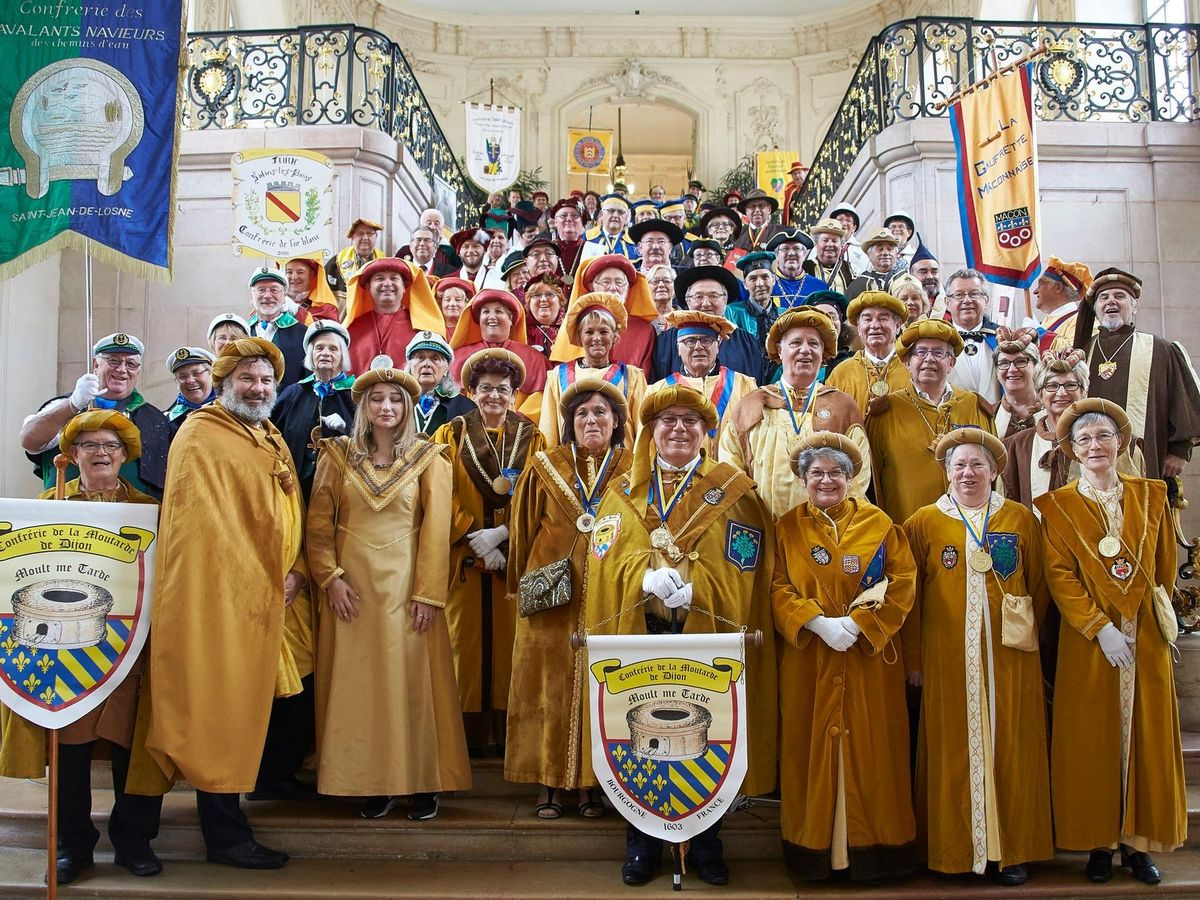
The strange thing about that night was no one liked my mustard chicken. I was frustrated, because mustard chicken is usually a hit in our house. The mustard did come from a new jar, but it was the same brand I buy every time, Maille Dijon Originale. For weeks afterward a question gnawed at me: Why is this mustard so spicy? I packed the jar in a cooler and went to see Elspeth Copeland, a professional taste tester in Toronto. Copeland sent me to talk to Demet Güzey, who worked for seven years at Unilever, the global consumer products giant that owns Maille. I described my situation and she was skeptical that Maille would make such a spicy jar by mistake. I wound up talking with Marc Désarménien, the head of one of the last mustard dynasties in France. My favourite fact about the city of Dijon: it is home to La Confrérie de la Moutarde de Dijon, or the Dijon Mustard Brotherhood. They wear medieval-style, yellow waistcoats and capes, and hold conferences and debates to defend and promote mustard. (via The Star)
Hi everyone! Mathew Ingram here. I am able to continue writing this newsletter in part because of your financial help and support, which you can do either through my Patreon or by upgrading your subscription to a monthly contribution. I enjoy gathering all of these links and sharing them with you, but it does take time, and your support makes it possible for me to do that. I also write a weekly newsletter of technology analysis called The Torment Nexus.
Australian dolphins have been filmed using conch shells to catch fish

Fifteen years ago, a note in the journal Marine Mammal Science commented on an odd behavior of dolphins in Western Australia. These Indo-Pacific bottlenose dolphins were seen lifting big conch shells from the water by sticking their noses into the openings. The purpose of this “shelling” was revealed when dolphins shook the shell to drain water out of it and eat a fish that had been trapped inside. Since then, multiple bouts of shelling have been observed in dolphins in these waters. Now, a new study in Marine Mammal Science reports shelling in another dolphin population, this time in Eastern Australia. It’s based on footage of two instances of shelling captured by the researchers, along with reports from a dolphin tour company. Handling the conch shell requires specialized skills that must be somehow taught and learned by dolphins. They’ve got to find the shell, get a fish to go inside it (if a fish isn’t in there already), and manipulate the shell to keep the fish inside as they bring it to the surface. (via Nautilus)
Quaker shopkeepers came up with the idea of price tags because haggling was immoral
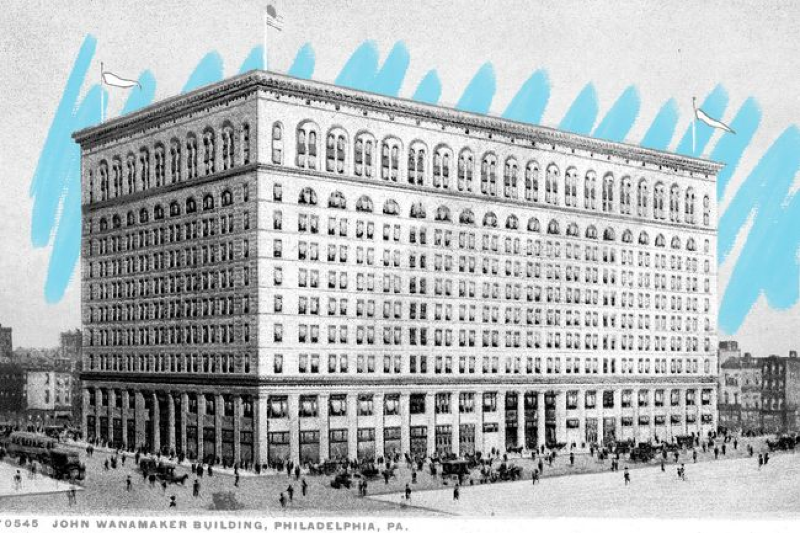
If you’re shopping for goods in the Western world, you expect to see a price tag on most things, whether it’s a secondhand toaster at a garage sale or a can of beans at the supermarket. But clearly advertised prices are a relatively recent phenomenon, originating in the 1870s. Before then, haggling was the norm, with the major exception being stores run by Quakers, who believed charging different prices for different customers was morally wrong. Philadelphia businessman John Wanamaker is widely credited with pioneering the price tag. He was a deeply religious man and, while he himself was Presbyterian, he agreed with the Quakers that transparent, clear, consistent pricing was a moral imperative. So when he created a clothing store called the Grand Depot in a converted railroad station, he clearly labeled the cost of each item on tags and in product guides. The business later became Wanamaker’s department store. The grand opening was just before the 1876 world’s fair in Philadelphia. (via History Facts)
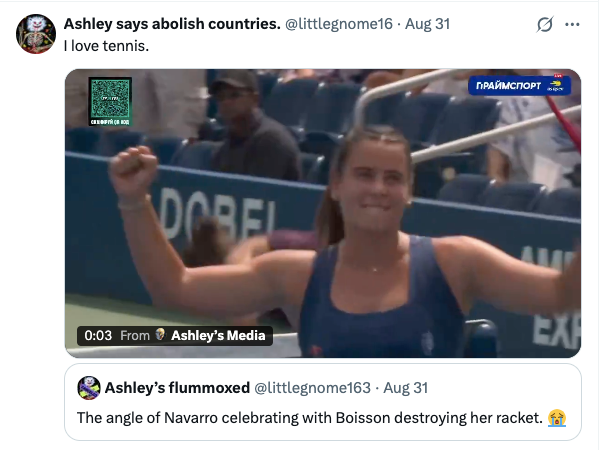
Clip of tennis champ catches her opponent in the background smashing her racket to pieces
Acknowledgements: I find a lot of these links myself, but I also get some from other places that I rely on as "serendipity engines," such as The Morning News from Rosecrans Baldwin and Andrew Womack, Jodi Ettenberg's Curious About Everything, Dan Lewis's Now I Know, Robert Cottrell and Caroline Crampton's The Browser, Clive Thompson's Linkfest and Why Is This Interesting by Noah Brier and Colin Nagy. If you come across something you think should be included here, feel free to email me at mathew @ mathewingram dot com