First he erased his own identity and then he walked into the sea

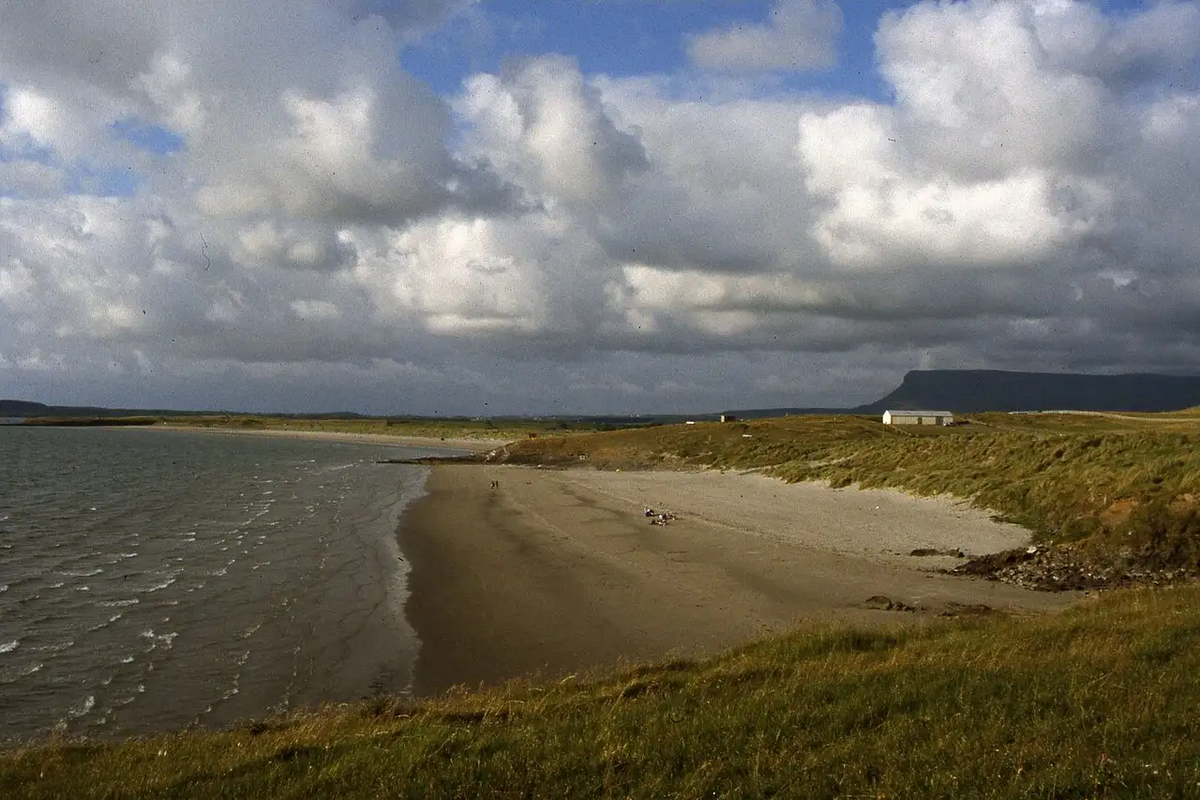
On June 12, 2009, a man checked into a hotel in Sligo, Ireland under the name Peter Bergmann and a nonexistent Austrian address. He paid cash every night. Over the next three days, cameras around town filmed him leaving the hotel with a purple plastic bag of belongings and coming back without it, using the blind spots between cameras to dispose of whatever was inside. He bought eight 82-cent stamps and airmail stickers at the post office, and asked a taxi driver where to find a quiet beach for swimming. On June 15, he checked out, ate a toasted ham and cheese sandwich at the bus station while reading scraps of paper from his pocket, tore them up, dropped them in a bin, and took the 2:20 bus to Rosses Point. Sixteen people saw him walking on the beach, greeting passersby. His body was found the next morning. Every clothing label had been cut out, and he carried no wallet, money, or identification. The pathologist found no signs of foul play, but did find advanced prostate cancer and bone tumors. (via Boing Boing)
The reason a JetBlue flight suddenly went into free fall seemed almost too bizarre to believe
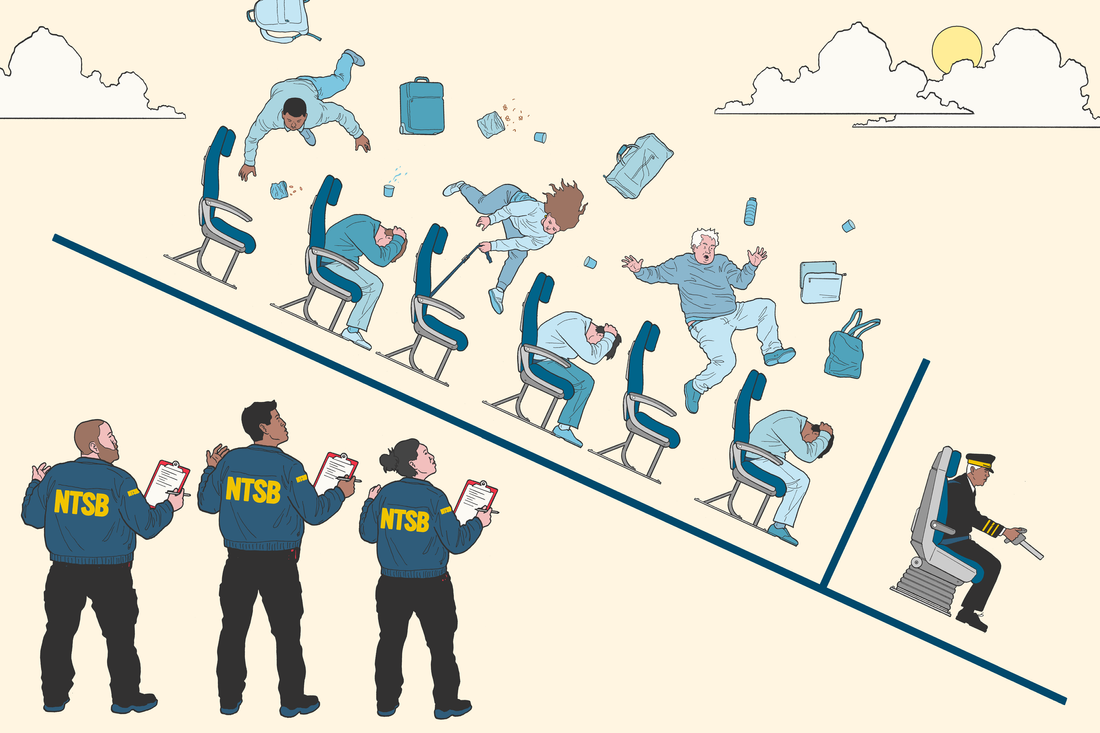
The JetBlue airliner that suddenly went into a dive over the Gulf of Mexico last October 30 did not crash. Despite how long the ordeal felt to passengers like Turner, the plunge lasted only about five seconds before the autopilot returned the aircraft to level flight. The flight crew, spooked, turned the plane toward the coast of Florida and brought it in for an emergency landing in Tampa. Twenty-two people were treated for their injuries. But because no one died, the flight didn’t receive widespread coverage. A dedicated team of investigators went to work. But in the days and weeks that followed, they became increasingly flummoxed. It wasn’t what had happened that puzzled them but why. As they examined the obvious potential causes, nothing matched up.Working their way down the list of possibilities, they found themselves in increasingly arcane and implausible-sounding territory. And the final option left to them — the only thing that could be true so had to be true — was so extraordinarily implausible that a normal reaction would be to dismiss it out of hand. (via NY Mag)
They thought they were going to space but it was just an elaborate hoax
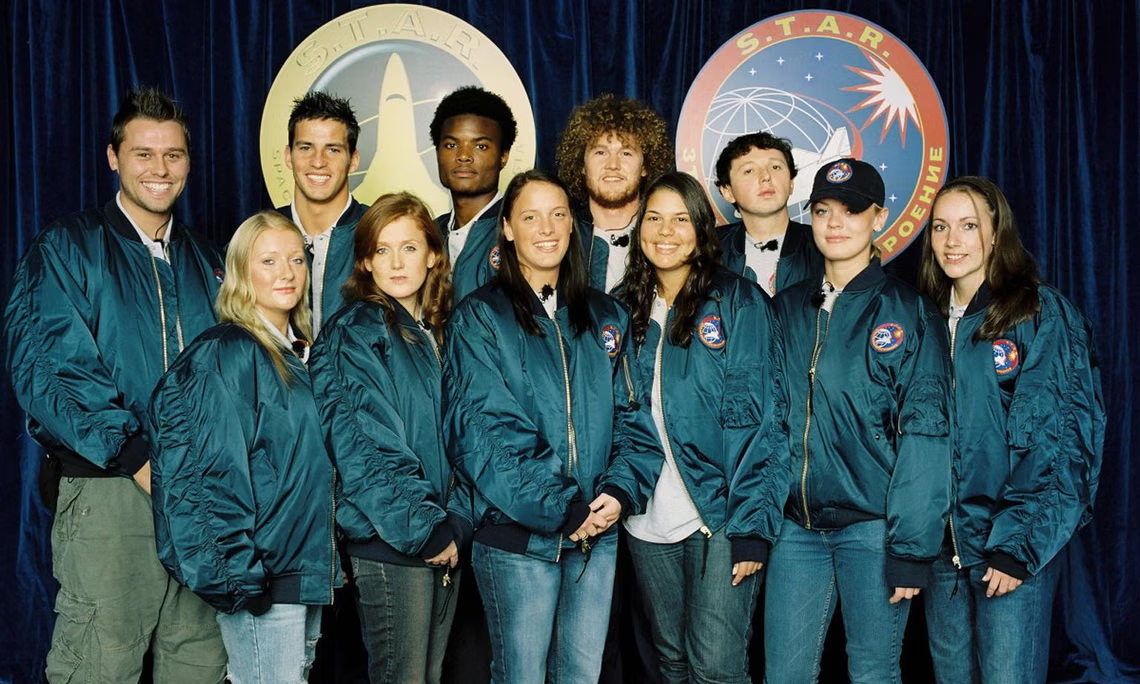
In December 2005, a group of outgoing twentysomethings were gathered in front of cameras on a remote airstrip. They had signed up for a reality TV series called Thrill Seekers and, after five months of auditions, they were about to find out the exact premise of the show. The host, Johnny Vaughan, told the excited gang: “You are about to become … the very first televised British space tourists.” They started screaming, jumping up and down and hugging each other. They were going into actual space! Except, they weren’t. Despite now lingering forgotten, Space Cadets, launched 15 years ago by Channel 4, was one of television’s biggest ever pranks. A meticulously executed televised stunt (costing a reported £5m) that wanted to test how far the limits of reality could be pushed. Could they convince a few members of the public that they had blasted off from a Russian space camp into the galaxy on a five-day orbit of the Earth? (via The Guardian)
Hi everyone! Mathew Ingram here. I am able to continue writing this newsletter in part because of your financial help and support, which you can do either through my Patreon or by upgrading your subscription to a monthly contribution. I enjoy gathering all of these links and sharing them with you, but it does take time, and your support makes it possible for me to do that. I also write a weekly newsletter of technology analysis called The Torment Nexus.
This is why your kitchen cookware got a lot worse but has the same brand name

Pyrex was materials science before it was a brand. Corning invented it in 1915: borosilicate glass that shrugged off thermal shock. It is the reason three generations learned to take a dish from the freezer to the oven without a second thought. The American Pyrex on shelves today is tempered soda-lime glass, a different material with a lower thermal safety margin. European Pyrex, made by an unrelated company, is still borosilicate. The switch happened under Corning itself, decades before the buyouts. That is exactly what made the brand such a perfect acquisition: the glass had already been downgraded, the reputation had not. In 1998 Corning sold the consumer business to an affiliate of Borden, then a KKR portfolio company, in a deal worth about $603 million. Cornell Capital, a private equity firm, bought the company in 2017 and renamed it Corelle Brands. In 2019 it merged with the Canadian company behind the Instant Pot, valuing the combination at $615 million. (via Worse On Purpose)
All Roquefort cheese is made from burned bread stored in moldy caves on a tiny strip of land
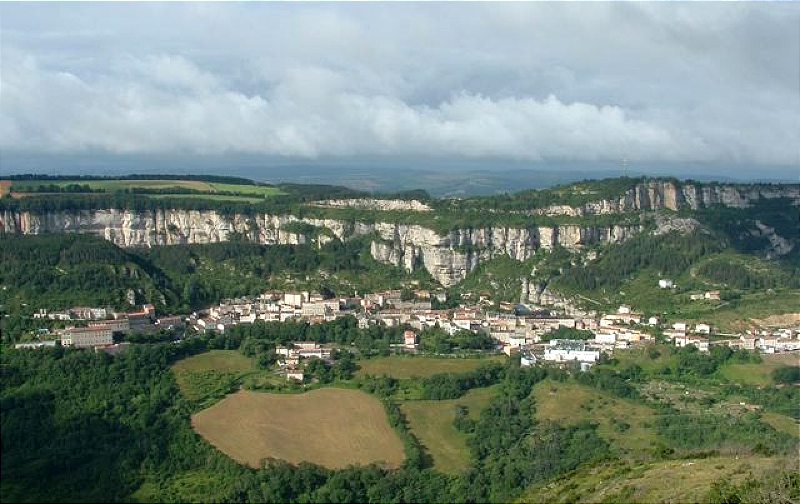
The tiny town of Roquefort-sur-Soulzon, with some 600 permanent inhabitants, draws visitors from around the world, who flock here to discover more about what many consider to be the king of cheeses, produced only in the certified Roquefort cellars lined up on a strip of land in the Aveyron only a mile and a quarter long and less than 330 yards wide. Today all true Roquefort is still created in chilly, damp caves owned by only seven cheese-making companies. Some, like Société, have grown into multimillion-dollar industries, while others, like Yves Combes and Carles, work with fewer than twenty employees. Of course each cellar guards its own secrets for producing its own special version. With over 700 varieties of Penicillium roqueforti in existence, the possibilities seem infinite. Papillon, the only producer to also bake and burn its own bread, produces a Roquefort with deep blue-green cavities. A lighter shade of green dots Roquefort Société, crafted with liquid Penicillium roqueforti. (via France Today)
The odds of a rabbit knocking you off your motorized scooter are low but they are not zero

Acknowledgements: I find a lot of these links myself, but I also get some from other places that I rely on as "serendipity engines," such as The Morning News from Rosecrans Baldwin and Andrew Womack, Jodi Ettenberg's Curious About Everything, Dan Lewis's Now I Know, Robert Cottrell and Caroline Crampton's The Browser, Clive Thompson's Linkfest and Why Is This Interesting by Noah Brier and Colin Nagy. If you come across something you think should be included here, feel free to email me at mathew @ mathewingram dot com