Beekeeper jailed for opening the hives to protect a neighbor


A beekeeper has been jailed for six months after she set swarms of her insects on sheriff’s deputies attempting to carry out an eviction at a friend’s house. Rebecca Woods insisted she only released her truckload of hives to allow the bees to enjoy the “lovely, flowering landscape” near the home of an elderly friend and cancer patient. But a district court in Springfield, Massachusetts, heard that Woods, 59, admitted under questioning that she was trying to save him from eviction by freeing the bees in the presence of the deputies who had shown up to serve papers. Several officers were stung on their heads and faces, and one required hospital treatment. One deputy is seen frantically waving his arms, trying to shoo the insects away. Woods, who put on her beekeeper’s suit during the incident, had driven up to the property with the hives stacked on a trailer pulled by her blue SUV, and proceeded to lift the lids of a number of them. (via The Guardian)
The company that owns the salvage rights to the Titanic wants to sell off artefacts

More than a century after the Titanic sank in the North Atlantic, the company that owns exclusive salvage rights to the shipwreck wants to auction about 100 artifacts raised from the ocean floor during the first recovery effort nearly 40 years ago.The doomed vessel’s wreckage has been an object of fascination and controversy since it was found in 1985, and the newly proposed sale is already stirring fresh debate over the fate of the thousands of items pulled from the site.When the company, R.M.S. Titanic, last proposed selling artifacts, in 2016, it was struggling through bankruptcy and the plan drew objections from the U.S. and French governments, as well as from UNESCO and other cultural institutions. The latest potential sale was proposed in a document that R.M.S. submitted in March to the federal court in Norfolk, Va., which oversees the recovery effort and may have to approve the auction. (via the New York Times)
How to use a 3D printer to make a playable plastic trombone for $30
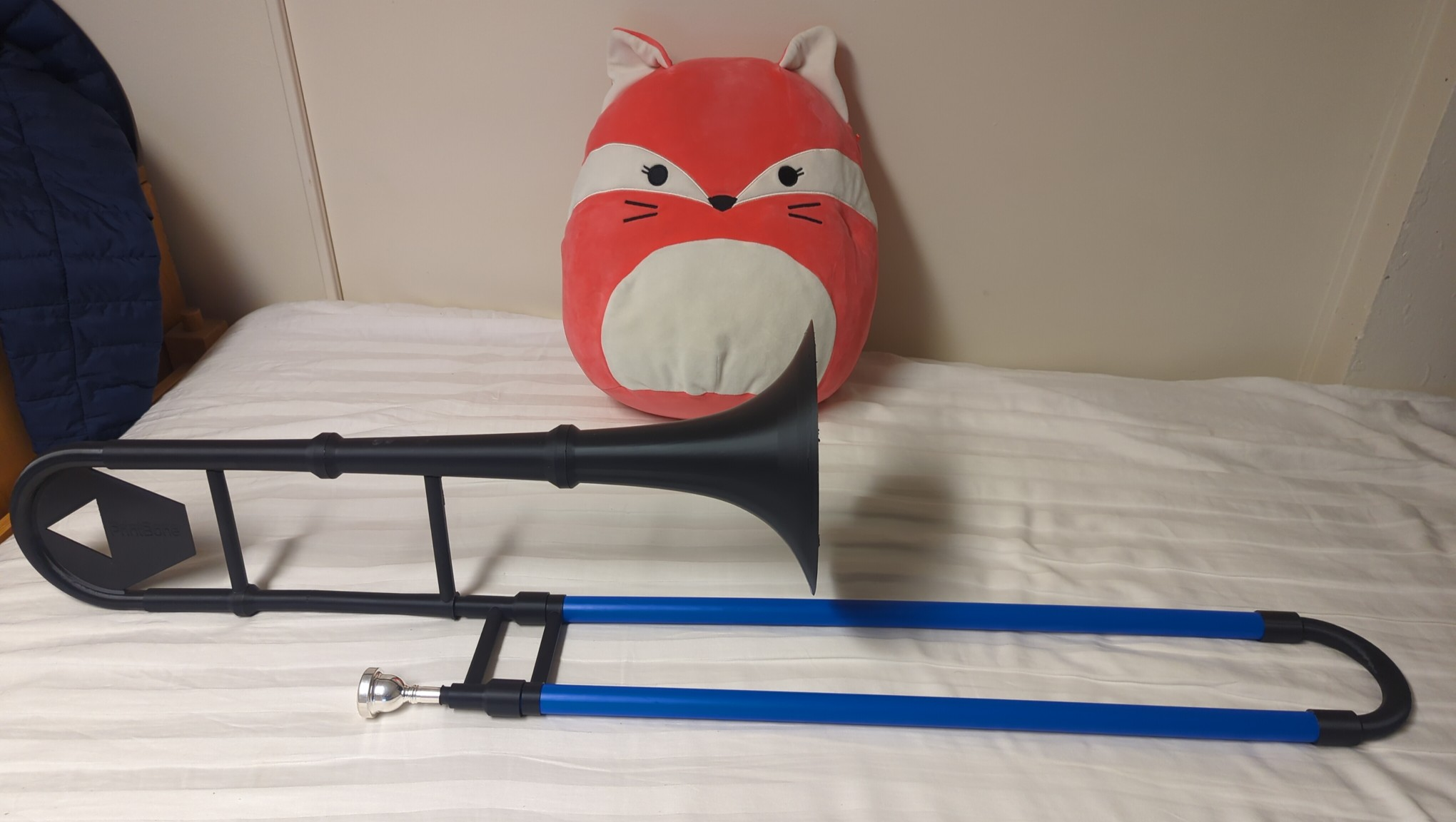
To play a wind instrument, you do some fancy stuff with your mouth which induces air pressure waves in the instrument. These waves have specific wavelengths that fit nicely inside the instrument’s tubing. For brass instruments like trombones, you vibrate your lips at some frequency like you’re blowing a raspberry, causing the air in the instrument to also vibrate loudly at a similar frequency. The main distinction in instrument design is open tubes vs. half-open tubes, because any open end is forced by the atmosphere to be at constant pressure. A flute is an open tube instrument, so when you blow lightly you play the first harmonic, and when you overblow the note jumps up an 8th (an octave) to the second harmonic. The physics above only work for tubes whose diameter stays constant. If we instead add a mouthpiece to one end and a flared-out bell to the other end, we can squish the harmonics together and approximate a complete harmonic series. (via Unnamed Website)
Hi everyone! Mathew Ingram here. I am able to continue writing this newsletter in part because of your financial help and support, which you can do either through my Patreon or by upgrading your subscription to a monthly contribution. I enjoy gathering all of these links and sharing them with you, but it does take time, and your support makes it possible for me to do that. I also write a weekly newsletter of technology analysis called The Torment Nexus.
Scientists say a coyote swam more than two miles to the island of Alcatraz
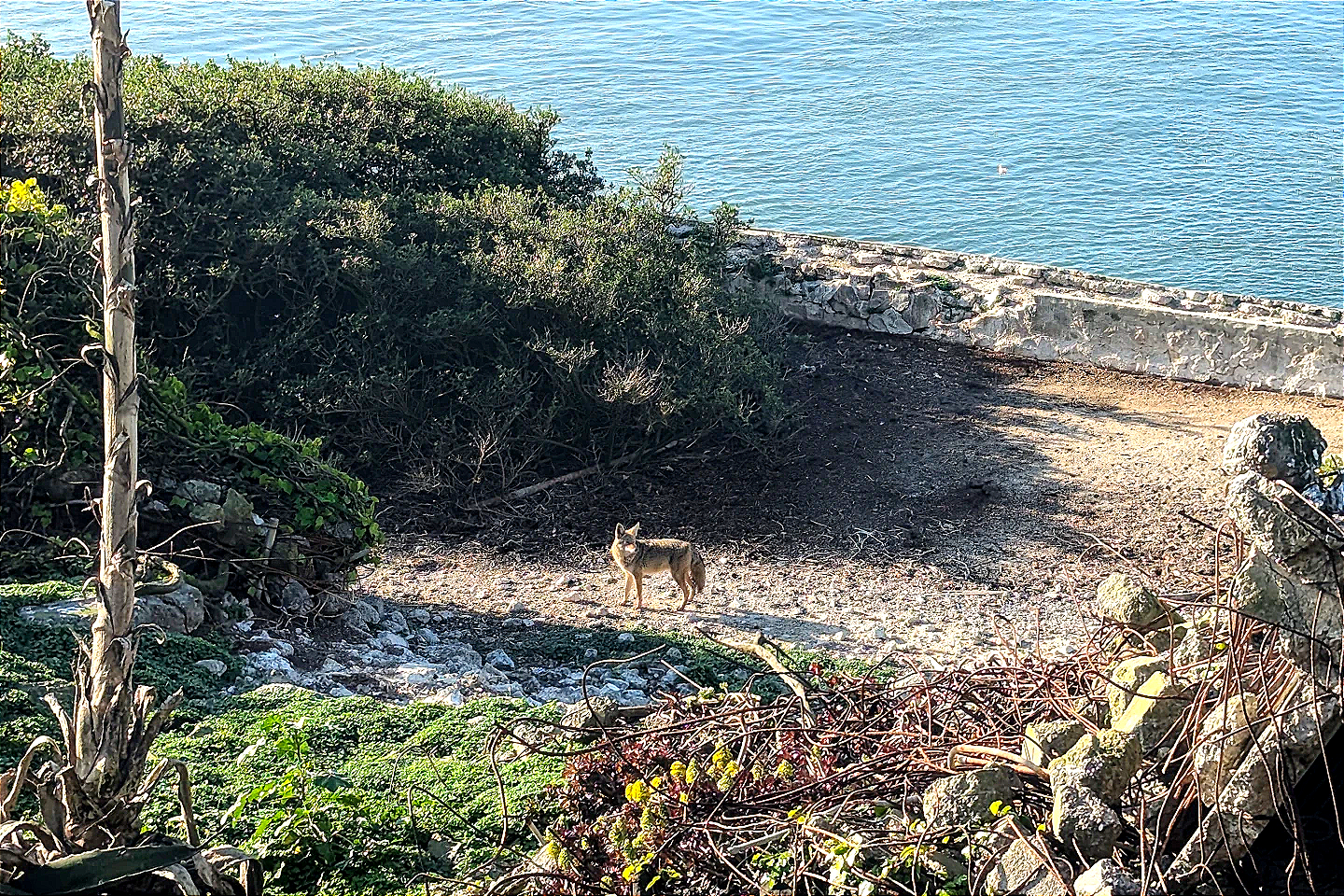
A lone coyote stunned biologists and others when it paddled its way to remote Alcatraz Island earlier this year, a former federal prison in the San Francisco Bay surrounded by swift, choppy waters notorious for thwarting prisoners’ escapes. At the time, biologists guessed the coyote swam from San Francisco, which is a little over 1 mile (1.6 kilometers) from the fortress. But it turns out the male coyote actually made an even longer swim from nearby Angel Island, 2 miles (3.2 kilometers) away. “Our working assumption was that the coyote made the swim from San Francisco because it is a significantly shorter distance. We couldn’t help being impressed by his accomplishment in making it to Alcatraz,” National Park Service wildlife ecologist Bill Merkle said. Camilla Fox, founder and executive director of nonprofit Project Coyote, said coyotes do swim, although it’s rare for humans to spot one doing so. (via AP)
What it's like inside the world's largest battery that is made of sand
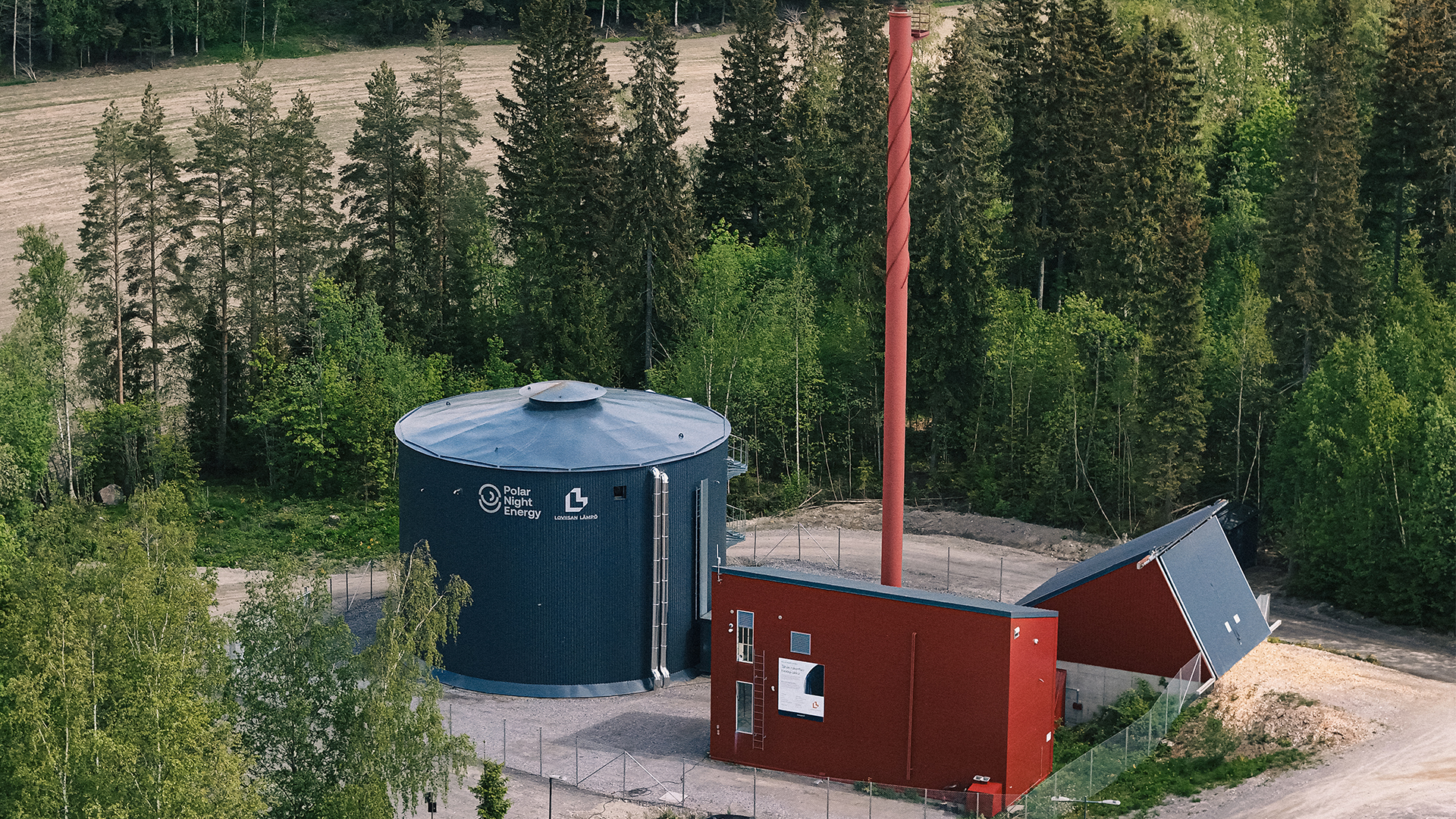
In late March, I visited Pornainen, a village of around 5,000 in Finland, as part of a press tour. To get to the world’s largest sand battery, you climb a spiral staircase bolted to the exterior of a dark corrugated steel silo set surrounded by forest, next to a red-brick building with a tall chimney. At the top, through a hatch, is something that doesn’t look like any heating system I’ve seen. The space inside is low and crowded with massive pipes wrapped in crinkled foil insulation pressing upward. The silo holds 2,000 tonnes of sand, recycled waste from a fireplace manufacturer, threaded through with those pipes – enough thermal energy to cover the majority of the municipality’s heating needs throughout the year. At full charge, it reaches 500-600°C. This is Polar Night Energy’s sand battery, commissioned in June 2025 for the district heating company Loviisan Lämpö, owned by CapMan Infra. (via Interesting Engineering)
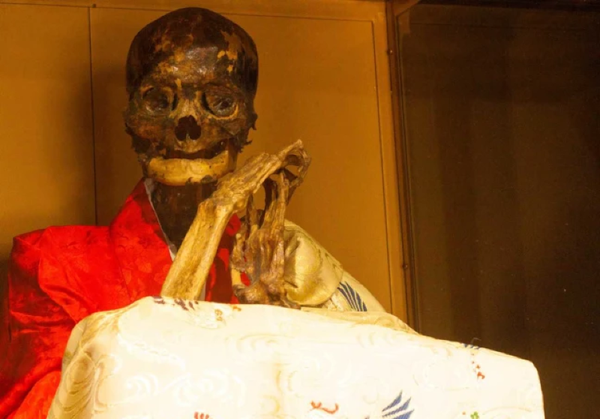
Some great examples from a stop-motion video exhibition

Acknowledgements: I find a lot of these links myself, but I also get some from other places that I rely on as "serendipity engines," such as The Morning News from Rosecrans Baldwin and Andrew Womack, Jodi Ettenberg's Curious About Everything, Dan Lewis's Now I Know, Robert Cottrell and Caroline Crampton's The Browser, Clive Thompson's Linkfest and Why Is This Interesting by Noah Brier and Colin Nagy. If you come across something you think should be included here, feel free to email me at mathew @ mathewingram dot com