Ancient DNA finally solves a 16th-century murder mystery

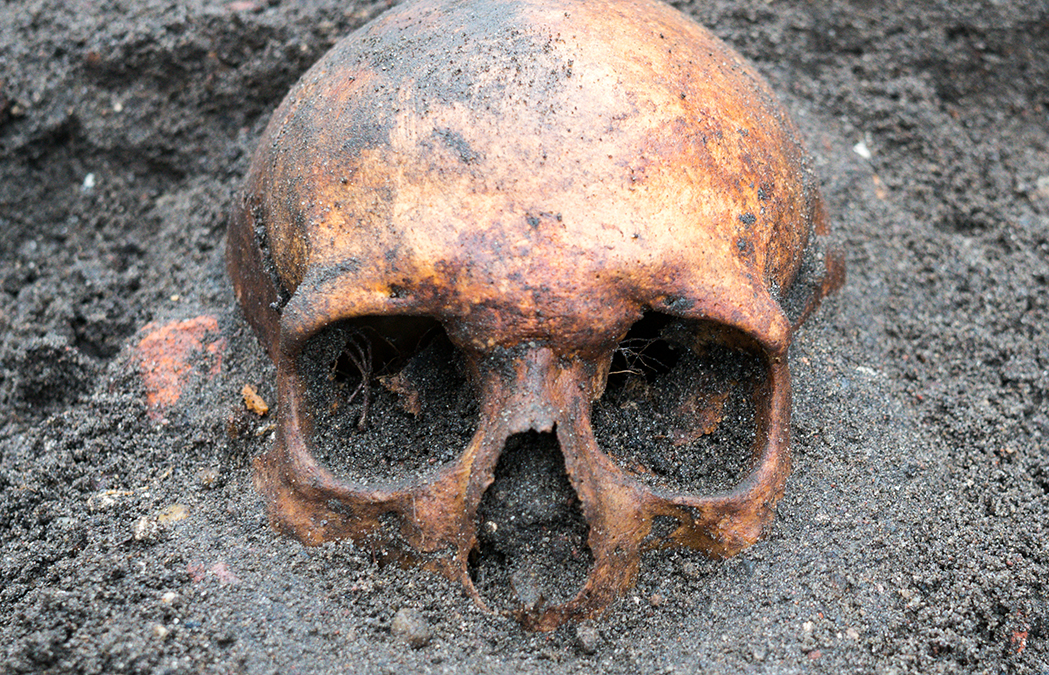
The Grand Duke Francesco de Medici, a prominent politician in the Tuscany region of Italy in the 16th century, died under mysterious circumstances in 1587 – with the suddenness of his death giving rise to rumors that he'd been poisoned. According to historical documents, Francesco's brother and political rival, Cardinal Ferdinando de Medici, was the prime suspect, especially as Francesco's wife, Bianca Cappello, also died within a day of her husband. In a new study published in iScience, researchers from Yale University in the US and the University of Pisa in Italy have confirmed the real killer. The team analyzed genetic material extracted from the skeletal remains of Francesco de Medici to find two species of Plasmodium parasites, single-celled organisms known as protozoans that cause malaria and are spread by mosquitoes. Malaria was widespread in central Italy for centuries, so the clues stack up. (via Science Alert)
Researchers show that living in an area with mountain lions makes driving safer
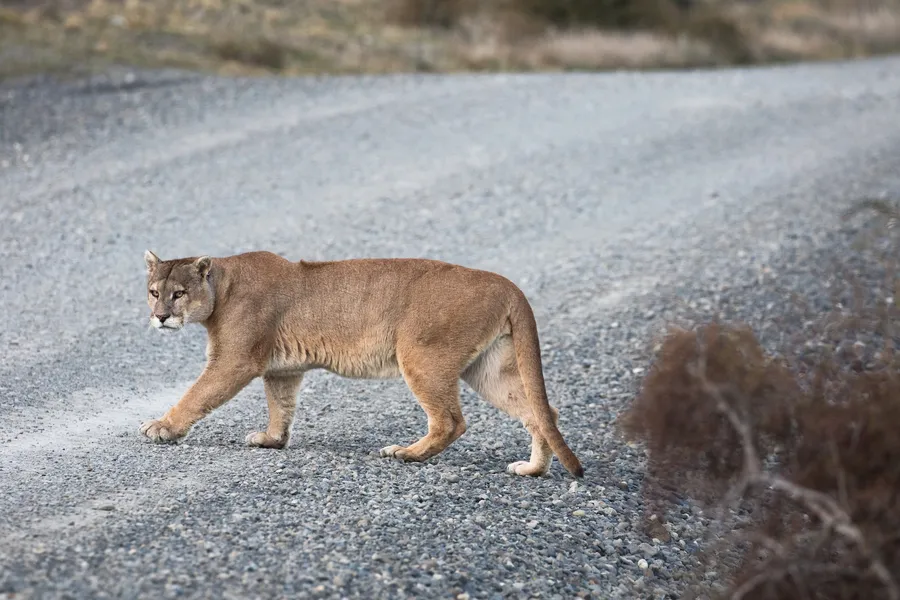
Hearing the roar of a mountain lion in the distance while you’re just outside your house might sound scary. Yet living in an area inhabited by these large predators might actually make you safer. Every year in the U.S., deer are involved in more than 1.5 million collisions with vehicles, resulting in the death of more than 200 people, tens of thousands of injuries and billions of dollars in damages. The team of scientists behind the new study, published on Wednesday in Current Biology, wanted to see whether pumas could play a role in decreasing those numbers. The researchers analyzed data from 503 camera traps and 59 GPS collars tracking pumas’ presence in Washington State’s Olympic Peninsula between 2020 and 2025. They also looked at data on the distribution and behavior of black-tailed deer and elk in the landscape and on collisions between vehicles and the animals. In those five years, the deer and elk were involved in more than 950 collisions with vehicles on the peninsula. (via Scientific American)
What it's like to surf a wave in Alaska that goes on for six miles
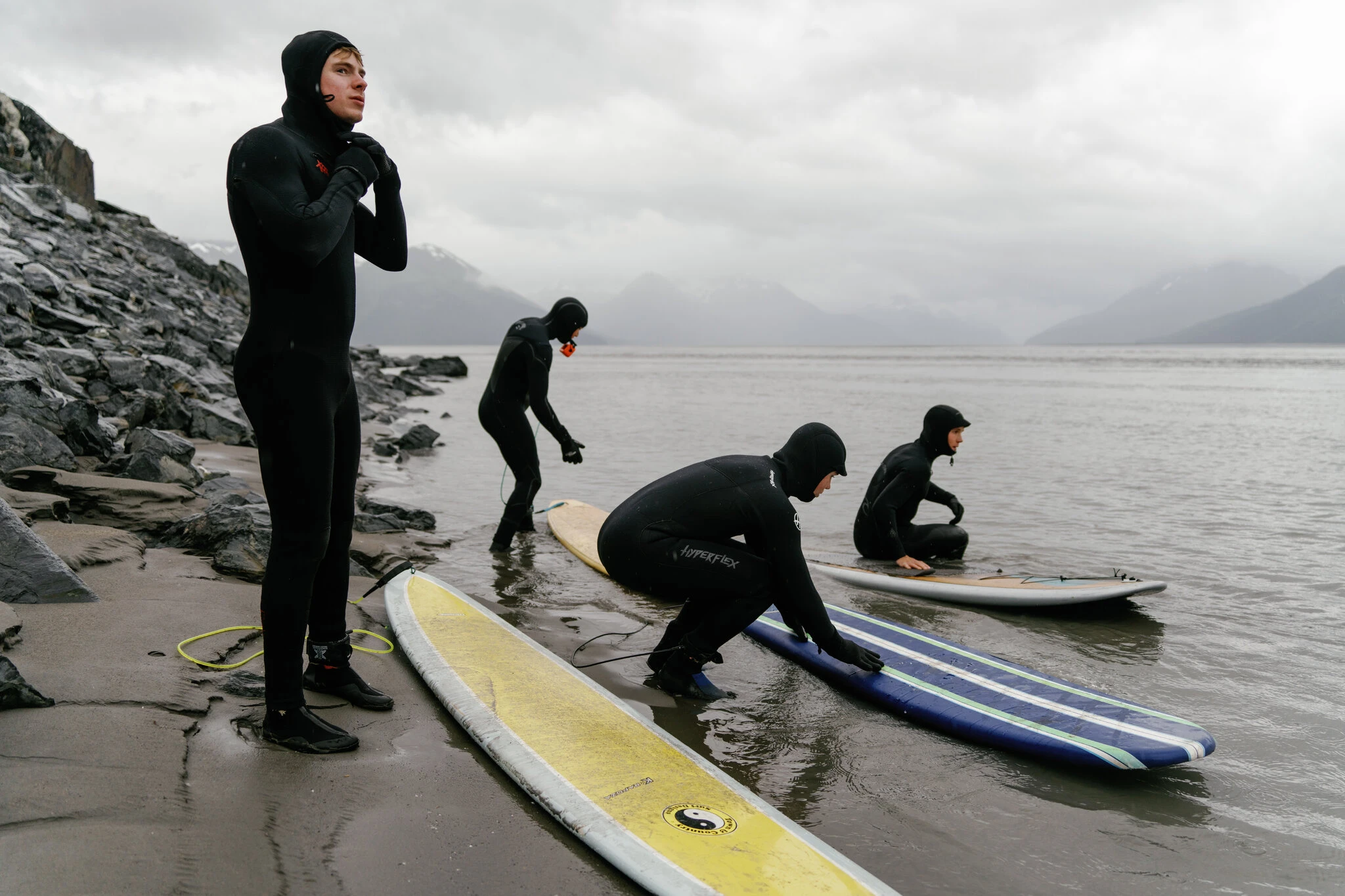
On a cold, windy, wet summer evening last month, Pete Beachy giggled as he peered into his binoculars and prepared to do something even he admitted can seem very, very stupid. “There she is,” he muttered. “That’s a wave.”Parked along the Seward Highway in Alaska, Mr. Beachy had spotted the first hint of foam curving around Bird Point, 30 miles southeast of Anchorage, and heading toward an inlet known as Turnagain Arm. The “wave” was a tidal bore, a twice-daily surge of water formed when the incoming high tide from the Pacific Ocean is forced into the narrow arm of Cook Inlet against the outgoing current. The resulting breaker can reach 10 feet in height, with speeds of 10 to 15 miles an hour — and surfers can ride it for miles if they’re tough enough to withstand the cold and skilled enough to stay upright.“One moment it’s still, and you’re looking up at the mountains and eagles and goats, and the next you feel like you have the entire ocean coming up behind you,” Mr. Beachy said. “It’s magical, man.” (via the NYT)
Hi everyone! Mathew Ingram here. I am able to continue writing this newsletter in part because of your financial help and support, which you can do either through my Patreon or by upgrading your subscription to a monthly contribution. I enjoy gathering all of these links and sharing them with you, but it does take time, and your support makes it possible for me to do that. I also write a weekly newsletter of technology analysis called The Torment Nexus.
She was the first woman to drive from coast to coast across the US in 1909
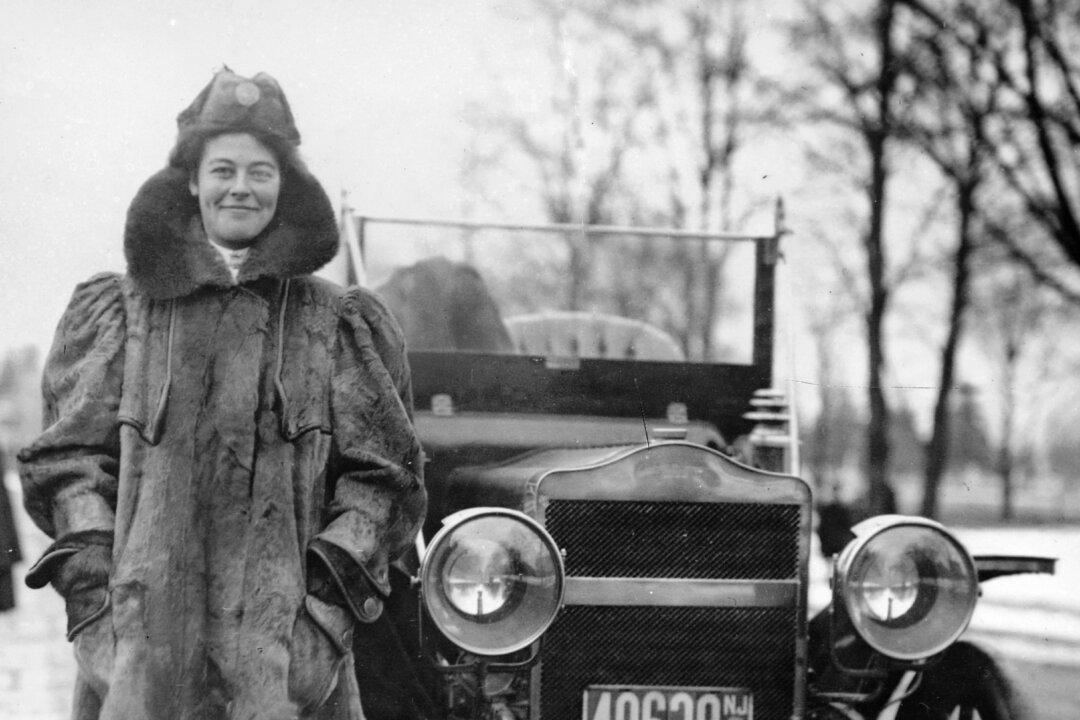
Alice Huyler Ramsey was an American who was the first woman to drive an automobile across the United States from coast to coast, a feat she completed on August 7, 1909. In 1908 her husband bought her a new Maxwell runabout. That summer she drove over 6,000 miles near their Hackensack home. In September 1908 she drove one of the three Maxwells which were entered in that year's American Automobile Association's Montauk Point endurance race, being one of only two women to participate. She won a bronze medal by getting a perfect score in the race. One of the other Maxwell drivers was Carl Kelsey, who did publicity for Maxwell-Briscoe. It was during this event that Kelsey proposed that she attempt a transcontinental journey, with Maxwell-Briscoe's backing. The company would supply a 1909 touring car for the journey and would also provide assistance and parts as needed. The drive was originally meant as a publicity stunt for Maxwell-Briscoe and would also prove to be part of Maxwell's ongoing strategy of specifically marketing to women. (via Wikipedia)
This German island had a festival where men would smack women with cow horns
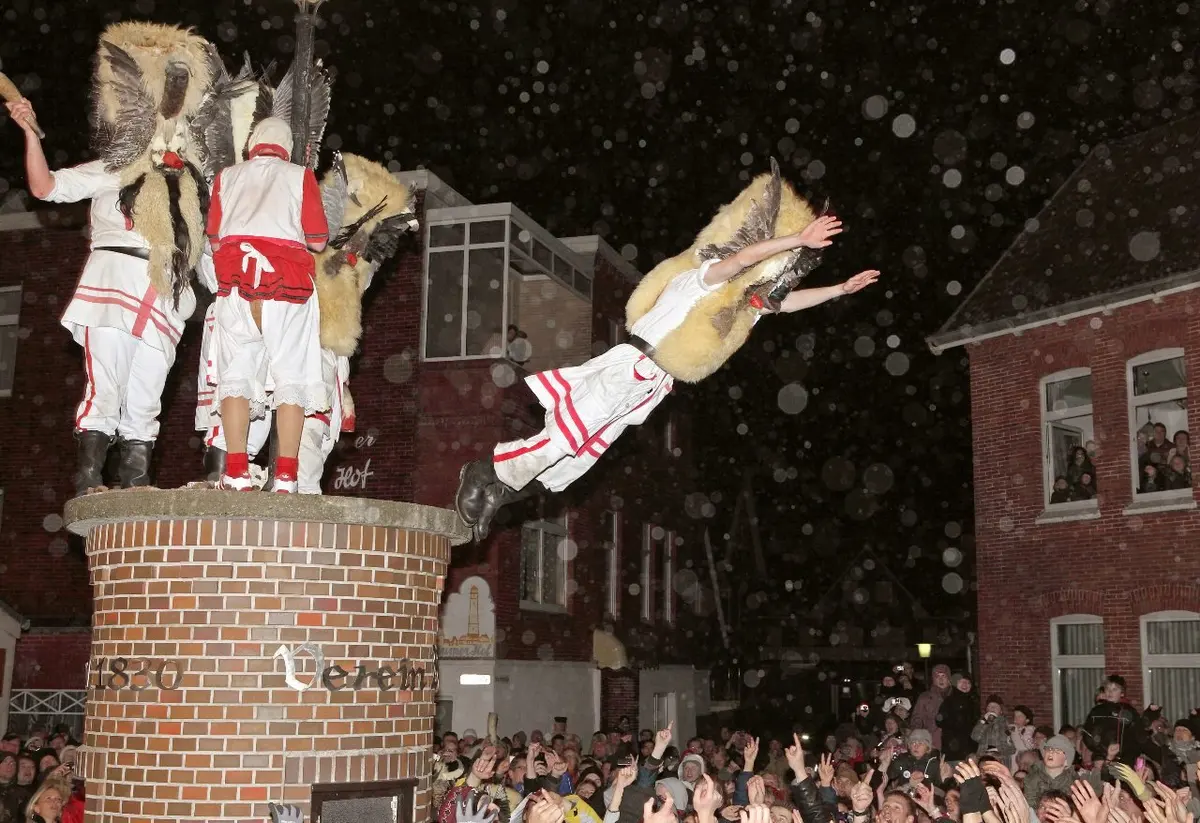
Germany is known for its charming and sometimes outlandish Christmas traditions - many of which are simply part of the fun of the festive season. This year, however, one popular custom on the East Frisian island of Borkum sparked fury across the nation after it was reported on by ARD's political news show, Panorama, and SRTG_F. The Klaasohm festival, which has been practiced on the island for almost two centuries, was at the centre of the unfolding scandal. This wild street celebration happens on the eve before Nikolaustag on December 6th, involving drinking, dancing and carnival-esque costumes. As part of the festivities, a small group of men dress up as the figure of "Klaasohm" by wearing large helmets covered in fur and feathers. Surrounded by male "helpers", the groups hurtles through the town, hunting down young women to catch and beating them on the bottom with cow horns. The tradition allegedly dates back to whaling times, when men would return after a long period at sea and try to re-assert their dominance in the community. (via The Local)
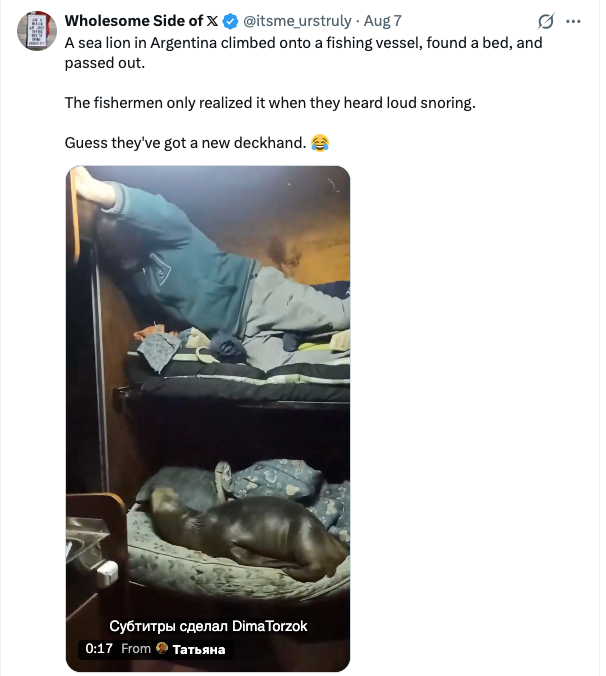
A sea lion jumped on board this fishing vessel and climbed into a bunk
Acknowledgements: I find a lot of these links myself, but I also get some from other places that I rely on as "serendipity engines," such as The Morning News from Rosecrans Baldwin and Andrew Womack, Jodi Ettenberg's Curious About Everything, Dan Lewis's Now I Know, Robert Cottrell and Caroline Crampton's The Browser, Clive Thompson's Linkfest and Why Is This Interesting by Noah Brier and Colin Nagy. If you come across something you think should be included here, feel free to email me at mathew @ mathewingram dot com