An ex-cop said he stole millions so he could give it to the poor


It was the largest armed robbery in Austrian history. The heist had been near perfectly executed — perfect, that is, except for one small oversight. The thieves didn’t realize that the ATM had a security camera that automatically took photos of the street. The images were blurry, but they revealed that the perpetrator who climbed into the van was short enough to stand upright without hitting their head. Detectives decided that it was almost certainly a woman. They soon homed in on a former Loomis employee who, when she worked for the company, had scheduled the routes and was only five feet three inches tall. Investigators were stunned when she named her accomplice: Gabriel E., a former officer in the city’s WEGA unit, the Viennese equivalent of SWAT. When detectives asked why he had committed such an audacious crime, he replied that he hadn’t stolen the money for himself. He’d done it for the children of Africa; he planned to build an orphanage there. It sounded absurd—the kind of desperate lie a thief might invent to deflect blame or ameliorate punishment—but it was very much the truth. (via The Atavist)
He survived for five nights in the mountains by eating wildflowers and hiding in a cave
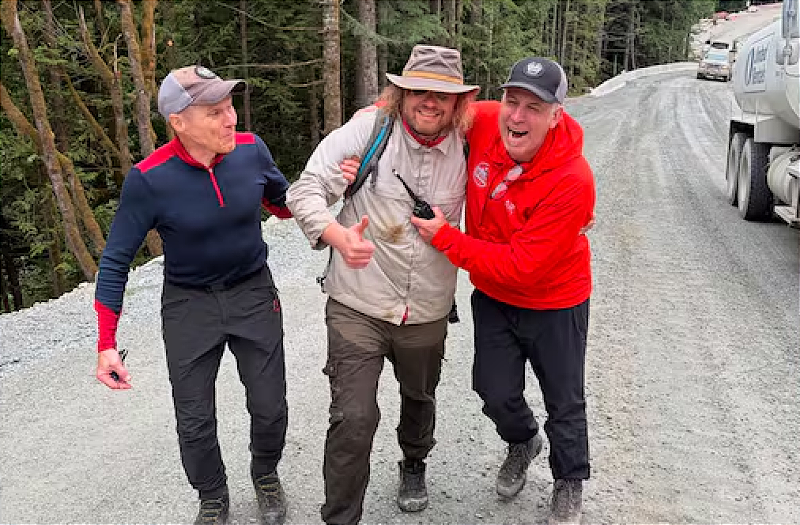
A man who survived a grueling five nights in British Columbia's Coast Mountains is sharing more about his experience. Stanislav Volo became the subject of a massive search after he failed to return from a hike on Sunday after riding up the Sea-to-Sky Gondola, just south of Squamish. Search and rescue crews found him Friday evening on the Indian Arm Forest Service Road after he'd descended the mountain injured, but under his own power. In an interview with CBC News on Saturday after being discharged from the hospital, the 43-year-old father of two was in good spirits, despite bruises and a black eye. Volo had intended to hike the Mount Habrich Loop. He said his phone died when he got to the top of the mountain, and he was unable to find his way down. Volo said he spent several nights sheltering in a small cave near a waterfall, where he focused on recovering, trying to stay warm. He said he rationed a few packages of gummy bears before he discovered a sweet-tasting wildflower to eat. (via the CBC)
After brain surgery this neuroscientist says he no longer felt fear or anxiety
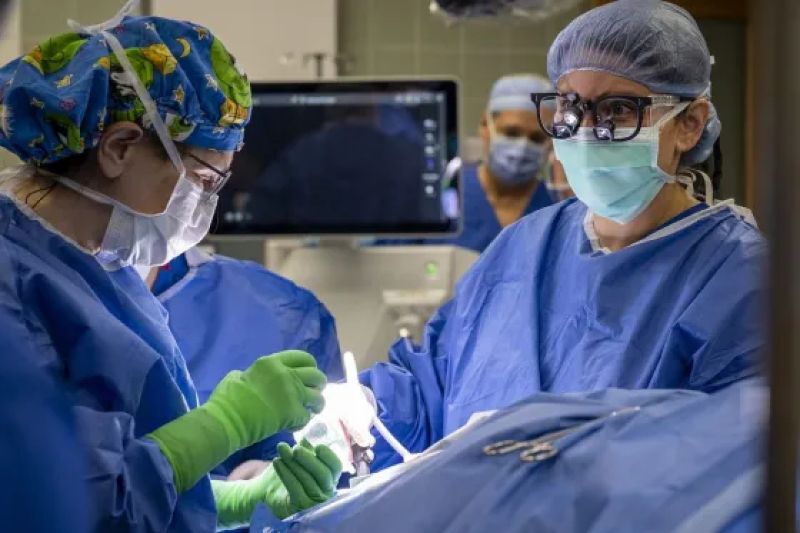
In summer 2024, I had an open craniotomy. Doctors cut open my skull and took out the part of my brain with the cancer - an astrocytoma2 about the size of my fist. Collateral damage included my right-side amygdala, the rightmost edge of my hippocampus, and a big chunk of my temporal cortex, including my right-side primary auditory cortex. I mention all of these difficulties because you might expect that, at some point during this process, I would be unhappy or afraid. I do not recall feeling this way. It wasn’t just that I was less depressed than expected under the circumstances. I was actually feeling glorious. I had been diagnosed with major depressive disorder several years earlier, and since then been continually on the maximum dose of the antidepressant mirtazapine. Now I no longer felt like it was necessary. Readers with neuroscience backgrounds have probably already put two and two together: my good mood started after surgeons removed my amygdala, a brain structure which plays a key role in fear. (via Astral Codex Ten)
Hi everyone! Mathew Ingram here. I am able to continue writing this newsletter in part because of your financial help and support, which you can do either through my Patreon or by upgrading your subscription to a monthly contribution. I enjoy gathering all of these links and sharing them with you, but it does take time, and your support makes it possible for me to do that. I also write a weekly newsletter of technology analysis called The Torment Nexus.
China invented moveable type hundreds of years before Gutenberg but didn't catch on
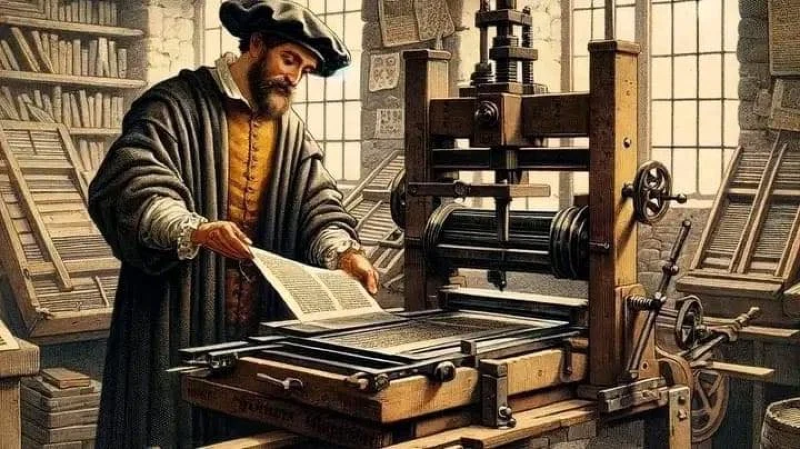
In the end, however, Chinese movable type was undone as much by economics as by anything else. As Wang Zhen had found to his cost, a font representing a usable fraction of the 50,000 or so Chinese characters could run to tens of thousands of types. (Others told of vast fonts of 200,000 types or more.) Wooden type had to be cut character by character, and there is no evidence that Chinese printers ever tried to expedite the process by casting type from metal or other malleable substances. Moreover, the mechanics of movable type weighed against it: printers found that it was often faster to cut entire pages in wood, as had been done since time immemorial, than it was to set, print from, and distribute movable type on a page-by-page basis. China’s printers were hamstrung by the writing they sought to reproduce. And so, though he had not invented movable type, if Gutenberg is to be credited with anything it must be that he made it work—that aided by the comparatively economical Latin alphabet he systematically tackled each aspect of a finicky, delicate process until he had perfected it. (via I Love Typography)
There's a new theory on how a six-tonne rock in Stonehenge was brought to the site
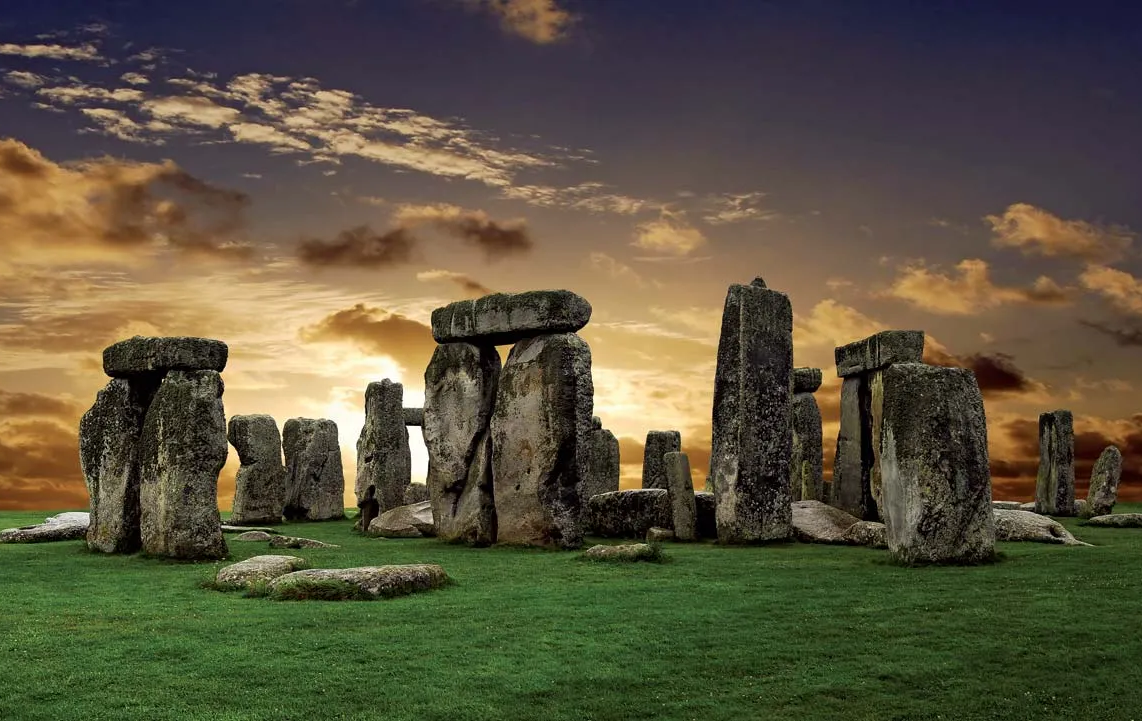
Built from stones weighing between 2 and 25 tonnes, the structure of Stonehenge demonstrates a scale of construction hard to imagine before the invention of the wheel. The mystery deepens when you consider that the stones are not from the local bedrock. So why these stones, and how did they get there? Recent work I carried out with geochemist Anthony Clarke from the University of Curtin, Australia, might have an answer to these two questions for the most far travelled stone of Stonehenge – the Altar Stone. The Altar Stone was sourced from 700km away in north east Scotland, from a region of bedrock geology known as the Orcadian Basin. Now, new work by our international team has looked to test the possibility it was transported by glaciers. It is the largest and heaviest of the so-called bluestones (Stonehenge’s travelled rocks), weighing 6 tonnes and measuring 4 metres long. The bluestones were the first stones of Stonehenge predating the larger stones which form the arches by 2,000 years. (via The Conversation)
She created a website that deconstructs the human body into two thousand 3D pieces

Acknowledgements: I find a lot of these links myself, but I also get some from other places that I rely on as "serendipity engines," such as The Morning News from Rosecrans Baldwin and Andrew Womack, Jodi Ettenberg's Curious About Everything, Dan Lewis's Now I Know, Robert Cottrell and Caroline Crampton's The Browser, Clive Thompson's Linkfest and Why Is This Interesting by Noah Brier and Colin Nagy. If you come across something you think should be included here, feel free to email me at mathew @ mathewingram dot com