An eccentric millionaire, a fake castle and 101 princesses

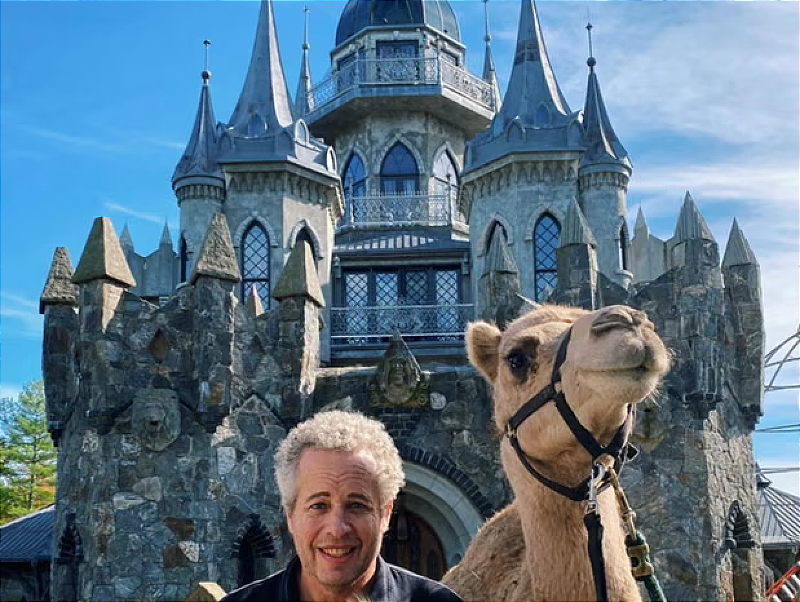
I awoke one morning in the summer of 2023 to discover that, while I’d slept, my son Joel had been texting my wife and me a series of unnerving messages about a perilous situation he had found himself in, in rural Connecticut. From what I could tell, as I frantically tried to piece together the night’s events, one of Joel’s friends had been invited to a party being held by a stranger she’d met that week on Tinder: “Castle party Saturday! 3:00pm to whenever. Dress code: Formal. Tell your friends.” So Joel and two others went along for the ride. But when they arrived, they found the man’s home so bizarre that Joel sent me the coordinates of his location and a photograph. The photograph was of a vast medieval castle with a drawbridge, gargoyles and many spires, towers and turrets. They crossed the drawbridge and entered the grand banqueting hall to discover … there was no party. The room was completely empty, all except for a small number of equally bewildered young people standing around awkwardly. “I’ve invited you here for a different reason,” the owner of the castle said. (via The Guardian)
In the 1800s doctors tried to inject sick or dying people with cow's milk
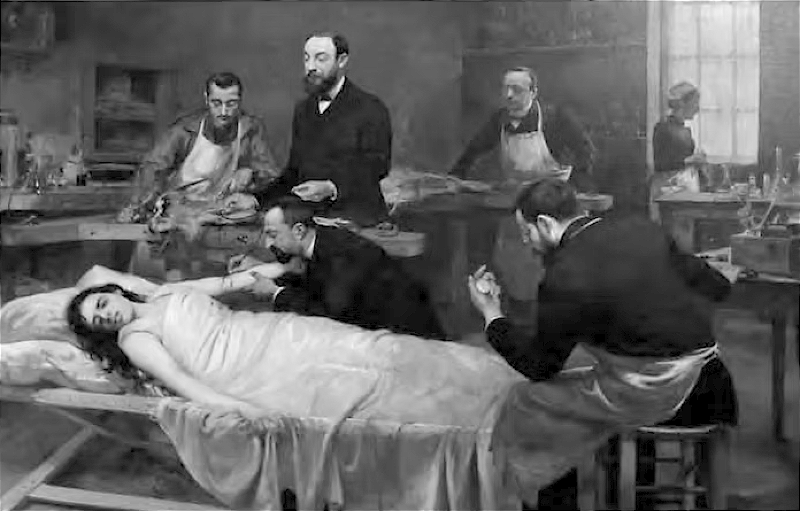
In 1825, James Blundell performed the first human-to-human blood transfusion in Europe. This procedure was practiced for over 50 years, with poor results at times. One issue was that many of the subjects suffered from incompatibility reactions as the concept of different blood types was not discovered until 1901. As the numbers of adverse reactions increased, human transfusions fell somewhat into disrepute and were rarely performed in the late 1800s. This brought about an era of popularity for milk transfusions. It was thought that the fatty particles in milk were converted to white blood cells by the body and later turned into red blood cells. The first documented intravenous injections of milk to treat humans was performed in 1854, in Canada. The first patient was a 40-year-old man who markedly improved after injection of 12 ounces of warmed cow’s milk, which came from a cow that had been brought to the hospital. However, five other patients who later got the milk transfusions died (via Fibonnaci MD)
No one knows who built 50 miles of rock walls along the Berkeley hills in California
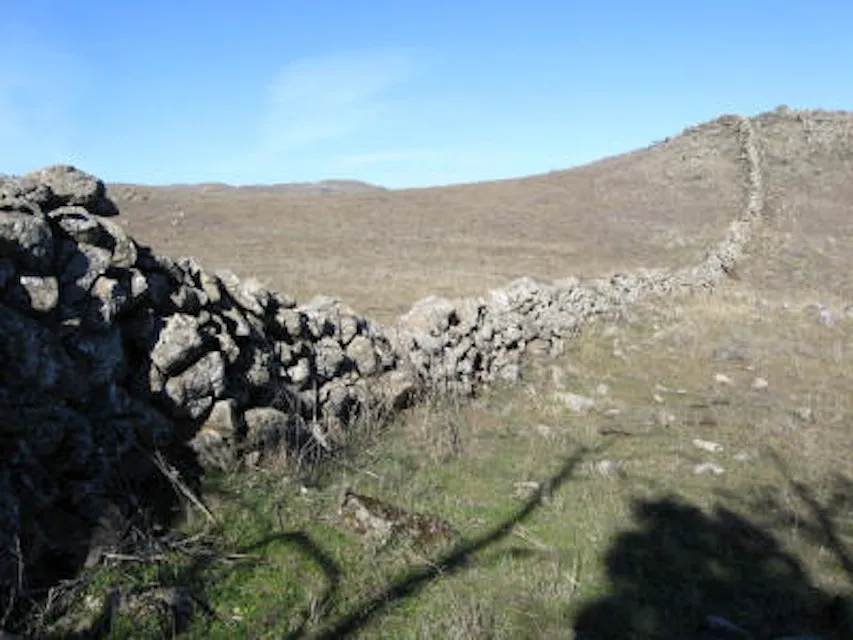
There are remnants of ancient stone walls all over the East Bay, and no one knows how old they are, who built them, or why. Though people have been pondering the enigma of the Berkeley Mystery Walls for well over a hundred years, no conclusions have been reached, and despite wild speculation, no serious scholarly study has ever been undertaken. Stretching for over 50 miles, the East Bay "Mystery Walls" are found up and down the hills of the East Bay from Berkeley to San Jose. The stone walls are up to five feet tall in places, and are constructed from boulders of varying sizes, some weighing up to a ton. The walls run in broken sections, anywhere from a few meters to half a mile in length, and are placed in unlikely and inaccessible places. They seem to serve no known purpose. They are clearly, visibly, very old. The Spanish settlers in the area reported that the walls were already there when they arrived, and when they asked the local Ohlone American Indians, they said the same thing. (via Atlas Obscura)
Hi everyone! Mathew Ingram here. I am able to continue writing this newsletter in part because of your financial help and support, which you can do either through my Patreon or by upgrading your subscription to a monthly contribution. I enjoy gathering all of these links and sharing them with you, but it does take time, and your support makes it possible for me to do that. I also write a weekly newsletter of technology analysis called The Torment Nexus.
Japan gets 1,800 people to drag a 360-tonne castle tower using ropes and rollers
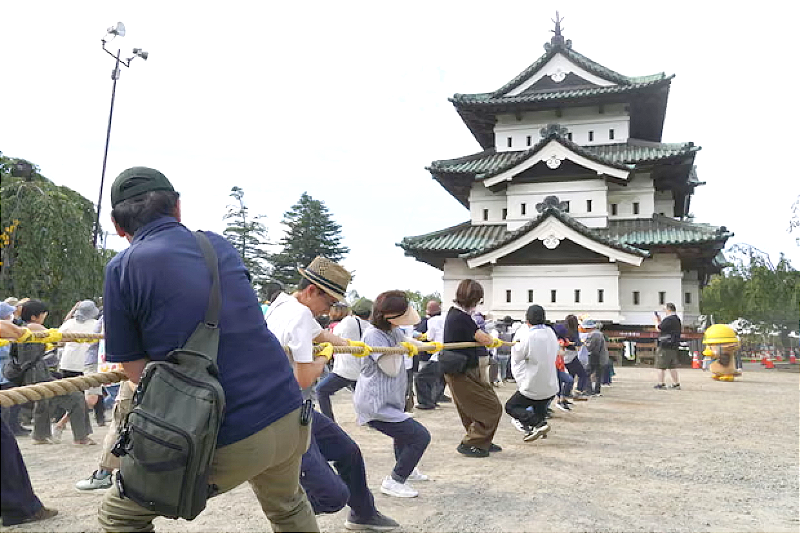
To chants of “so-re, so-re”, about 1,800 people came together in northern Japan over the weekend to pull a 360-tonne castle keep a little more than two metres closer to its original resting place as part of ongoing renovations. The keep – a fortified tower within a castle – had to be moved to repair a wall that was damaged in a major earthquake. Rotating teams of 80 people heaved on 30-metre ropes as the keep of Hirosaki Castle in Aomori prefecture edged closer to its destination. On Saturday participants towed the building – which has been set on rails – 1.13m, while on Sunday it was shifted another 1.09m. In order to preserve the historic structure, a technique known as hikiya – whereby buildings are put on rollers and moved rather than dismantled – was used. In 2015 the city put out a call for people to come and participate directly. The result was the first citizen-driven hikiya, and the first time the method has been used in any form to move a castle for a century. Work to preserve the castle has been going on since. The wall was completed in December 2024, with all 2,185 stones restacked in their original positions. (via The Guardian)
Archaeologists say they have found intact human brains that are thousands of years old
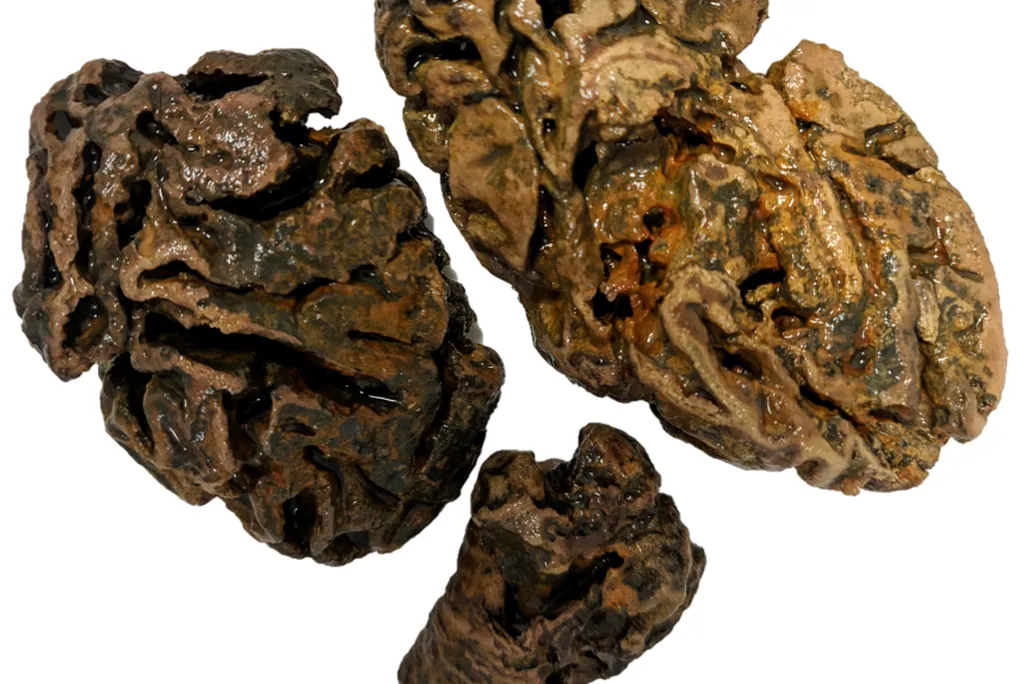
The brain is one of the first organs to begin decomposing after death. Yet archaeologists have discovered more than 4,400 preserved human brains around the world, some of which have remained intact for the last 12,000 years. In hundreds of cases, the brain was the only soft tissue left among otherwise skeletal remains. But how—and why—do brains sometimes persist for millennia while all other types of soft tissue disappear? This preservation paradox has stumped scientists for years. Now, however, a team of researchers say they may have solved the mystery. If a human brain ends up in a wet, oxygen-starved environment, the processes that usually cause decay can have the opposite effect, researchers report in a study published August 7. Many of the intact brains were found in watery, low-oxygen areas, such as shipwrecks, riverbeds, lakeshores and flooded caves. But since water is a key driver of decay, this pattern is puzzling. Seviour and her colleagues wanted to figure out why the brain specifically seemed to be immune to water’s destructive powers. (via The Smithsonian)
The hilarious walking style of the Eurasian cinereous vulture

Acknowledgements: I find a lot of these links myself, but I also get some from other places that I rely on as "serendipity engines," such as The Morning News from Rosecrans Baldwin and Andrew Womack, Jodi Ettenberg's Curious About Everything, Dan Lewis's Now I Know, Robert Cottrell and Caroline Crampton's The Browser, Clive Thompson's Linkfest and Why Is This Interesting by Noah Brier and Colin Nagy. If you come across something you think should be included here, feel free to email me at mathew @ mathewingram dot com