A top drone pilot in the Ukrainian Army describes his job

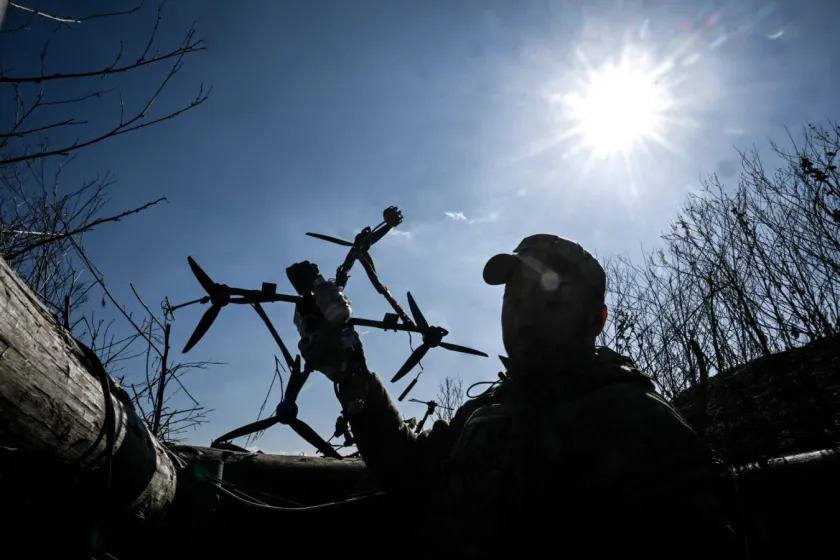
I joined the army on the day of the Russian invasion. I’d studied computer science and only recently landed a great internship at a game company. But I saw the news and knew my options were to sit and wait for them to come and kill me or go running into the fight. On the front line, we spend 90 per cent of our time underground in bunkers because of the threat of enemy drones. Every time you go outside, you risk being spotted and killed. The conditions are like camping, but it obviously has a very different vibe. I’ve done a lot of different jobs as a drone pilot, but at the end of the day, the mission was always to protect our ground troops. I spent time as a reconnaissance drone pilot, then flying bomber drones and now I’m doing anti-drone missions in a regiment called Aquila. I’m proud to say that I’m a top performer not just in my regiment but in the wider army. I think it’s because I’ve been doing it for a long time, but I’ve taken out 932 enemy drones. I focus on finding smaller FPV drones that are doing reconnaissance or hunting our troops with explosives, and take them out before they can do any damage. (via New Scientist)
If you see a sign on a boat saying passengers can't bring bananas on board this is why
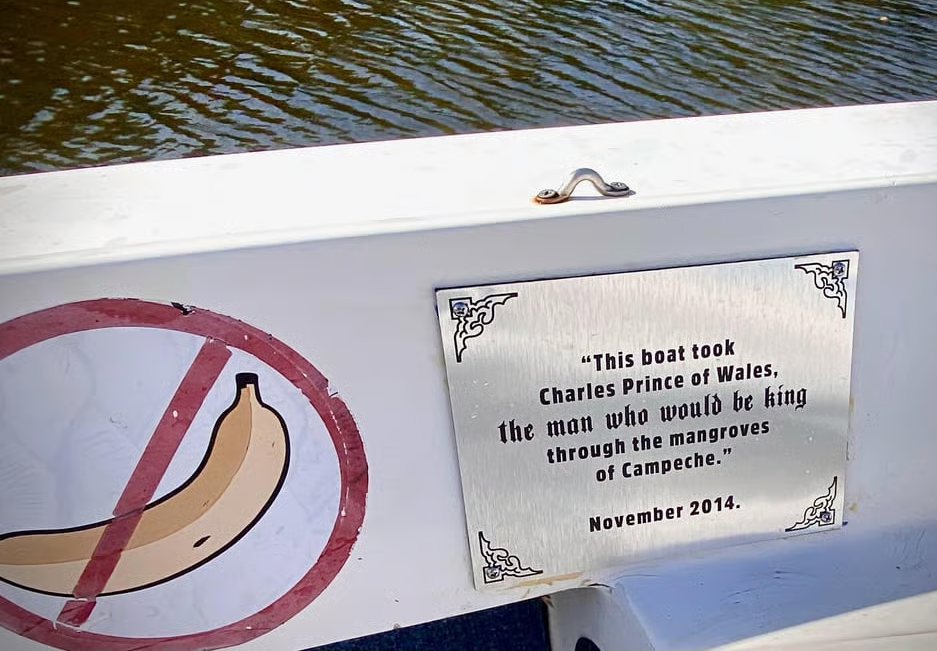
Plenty of captains don't stop at the fruit itself. One chucked a client's can of Banana Boat sunscreen into the Gulf of Mexico first thing in the morning; another picked the banana-shaped pieces out of a bag of Runts before leaving the dock. Ask any of them why, and you'll usually get a history lesson about the Caribbean trade of the 1700s. Ships hauling bananas had to sail fast before their cargo spoiled, so nobody could troll for fish off the back. Or the bunches hid venomous spiders and snakes. Or, the most scientific-sounding theory of all, ripening bananas give off ethylene gas, which makes everything else in the hold rot. Sailors banned them to protect their food, and the ban eventually drifted over to fishing boats. Jim Rizzuto has been writing about fishing in Kona, Hawaii, for decades, and he went looking for the oldest written version of the ethylene explanation. The earliest one he could find was from 1972. He wrote it. As he explains, he "invented the connection between the gas and the fishing kapu as an April Fool's joke, never thinking anyone would ever take it seriously because it was so far-fetched." (via Now I Know)
A World War II frigate that sank in the Thames has 1,400 tons of explosives in it
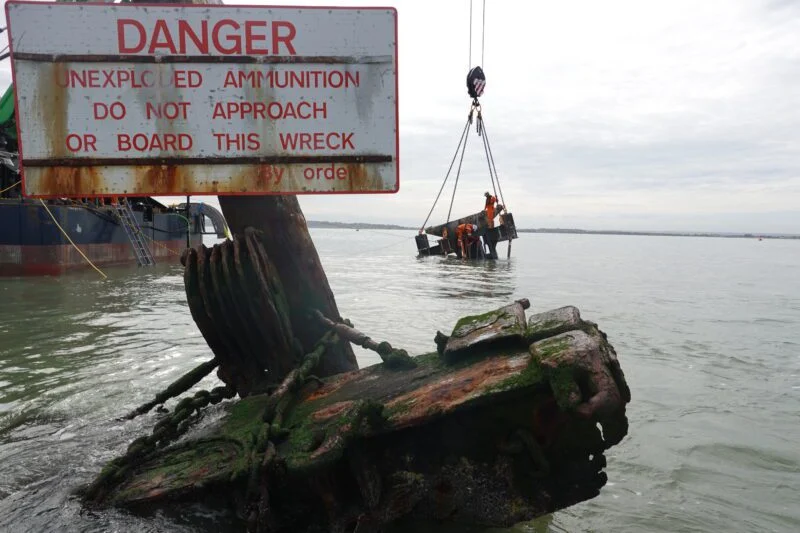
More than 80 years after the SS Richard Montgomery sank in the Thames Estuary with roughly 1,400 tons of explosives still aboard, marine contractors have begun one of the most delicate interventions yet on the notorious World War II wreck. Florida-based Resolve Marine has started work to remove the Liberty ship’s three remaining steel masts, which still rise above the water near Sheerness, Kent. Engineers and divers will cut and lift the structures under closely controlled conditions intended to avoid disturbing the deteriorating wreck. The work marks a significant step in the UK government’s long-running effort to reduce risks associated with the wreck without attempting to remove its remaining munitions. The Richard Montgomery ran aground on a sandbank in August 1944 while carrying thousands of tons of ammunition. Salvage crews removed roughly half of the cargo before the hull flooded and broke apart, forcing the operation to be abandoned. About 1,400 tons of explosives remain inside the forward holds today, according to the UK Maritime and Coastguard Agency. (via GCaptain)
Hi everyone! Mathew Ingram here. I am able to continue writing this newsletter in part because of your financial help and support, which you can do either through my Patreon or by upgrading your subscription to a monthly contribution. I enjoy gathering all of these links and sharing them with you, but it does take time, and your support makes it possible for me to do that. I also write a weekly newsletter of technology analysis called The Torment Nexus.
She hand-wrote much of the software behind six NASA moon missions and the space station

Margaret Hamilton, who led the 100-person team that wrote the onboard software for the Apollo missions, guiding Neil Armstrong and Buzz Aldrin to a safe landing on the moon, died on Sept. 30 in Cambridge, Mass. She was 90. Ms. Hamilton was a young mathematician at the Massachusetts Institute of Technology in the early 1960s, putting her husband through law school by working in a computer lab. When she learned that M.I.T. was designing in-flight computers for the moon mission, she eagerly joined the team.She was the first female programmer hired to work on the Apollo project, housed at M.I.T, in 1965. Her skills led to her promotion to director of software engineering, which developed the two 70-pound onboard computers for the Apollo flights. Ms. Hamilton, who would bring her young daughter to work on weekends and evenings, is credited with popularizing the term “software engineering” to describe the complexity of the work her team did. Ms. Hamilton worked on the six lunar landing missions from 1969 to 1972. Her programming also contributed to Skylab, America’s first space station, which was launched in 1973, and to the early design of the space shuttle. (via the NYT)
France used to have an underwater cable-car with six mini submarines
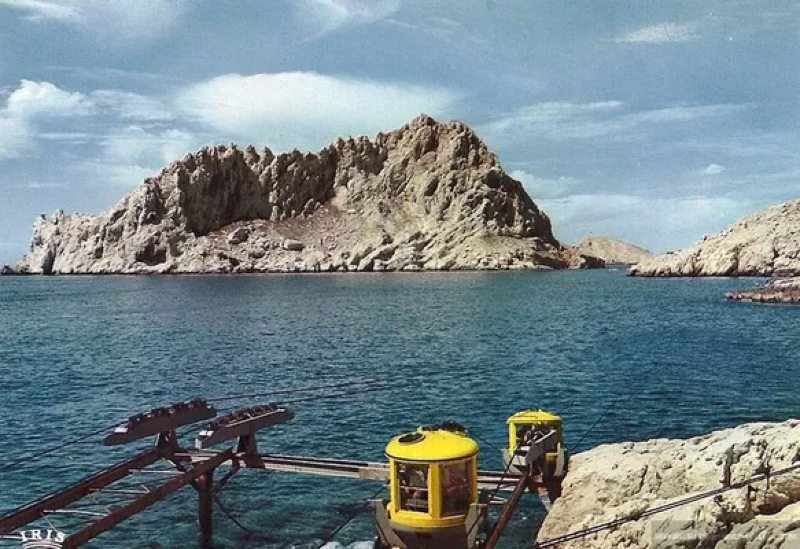
The Téléscaphe (a portmanteau of "téléphérique" (cable car) and "bathyscaphe") was an underwater cable way, situated near Les Goudes in Marseille, France. In the early 1960s, ski lift engineer Denis Creissels and alpine skier James Couttet set out to design a system that would make visits to the seabed accessible to the general public. With support from the City of Marseille and the École nationale des ponts et chaussées, construction began in 1966, and the attraction opened in June 1967. The system consisted of four bell-shaped, six-seater submarines, each weighing around 3 tons and pulled by a cable. It could carry approximately 60 passengers per hour. A trip cost 12 francs, and safety was overseen by frogmen who monitored the operation. The submarines were fitted with lights, and could be operated at night. After each trip passengers received a certificate (a "baptême de plongée" or “diving baptism”) commemorating their first dive. The Téléscaphe proved popular but only operated for one season, closing in 1967 due to lack of money and support, as well as high operational costs. (via Wikipedia)
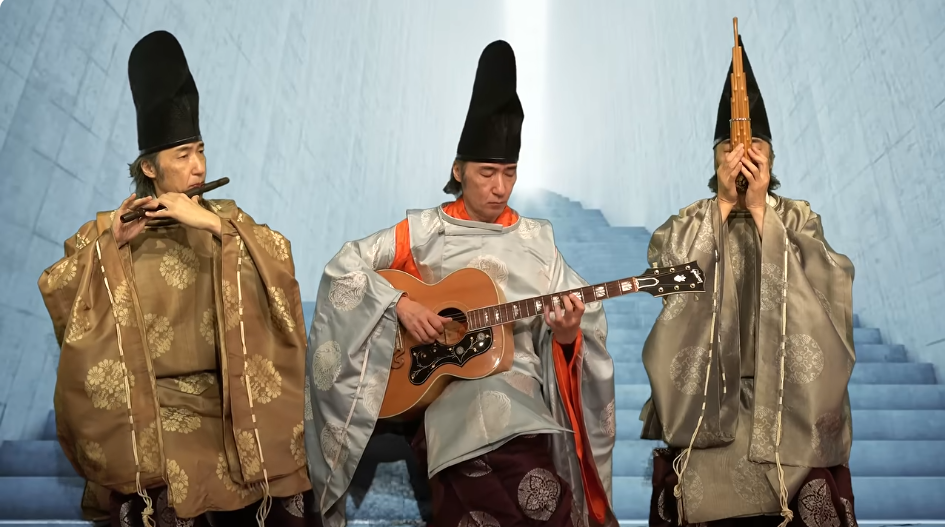
Stairway to Heaven performed using traditional Japanese musical instruments
Acknowledgements: I find a lot of these links myself, but I also get some from other places that I rely on as "serendipity engines," such as The Morning News from Rosecrans Baldwin and Andrew Womack, Jodi Ettenberg's Curious About Everything, Dan Lewis's Now I Know, Robert Cottrell and Caroline Crampton's The Browser, Clive Thompson's Linkfest and Why Is This Interesting by Noah Brier and Colin Nagy. If you come across something you think should be included here, feel free to email me at mathew @ mathewingram dot com