A strange bank robbery with one of the great notes of all time

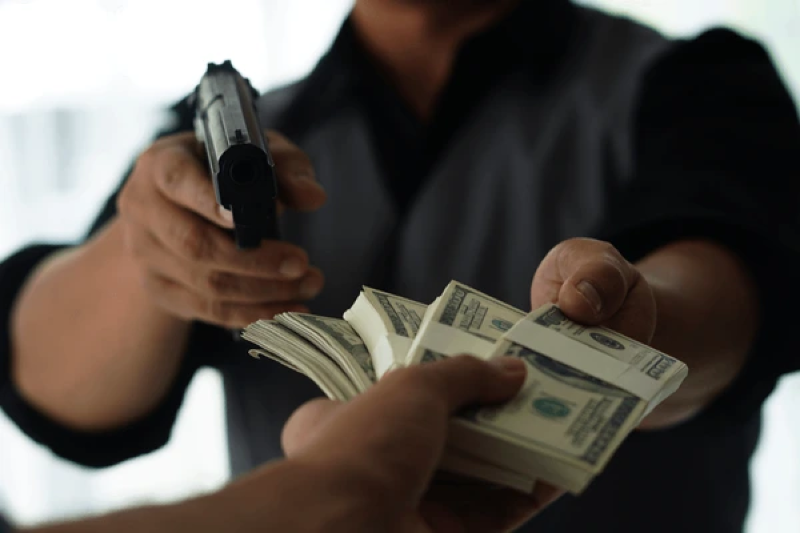
It was 2004. I was 31. I was up for several days on meth and drinking heavily for the past month or so. I decide to go rob a bank and take my son to Tijuana, Mexico to see my biological father – his new grandpa. I’ve recently been discharged from parole. I take this new freedom as a chance to use drugs uncontrollably and drink like a mad man. I sit down on my chair and snatch a piece of scratch paper off my desk and write a bank robbery note. Later, as we proceed with the trial, I sit in the courtroom in a suit and tie, looking as innocent as possible. The D.A. walks in with a huge poster board and easel. He turns to the audience, then back to the jury and asks the judge for permission to enter exhibit D. The judge grants this wish. It’s my banknote. Written in big bold black letters on a torn piece of a brown paper bag that I get from liquor stores. “Please give me all of your money,” it reads, “or i will tickle you to death put the money in the paper bag i have a pisol in my pocket. Have a nice day the paper bag bandit.” (via Dreamland)
Ancient damage from a kind of machine-gun discovered on the walls of Pompeii
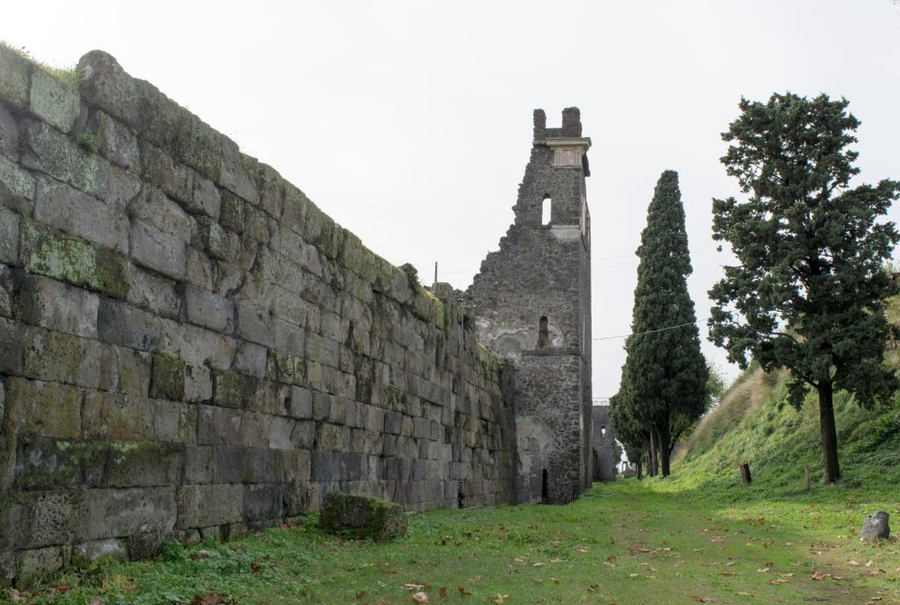
In 89 B.C.E., Pompeii was under siege. An invading army of tens of thousands of soldiers led by Lucius Cornelius Sulla stormed the town’s walls with slings and catapults. The siege subdued the rebellious city back beneath the thumb of the Roman Republic. Recently discovered damage on Pompeii’s fortification walls likely resulted from this fateful siege — and some of it may have come from a deeply mysterious ancient “machine gun,” researchers reported recently. Excavations and surveys conducted since 2024 have revealed several clusters of gouges in Pompeii’s northern fortification walls that were pristinely preserved by the eruption of Mount Vesuvius in C.E. 79. The marks are arrayed in a way that suggests they may have been left by a repeating dart-thrower called a polybolos. “It was an antipersonnel weapon used to strike archers emerging from the battlements above and the postern below,” says study lead author Adriana Rossi. The machine “had been described in detail but had never before been unearthed in any archaeological find or material evidence.” (via Scientific American)
Diatom arranging is the art of manipulating microscopic algae to make designs
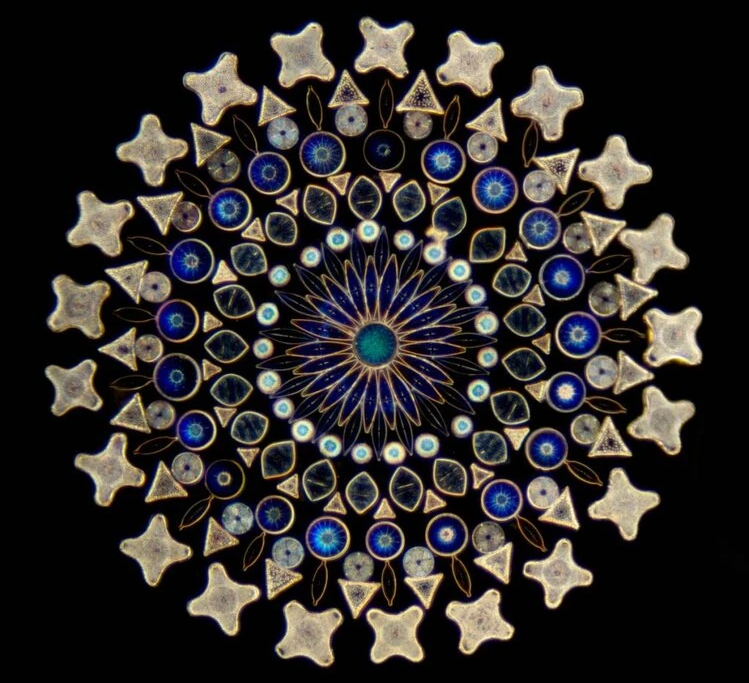
Found in oceans, lakes, rivers, puddles and even damp soil, diatoms are a type of almost invisible marine algae. Diatoms produce half the world’s oxygen, rivaling the output of all the planet’s rainforests combined. When diatoms die, their remains sink down to the seafloor, forming thick layers of sediment that persist for eons. None of this mattered to us out there at Mile Rock Beach. Far more relevant were the silica shells that encase the diatoms. These shells, or frustules, come in an astonishing variety of shapes and sizes. Some look like spiky disks, others like delicate canoes, or cubes, or gears. Tens of thousands have been identified—Coscinodiscus, Navicula, Chaetoceros, Thalassiosira, Actinocyclus, Pseudo-nitzschia, Skeletonema, Cyclotella — and many more have yet to be named. For the purposes of a community of craftspeople that is itself rather small, these organisms constitute a singular kind of palette. (via Craftsmanship)
Hi everyone! Mathew Ingram here. I am able to continue writing this newsletter in part because of your financial help and support, which you can do either through my Patreon or by upgrading your subscription to a monthly contribution. I enjoy gathering all of these links and sharing them with you, but it does take time, and your support makes it possible for me to do that. I also write a weekly newsletter of technology analysis called The Torment Nexus.
Japan has a database of cherry blossom info that goes back 1,200 years
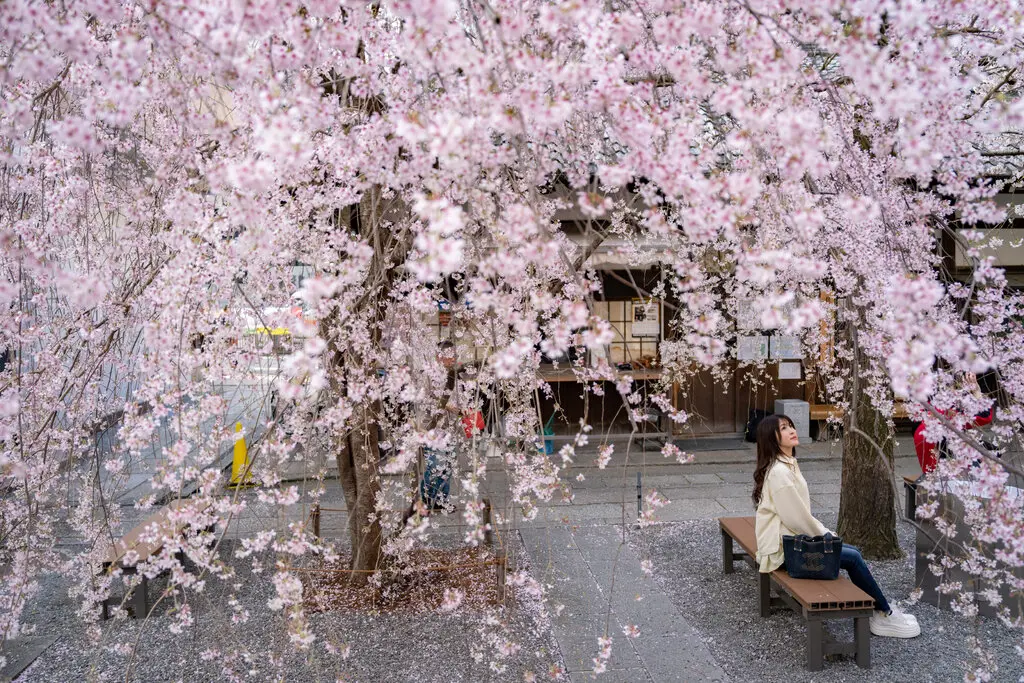
For more than 1,200 years, Japanese noblemen, monks and bureaucrats have carefully recorded one of the most eagerly awaited days of the year — when cherry blossoms bloom in the ancient capital, Kyoto.In recent years, a climate scientist, Yasuyuki Aono, has been the keeper of this trove of dates, one of the world’s most remarkable and longest-running climate records. Cherry trees, or sakura, are particularly sensitive to changing temperatures, and as the planet has warmed, they have bloomed earlier and earlier.Then last summer, Prof. Aono, who had meticulously updated the record year after year, died after a battle with cancer. That prompted supporters of his work to start looking for a worthy successor. Now, just as Kyoto sees the last of the year’s cherry blossoms, Prof. Aono’s successor has been found. A Tokyo-based environmental biophysicist, Genki Katata, agreed to be the new custodian. (via the New York Times)
He turned his life around but only after he stole his co-worker's identity
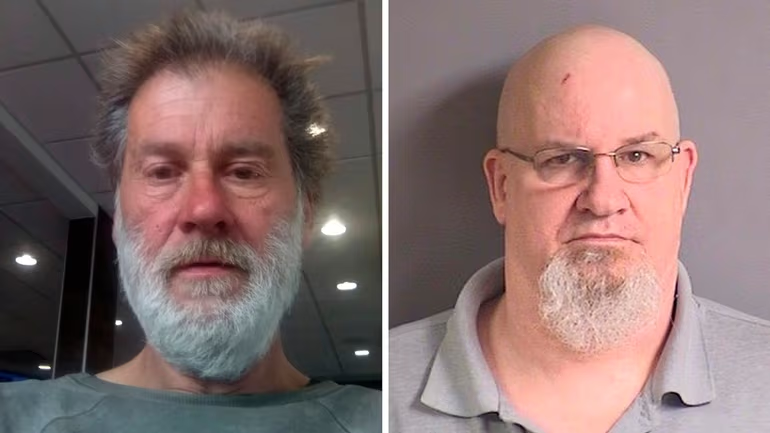
A man who went by the name William Woods had turned his life around. Three decades ago, he was homeless and worked at a hotdog cart. But then the man got married and had a child. He opened up bank accounts, received credit lines, and started working at a hospital, where he earned more than $100,000. There was just one problem: Although William Woods is a real person, the man is not that person. Instead, the man’s name is Matthew Keirans. Keirans met the real Woods in the late 1980s; Woods was Keirans’s coworker at the hotdog cart. From then on, Keirans used Woods’s identity in every aspect of his life. Keirans obtained employment, insurance, a social security card, driver’s licenses, titles, loans, and credit using Woods’s identity. Keirans paid taxes under Woods’s identity. When Keirans stole a car, authorities issued an arrest warrant in Woods’s name. Although Keirans got married, his wife did not know his real name, and their child bore Woods’s surname. Then Woods intervened. (via the Court of Appeal)
Director Werner Herzog says he knows French but he refuses to speak it

Acknowledgements: I find a lot of these links myself, but I also get some from other places that I rely on as "serendipity engines," such as The Morning News from Rosecrans Baldwin and Andrew Womack, Jodi Ettenberg's Curious About Everything, Dan Lewis's Now I Know, Robert Cottrell and Caroline Crampton's The Browser, Clive Thompson's Linkfest and Why Is This Interesting by Noah Brier and Colin Nagy. If you come across something you think should be included here, feel free to email me at mathew @ mathewingram dot com