Your dog might be able to smell whether you have cancer

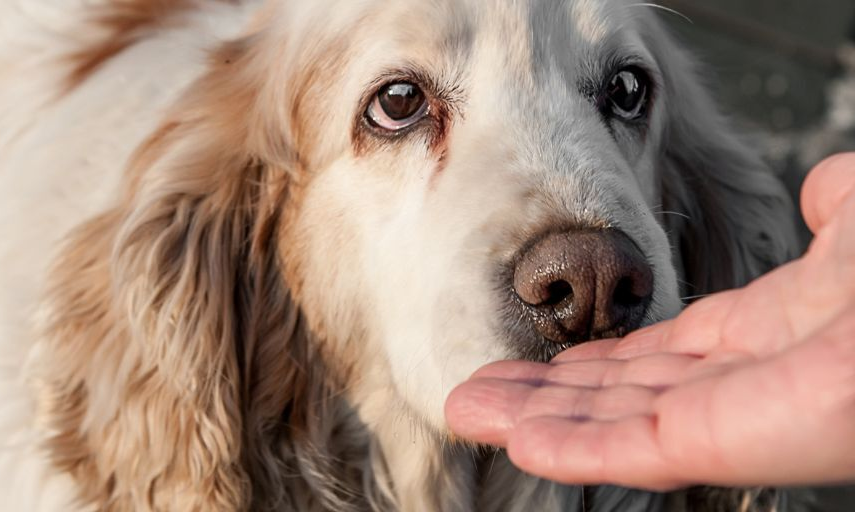
Humans have put dogs’ remarkable sense of smell to use by training them to sniff out explosives and narcotics. Their powerful noses can also detect viruses, bacteria, and signs of cancer in a person’s body or bodily fluids. Like many other diseases, cancers leave specific traces, or odor signatures, in a person’s body and bodily secretions. Cancer cells, or healthy cells affected by cancer, produce and release these odor signatures. They detect these odors in substances called volatile organic compounds (VOCs). Depending on the type of cancer, dogs are able to detect VOCs in a person’s skin, breath, urine, feces, and sweat. Dogs can detect these odor signatures and, with training, alert people to their presence. People refer to dogs that undergo training to detect certain diseases as medical detection dogs. Trained dogs can detect some substances in very low concentrations, as low as parts per trillion, which makes their noses sensitive enough to detect cancer markers in a person’s breath, urine, and blood. (via Medical News Today)
Why does a plate of honey-drizzled bananas show up on this street corner every day?
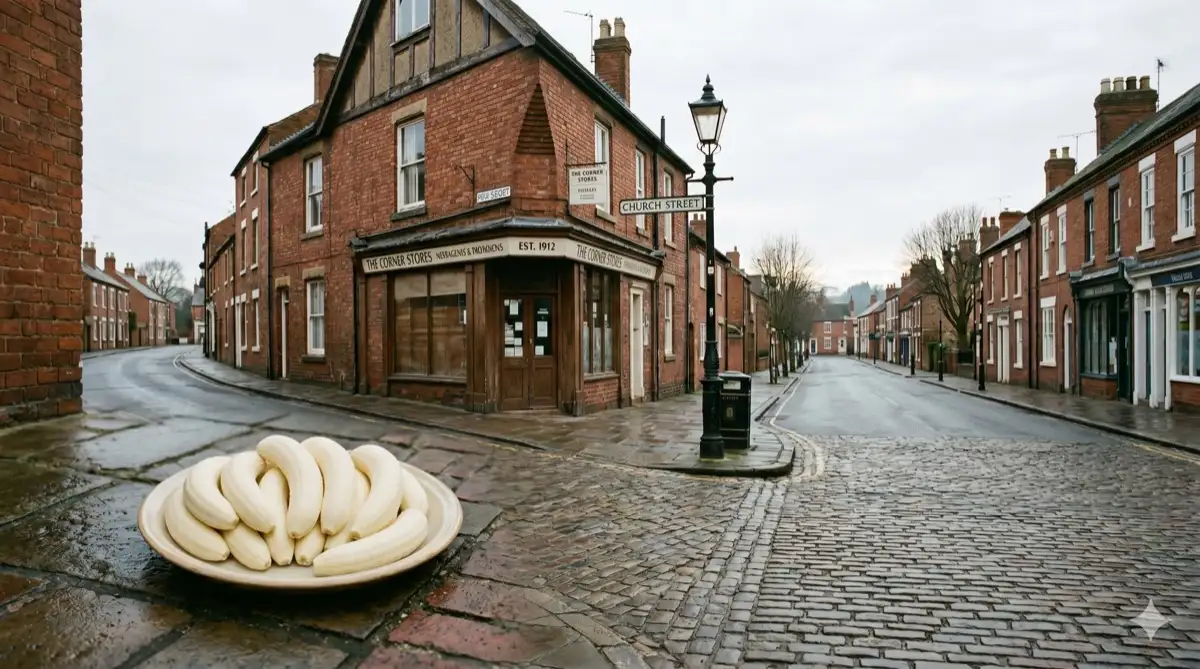
Two men sat in a car on Abbey Road in Beeston, Nottinghamshire, on the night of February 1, 2025, waiting to catch a ghost. Luke Roberts and Jai Brewer call themselves the "banana hunters," and they had come to watch a particular street corner opposite a church. For more than a year (some neighbors said two), a plate holding 15 to 20 peeled, honey-drizzled bananas had been turning up there overnight on the first or second of every month. No one had ever seen who left it. The stakeout ended at sunrise without a sighting. Somehow, bananas appeared anyway. The plate sits there in the same condition every month: peeled, whole, untouched by squirrels or foxes or magpies, which is its own quiet riddle. A local volunteer who picks up litter has tried gentle interventions, hoping to discourage the practice without confrontation. It hasn't worked. On March 2, 2025, the plate moved a few streets over to Albert Road near Broadgate Road, as if whoever is doing this is keeping an internal calendar. (via Boing Boing)
There's an ancient earthwork in Louisiana that is older than the pyramids or Stonehenge
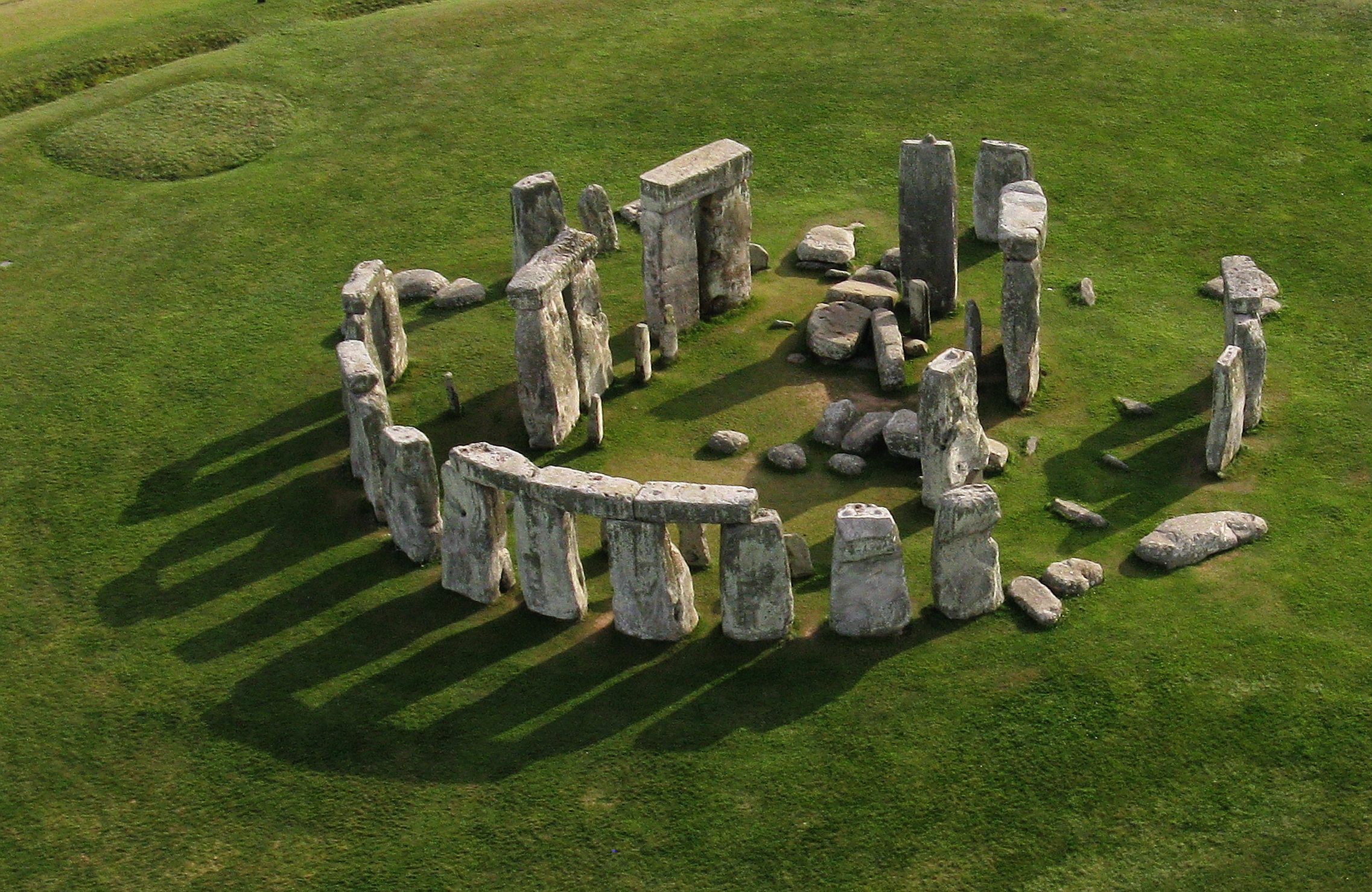
Watson Brake is an archaeological site in present-day Ouachita Parish, Louisiana, from the Archaic period. Dated to about 5400 years ago (approx. 3500 BCE), Watson Brake is considered the oldest earthwork mound complex in North America. It is older than the Ancient Egyptian pyramids or Britain’s Stonehenge. Its discovery and dating in a paper published in 1997 changed the ideas of American archaeologists about ancient cultures in the Southeastern United States and their ability to manage large, complex projects over centuries. The archeologists revised their date of the oldest earthwork construction by nearly 2000 years, as well as having to recognize that it was developed over centuries by a hunter-gatherer society, rather than by what was known to be more common of other, later mound sites: a more sedentary society dependent on maize cultivation and with a hierarchical, centralized polity. (via Wikipedia)
Hi everyone! Mathew Ingram here. I am able to continue writing this newsletter in part because of your financial help and support, which you can do either through my Patreon or by upgrading your subscription to a monthly contribution. I enjoy gathering all of these links and sharing them with you, but it does take time, and your support makes it possible for me to do that. I also write a weekly newsletter of technology analysis called The Torment Nexus.
The optical qualities of this 4th century Roman cup have baffled scientists for centuries
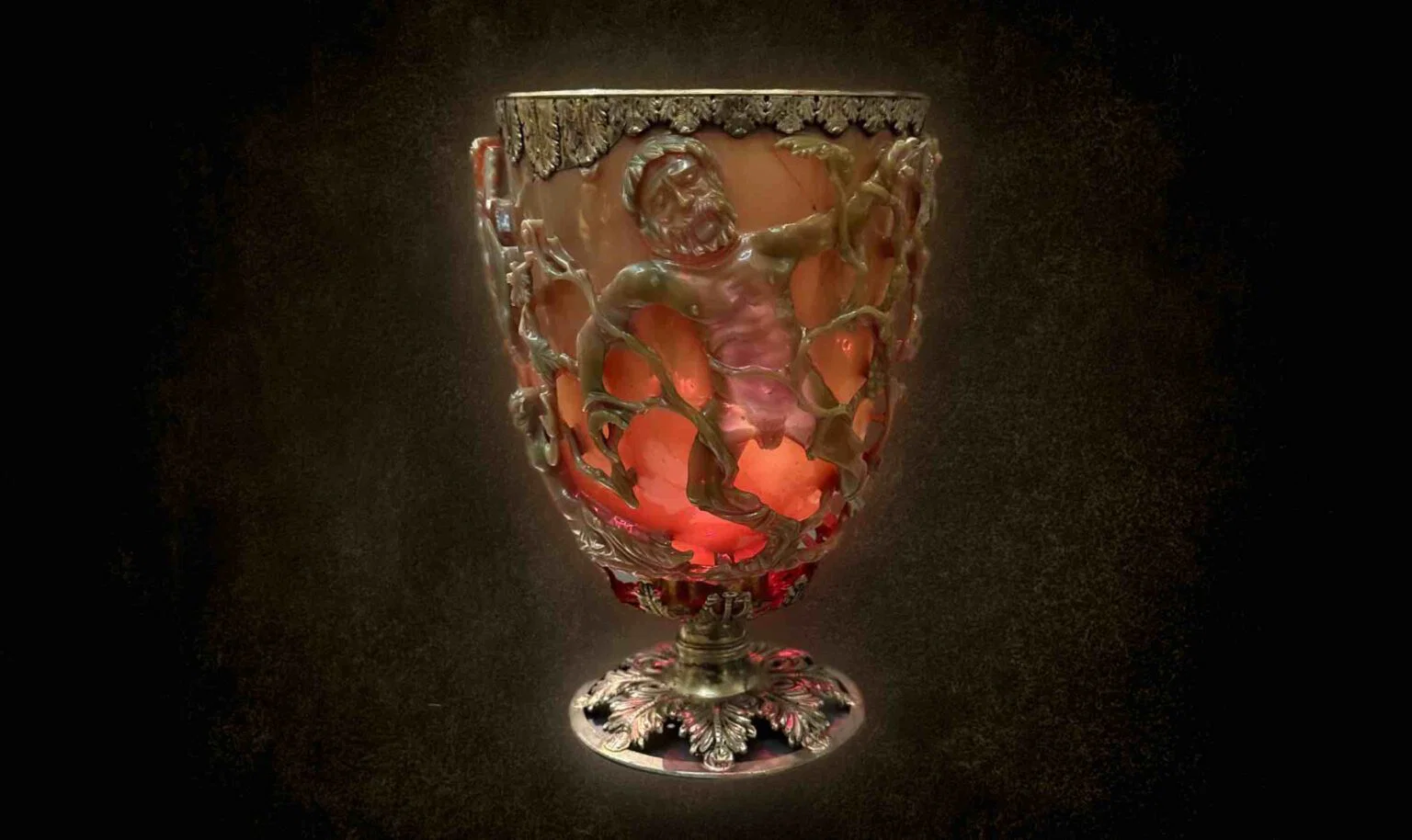
During the 4th-century, a remarkable artifact was produced by Roman artisans that exhibits optical qualities so unique they have baffled scholars for centuries. Known as the Lycurgus Cup, it is one of the most unusual examples of glassworking ever produced by the Roman Empire, as it is made from dichroic glass — a material that appears to exhibit an entirely different coloration when light passes through it — causing it to look green when illuminated from the front but appearing a striking amber-red from behind. “The Lycurgus cup is, without any doubt, one of the most fascinating glass artifacts in the history of humankind,” wrote the authors of a 2020 study that examined its remarkable appearance. According to Kool, Dekker, and the team, analysis of the Lycurgus cup’s color-changing properties revealed the presence of nanoparticles within its ancient glass — a discovery that predates the modern development of nanotechnology by an astounding 1,600 years. (via The Debrief)
These tiny fish are only an inch long but they can scale a 50-foot waterfall
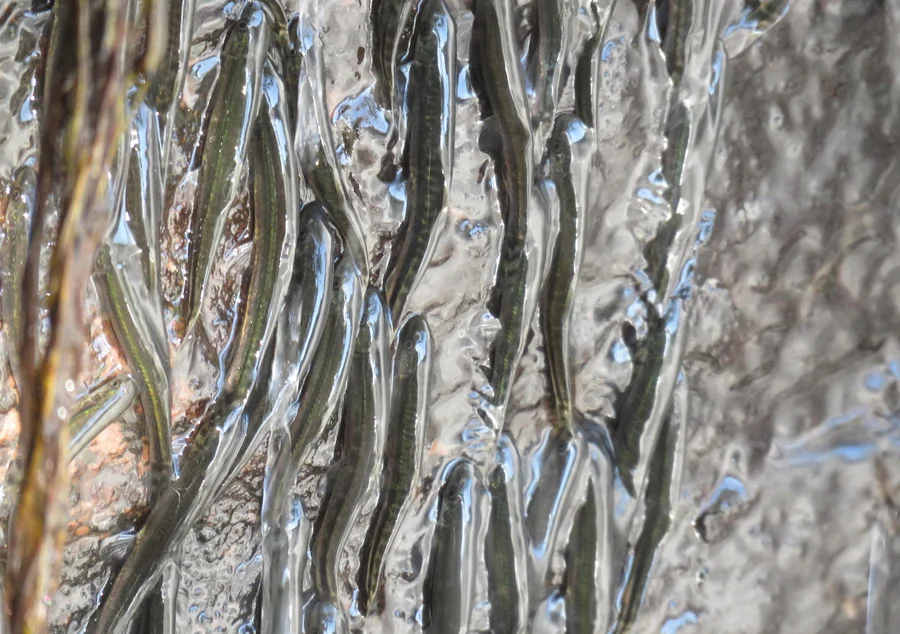
The world cheered when Alex Honnold free-climbed a 101-story skyscraper in Taipei. The new free-climbing champion is the shellear, a fish that is about the size of a ziti noodle — that can scale a 50-foot waterfall. During major floods, thousands of tiny fish convene at Luvilombo Falls in the upper Congo River Basin to undertake a peculiar vertical migration, described for the first time today in Scientific Reports. At sunset they sidle up to the splash zone—the damp areas on either side of the waterfall’s main flow — and press their fins flat against the sheer rock face. These fins are covered in what Kiwele Mutambala Pacifique, a Ph.D. student in the Democratic Republic of the Congo, calls “petit crochet” (French for “little hooks”). These microscopic single-celled structures give the shellear its grip, he explains. Then, with a wiggle of the tail, “it’s as if the fish is swimming but in vertical,” he says. “It’s beyond imagination.” (via Scientific American)
A Coast Guard officer jumping aboard a runaway boat is like a Bond movie come to life

Acknowledgements: I find a lot of these links myself, but I also get some from other places that I rely on as "serendipity engines," such as The Morning News from Rosecrans Baldwin and Andrew Womack, Jodi Ettenberg's Curious About Everything, Dan Lewis's Now I Know, Robert Cottrell and Caroline Crampton's The Browser, Clive Thompson's Linkfest and Why Is This Interesting by Noah Brier and Colin Nagy. If you come across something you think should be included here, feel free to email me at mathew @ mathewingram dot com