Quadruple amputee cornhole pro shoots man while driving


A noted professional cornhole player who is a quadruple amputee is behind bars after authorities said he shot and killed a front seat passenger Sunday night while he was driving in Maryland. Dayton Webber, 27, was behind the wheel when he opened fire on Bradrick Michael Wells during an argument as they were traveling in a car in the town of La Plata, the Charles County Sheriff’s Office said in a statement. Webber, who lives in La Plata, pulled over and asked the backseat passengers to help pull Wells out of the car, but they refused, flagged down La Plata police and reported the shooting, the sheriff's office said. Webber competes in the American Cornhole League, which called the case "an extremely serious matter." Webber's arms and legs were amputated to save his life from a serious streptococcus pneumonia blood infection when he was 10 months old. He said doctors gave him a 3% chance of surviving. (via CNN)
This librarian maintains a comprehensive list of all the items found inside borrowed books
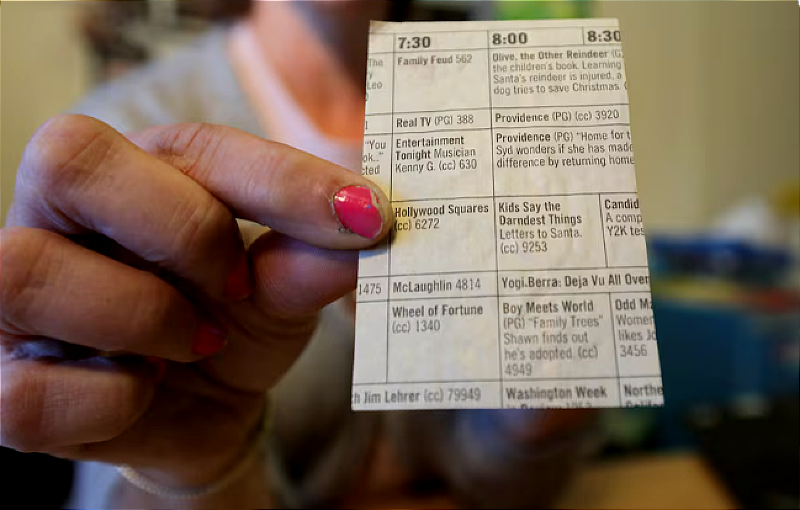
Photographs, to-do lists, airplane tickets and quirky drawings by children are part of thousands of lost and forgotten items in library books carefully collected for years by a librarian in California. The items are now part of a collection called "Found in a Library Book" at the Oakland Public Library. Among the items are a ticket to an Oakland Athletics baseball game on April 25, 2013 and a ticket to a Heineken beer-related event dated Nov. 19, 2002. Any item found in a returned book throughout the library system gets sent to librarian Sharon McKellar, who began collecting the items 10 years ago. A few days ago, she opened envelopes containing polaroid photos, two post-it notes stuck to each other with a list of ingredients on one and a list of bible verses on another and a single square sheet of toilet paper."I like imagining where these came from," said McKellar, who has been with the library since 2003. (via Reuters)
That time when Catholic Europe and Protestant England each had their own calendar

The adoption of the Gregorian calendar in 1583 by Pope Gregory XII refined the schedule of leap years to more accurately reflect the length of the year, and corrected the creep of the calendar since the Roman Empire by jumping ahead ten calendar days. As you can imagine, Protestant Europe was less inclined to follow the Pope’s directives on changing the calendar, and several countries, including England, clung to the less-accurate Julian calendar. The use of different calendars created a confusing interregnum during which events happened on different dates depending on who was keeping score, England or Catholic Europe. For example, the English defeated the Spanish Armada at Gravelines on July 29, 1588 in England or August 8, 1588 in Europe. William Shakespeare died on April 23, 1616 in England, which was May 2, 1616 in Europe. Isaac Newton was born in England on Christmas Day 1642, a more memorable day than Europe’s January 4, 1643. (via Why Is This Interesting?)
Hi everyone! Mathew Ingram here. I am able to continue writing this newsletter in part because of your financial help and support, which you can do either through my Patreon or by upgrading your subscription to a monthly contribution. I enjoy gathering all of these links and sharing them with you, but it does take time, and your support makes it possible for me to do that. I also write a weekly newsletter of technology analysis called The Torment Nexus.
The mystery of the legless lizards of Taiwan

Slithering through the damp leaf litter, deep in the forests of Taiwan is an elusive creature that’s been causing confusion for decades—the Formosan legless lizard. But first, what makes this limbless reptile a lizard and not a snake? For starters, it has ears, or at least tiny external earholes, which snakes lack. It also has eyelids and can blink with them, while snakes have transparent, fused membranes protecting their eyes. Finally, it has a lateral groove on each side of its body which allows the skin to expand. While its appearance may confound those unfamiliar with the finer points of reptile classification, the distinction between snake and lizard wasn’t the source of the confusion. Instead, early naturalists originally believed there were two legless lizards lurking in the forests of Taiwan: one displayed striking blue spots, while the other lacked them. Complicating things further, the original specimen for scientists to refer back to vanished shortly after World War II. (via Nautilus)
First glimpse of sperm whale birth reveals teamwork to support newborn

A sperm whale giving birth has been assisted by 10 other females in her social unit, the first time such an event has ever been observed in non-primates. In July 2023, scientists who have been monitoring a group of sperm whales in the Caribbean since 2005 noticed that all 11 females in the group had gathered near the surface. By chance, the researchers had drones in the air and were able to observe and record the event. Shortly afterwards, the flukes of a calf started emerging from its mother. The delivery took place over the next half hour, during which the other females coordinated themselves to protect the mother and newborn. As soon as the calf was born, the female whales gathered around and took turns making sure that it was kept lifted at the surface so it could breathe and had time for its flukes to fully unfurl. In the first few hours, newborn sperm whales aren't buoyant and cannot stay at the surface on their own, so such assistance is thought to be critical to prevent calves from drowning. (via New Scientist)
The Rolling Stones song Satisfaction played on rubber chickens by a man in a tuxedo

Acknowledgements: I find a lot of these links myself, but I also get some from other places that I rely on as "serendipity engines," such as The Morning News from Rosecrans Baldwin and Andrew Womack, Jodi Ettenberg's Curious About Everything, Dan Lewis's Now I Know, Robert Cottrell and Caroline Crampton's The Browser, Clive Thompson's Linkfest and Why Is This Interesting by Noah Brier and Colin Nagy. If you come across something you think should be included here, feel free to email me at mathew @ mathewingram dot com