How Sean Penn saved a man trapped in a Bolivian prison


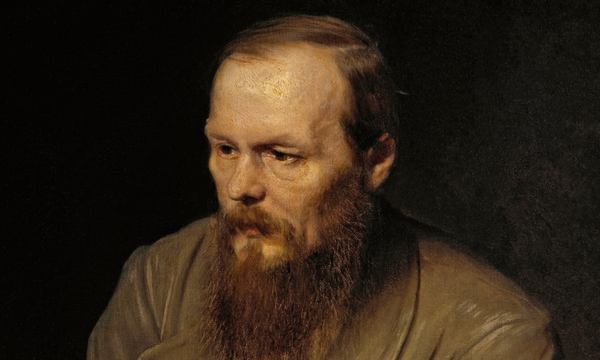
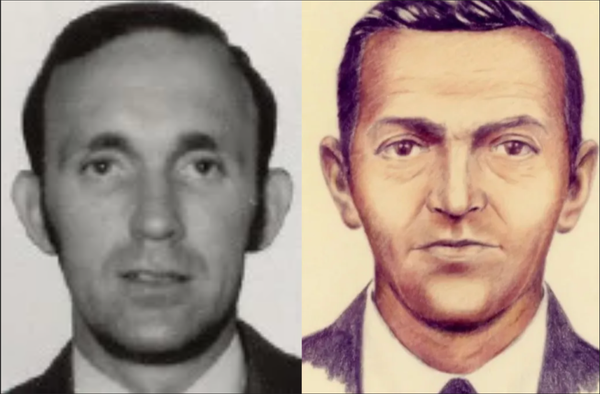
Sean Penn always knew that rescuing Jacob Ostreicher from his years of Bolivian imprisonment would be difficult. Ostreicher, a then-52-year-old Hasidic businessman who had moved to the country from Brooklyn to manage a rice farm, got stuck there for two and a half years after he was accused of money laundering and criminal organization. His detainment in one of Bolivia’s most brutal prisons had attracted international attention — ABC News’ Nightline had run a segment about his incarceration; it was covered by the New York Times, the BBC, the Associated Press, and the Bolivian and Jewish press. It seemed like he would never get back to the States. Until suddenly, in December 2013, he returned. The Bolivian justice minister claimed Ostreicher had slipped away while out of prison on house arrest. Chaya Gitty Weinberger, Ostreicher’s daughter, told the Times that her father had been “dropped off in Pacific waters,” then released — but only after her uncle had negotiated a ransom. A State Department spokesperson would only confirm to news organizations that Ostreicher was in the United States. What really happened remained a mystery. (via NY mag)
This Nobel Prize winner's invention can generate pure drinking water from the air
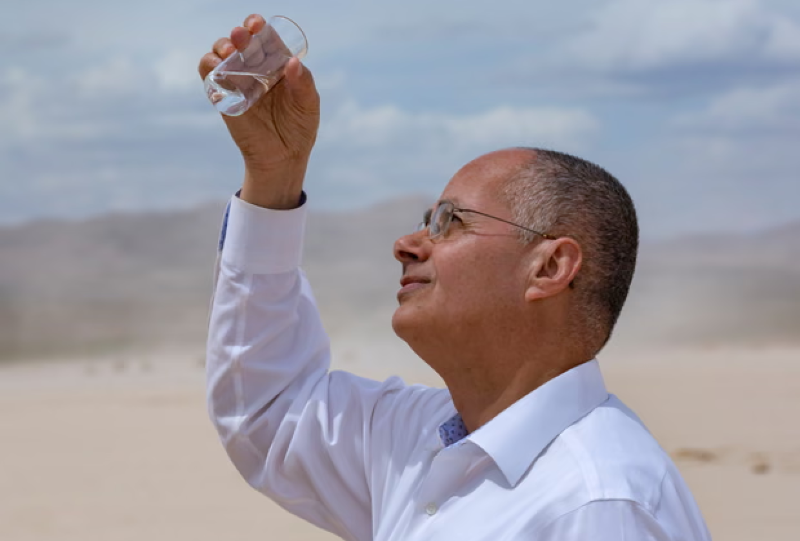
A Nobel laureate’s environmentally friendly invention that provides clean water if central supplies are knocked out by a hurricane or drought could be a life saver for vulnerable islands, its founder says. The invention, by the chemist Prof Omar Yaghi, uses a type of science called reticular chemistry to create molecularly engineered materials, which can extract moisture from the air and harvest water even in arid and desert conditions. Atoco, a company that Yaghi founded, said its units, comparable in size to a 20ft shipping container and powered entirely by ultra-low-grade thermal energy, could be placed in local communities to generate up to 1,000 litres of clean water every day, even if centralised electricity and water sources were interrupted by drought or storm damage. Yaghi, who won the 2025 Nobel prize in chemistry, said the invention would change the world and benefit islands in the Caribbean. (via The Guardian)
These earthworms have somehow managed to stay alive inside an active volcano

Earthworms have an uncanny ability to adapt to the world’s harshest soils — so much so, in fact, that they’ve become an invasive species within active volcanoes. The soil within active volcanos is toxic in just about every way imaginable. They’re low in O2, high in CO2, are full of acid, have elevated concentrations of metal ions, and are constantly degassing. But still, the earthworm (Amynthas gracilis) calls it home and survives the harshness, according to a study from Cardiff University researchers uploaded to the online repository bioRxiv. The worm’s presence in this unlikely landscape lead researchers to investigate exactly how they manage their remarkable survival, all the while hoping to glean information that could lead to future advancement in areas ranging from biotechnology and agriculture to medicine and environmental management. The researchers studied an active volcano in the Azores of Portugal known as the Furnas volcano, whose caldera is home to persistent activity. (via Popular Mechanics)
Hi everyone! Mathew Ingram here. I am able to continue writing this newsletter in part because of your financial help and support, which you can do either through my Patreon or by upgrading your subscription to a monthly contribution. I enjoy gathering all of these links and sharing them with you, but it does take time, and your support makes it possible for me to do that. I also write a weekly newsletter of technology analysis called The Torment Nexus.
He helped invent modern artificial intelligence and then completely disappeared
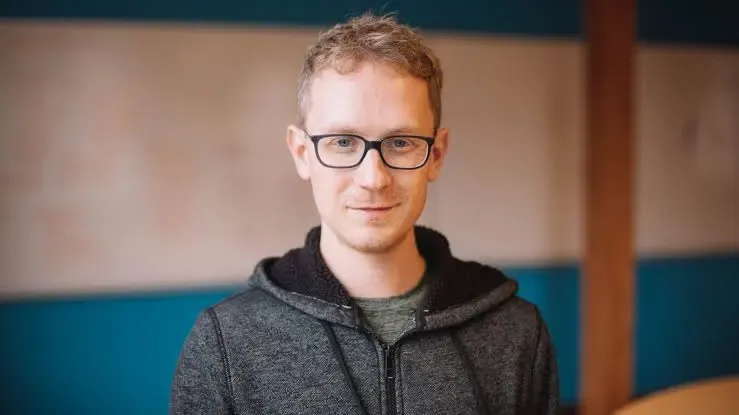
Hinton & Sutskever are household names in machine learning. They revolutionized the world by training, for the first time, an actual well-performing neural network for image classification. This architecture was called AlexNet. It absolutely demolished the then state of the art. The architecture is named after the papers first author. Alongside Hinton and Sutskever is a guy named Alex Krizhevsky. He’s not doing any AI research at all anymore. His legacy is a handful of papers with citations higher than I’ll ever earn in a year. If Geoffrey Hinton is the “modern grandfather” of AI, then this guy is the father. Contrary to Sutskever and Hinton, he actively avoids media attention. Apart from the initial AlexNet talk, he has done exactly one “interview”, and it is humblingly humble. His name is very literally already written in the history books. And what does he do with it? He does not show his face. He worked at google until 2018 and “lost interest” and just left. What is he doing now? No one knows. (via Celeste-land)
Psychologists say Ravel's famous Bolero could be the product of dementia

No one would deny that the sometimes beloved, often reviled Boléro by Maurice Ravel (1875-1937) is repetitive. The French composer himself criticized his most popular work as "a piece for orchestra, without music." Could Boléro have been a manifestation of Ravel's growing dementia? Originally commissioned in 1928 by ballet dancer Ida Rubinstein as a "choreographed poem," the 15-minute work is dominated by a repetitive, hypnotic rhythm. Weaving through these driving beats are two themes, passed around the different sections of the orchestra and each repeated eight times. Changes in the work's dynamic level – which builds throughout the piece to a bombastic, crashing end – manifest the only variations in the work. One could argue that Boléro is a great study in the art of orchestration and presents Ravel as a master arranger. But in recent years, psychiatric researchers have offered another possible explanation. They suggest that the repetition in Boléro could reflect a manifestation of Alzheimer's disease, or some other serious mental deterioration (via NPR)
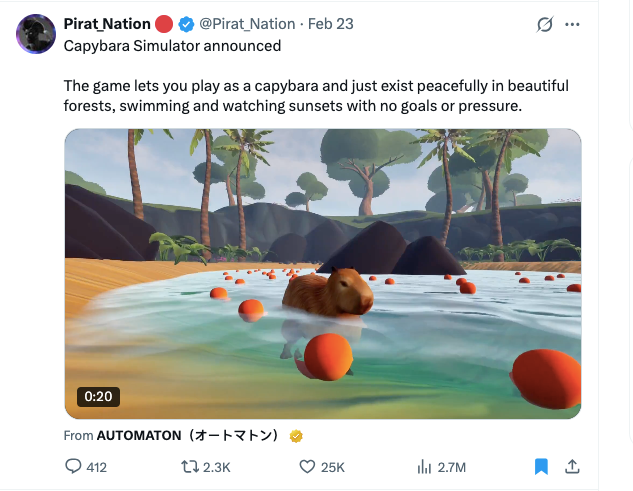
This game lets you pretend to be a capybara and the only goal is to relax
Acknowledgements: I find a lot of these links myself, but I also get some from other places that I rely on as "serendipity engines," such as The Morning News from Rosecrans Baldwin and Andrew Womack, Jodi Ettenberg's Curious About Everything, Dan Lewis's Now I Know, Robert Cottrell and Caroline Crampton's The Browser, Clive Thompson's Linkfest and Why Is This Interesting by Noah Brier and Colin Nagy. If you come across something you think should be included here, feel free to email me at mathew @ mathewingram dot com