He was the most successful double agent of all time

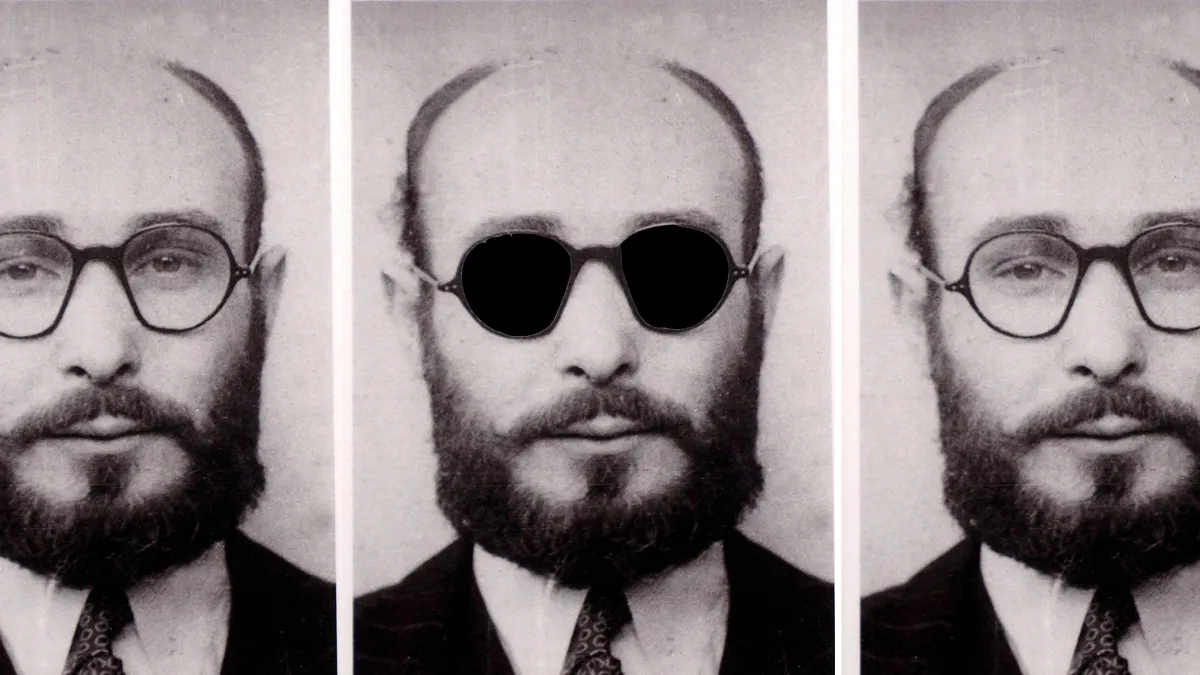
Juan Pujol was born in Barcelona in 1912 to a family of moderate means and liberal political beliefs. The onset of war in 1939 convinced him that he should make a contribution to the good of humanity. He decided contact the British authorities and offer to spy against Germany. Each time his approaches were rebuffed. In contrast, Pujol had no difficulty making contact with German Intelligence in Madrid, sayinghe was a Spanish government official of fanatical pro-Nazi persuasions. He was given a crash course in espionage. Instead of travelling to England, Pujol actually moved to Lisbon and began work creating a network of wholly imaginary sub-agents. By 1944 Pujol and Harris, working together, had invented no fewer than 27 sub-agents, each with full life stories. The fictional agents included such characters as a Venezuelan in Glasgow, an indiscreet US army sergeant and a Welsh nationalist leading a group of Fascists called the "Brothers of the Aryan World Order" in Swansea. (via MI5)
People who lose their vision sometimes develop a condition where they see imaginary things

For those stricken with Charles Bonnet Syndrome, the world is occasionally adorned with vivid yet unreal images. Some see surfaces covered in non-existent patterns such as brickwork or tiles, while others see phantom objects in astonishing detail, including people, animals, buildings, or whatever else their minds may conjure. These images linger for as little as several seconds or for as much as several hours, appearing and vanishing abruptly. They may consist of commonplace items such as bottles or hats, or brain-bending nonsense such as dancing children with giant flowers for heads. Most of those afflicted with Charles Bonnet Syndrome are people in the early stages of sight loss, and the hallucinations usually begin while their vision is still present but slowly diminishing. (via Damn Interesting)
Why did a teenaged girl walk across most of Europe over 3,400 years ago?

It was a cold morning on February 24, 1921, when farmer Peter Platz set out to do what so many farmers had done before him: level a mound of earth on his land to gain more farmland. What Platz could not have imagined was that, beneath that hill, a young woman from the Bronze Age had been waiting for more than three millennia for someone to tell her story. As he removed the soil, the farmer’s shovel struck something solid. It was a large tree trunk, hollowed out like a coffin. The interior of the coffin astonished the scientists. The inside of the trunk had been lined with a cowhide, placed with the hair facing inward, creating a soft bed. Over the body, a large wool blanket had served as a shroud. The constant humidity, the action of oak tannins (the same used in leather tanning), and the lack of oxygen had created a perfect time capsule. (via La Brujula Verde)
Hi everyone! Mathew Ingram here. I am able to continue writing this newsletter in part because of your financial help and support, which you can do either through my Patreon or by upgrading your subscription to a monthly contribution. I enjoy gathering all of these links and sharing them with you, but it does take time, and your support makes it possible for me to do that. I also write a weekly newsletter of technology analysis called The Torment Nexus.
This Japanese shrine dedicated to an ancient tree is run entirely by vending machines

Japan is a country filled with shrines dedicated to various things and entities. Some are big, and others as small as a single sign. But very few are run by vending machines. The Enkiri Enoki shrine is dedicated to an ancient tree from the Eddo period which is said to help with the breaking of bad relationships and the beginning of new ones. This makes it a popular spot with people who want help with their relationship, and also alcoholics who want to stop drinking. However, the place is too small for round the clock shrine keepers, and thus an alternative was found; vending machines. There are two of them: a large machine that sells 'Ema' planks which are used to write down your wish, and a smaller 'gachapong' machine which dispenses blessed charms. This unique system makes the temple easy to use with minimal upkeep from priests. (via Atlas Obscura)
Head priest of Pittsburgh church accused of stealing baseball cards from Walmart
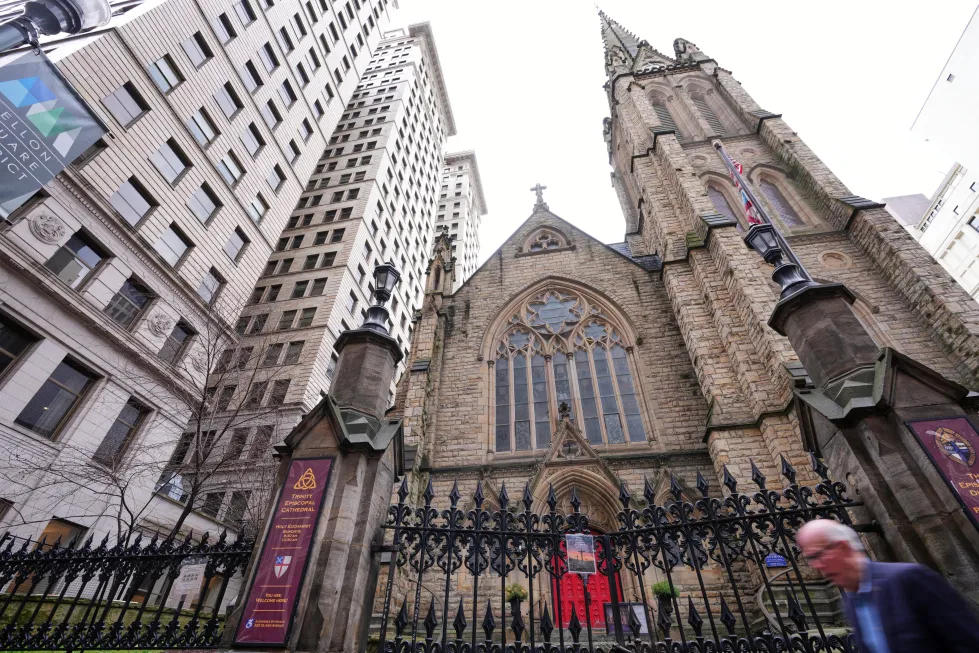
The head priest and dean of Trinity Episcopal Cathedral in downtown Pittsburgh is facing charges after being accused of stealing more than $1,000 in baseball cards from a Walmart. The Very Rev. Aidan Smith was arrested Feb. 27 by police just after leaving the Walmart in Economy Borough, just outside Pittsburgh, with 27 packs of baseball cards concealed under his clothing and in a cardboard box, according to court records. Smith, 42, was charged with receiving stolen property and retail theft. Police responded to a call from Walmart security, who said Smith was in the store again after having stolen from it in previous days. Police said Walmart security video shows Smith also taking baseball cards each of the four previous days and leaving without paying. Walmart valued the stolen baseball cards at $1,099.99, police said. (via Associated Press)
This solar power plant uses the sun to heat up salt to extreme temperatures

Acknowledgements: I find a lot of these links myself, but I also get some from other places that I rely on as "serendipity engines," such as The Morning News from Rosecrans Baldwin and Andrew Womack, Jodi Ettenberg's Curious About Everything, Dan Lewis's Now I Know, Robert Cottrell and Caroline Crampton's The Browser, Clive Thompson's Linkfest and Why Is This Interesting by Noah Brier and Colin Nagy. If you come across something you think should be included here, feel free to email me at mathew @ mathewingram dot com