He found Stalin's daughter living in a Wisconsin retirement home

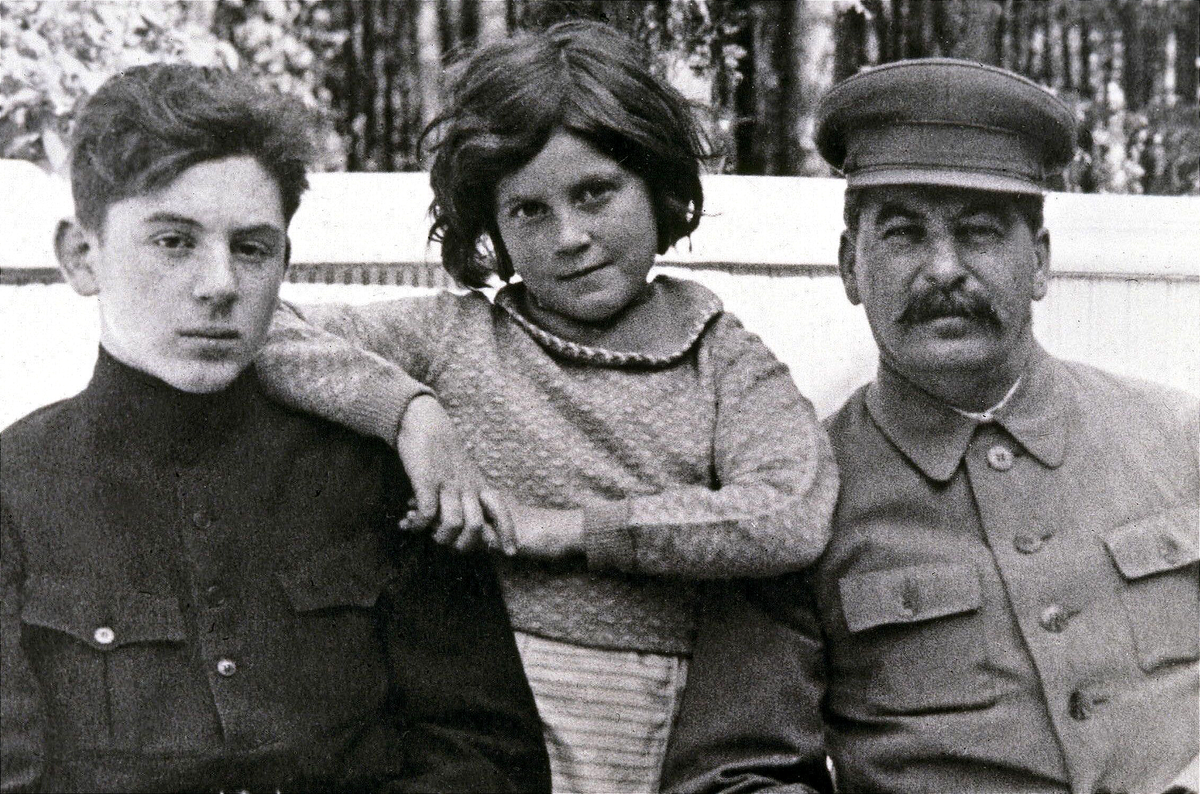
Svetlana, who was then eighty-one years old, lived in a senior citizens’ center in Spring Green, Wisconsin. When we met, she was dressed in baggy gray sweatpants and sunglasses. She was short and compact, and her once red hair had turned white and had started to thin. Scoliosis had given her a hunch, and she used a cane. She showed me her one-bedroom apartment, and the little desk by a window where her typewriter stood. Her bookshelf included the Russian-English dictionary that her father had used. Svetlana was welcoming, and spoke with the energy of someone who hadn’t told her story in a long time. After a few hours, she wanted to take a walk. We headed down a quiet street, to a garage sale, where a man in a Harley-Davidson T-shirt was selling a small cast-iron bookshelf. He asked Svetlana if she wanted to buy it. She couldn’t, she said. She had only twenty-five dollars until her welfare check came. (via the New Yorker)
She discovered 35 forgotten Rembrandt etchings while cleaning out an old desk
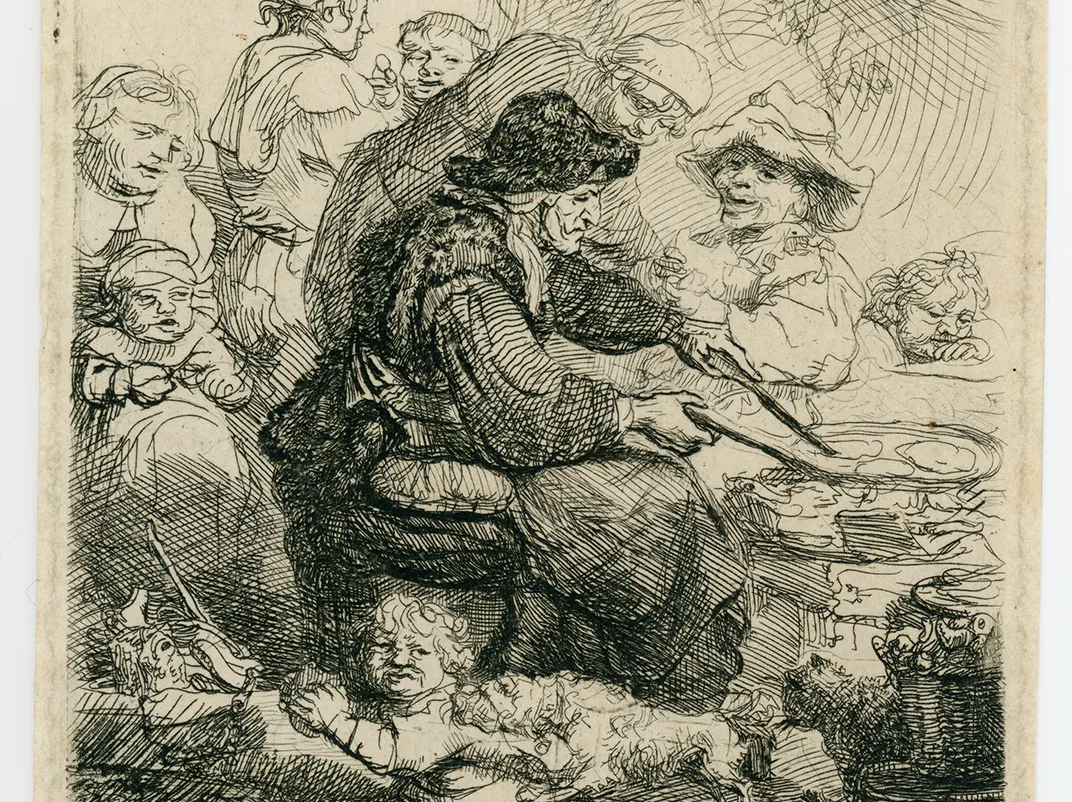
Charlotte Meyer is a Dutch woman who made a life-changing discovery in 2020, when she decided to sort through a drawer of heirlooms that had long gone untouched. Years before, when Meyer’s grandfather died, he left her a folder of prints that had been in the family for roughly a century. When Meyer finally opened the folder, she found 35 etchings created by the Dutch master Rembrandt van Rijn, whose 17th-century paintings and prints are renowned as some of the greatest visual art to come out of the Western world. Meyer’s grandfather collected the etchings between 1900 and 1920. They were small, with some measuring only a few centimeters in length. At first, Meyer wasn’t sure if the artworks were truly by Rembrandt. She felt sheepish calling experts at the Stedelijk Museum Amsterdam, but when the experts arrived at Meyer’s home and went through the etchings, the full weight of the find sank in. (via the Smithsonian)
A Spanish inventor built a radio-controlled vehicle in the early 1900s
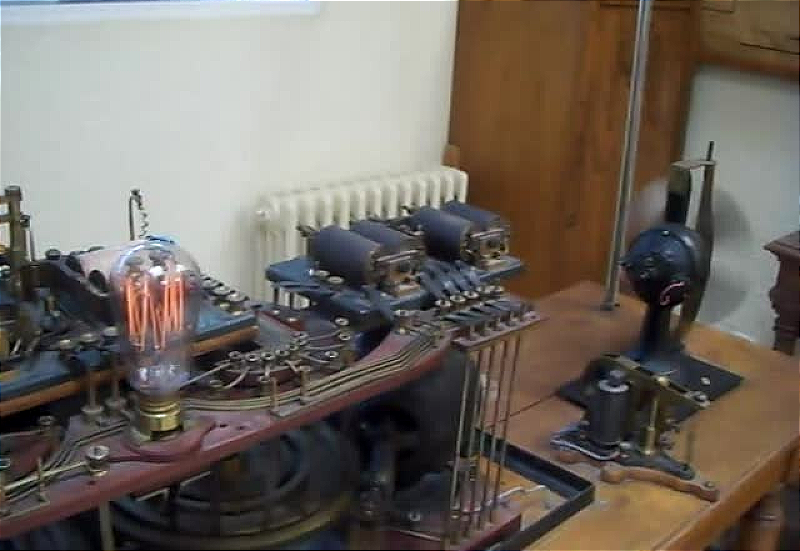
No one knows exactly when the vehicles we drive will finally wrest the steering wheel from us. But the age of the autonomous automobile isn’t some sudden Big Bang. It’s more of a slow crawl, one that started during the Roosevelt administration. And that’s Theodore, not Franklin. His name was Leonardo Torres Quevedo, a Spanish engineer born in Santa Cruz, Spain, in 1852. It was called the Telekino, a name drawn from the Greek “tele,” meaning at a distance, and “kino,” meaning movement. The Telekino transmitted wireless signals to a small receiver known as a coherer, which detected electromagnetic waves and transformed them into an electrical current. This current was amplified and sent on to electromagnets that slowly rotated a switch controlling the proper servomotor. Quevedo could issue 19 distinct commands to the systems of an airship without ever touching a control cable. By 1904, he was using the Telekino to direct a small, three-wheeled vehicle from nearly 100 feet away. (via Ars Technica)
Hi everyone! Mathew Ingram here. I am able to continue writing this newsletter in part because of your financial help and support, which you can do either through my Patreon or by upgrading your subscription to a monthly contribution. I enjoy gathering all of these links and sharing them with you, but it does take time, and your support makes it possible for me to do that. I also write a weekly newsletter of technology analysis called The Torment Nexus.
Emus faced down the Australian army and won
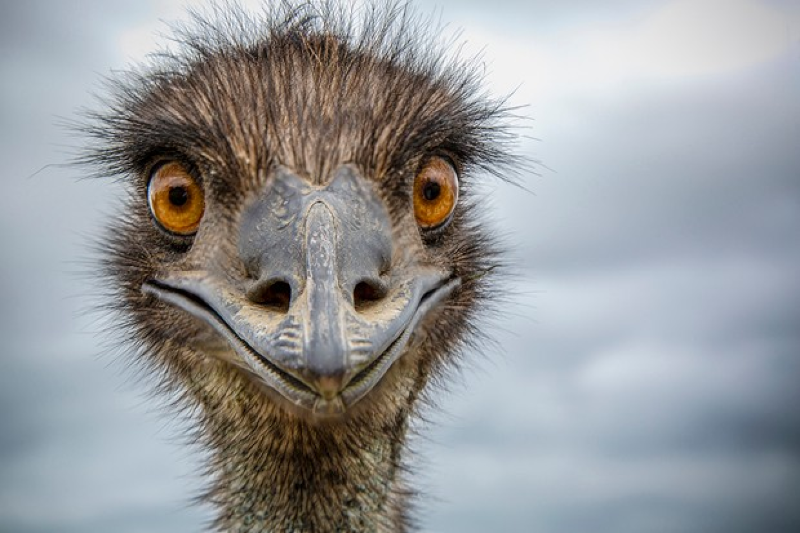
n November 1932, the harsh southern sun beat down on an empty paddock in Western Australia. The soil is red and strewn with rocks. Three soldiers emerge from the haze: An officer and two gunners, their backs straight, their uniforms immaculate. Then, their leader holds up a hand and bids his charges halt. He’s seen the cloud of dust on the horizon; a cloud that can mean only one thing. The officer barks orders. The gunners salute and then dig themselves in as best they can, readying their machine guns against the onslaught to come. These three brave men have come to fight for the future of Australian agriculture, to face down a foe the Australian army has never faced before. Screw your courage to its sticking place, dear reader, for they have come to battle… the emu. As an Australian, I can confirm that my country once fought a war against an army of large, somewhat comical flightless birds. And we lost. (via Popular Science)
She was the sultry voice on the radio playing music designed to convince Germans to give up

“Hello, boys. Here I am again, your Vicky With Three Kisses.” Even on nights when the radio was filled with noise as Allied and Axis forces attempted to jam their enemies’ broadcasts, the woman’s meaning was unmistakable. She pursed her lips and sent a trio of smooches across the airwaves. A German sailor listening to Vicky might imagine this was his girlfriend waiting at home, as she had been for years while the war stretched through 1944. For those with no one to return to, the voice belonged to a blonde-haired and blue-eyed dream. When the music faded, Vicky returned. “We don’t have much time left. And who knows when and where we will see each other again?” In a radio studio north of London, the dark-haired, dark-eyed, half-Jewish actress playing the role of Vicky stepped away from the microphone. She had fled from the Nazis once before. Now she was fighting back with the war’s newest weapon. (via The Smithsonian)
He taught his fish to drive a remote-control tank
Acknowledgements: I find a lot of these links myself, but I also get some from other places that I rely on as "serendipity engines," such as The Morning News from Rosecrans Baldwin and Andrew Womack, Jodi Ettenberg's Curious About Everything, Dan Lewis's Now I Know, Robert Cottrell and Caroline Crampton's The Browser, Clive Thompson's Linkfest and Why Is This Interesting by Noah Brier and Colin Nagy. If you come across something you think should be included here, feel free to email me at mathew @ mathewingram dot com