Casual Fridays were invented as a way to sell Hawaiian shirts

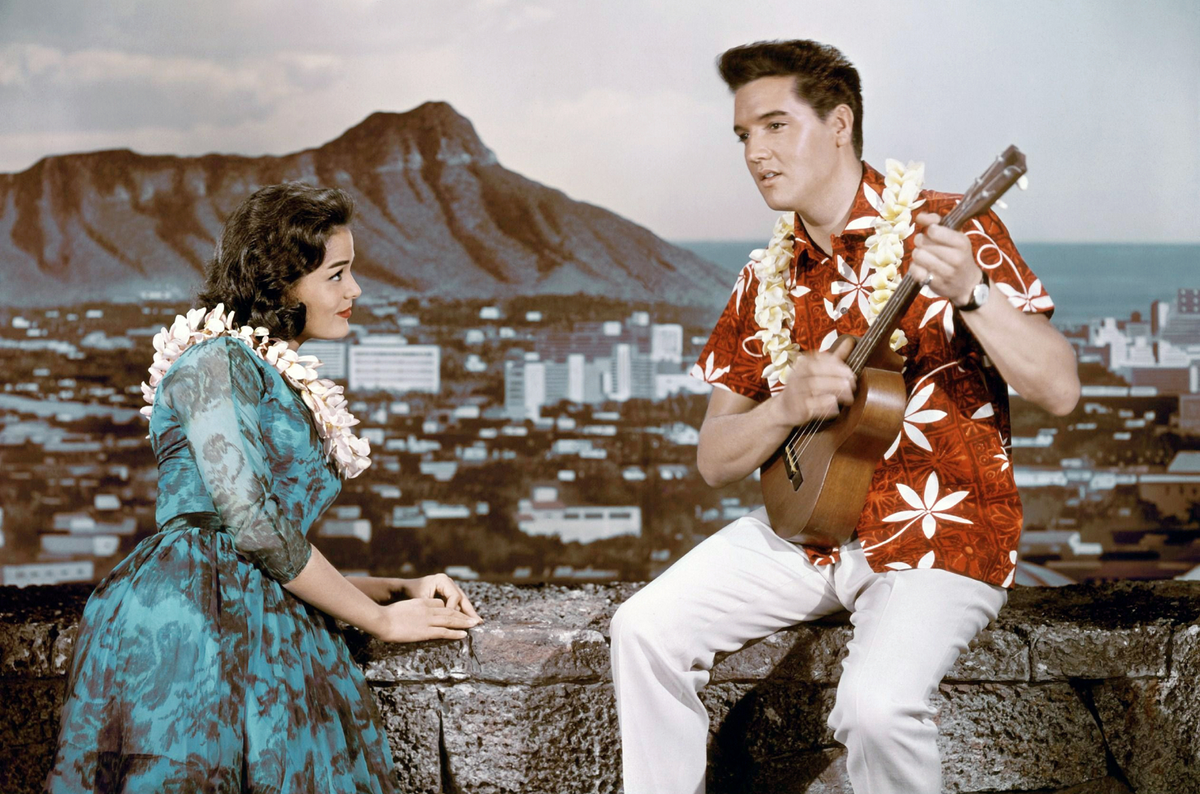
My city’s ‘Casual Fridays’ workplace default is not a coincidence, nor an act of free will by our bosses. It is the result of an extremely successful lobbying campaign. Specifically: A coordinated 1960s–90s effort by the Hawaiian Fashion Guild to convince mainland corporations that allowing employees to dress more casually on Fridays would boost morale, increase productivity, and, critically, increase the purchase of aloha shirts. This effort was branded “Operation Liberation,” which sounds like something from a declassified CIA memo. In the postwar period, Hawaii’s economy was struggling. Industries beyond tourism were in dire need of mainland demand. So the Guild began sending two aloha shirts to every member of the Hawaiian Senate and House, encouraging them to wear them to work on Fridays. The idea was to normalize the shirt locally, then export the concept to the continental U.S. It worked at every level. (via Why Is This Interesting)
When smallpox was eradicated Larry Brilliant sent a doctor a single Land Rover tire

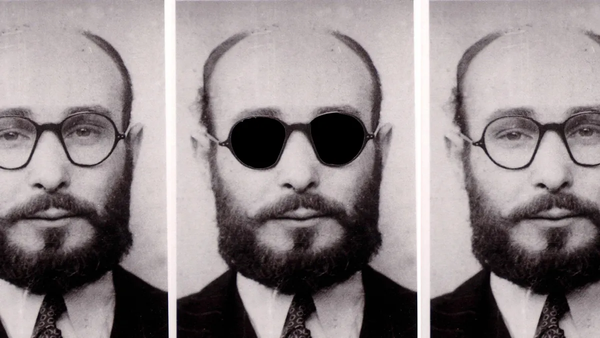
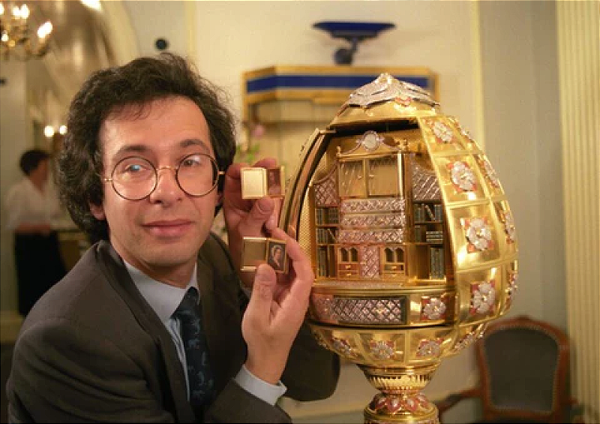
Years ago, at the World Health Organization, I was working on the campaign to eradicate smallpox. One of our most vocal critics was a senior leader at WHO named Dr. Ignatovitch. He called the effort a waste of time and resources, saying: “If smallpox is ever eradicated, I’ll eat a Land Rover tire.” In 1975, a search of Bangladesh found one last case of smallpox in a young girl named Rahima Banu, in a village on Bola Island. I was sent from New Delhi to confirm she was indeed the last case of variola major in nature. In 1980, the world officially declared the disease eradicated—the first (and so far only) time that’s ever happened. And yes—one of the happiest days of my life was when we sent Dr. Ignatovitch a Land Rover tire. It was cleaned, boxed, and shipped with a note that read: “Dear Dr. Ignatovitch, In keeping with your promise, here is your tire. Would you like ketchup or mustard to go with that?” (via the Steve Jobs Archive)
The kidnapping of the Aga Khan's famous racehorse in 1983 remains a mystery
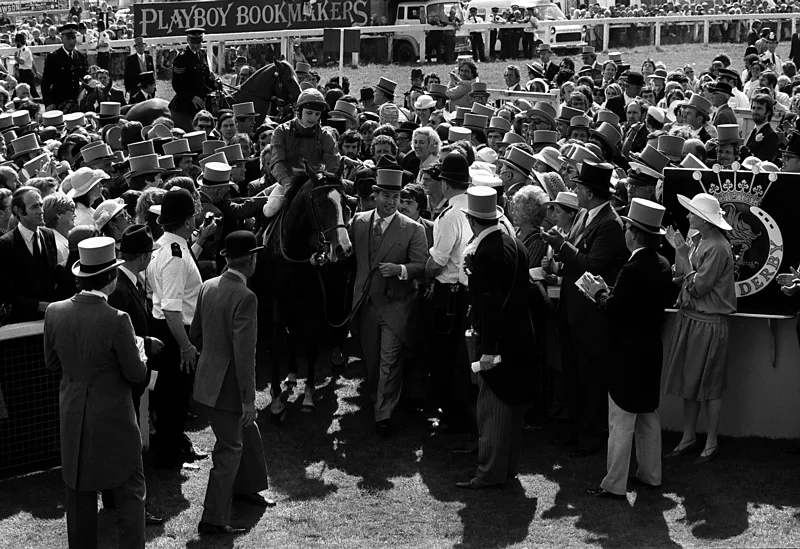
It was on a cold winter's night in 1983 that a prize stallion named Shergar was stolen from a stud farm in Ireland. At the time, Shergar had been settling into a new life at stud after his stunning sporting exploits. The stronger a stallion's track record, the higher the price commanded for his services. Shergar was hot property thanks to his win in the 1981 Epsom Derby, which remains one of the greatest moments in the race's 246-year history. Shergar's emerald-green silks with red epaulets were the racing colours of his owner, the billionaire spiritual leader the Aga Khan. The Aga Khan valued his prized possession at £10m (£36m or $49m today) and sold 34 shares at £250,000 each, keeping six for himself. Speculation about possible motives was everywhere. far-fetched theory had the horse being transported from Ireland to Libya's Colonel Gaddafi in return for weapons for the IRA. The cash-strapped Irish republican paramilitary group was the prime suspect, having been behind a series of human kidnaps. (via the BBC)
Hi everyone! Mathew Ingram here. I am able to continue writing this newsletter in part because of your financial help and support, which you can do either through my Patreon or by upgrading your subscription to a monthly contribution. I enjoy gathering all of these links and sharing them with you, but it does take time, and your support makes it possible for me to do that. I also write a weekly newsletter of technology analysis called The Torment Nexus.
Animals who first developed eyes initially had only one but some had as many as four

Scientists have long puzzled over how the vertebrate eye first evolved. A pair of new studies suggest a strange beginning: Our invertebrate ancestors 560 million years ago were cyclopes, with a single eye at the top of their head, scientists now propose, that only later split in two. Charles Darwin fretted a lot about the exquisite complexity and sophistication of the vertebrate eye as he developed his theory of evolution. But he was encouraged by the diversity of simpler eyes among invertebrates. Some are mere lumps of pigment that detect light; others are simple cups lacking lenses. New fossil discoveries suggest that the evolutionary course of eyes may have taken some surprising turns: paleontologists in China and England have been studying some of the earliest vertebrate fossils, which date back 518 million years. These show traces of eyes on the sides of the head, complete with lenses and retinas. But at the top of the head, there is a second pair of eyes, complete with lenses and retinas. (via the New York Times)
Virtually all modern drug research relies on this humble seaweed

In 1942, at the height of British industrial war mobilization, an unlikely cohort scavenged the nation’s coastline for a precious substance. Among them were researchers, lighthouse keepers, members of the Royal Air Force and the Junior Red Cross, plant collectors from the County Herb Committee, Scouts and Sea Scouts, schoolteachers and students. They were looking for fronds and tufts of seaweed containing agar, a complex polysaccharide that forms the rigid cell walls of certain red algae. Chileans, New Zealanders, and South Africans, among others, were also scrambling to source this strategic substance. A few months after the Pearl Harbor attack, the U.S. War Production Board restricted American civilian use of agar in jellies, desserts, and laxatives so that the military could source a larger supply; it considered agar a “critical war material” alongside copper, nickel, and rubber. Without agar, countries could not produce vaccines or the “miracle drug” penicillin, especially critical in wartime. (via Asimov Press)
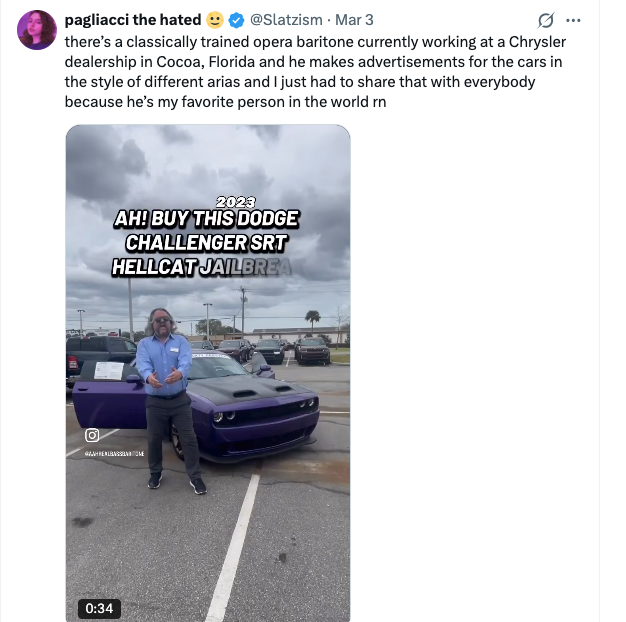
This classically trained opera singer sells cars by singing arias about them
Acknowledgements: I find a lot of these links myself, but I also get some from other places that I rely on as "serendipity engines," such as The Morning News from Rosecrans Baldwin and Andrew Womack, Jodi Ettenberg's Curious About Everything, Dan Lewis's Now I Know, Robert Cottrell and Caroline Crampton's The Browser, Clive Thompson's Linkfest and Why Is This Interesting by Noah Brier and Colin Nagy. If you come across something you think should be included here, feel free to email me at mathew @ mathewingram dot com