Why did Olympic ski jumpers try to make their penises larger?


In the run-up to this year’s Winter Olympics, and even as the Games have got underway, a scandal has been brewing: allegedly, some competitive ski jumpers may have artificially enlarged their crotch area by injecting their genitals with engorging chemicals or stuffing their underwear to create bigger bulges. The apparent reason: to alter their suit measurements and, reportedly, to gain a boost in jumps.The allegations, dubbed “Penisgate,” have caught not only the Internet’s attention but also the World Anti-Doping Agency’s eye. It raises an important science question: How does a slight increase in a jumper’s suit surface area change their jumping distance? Let’s start with the crotch. According to rules issued by the International Ski and Snowboard Federation (FIS), the body that regulates ski jumping, “crotch height” measurements for an athlete’s suit are taken by laser. So, in theory, if an athlete’s crotch is a little larger, they would get a slightly roomier suit than they might otherwise. (via Scientific American)
These high-school students built an airplane in shop class and then they flew it
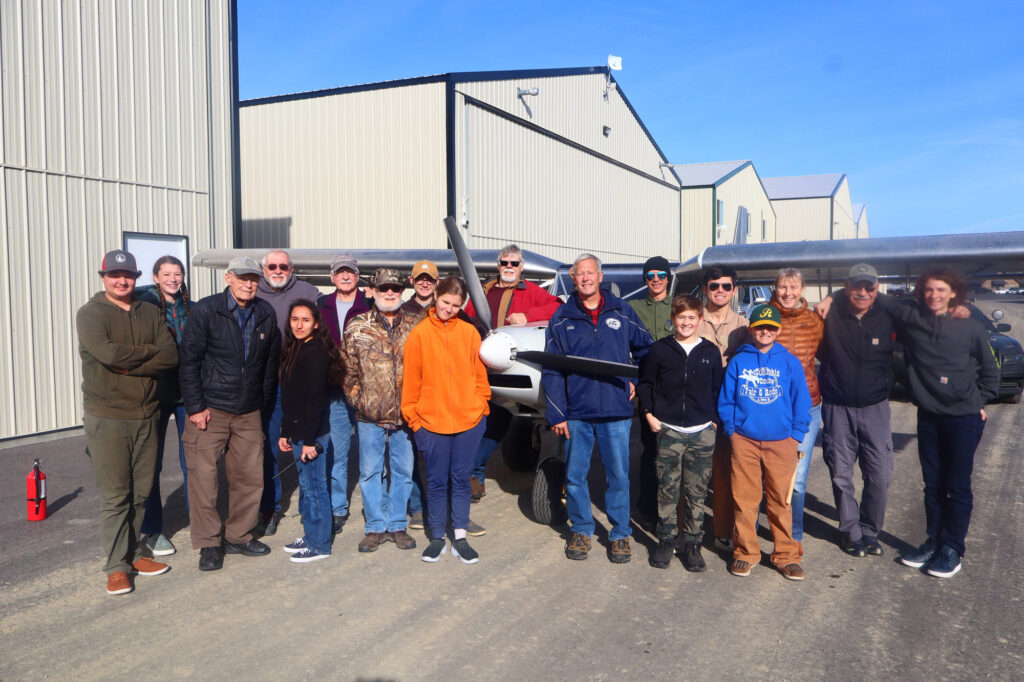
A remarkable high school aerospace program in Sandpoint, Idaho, reached a milestone that few youth aviation initiatives ever achieve — FAA airworthiness certification for not one, but two student-built aircraft. Now those planes have taken flight, piloted by a former student who helped build one of them. When the Federal Aviation Administration inspector signed off on airworthiness certificates for a Van’s RV-12 and a Zenith STOL CH 750, it validated years of Saturday morning labor by middle and high school students who’d gathered in rented hangars at Sandpoint Airport. But getting the FAA’s approval stamp was only half the story. The real vindication came when Eric Gray, a former ACES (Aerospace Center of Excellence Sandpoint) student who’d worked on the Zenith during his own high school years, climbed into the cockpit as the qualified test pilot for both aircraft. It’s the kind of full-circle moment that validates not just the technical competency of the program, but its deeper mission, to create a pipeline from teenage curiosity to aerospace careers.(via KitPlanes)
If you stay in this Airbnb in a small Scottish town you also get to run the bookstore downstairs
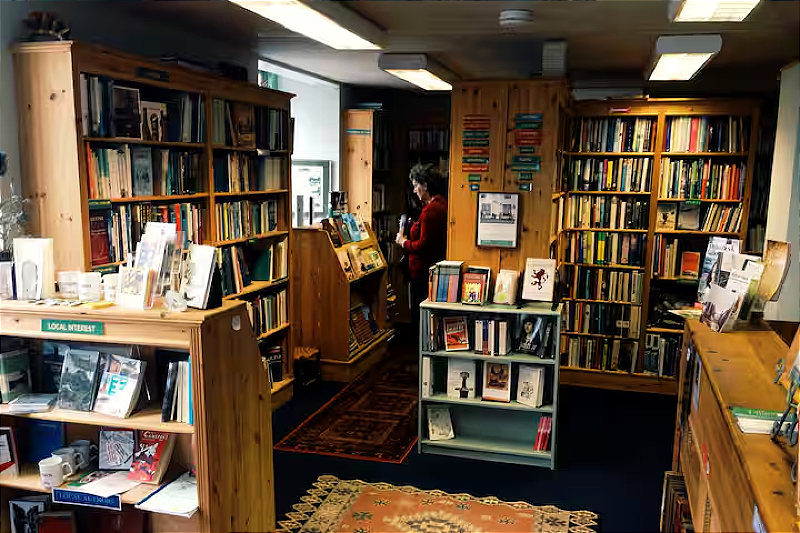
Wigtown in Scotland is a small village on the shore of the Irish Sea. It is home to about 1,000 people, but also to more than a dozen bookstores, which led to its nickname: “Scotland’s National Book Town." And nestled on a street corner is The Open Book. The Open Book takes up just one floor of a small two-story building. The second floor, though, is where the magic begins. It’s an apartment for rent, bookable on Airbnb for a week or two at a time. And it comes with a perk — or maybe a catch, depending on your point of view: during your residency in the apartment, you’re expected to work at the bookstore below. The store was set up in 2014 by the operators of the annual Wigtown Book Festival; revenue from the apartment and from the books sold fund the operation of the store, with any overage going toward festival costs. (via Now I Know)
Hi everyone! Mathew Ingram here. I am able to continue writing this newsletter in part because of your financial help and support, which you can do either through my Patreon or by upgrading your subscription to a monthly contribution. I enjoy gathering all of these links and sharing them with you, but it does take time, and your support makes it possible for me to do that. I also write a weekly newsletter of technology analysis called The Torment Nexus.
A mom who was worried about her son during World War II invented duct tape
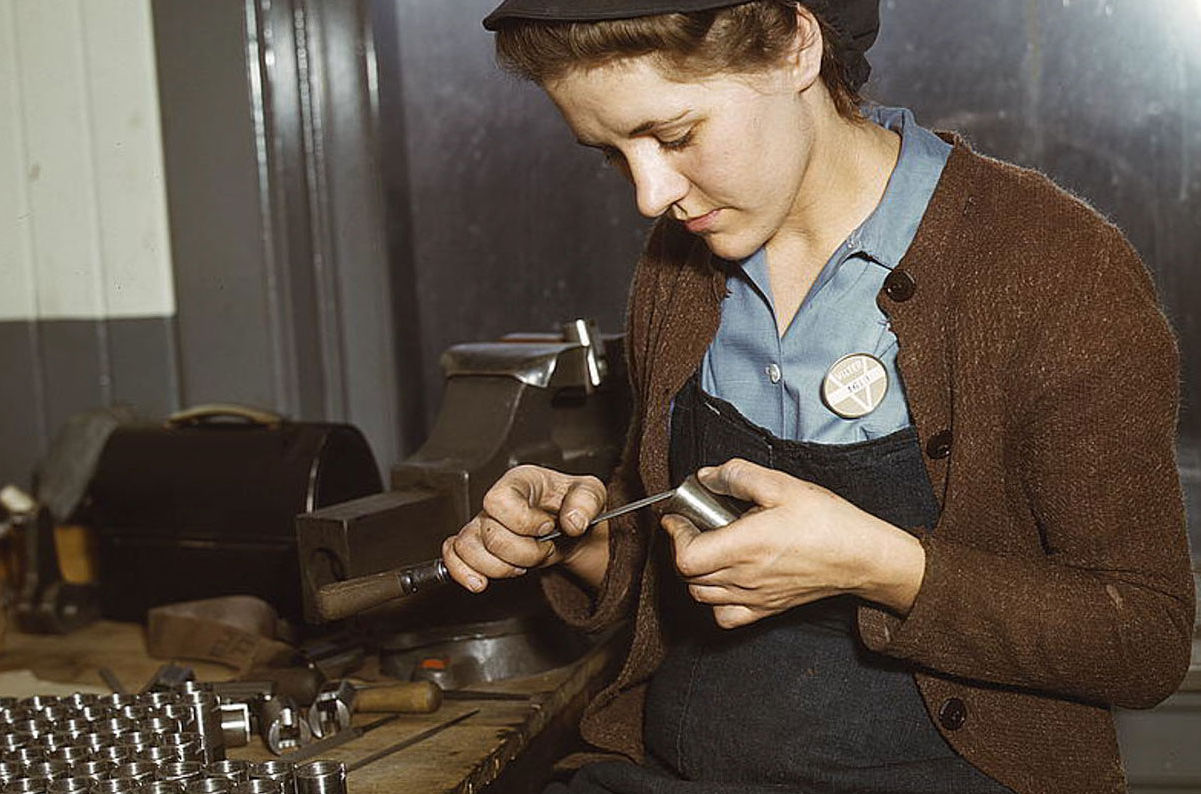
During World War II, a woman named Vesta Stoudt took part in the war effort by working in a munitions plant in Illinois. There, she packed up grenade cartridges in cardboard boxes, which were sealed with paper tape and dipped in wax to make them waterproof. As Stoudt noticed, this packing method was far from perfect. Stoudt’s two sons were in the Navy at the time, and she worried it would leave them vulnerable in the field. She had a solution: Waterproof tape made of durable cloth. Stoudt’s supervisors didn’t offer her much support for this idea — so she went directly to the top. She sent a letter to President Roosevelt and described her idea, including diagrams. She mentioned her sons in the service, as well as Roosevelt’s. FDR was thrilled with the idea and sent her message to the War Production Board, and a company then called the Industrial Tape Corporation produced what we now know as duct tape. (via Nautilus)
The world's smallest skyscraper in Texas is the result of a clever scam
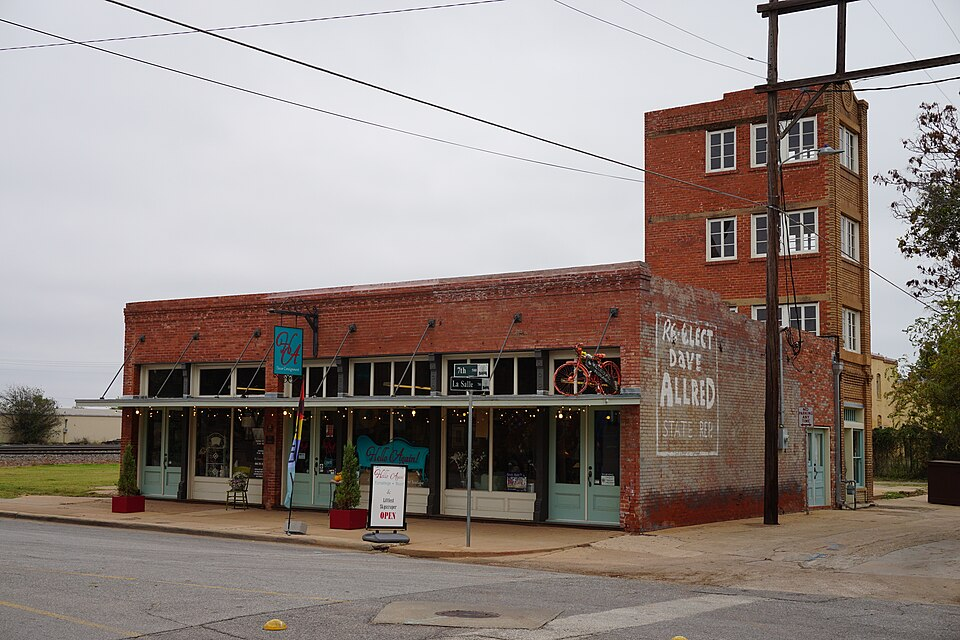
At just 40 feet tall, the Newby-McMahon Building in Wichita Falls isn’t very impressive, even when compared to regular-sized buildings, let alone skyscrapers. And yet it was supposed to be one of the most imposing skyscrapers of its time when it was designed in the early 1900s. The origins of the Newby-McMahon Building can be traced back to the early 1900s, when the city became the center of a regional oil boom. J.D.D. McMahon was the first to notice the city’s dire need for office space and quickly proposed a solution – building an imposing skyscraper. His blueprints caught the eye of several investors, and he was able to raise about $200,000 (about $6.8 million in today’s money). McMahon promised a multistory office building that would be built just across the street from the St. James Hotel, but what he failed to mention was that it wouldn’t go up very much. Investors didn’t notice that the building’s scale was measured in inches rather than feet, and, by the time they realized, it was too late.(via Oddity Central)
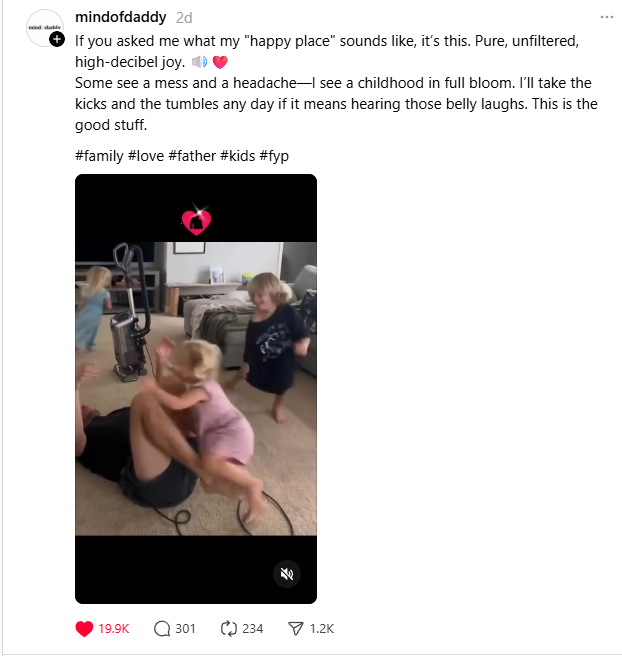
Dad helping produce the next generation of Olympic gymnastics competitors
Acknowledgements: I find a lot of these links myself, but I also get some from other places that I rely on as "serendipity engines," such as The Morning News from Rosecrans Baldwin and Andrew Womack, Jodi Ettenberg's Curious About Everything, Dan Lewis's Now I Know, Robert Cottrell and Caroline Crampton's The Browser, Clive Thompson's Linkfest and Why Is This Interesting by Noah Brier and Colin Nagy. If you come across something you think should be included here, feel free to email me at mathew @ mathewingram dot com