What it's like to suffer from locked-in syndrome


There is one time of day when Dawn Faizey Webster can feel normal. It’s after dinner, once she has been changed into her pyjamas and she is lying in bed, watching television. After a certain amount of time or a certain number of episodes, Netflix, the ever-considerate streaming service, asks its viewers “Are you still watching?” If you don’t respond by pressing a button on the remote, it assumes you’ve nodded off and pauses the stream. Dawn can’t press buttons. She can’t move her fingers or toes or her arms or legs. She can’t swallow. She can’t speak. She hasn’t been able to do any of those things since Tony Blair was prime minister. When Netflix suspects she has fallen asleep and the "still watching" message appears, she can only hope to attract a carer’s attention through the baby monitor in her room. Dawn, 53, has been locked in since suffering a stroke in her brainstem in the summer of 2003. (via The Times)
Who are the mysterious saboteurs behind a five-day Berlin power blackout?
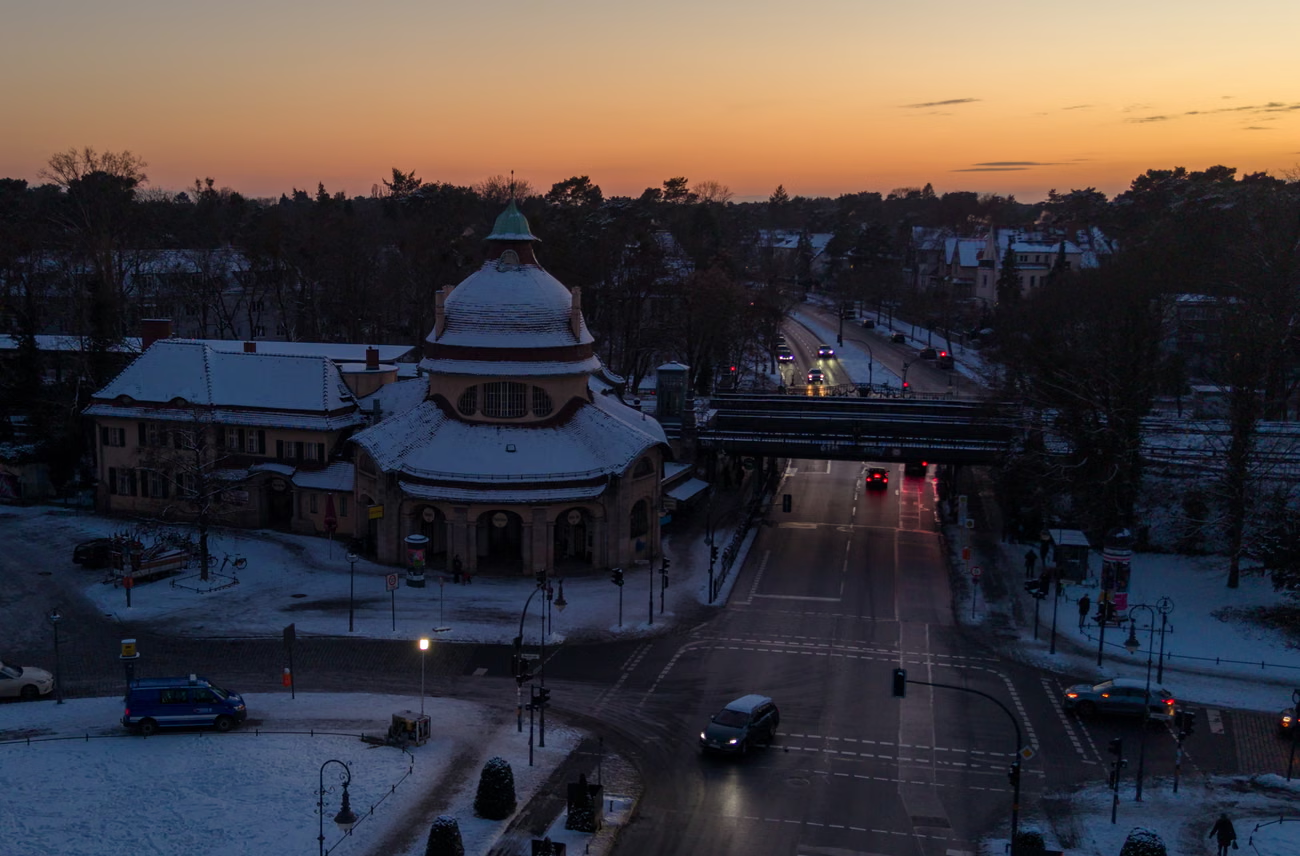
Sebastian Brandt, chief technician of the Immanuel hospital in the leafy, affluent Wannsee district of Berlin, guessed something was wrong as soon as he opened the window of his home and smelled diesel. It was 3 January, a freezing Saturday morning, and luckily the hospital opposite had relatively few patients on this post-holiday weekend. As he looked out, the diesel fumes told him that the emergency generator – a huge, deafening, decades-old machine in the basement – had kicked in. That meant the hospital was no longer getting power from the grid. And that meant Brandt was not going to have a quiet weekend. What Brandt didn’t know was that his hospital was cut off because a couple of hours earlier, at about 6am, approximately 12km away, someone had set fire to five high-voltage cables fixed to the underside of a bridge over the Teltow canal, a long waterway that cuts through the southern part of the German capital. (via The Guardian)
The oldest baseball diamond in the world is in this Ontario town in Canada
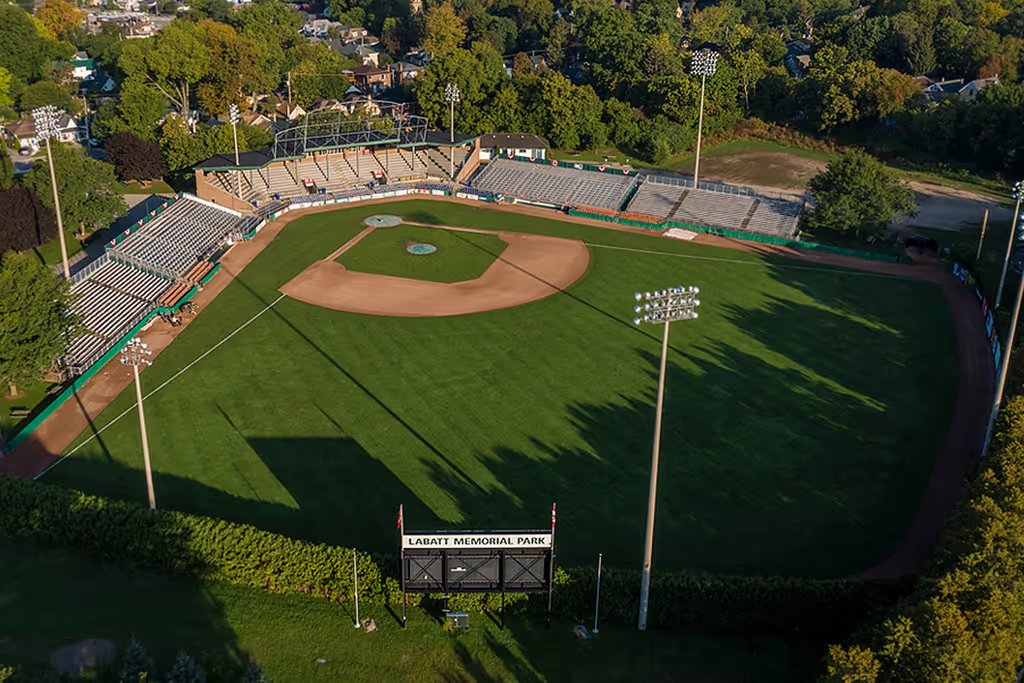
Tucked along the Thames River in the Ontario city of London is a baseball field older than legendary MLB ballparks like Fenway Park and Wrigley Field, and officially recognized as the oldest continuously operating baseball diamond on the planet. Labatt Memorial Park opened as Tecumseh Park in 1877 and has hosted organized baseball ever since. The historic field nearly lost its claim to fame in the late 2000s, when a baseball diamond in Massachusetts was briefly awarded the Guinness title of the "World's Oldest Continually Operating Baseball Grounds." There was later a dispute, which came down to a technicality involving the placement of home plate after flooding forced adjustments to the field layout decades earlier. Guinness inevitably reversed the decision and officially recognized London's park as the rightful record holder in 2009, cementing Labatt Memorial Park's place in history. The park's story dates back to the London Tecumsehs baseball club, one of Canada's earliest organized teams. (via BlogTo)
Hi everyone! Mathew Ingram here. I am able to continue writing this newsletter in part because of your financial help and support, which you can do either through my Patreon or by upgrading your subscription to a monthly contribution. I enjoy gathering all of these links and sharing them with you, but it does take time, and your support makes it possible for me to do that. I also write a weekly newsletter of technology analysis called The Torment Nexus.
While renovating this medieval UK library they found a mummified cat
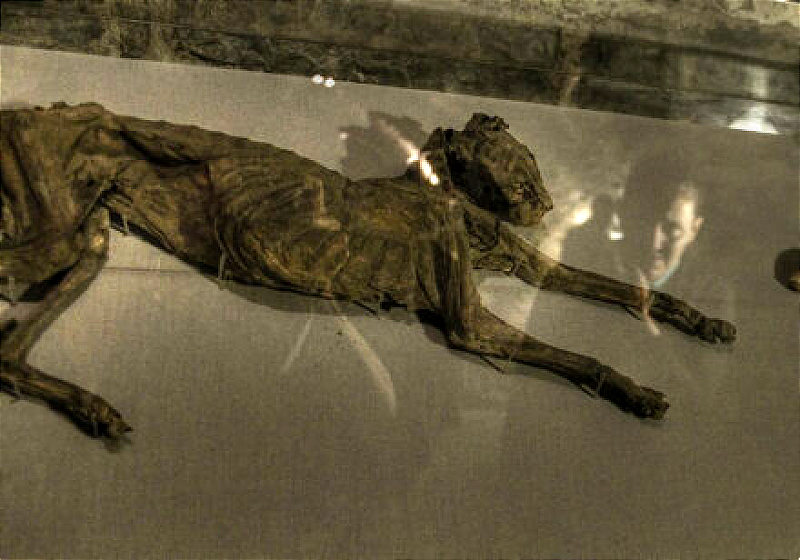
Over the years, the medieval buildings that now house Chetham’s Library have undergone numerous repairs and refurbishments, unearthing new discoveries. It was during renovations to the buildings during the late twentieth century that one of the more eccentric objects found to date was uncovered. While completing work on the school’s new library, one of the workmen came across a mummified cat in the rafters! In ancient Egypt, the birthplace of mummification, cats and various other animals were mummified for a number of purposes. One of these was so that they could be buried with their owners after death, an extension of owners’ love for their pets. Animals were also mummified as a sign of respect for the gods. For centuries, people placed dead cats in the walls of houses and other buildings in England, which subsequently dried out and became mummified. In times of great superstition, such as the witch trials that occurred between the sixteenth and eighteenth centuries, some of the population looked to commonplace magic to ward off evil spirits. (via Chetham's Library)
This former enslaved man was the world's second-tallest man at eight foot nine inches
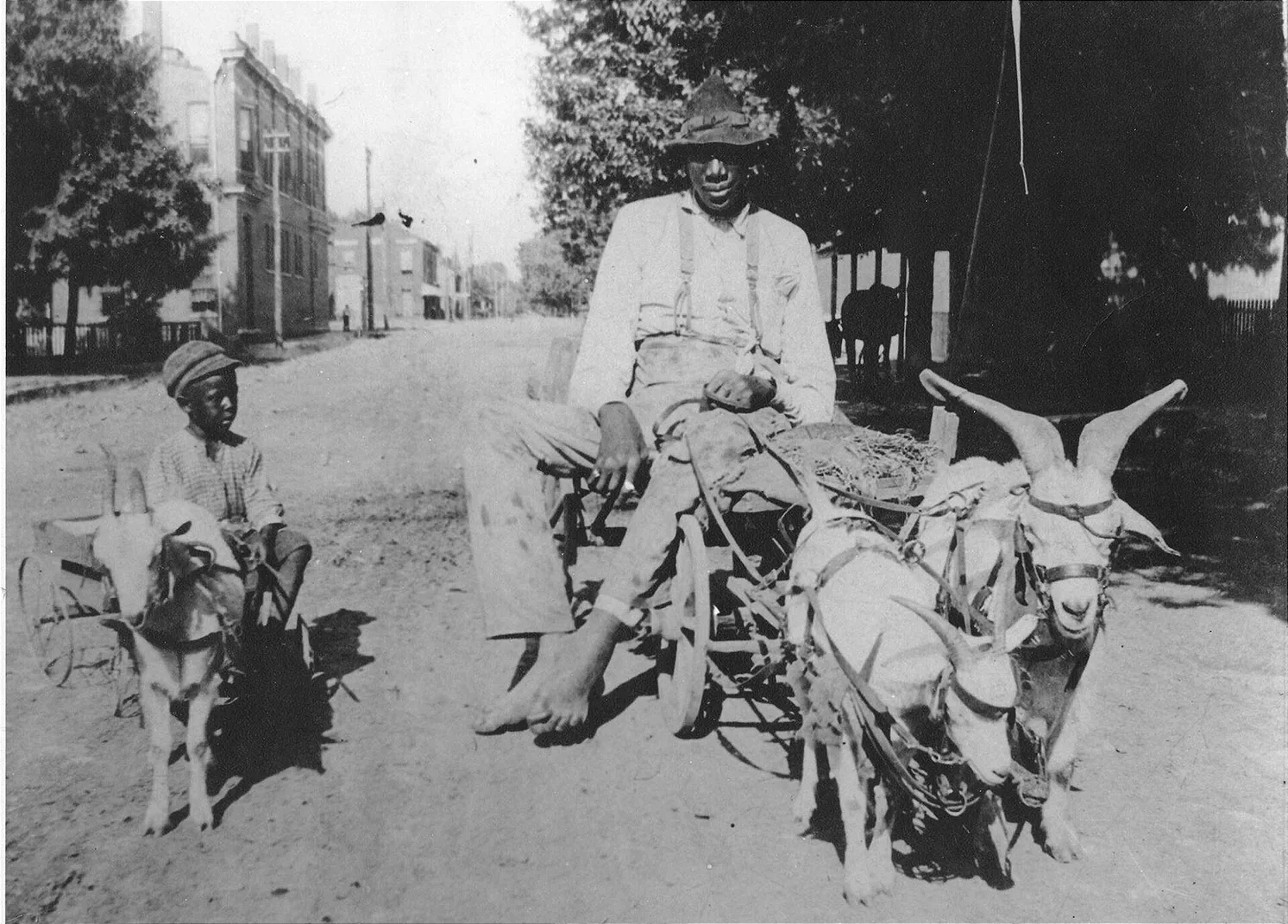
In a small Tennessee town in the late 1800s, a man moved through the streets on a cart pulled by goats. He was the son of formerly enslaved sharecroppers, he'd never gone near a sideshow, and he was, by the time he died in 1905, almost certainly the tallest human being alive on Earth. His name was John William Rogan. Rogan stood 8 feet 9 inches tall, a height that makes him the second-tallest person in history, behind only Robert Wadlow. John William Rogan was born on 12 February 1867 in Sumner County, Tennessee, the fourth of twelve children raised by William and Truelove Rogan. The condition was gigantism, caused by the overproduction of growth hormone, typically resulting from a benign tumour on the pituitary gland. In John's case, it triggered something additional: ankylosis, an abnormal fusion of the skeletal joints that progressively destroyed his ability to walk. His bones grew, but his muscles couldn't keep up. By his mid-teens, he could no longer support his own weight. (via Utterly Interesting)
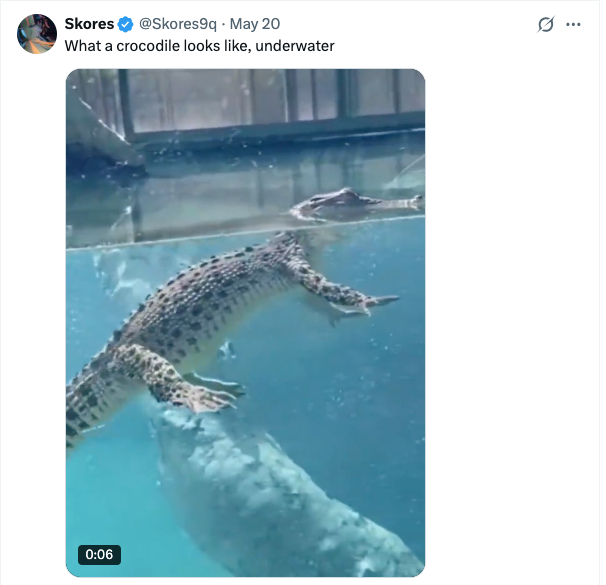
This is what a crocodile looks like underwater while it is swimming
Acknowledgements: I find a lot of these links myself, but I also get some from other places that I rely on as "serendipity engines," such as The Morning News from Rosecrans Baldwin and Andrew Womack, Jodi Ettenberg's Curious About Everything, Dan Lewis's Now I Know, Robert Cottrell and Caroline Crampton's The Browser, Clive Thompson's Linkfest and Why Is This Interesting by Noah Brier and Colin Nagy. If you come across something you think should be included here, feel free to email me at mathew @ mathewingram dot com